The Long Game: CEO and EVP of the American Institute of Architects Carole Wedge on Relationships, Growth, and Confidence
By Julia Gamolina
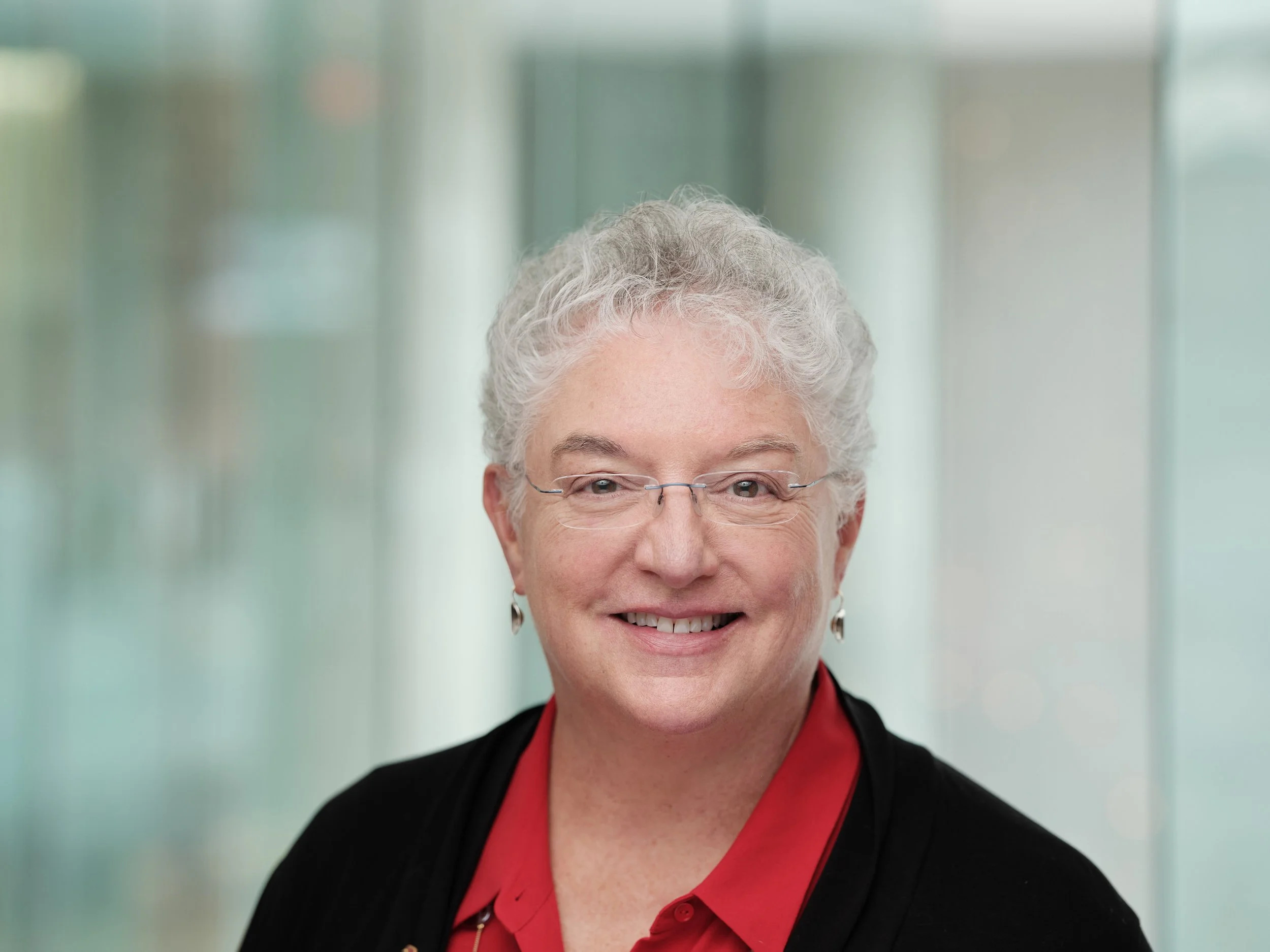
Carole Wedge is the Chief Executive Officer and Executive Vice President of the American Institute of Architects, a role she assumed in December 2025. Prior to joining the AIA, she spent nearly four decades at Shepley Bulfinch, a national architecture and interior design firm serving leading institutions in higher education, healthcare, science and technology, housing, and urban development.
Elected President and CEO of Shepley Bulfinch in 2004, Wedge led the firm's national expansion and evolution over nearly two decades, fostering a culture of openness and collaboration while guiding its strategic growth and rebranding. Under her leadership, the firm strengthened its presence across the United States and expanded its impact in institutional architecture and design.
After retiring from Shepley Bulfinch in 2023, Wedge began a new chapter as a coach and strategic advisor, drawing on seventeen years of experience as a CEO to help individuals and organizations develop talent, build collaborative teams, and achieve their goals. Throughout her career, she has been recognized for her commitment to leadership, mentorship, and advancing the design profession.
JG: CEO of AIA National is a huge role to step into. What does the role mean to you and what are you most focused on for this year?
CW: A major theme that keeps coming up is the voice of architects. As a design organization representing more than 101,000 architects and designers, are we doing enough to educate the public about what architects actually do? This question is tied to a couple of larger issues. One is that arts education is not as prevalent in public schools as it once was and some of the creative pathways that introduced people to architecture and design became less visible. The other challenge is helping people understand the design process itself.
Finally, one of the ideas we’re discussing is aiming higher through regenerative design. When you look at the progress toward net-zero buildings, wellness-focused design, and sustainability goals, architects have made remarkable advances over the last twenty years. Now we’re beginning to think at a larger scale that includes regenerative communities and regenerative processes. Our current president, Illya Azaroff, has been a tremendous leader in this.
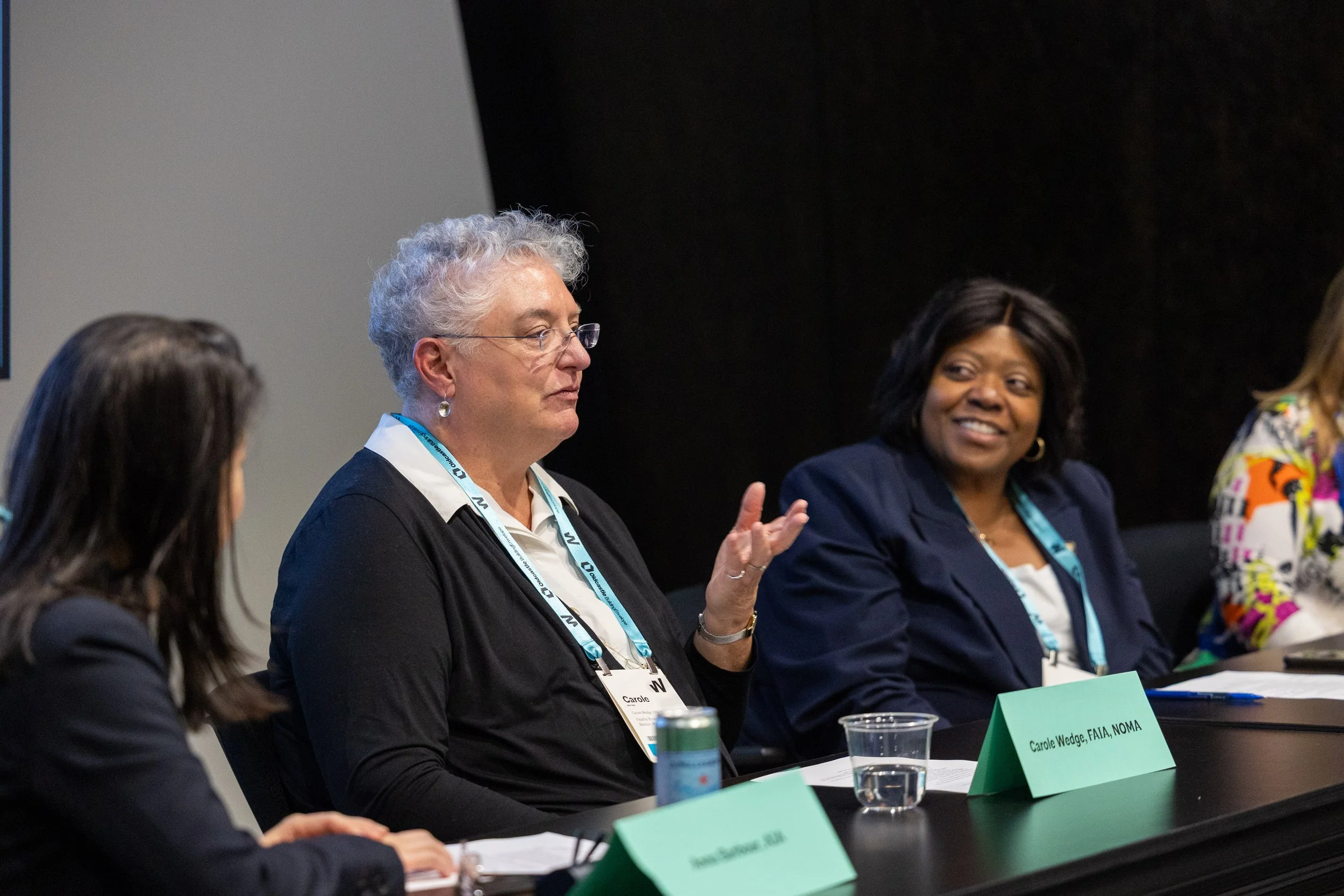
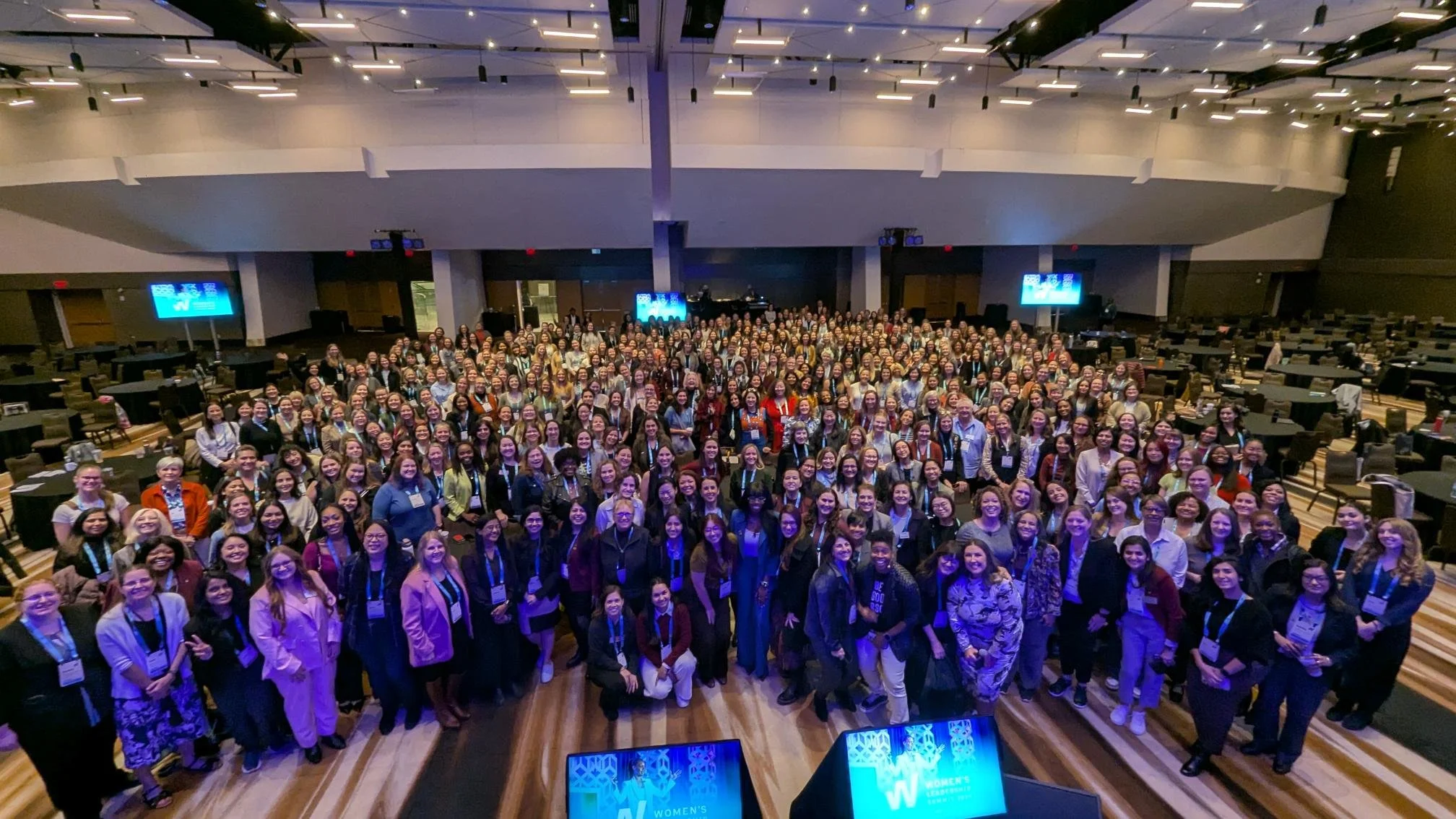
2025 Women’s Leadership Summit. Courtesy of AIA National.
What does this all mean for you personally?
This role feels a little like the third act of my career. I’m excited to connect the dots, serve as a spokesperson for the AIA, and support our members and their diverse needs. One of the things I enjoy most is helping translate architects’ experiences for professionals who aren’t architects – whether they work in marketing, communications, technology, or other areas within the organization.
Let’s go back to the first two chapters of your career – you were with Shepley Bulfinch for thirty-seven years, progressing from architect to CEO in that time. Something that is true across many industries is that when highly effective sole contributors get promoted to managerial and eventually to leadership roles, that transition is not always easy or properly supported. How did you adapt and evolve?
People are always surprised that I stayed at the same firm for 37 years; even my children, who are 29 and 35, ask, “Why did you stay in the same place for so long?” What many architects will understand is that every new project feels like a new job since you have a new client, a new site, a new program, and often a new team. But as you said, as you grow within a firm, there's a natural progression. Becoming a principal is different as suddenly, you're responsible for bringing in work! Making that transition taught me that there were opportunities to do things differently than previous generations had. I remember thinking, "My next design project is Shepley Bulfinch itself."
A group of us became more focused on learning, measuring outcomes, and adapting our practice. Today, the pace of change feels even faster, and whether we're talking about climate, economics, politics, or AI, we're operating in a truly global environment. My perspective has been to embrace change while also recognizing that people need time to adapt. Ultimately, what I've learned is that design skills are incredibly transferable. Whether you're designing a building, leading a firm, improving a process, or navigating organizational change, you're listening carefully, solving problems, and imagining better possibilities through it all.
“I learned that the most important moment often comes after the loss...For me, the lesson is simple: play the long game.”
What was some of the best advice that you got as your career progressed?
I was fortunate to have many mentors throughout my career. Most of them were men, and several had made the transition to principal before I did. One of the best pieces of advice they gave me was, “Be patient with yourself. It’s going to take a few years to get comfortable in this role.” They also encouraged me to learn by observing, and to reference what has come before. For example, don’t stare at the blank page of an RFP and wonder how to begin. Look at the strongest proposals your firm has produced. Study how other people approach the work and figure out what resonates with you.
Another piece of advice that proved invaluable was to stay connected with the people you meet throughout your projects. Beginning early in my career, I paid attention to the people on the client side who struck me as particularly thoughtful, smart, and interesting. I stayed in touch with them long after the project ended. I would invite them to conferences, events, or just to visit our office. Over time, I realized that relationship-building is a skill in itself. And it's not just about winning work; it's about genuinely investing in people and maintaining those connections over the long term.
Having transitioned myself to this side of the business, I very much attest to that.
One thing I always found interesting was how firms respond after losing a project. I learned that the most important moment often comes after the loss. Whenever a client called to tell me we hadn't won a project, I would say, "I'd love to come visit in a few months and see how things are going. Would that be okay?" It shifted the conversation from a single pursuit to a long-term relationship.
Otherwise, we would lose a project, feel disappointed, move on to the next opportunity, and suddenly five years had passed without speaking to anyone at that institution. That never made sense to me. If we'd made the shortlist, we'd already built a meaningful connection! What I discovered was that maintaining those relationships often paid off. Some of those clients eventually hired us for future projects. Others would say, "You were so close last time that we're comfortable moving forward without another lengthy selection process." For me, the lesson is simple: play the long game. The project may be over, or you may not have won it, but in many cases, that's when the real relationship begins.
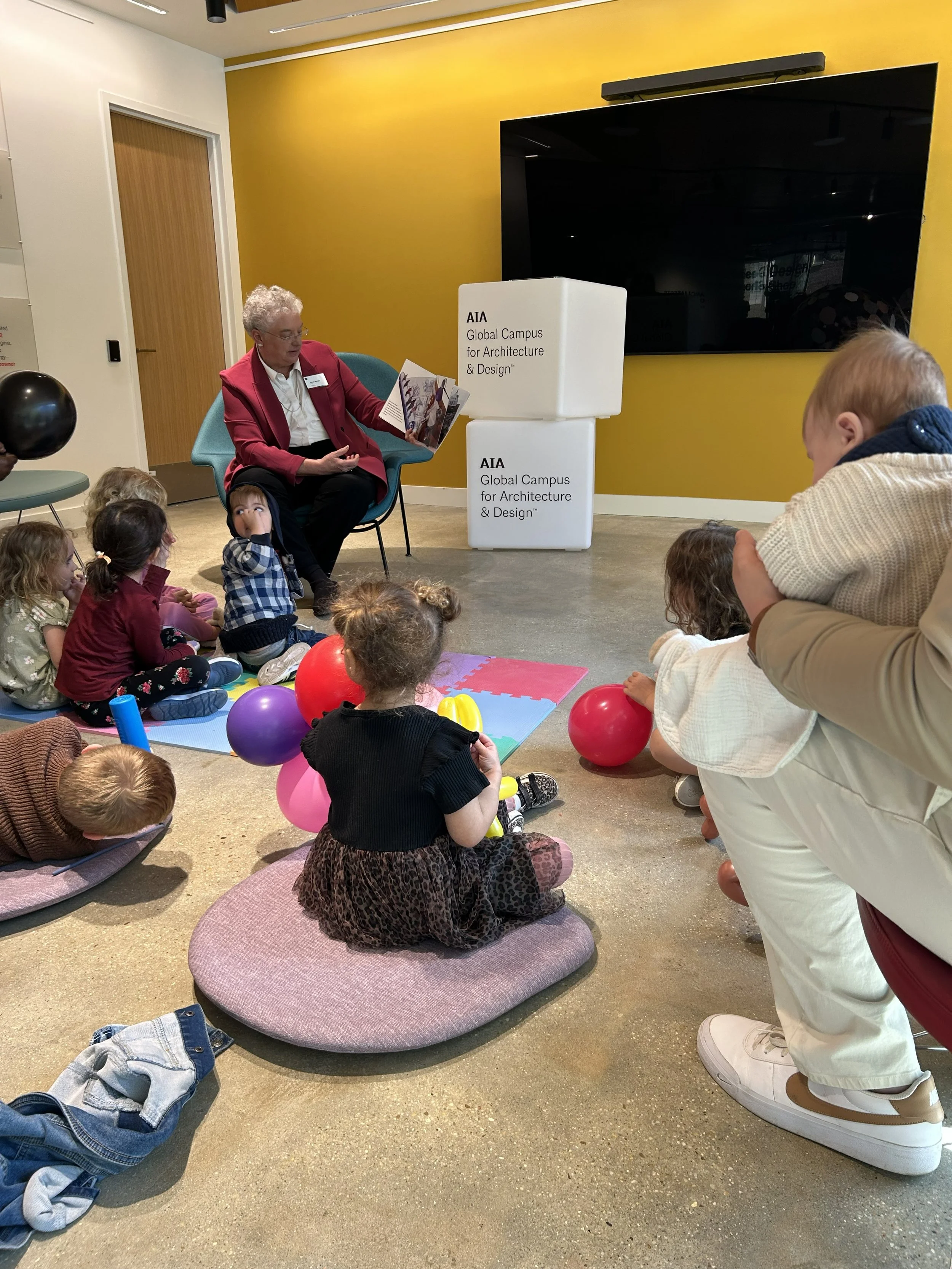
Carole reading to children in AIA National’s exhibit space. Courtesy of AIA National.
After your tenure at Shepley Bullfinch, you became a coach. What’s the advice that you gave often?
Confidence comes with experience. One of the first things I would say to someone who's just been promoted is, “Be patient with yourself. You were promoted because people see potential in you. That doesn't mean you're supposed to know how to do the job perfectly on day one.” At first, you're learning by watching others. Eventually you develop your own approach.
The second thing I'd recommend is looking around your organization, identifying leaders you admire, and paying attention to how they approach their role. When I was first promoted, I went to a colleague who had been a mentor and asked, "How do you think about the job of principal?" He said, "When I come into the office, I say hello to everyone. Then I think about what the engineers, marketing team, and proposals need from me, because the most important thing I'm doing is preparing for the work that comes after the current project. Only after that do I answer my own emails or focus on tasks that only I can do." What struck me was how generous that mindset was. His view of leadership wasn't centered on his own productivity, but on enabling everyone else to succeed.
What are some of the biggest challenges that you have gone through in your career?
One of the greatest challenges in architecture is that our business model doesn't always weather downturns well. As a leader, one of the hardest decisions you'll ever have to make is reducing headcount – whether that's a furlough, a layoff, or simply acknowledging that you no longer have the right role for someone in the organization.
You have to approach those decisions with empathy. My daughter works in HR and has been involved in workforce reductions herself. I’ve shared with her that those conversations should never become easy. You can be loyal to the long-term health of the business and still recognize that you're having a profound impact on another person's life. I wish there were a way to say that whenever architecture slows down, there are endless other design opportunities waiting. The reality is that firms need to think carefully about resilience.
How do we do this?
Diversification. I saw that firsthand at Shepley Bulfinch. There were times when New England was experiencing a slowdown while our Houston office was incredibly busy. Geographic diversity helps. Market diversity helps. Expanding into services like strategy and planning helps. It's a little like having a diversified investment portfolio. The more varied your opportunities are, the better you're able to navigate economic cycles.
I also learned the importance of honesty. During difficult periods, we didn't pretend everything was fine. I lived through several major downturns, including the 2008 financial crisis and the COVID-19 pandemic. In both cases, there were moments when it became clear that large projects were being delayed or canceled. Instead of waiting, we reached out to our clients and said, "We'll support however we can. If the big project is on hold, do you have smaller projects that still need attention?" We visited clients, stayed visible, and remained engaged. We were willing to take on work that might not have been part of our original plans because keeping momentum mattered. That flexibility helped us get through some very difficult periods.
“You don’t have to solve every problem in the profession. You don’t have to see the entire picture at once. You can focus on the team around you, do your work thoughtfully, and contribute to a larger collective effort. Those actions ripple outward.”
The business model of architecture is a topic our profession cycles through over and over without implementing much change. We constantly talk about compensation, working conditions, and unionization. I’d love your perspective on what we can do to create a more sustainable future.
I remember a healthcare client telling me, "Carole, your additional services are killing us." I asked her, "Do you know where those additional services come from?" She said, "Not really." So we walked through it together. One department had changed its requirements. Another had introduced a new need. In other cases, information arrived later than expected. The additional services weren't arbitrary – they reflected changes that occurred throughout the design process. When we had strong relationships with clients, we could have those conversations honestly. We could explain that additional services are often a form of contingency when we're trying to help clients navigate uncertainty on projects that may take years to complete.
At the same time, firms have to make thoughtful decisions about who they work with. There are plenty of management books that ask a simple question: Who is the client you should fire? If a relationship isn't profitable, if there's no cultural fit, if people aren't working well together, or if the project consistently creates friction, it's worth asking whether that relationship should continue. Those are difficult decisions, but sometimes the best thing a firm can do is focus its energy on clients and projects that are aligned with its values.
The other piece of this conversation that interests me is AI. One of the things architecture firms have done over time – especially when they become busy – is outsource certain tasks. Code reviews, specifications, and other technical services often get handed off because they can be time-consuming and specialized. In some cases, I think we may have given away scope that technology could help us reclaim. I've spoken with firms that have decided to bring more services in-house. Some have moved into construction, handling both design and building. Others have become more involved in field detailing and construction administration because that's the work they enjoy and where they see value. AI won't solve every problem, but it could help architects work more efficiently, reduce errors, and take ownership of areas of practice that may have drifted elsewhere over time.
With so much change happening so quickly, who are you admiring right now?
I was recently at the Royal Architectural Institute of Canada conference in Vancouver, and one of the highlights was hearing from Moshe Safdie, whose work has inspired me for decades. I first encountered his work through Habitat 67 at the 1967 World's Fair, and I also remember seeing Buckminster Fuller's geodesic dome. Those experiences were formative for me and are part of the reason I became an architect. I was also inspired by Michael Green, whose work in mass timber and public advocacy has helped advance important conversations in the profession. And I was especially happy to see Angela Brooks and Lawrence Scarpa receive honorary fellowships from the RAIC.
Outside of architecture, I've also been thinking a lot about leadership. I have tremendous admiration for Mark Carney and the way he approaches complex challenges. And I'm a longtime admirer of Priya Parker. Her work on gathering, connection, and creating meaningful experiences feels especially relevant today. In a post-COVID world, I think we've developed a new appreciation for how precious it is to gather in person. That idea connects to another topic I've been thinking about recently: the fact that leadership can be lonely. As you move into leadership roles, certain responsibilities require discretion, and that can feel isolating.
That's where coaching and peer groups become so important. Whether it's a women's leadership group, an AIA chapter, a professional network, or a coach, leaders need support systems. Sometimes those support systems exist within your firm, but often you need to look beyond your organization to find them. I spent years participating in peer groups and coaching circles.
Madame Architect was born out of my involvement with ArchiteXX, a group I sought out because I was looking for a support system outside of practice. And on the topic of support groups, what do you feel your mission is right now?
I think my mission is to make the AIA feel more accessible, more connected, and better aligned. I want the national organization and local chapters to support one another more effectively rather than duplicating efforts.
My metaphor for that comes from an unlikely place. I originally thought I might become a biologist. I wanted to be Jacques Cousteau when I was growing up, and I had a wonderful biology teacher in high school who fueled that interest. To this day, I'm a bit of a bird nerd. One of my favorite phenomena in nature is murmuration – the way starlings move together in those extraordinary formations across the sky. Wouldn't it be wonderful if the AEC community functioned a little more like a murmuration? We're collaborating, moving together, and trusting one another. What's remarkable is that each bird doesn't need to understand the entire flock. It only needs to pay attention to the birds closest to it.
There's a lesson in that. You don't have to solve every problem in the profession. You don't have to see the entire picture at once. You can focus on the team around you, do your work thoughtfully, and contribute to a larger collective effort. Those actions ripple outward. And yes, I fully embrace my bird-nerd status. Wherever I go, I have the Merlin Bird ID app on my phone. I'm pretty good at identifying birds by sight, but I'm still working on identifying them by song.
Carole, my last question for you is what advice do you have for those entering the profession today?
Stay ambitious. Whether it's regenerative design, resilience, housing, sustainability, or community-building, we have the opportunity – and a responsibility – to think deeply about the communities we're shaping and the future we're creating.
And finally, I would encourage young professionals to build their networks. Everywhere I go, I hand out my business card and tell people, "Get in touch with me. I'm serious. I'm here to support you."
This interview has been edited and condensed for clarity.