Stories That Matter: The Art Spy Author Michelle Young on Making Time for Your Interests, Building Iteratively, and Sparking Conversation
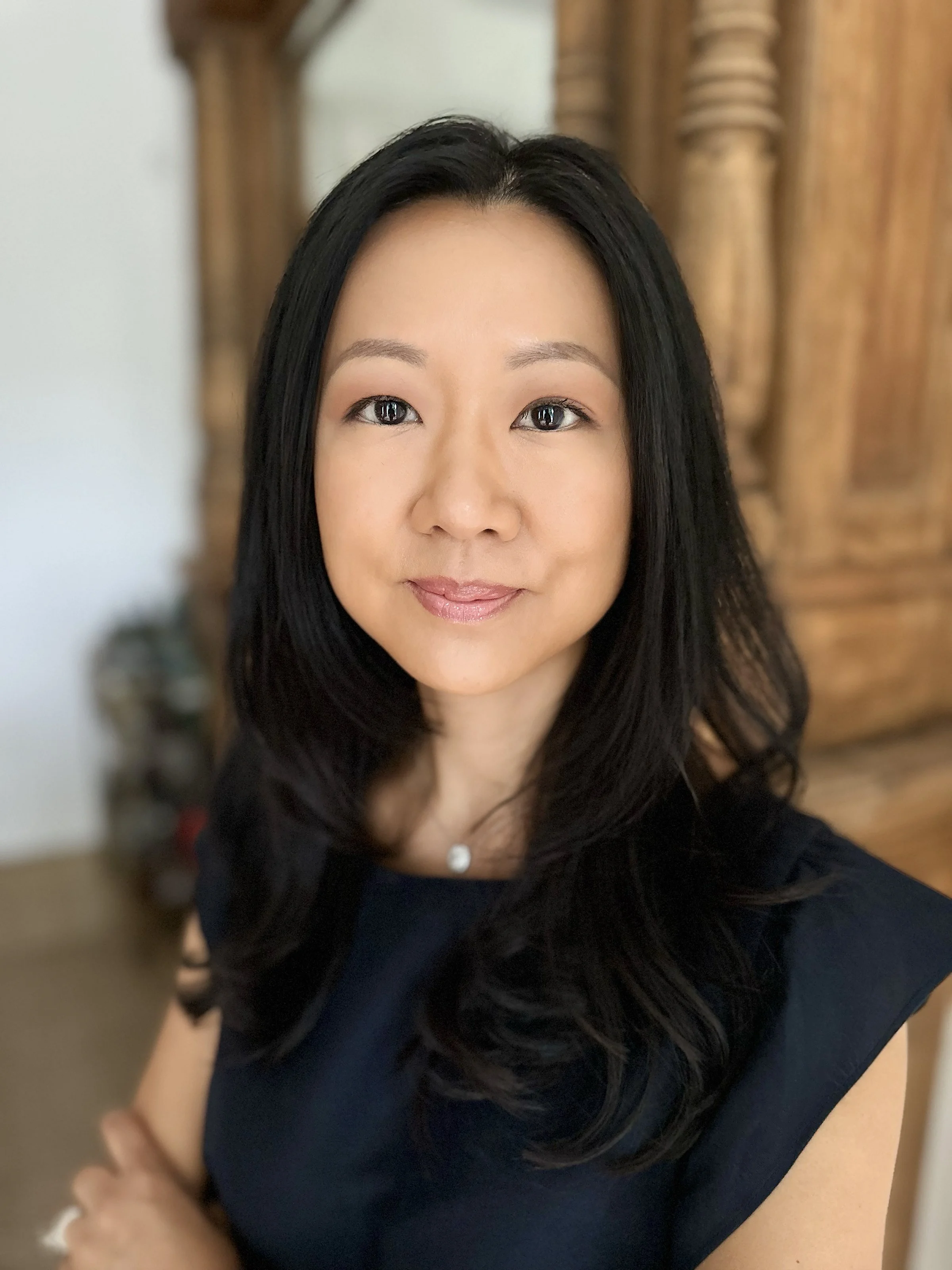
By Julia Gamolina
Michelle Young is an award-winning journalist and author. Her book, The Art Spy: The Extraordinary Untold Tale of World War II Resistance Hero Rose Valland was named a Best Book of 2025 by the NYPL, Library Journal, and Hyperallergic. She is a graduate of Harvard College and holds a master’s degree from Columbia University GSAPP, where she served as a Professor of Architecture. She is the founder of Untapped New York.
JG: When we spoke last, we discussed your media company, Untapped New York, which focuses on New York City and all there is to explore here. Your recent book though, The Art Spy, published by HarperOne, takes us to Paris! Tell me how this came to be; you've written books before, but why Paris, and why this story?
MY: When I discovered Rose Valland, an art historian turned spy in World War II France, I felt like I was being called to tell her story. I have long been obsessed with female spies in World War II and when I come across their stories, I always wonder what I would have done in their shoes. Rose was the first spy in which I could truly imagine myself acting in similar ways. I felt a real kinship with her as a person and with her background. We both studied art history, which was my major at Harvard. We both learned German and chose to live in the same neighborhood while studying in Paris—within a few blocks of each other, and as a child I went to many of the places she went to rescue artwork after World War II. I also felt that I could see how her brain worked and how she processed information.
But on a deeper level, I understood and identified with the struggles she went through, as someone who was underestimated based on what she looked like and where she came from. At the root, her story is one of an outsider who fights her way to the top of the art world in France and learns to take on multiple identities as needed. Her skills, undervalued in peacetime, become essential in wartime. I very much admired how she fought for her principles, no matter the cost, and how relentless she was. I wanted to understand how she could be forgotten, despite being one of the most medaled women in all of WWII of any country. My hunch was that her story, as a woman, as a lesbian, and as someone who didn’t fit any distinct mold, was likely undertold. And that hunch turned out to be correct.
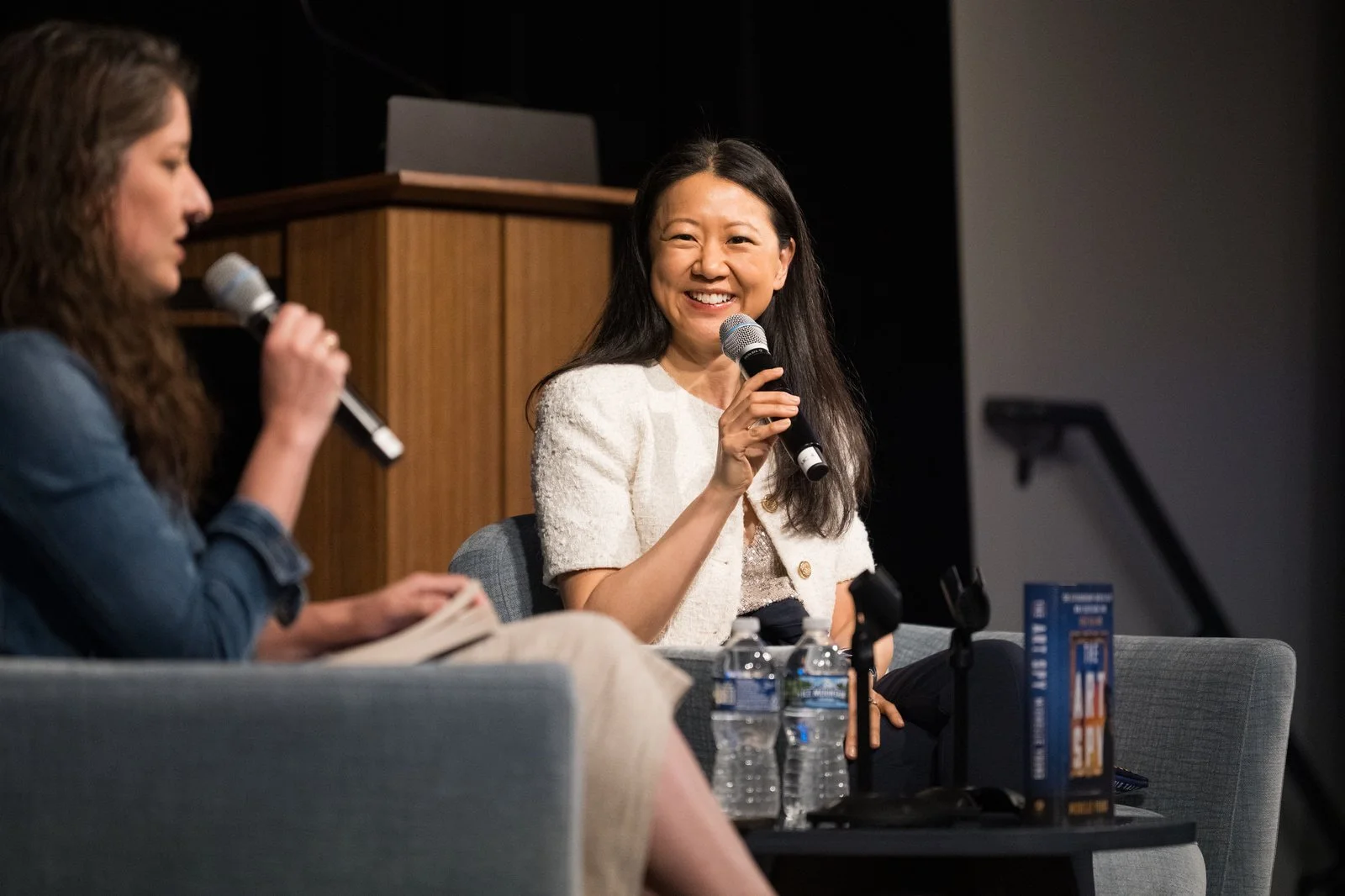
Michelle speaking on The Art Spy book tour, St. Louis County Library.
What did you learn from being an author, versus the creator of a media company or journalist or professor? But to also build on that, what are the main things you learned from each of those identities?
I see all those careers as similar in spirit. The type of extensive research and creativity required in writing narrative nonfiction is quite entrepreneurial. You must uncover things that haven’t been discovered before. You have to be dogged and never give up. You have to believe that you will be able to deliver the final product, have the inventiveness to look in unexpected repositories and track down atypical sources, keep tabs on multiple leads and storylines simultaneously, convince other people to believe in your mission, give credit to those who helped you along the way, and market your book. There is one other thing that I think you need to have: a love for detailed detective work.
Was it a different daily existence than what you were used to?
The main difference I found from all the work I’ve done before is the timeline of the project. After years of writing for online publications, I loved that I had several years to work on this book, without an imminent timeline. It was wonderful for my creative process. It enabled me to truly immerse myself and on most days, I found it difficult to remove myself from Nazi-occupied France and return to my normal life, because I was in that deep. I found that a multi-year timeline gave me the ability to test, experiment, discard, and evolve my work. For the most part, it was the most peaceful working process I’ve ever had in my life.
“I think the greatest impact we can have on this world is to spark emotion and conversation from the things we create...Hearing from readers is the most gratifying part of writing a book, in my opinion.”
Tell me a little bit more about the research and writing process for The Art Spy.
In general, I don’t research and write on the same day because narrative non-fiction writing for me is more like literary writing rather than journalistic writing. Research on the other hand is a technical task, requiring organization, logic, multitasking, and creative problem solving. Depending on what I’m working on, I will consciously turn on different parts of my brain.
I do a period of generalized research to start off a book which gives me time to think about how the narrative might unfold. I then think of each chapter of a book like an article—it has to stand on its own, draw you in, and make you want to find out more when it closes. I do an exhaustive (and I mean exhaustive) dive into everything I can possibly get my hands on related to the topic in that chapter. I process that information in my head and in notes, and then I start to hear and see the written lines in my head. That’s when I begin writing.
Putting pen to paper makes me identify what additional information I need to make the narrative come alive for the reader, and I’ll search for that extra material in the process of writing. I’m also a very critical editor of my own writing, using the skills I learned editing other people’s writing on Untapped New York. Anything that doesn’t need to be on the page should be cut. Anything that causes a bump in the reading must be rethought.
Do you feel like your past training and work in architecture and urban planning come in handy?
Yes! There were a few super exciting, full circle moments. At one point, I was trying to understand where a pivotal event took place, as Rose is trying to save the last train of Nazi looted art from leaving France. The train was finally stopped in the outskirts of Paris through Rose’s efforts and the efforts of the Resistance, but I wanted to know with precision where. I pulled historical maps and overlayed them onto current maps in Illustrator and realized that one of the archives I was spending a lot of time in—where Rose’s meticulous documents about that event are held—was literally the spot where the train was saved. I had observed that the archive was in a weird place urbanistically, and it turned out that it was a repurposed triangular plot of land that used to be the siding of a train station. I like to think Rose would have found this coincidence incredible, too. I was so excited about it, I made the whole thing into a time lapse GIF and showed it to my students in my Columbia GSAPP studio!
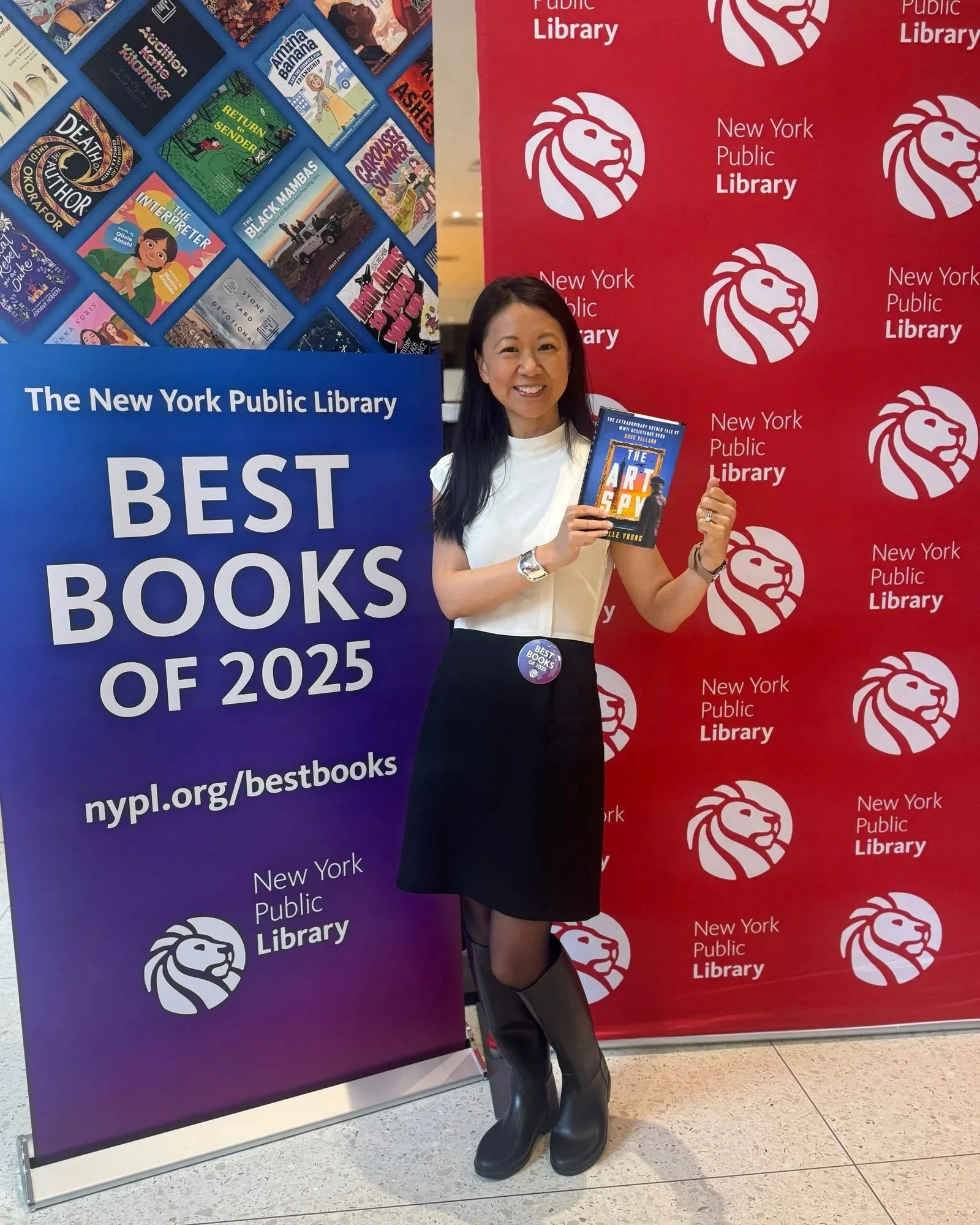
Michelle at the New York Public Library Best Books of 2025 Ceremony.
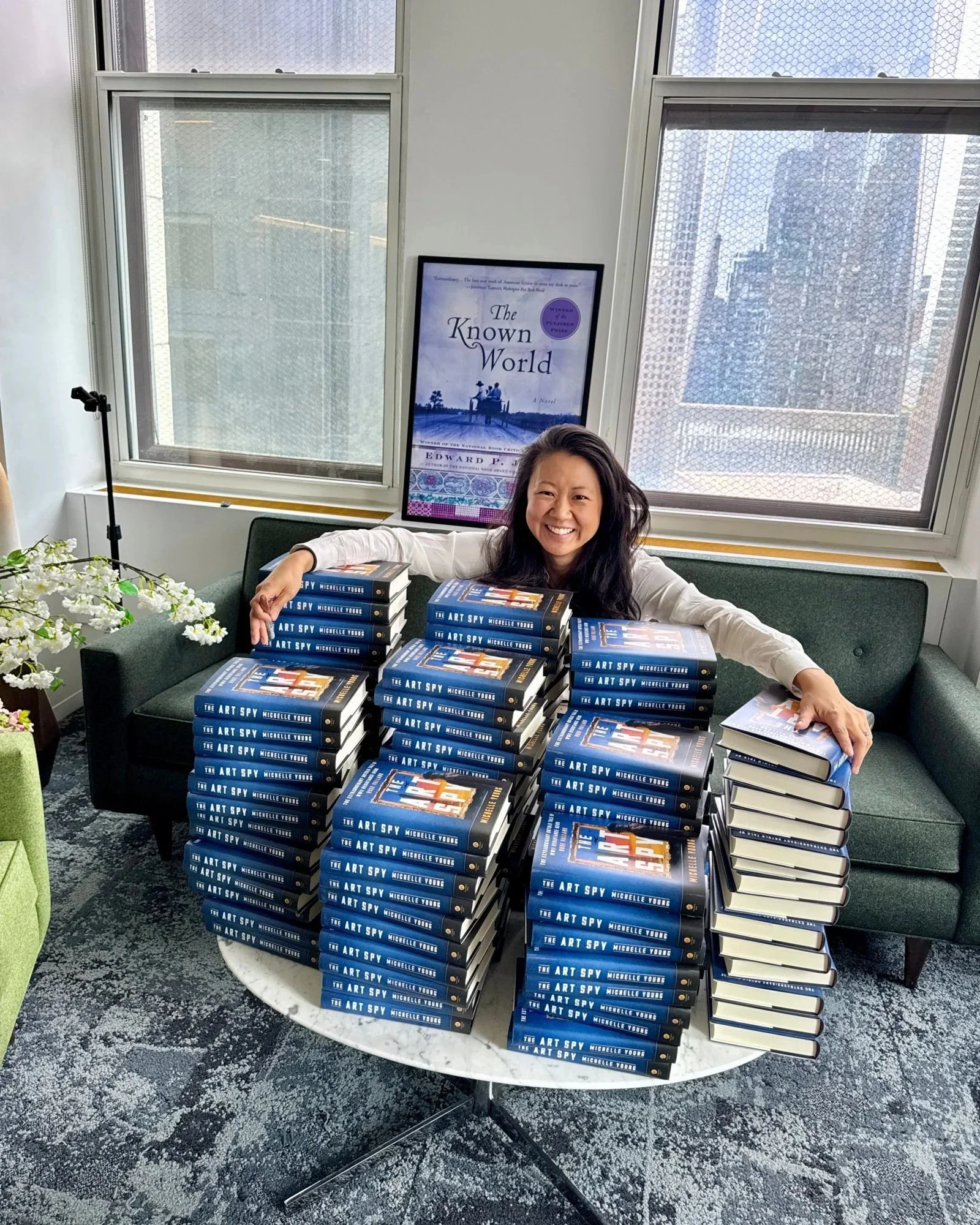
Michelle at the Harper Collins office NYC signing books for a first edition book club.
What was some of the best advice you got early on that has informed your approach to your work and career?
The most transformative person for me was my mentor from Columbia GSAPP, the late Moji Baratloo who was an architect and urban designer. I thought I was at GSAPP for urban studies, but she had me making models and doing design work. In every class, it felt like she was telling me to go in a different direction. I fought against it at first, but she knew better. By taking me far out of my comfort zone, I discovered how I was best suited to work. She was endlessly supportive of Untapped New York and at one point, in another class I took with her, she told me, “Stop making me PowerPoint presentations. Put your work on your website, where everyone can see it.” From then on out, I learned to trust my own instincts and to build iteratively, without fear of failing. I stopped making outlines. I built my company Untapped New York using this method, and I wrote The Art Spy as well this way. At the core, the idea is that only by doing can we know if something works, and only by iterating can we build the best version of something.
I also remember how supportive Moji was of each student and their interests. Mid semester, she called me up and asked, “What do you really want to be doing?” She then tailored the rest of the semester to each of our interests. It was incredible to have a teacher like that at that stage of my life. After she passed away from cancer, I taught her class at Columbia GSAPP for ten years. I tried to keep her ideas alive and instill the same methodology of teaching that she had imparted to me.
What have been the biggest challenges in writing your book? How did you manage through?
One challenge I had was letting go of something I wrote that wasn’t quite working. I was really attached to the original opening of the book, which I wrote as part of my book proposal. In my mind, this sold the book and I was really proud of it, so why change it? In the original prologue, Rose has a gun to her back on Liberation Day and is suspected of being a Nazi collaborator. What could be more dramatic and tension building than that, I thought? But every editing pass we did, my editor had comments and questions about the prologue and at some point, I realized that she thought the chapter was taking place at a different point in time. That’s when I realized there was a problem with my timeline—this is a book about World War II, but I started it with a flash forward after the Germans surrendered Paris. I decided to go back to the source material, and I discovered that even more tension could be to be conveyed just by starting the prologue a few days before—prior to the Liberation of Paris. The opening of the book is a lot stronger now.
“Don’t think, just do. Life is too short to simply dream of following your passion. Make time for your interests on the side and see where they go.”
Who were your mentors through it all? Who are you admiring now and why?
I have to admit, I’m usually bad at seeking advice and receiving feedback! I like to work alone, struggle alone, and as we are taught in architecture school through experience, it’s the struggle that leads to those transcendent, creative moments. But with something so consequential, I knew I needed other people to look at the manuscript—once I felt it was ready. I asked writers I admire, and they were all so generous with their time. Some factchecked, some gave me advice on literary aspects, some tackled both. I am really grateful to the writers Michael Wolraich (The Bishop and the Butterfly), Gerri Chanel (Saving Mona Lisa), Lynne Olson (The Sisterhood of Ravensbrook), Jonathan Petropoulos (Göring’s Man in Paris), Mark Braude (The Typewriter and the Guillotine), and journalist Benedict Delfault, for reading my manuscript with such care.
And I have to give a big shoutout to author and journalist Laurie Gwen Shapiro (The Aviator and the Showman). The Art Spy actually came out of a chance meeting on an Untapped New York tour of the Woolworth Building. I first launched tours and experiences purely to meet the people who read the website, not as a revenue stream. At a post-drink gathering we’d host after the tours, I met Laurie, who was about to go on a trip to Antarctica as research for her narrative nonfiction book, The Stowaway. She immediately said to me, “You should write a book.” I was almost taken aback that she was so certain, particularly because I had no plans to write a narrative nonfiction book and no ideas for one. And she had just met me! But she was certain. She also did the hard job of telling me some of my ideas were not book-worthy. Her best advice was to write something that answered the questions: “Why is this your story? Why are you the person who should tell it?” And secondly, “What is your unique access that only you have?” Everyone needs a Laurie in their lives.
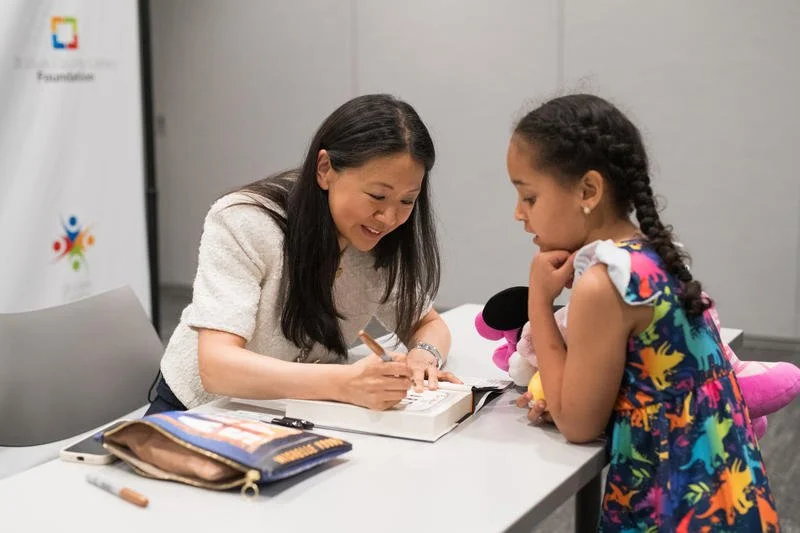
Michelle signing books at St. Louis County Library.
What is the impact you’d like to have on the world now? What is your core mission? And, what does success in that look like to you?
I think my core mission is to tell stories that inspire and stories that matter. I also believe in doing work that furthers our notion of justice, collectively as a society. I don’t see that mission confined to historical subjects necessarily, even though I got started in World War II. My goal has always been to create accessible works and to write in the most engaging way possible to distill complicated history and topics for every kind of reader.
Success to me is having my books have a long tail life—it’s been a year since The Art Spy published and I’m still on a rabid book tour pace, which is truly unusual for the publishing industry these days. The book went into hardcover reprint two months after publication date and will be out in paperback this fall. That being said, it can be easy to focus on whatever metrics your industry says you should focus on, but I think the greatest impact we can have on this world is to spark emotion and conversation from the things we create. That’s the impact I’m looking for, in whatever I do. I’ve been floored by messages from readers about how much they loved the book and the conversations it has inspired. I’ve had readers make me art and send it to me in the mail! Hearing from readers is the most gratifying part of writing a book, in my opinion.
Finally, what advice do you have for those looking to make a change in their career, or to start something new?
Don’t think, just do. Life is too short to simply dream of following your passion. Make time for your interests on the side and see where they go. There obviously must be an alignment between financial considerations and your dreams, but hopefully there is a place in the Venn diagram where they line up. Don’t be afraid to try new things, because all your life experiences will just get folded into you as a person and you’ll gain skills that will be useful in the future.
Finally, I believe in hard, honest work. The world is full of advice on how to make money quickly, how to go viral quickly, how to do less work. But in the long run, I believe it’s more powerful to be the last (wo)man standing, and to build tangible things. You can’t put a value on the trust other people have in you. Your work, and the things you’ve built, will speak for themselves.
This interview has been edited and condensed for clarity.