Large Scale Transformations: Vornado Realty Trust's Nicole Dosso on Reflection, Transition, and Always Learning
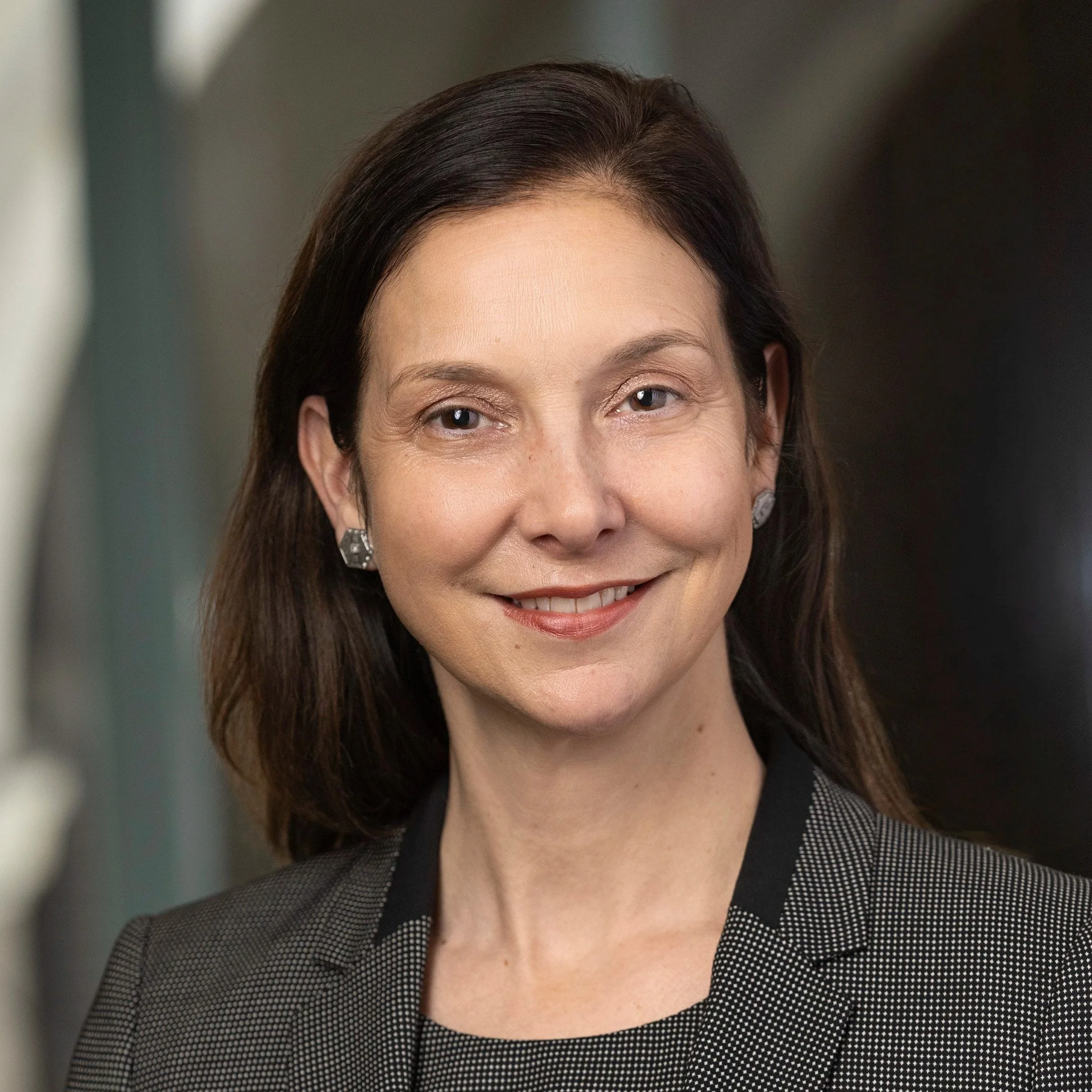
By Julia Gamolina
Nicole Dosso, FAIA has spent her twenty-five-year career working in New York City on complex projects demanding a high level of team coordination and collaboration. Nicole is currently a Vice President of Design and Construction at Vornado Realty Trust (VNO) where she has been involved in several projects in NYC’s Penn Station District, including the adaptive reuse of the civic Farley Post Office into the Moynihan Train Hall, the repositioning of the existing Penn 1 and Penn 2 buildings into a connected campus, and numerous district improvements which include the creation of Plaza 33, a repositioned entrance to Penn Station at 32nd Street and 7th Avenue and Penn District distinctive sidewalks.
Prior to joining VNO, Nicole was a Director at Skidmore, Owings & Merrill LLP (SOM). Nicole was the lead technical designer on SOM’s projects at the World Trade Center site – 7 World Trade Center and One World Trade Center. Her other projects included 35 Hudson Yards, multiple projects comprising Manhattan West, Baccarat Hotel & Residencies and the adaptive reuse of the landmark Waldorf - Astoria building in New York.
JG: When I first interviewed you in 2018, and when we did your subsequent 2019 Days With piece, you were at SOM. My first question for you is really a three-parter: How did you know it was time to move on? What were you looking to do? And, how did you know Vornado was the place to do that?
A lot of it goes back to the beginning of my path at SOM. When I first joined, the firm was structured with a split between design and technical. During my interview, they asked which department I wanted to join, and I chose technical because it was my weakness; I struggled with technical drawing as a student at Syracuse. That decision really defined my career. At twenty-three, I had no idea how much it would shape my trajectory, but it did. I started working in the field at a very young age, and I quickly realized I was interested in architecture at an industry level and not just design. That led me to stay in the technical group, where I could learn about building, tectonics, and construction. At SOM, I also had access to all of the major developers in New York City — Vornado, Durst, Brookfield, Related. I saw projects from multiple perspectives: design, construction, and client. That exposure was incredibly formative.
Around 2017, after finishing One World Trade Center and working on other large projects, I started thinking about my next step. I did an exercise where I wrote down everyone in the industry I admired or aspired to be like. The list was short — about ten people — and none of them were architects. That was surprising, but also clarifying. From there, I made a strategic effort to meet each of them. Some I knew, others I didn’t. I wasn’t even looking for a job necessarily at that point; I was trying to understand their paths and where my career could go. That process took about two years.
During that time, I realized that while I had deep experience, it was concentrated in one firm and one type of work. Some smaller development firms struggled to see how I would fit, especially since I didn’t have a traditional business background. And I also realized that my understanding of what developers do was limited; I only knew it from an architect’s perspective. I actually didn’t pursue Vornado directly because they were my client at the time, and I felt it wouldn’t be appropriate. But they ended up approaching me. By then, I had done so much research and reflection that when the opportunity came, I didn’t hesitate. I knew it was the right move.
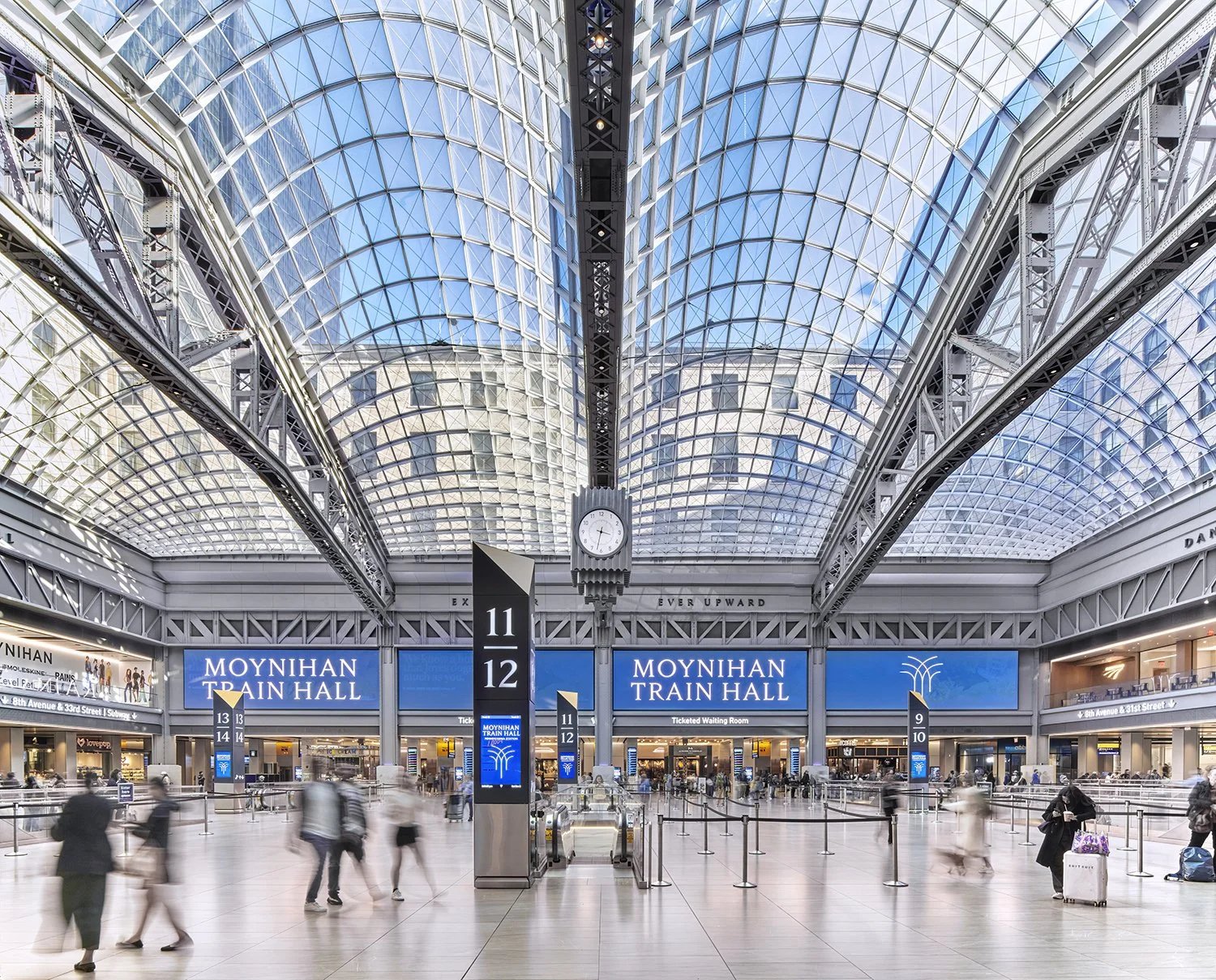
Moynihan Train Hall, courtesy of Vornado Realty Trust.
Why Vornado specifically?
A big part of it was my connection to New York — that has always shaped my career. Early on, after 9/11, I knew I wanted to work on projects like the World Trade Center. As my career progressed, I became more interested in the public realm and how projects shape the experience of the city. After working on skyscrapers, I realized I was most excited about creating public space: plazas, retail, streetscapes — places where people gather.
Vornado’s work in the Penn District really aligned with that. They were making a long-term commitment to improving New York, and that was something I wanted to be part of. Projects like Moynihan Train Hall and Plaza 33 are great examples. Plaza 33, for instance, is a relatively small park, but it’s had a huge impact on the area. That kind of transformation — creating vibrant public space —is what excites me most.
“As a developer, you’re responsible for making sure nothing falls through the cracks. This was all very humbling. I had spent over twenty years as a technical architect and considered myself highly experienced. But when I moved into development, I realized how much I still had to learn, especially around cost, contracts, and execution.”
What is your role at Vornado, and how is it different from what your role was at SOM?
When I first transitioned, I thought it would be an extension of what I had been doing. It wasn’t. The biggest difference is that I don’t have a team reporting directly to me. As a developer, you hire architects and contractors, but they’re not your staff. You have influence, but not direct control.
The stress is also very different. As an architect, you deliver drawings. As a developer, you’re responsible for the entire outcome — schedule, budget, execution — without directly doing the work yourself. You have to lead, coordinate, and motivate others. That became very clear during COVID, when I was working on Moynihan. We were still on site, dealing with outbreaks, delays, and uncertainty — but the project still had to be delivered on time. That level of responsibility was something I couldn’t have fully understood before.
My role now is also more granular. As a developer, you’re involved in everything — budgeting, procurement, trade coordination. You can’t overlook anything. As an architect, you might assume someone else is handling certain details. As a developer, you’re responsible for making sure nothing falls through the cracks. This was all very humbling. I had spent over twenty years as a technical architect and considered myself highly experienced. But when I moved into development, I realized how much I still had to learn, especially around cost, contracts, and execution.
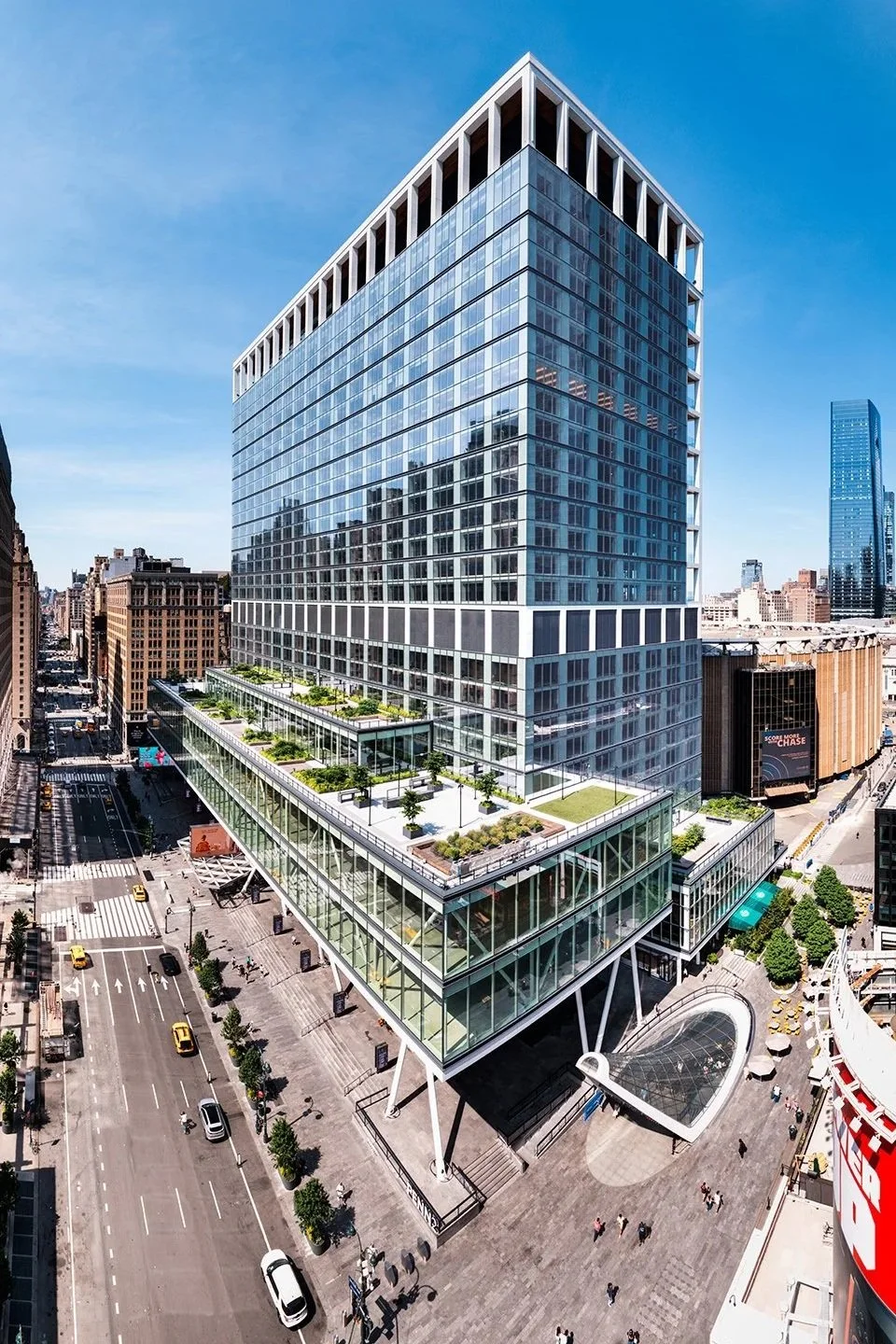
Penn 2, courtesy of Vornado Realty Trust.
What do you wish most architects understood about their clients?
I think architects don’t always understand the implications of missed deadlines. When a developer sets a deadline, it’s often tied to leases, tenants, and financial commitments. If something as simple as an RFI response is delayed, it can have real consequences. I don’t think that’s always communicated clearly, but it’s critical.
Having working on such large-scale complex projects throughout the entirety of your career, I imagine you and your teams have faced real challenges. How do you manage stress?
Managing stress is personal, but at some point, when I was at SOM, I knew that I had to set boundaries. As a young architect, I worked all the time. I remember on my first project, we worked around the clock. There was no air conditioning in the building, and we would sit in the plotter room just to cool down. We worked seven days a week. And I worked like that for much of my career at SOM. Around 2010, I started to take a step back and reclaim time for myself. That’s when I got into running and photography. Those became really important to me, and they still are.
One positive difference in development is that there is more respect for weekends. When I first arrived, I was working weekends and sending emails, and people would say that wasn’t really the culture. So I adjusted. Now I work very intensely during the week, but I keep my weekends to myself. I even keep two phones so I can create a clear boundary between work and personal life. That separation helps me manage stress.
“...give yourself time. It took me over twenty years to become the architect I wanted to be before pivoting. That depth of experience matters.”
Something that has always amazed me about you, in addition to the scope of your work, is that you’ve run many marathons by this point! What has running taught you that you bring into your work?
Running has given me a sense of community and perspective. It’s also deeply connected to how I experience New York. When I started running, I began seeing the city differently — its streets, neighborhoods, and public spaces. That reinforced my interest in the urban realm and designing for people.
Running is also about endurance. Both running and large-scale projects require long-term commitment and resilience. I remember one of my early races, someone tapped me on the back and encouraged me to keep going. That stuck with me. More recently, I was at an event honoring a friend who completed her 82nd marathon. Someone asked her when she would stop running, and she said, “When I can’t brush my teeth anymore.” That really resonated with me.
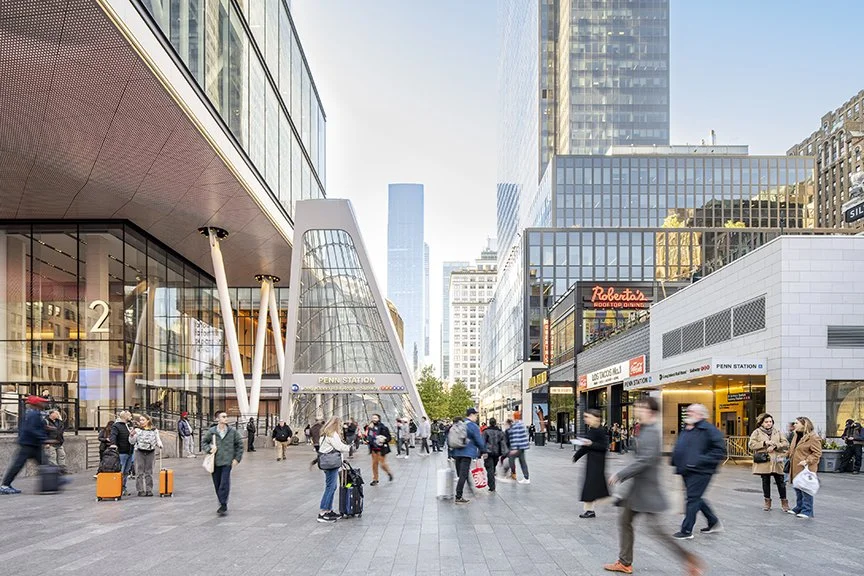
Plaza 33, courtesy of Vornado Realty Trust.
Finally, what advice would you give to someone looking to pivot in their career?
First, reflect on who inspires you and write it all down. That exercise was incredibly valuable for me.
Second, build your network. Reach out to people, even those you don’t know. You’d be surprised how many are willing to talk.
Third, give yourself time. It took me over twenty years to become the architect I wanted to be before pivoting. That depth of experience matters. I’d say six to eight years at one company is a good foundation before making a move, but it depends on the individual. And you should always be open to opportunities. Even if you’re not looking to leave, have conversations and stay aware of what’s out there.
Finally, mentorship is critical at every stage. It’s never too late to find mentors, and the right environment can make all the difference.
This interview has been edited and condensed for clarity.