Impacts at Scale: Industry Leader Kimberly Dowdell on Defining Values, Building Bridges, and Continuing to Show Up
By Julia Gamolina
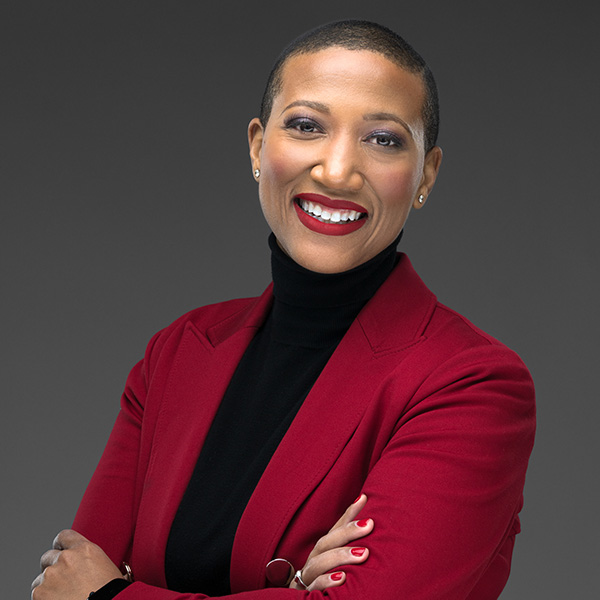
Kimberly Dowdell is a licensed architect and AEC industry leader. In 2024, she served as the 100th President of the American Institute of Architects (AIA). In 2019 and 2020, Dowdell served as the 33rd President of the National Organization of Minority Architects (NOMA). She is also a Cornell University Trustee and a civic leader. Dowdell currently serves as Vice President of Strategic Partnerships at Amrize. Her overarching mission is to improve the quality of people’s lives, by design.
JG: When I first interviewed you, you were serving as NOMA President. Since then, you’ve been AIA President, you are now working in the manufacturing sector—not to mention that we’ve all also gone through a global pandemic. I feel like you’ve truly done and seen it all in AEC, from architecture to development, to business development, to manufacturing. So where do you feel like you are today, in your career?
KD: I still feel very much like I'm on a journey of discovery. I haven't quite figured everything out yet. What I’m doing today won’t necessarily be what I do next year or five years from now. I encourage students, young professionals — and really all kinds of professionals — to be curious. I’ve embraced curiosity through all of the different iterations of my career.
I often give advice about the four C’s – how to “foresee the future,” a play on words. To be curious is number one. Being creative is number two. Being courageous is third, which I talked about during my main stage speech as AIA President, with a call to action for the profession. And finally, being consistent — just keep showing up every single day to push your mission forward. That’s how I’ve approached my career, and I’m going to continue to be curious and see how I can make a difference in ways that are most valuable and impactful.
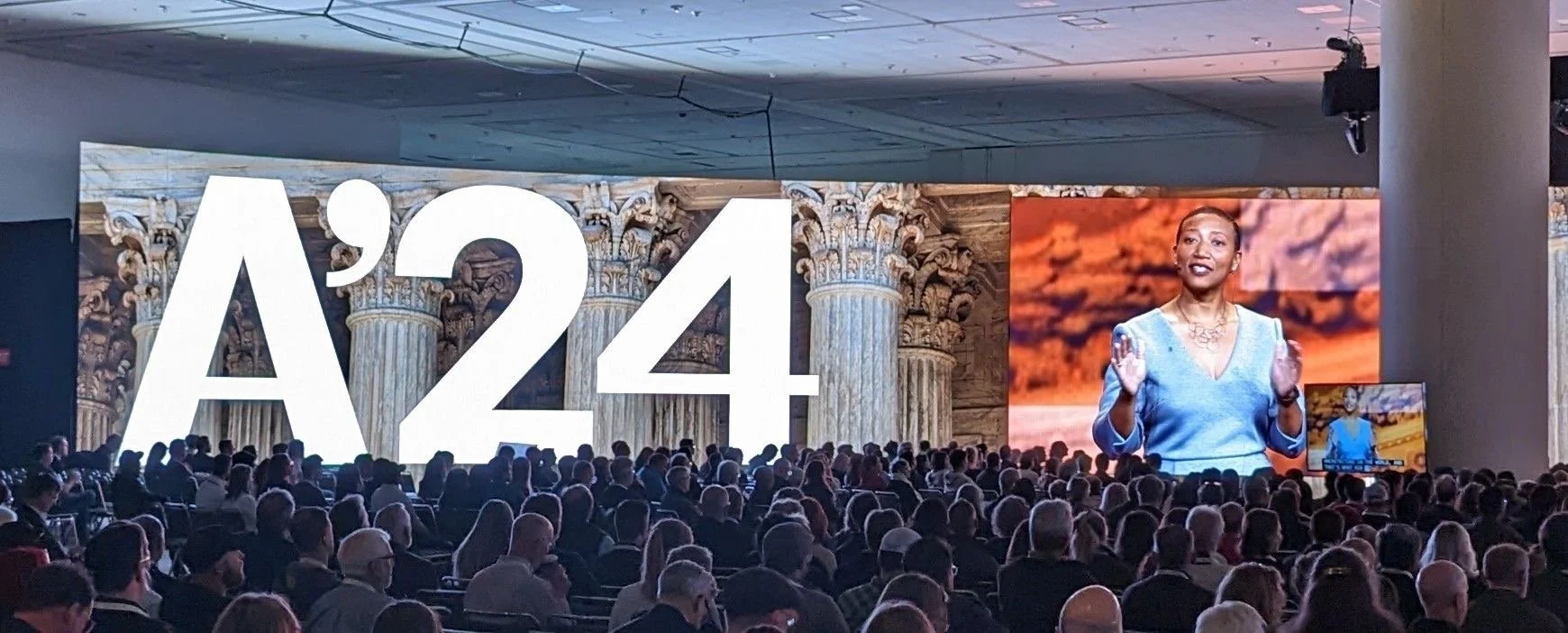
Let’s talk about your AIA presidency, now that you have some distance from it. I imagine the AIA presidency is an incredible opportunity and learning experience, but a huge responsibility and probably very challenging in some ways. With where you are today, what do you feel like you’ve learned through your tenure? What do you feel like you’ve accomplished? And, what do you take away?
I’ve had about a year and a half to process what 2024 was. I still wear a bracelet that says “More in ’24.” The president before me, Emily Grandstaff-Rice, gave it to me as a reminder of that experience. She said the AIA presidency comes with high highs and low lows, and I think of it as the best of times but also the worst of times for various reasons. I try to focus on what was positive, including getting to speak on behalf of the architecture profession for 366 days—it was a leap year.
I set a goal to surpass 100,000 members for the first time in the organization’s history. And we did! We reached about 100,700 members. When I started, we had 98,000, so it was meaningful growth, especially when many membership organizations are losing members. I also got to travel the world and am proud of expanding globally, bringing the certificate to the Sub-Saharan Africa section. I went to Nigeria and Kenya, as well as Singapore, Malaysia, Paris, London, and throughout the United States. One of my most memorable trips was visiting Hawaii. I recognized the sensitivity around the visit because some may see it as extravagant, but I'm still so glad that we went to support AIA Hawaii. There had not been many visits from AIA over the years due to the distance. I was also invited to Alaska, but could not attend due to a scheduling conflict. I would have loved to visit Alaska and so many other places that had not seen an AIA President in a while. One such visit was to Grand Rapids, Michigan. No one in there chapter could recount a presidential visit, ever. I was delighted to spend time with our members there. Overall, we covered as much ground as we could. Each visit was meaningful.
Finally, going back to my hometown of Detroit for Architecture Week was especially meaningful. I spoke to third graders at the school I attended. There was actually a mix-up and I was sent to a different school — Bird Elementary instead of Burns Elementary — but I ultimately visited both. It showed the difference in resources between suburban schools and Detroit Public Schools. Both visits were great experiences, but it highlighted disparities in exposure and opportunity. It reinforced how important it is for young people to see what architecture is, and to see people who look like them — and people who don’t — represented in the field.
“People assume all architects care about the same things. There are shared values, but there’s huge variety within the profession...It’s also important to include those who aren’t licensed or don’t intend to be. There’s a large group of people trained in architecture who contribute meaningfully without licensure.”
What did you learn about architects and architecture that surprised you?
People assume all architects care about the same things. There are shared values, but there’s huge variety within the profession. I knew that conceptually, but I really understood it deeply as AIA President. It’s also important to include those who aren’t licensed or don’t intend to be. There’s a large group of people trained in architecture who contribute meaningfully without licensure.
The AIA must prioritize licensed architects, but as a broader professional community, we need to ensure people feel a sense of belonging regardless of their path. Even licensed architects have different paths — design, technical, advocacy, technology, management. We need to value each pathway. That doesn’t mean compromising public safety or licensure standards, but it does mean not losing people who trained in architecture and contribute in different ways. That was something that really resonated during my time as president — how to be inclusive while maintaining the integrity of the profession.
What are your thoughts on the unionization conversations happening in the profession?
My preference would be that the profession takes care of people well enough that unionization doesn’t need to come up. If basic needs are met, that conversation shouldn’t be necessary.
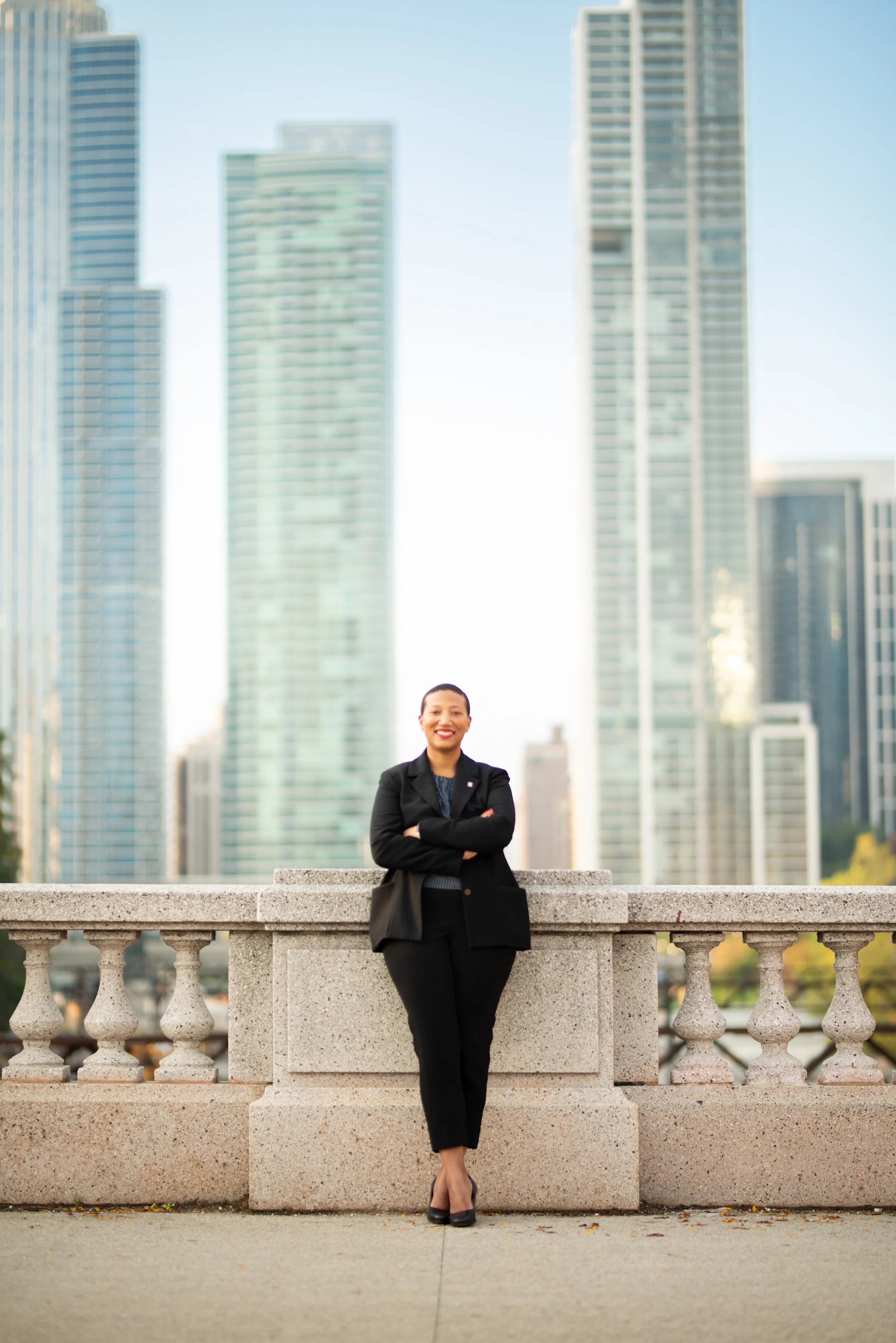
Kimberly Dowdell with the Chicago skyline, 2019. Photography by Mike Jue.
You’ve worked as an architect, developer, public servant, and now in manufacturing. Tell me about this.
Amrize is a company that offers advanced building solutions. It spun off from a global company, Holcim, about a year ago, so it’s a legacy business with a new structure. There were four main reasons I joined — prioritizing material innovation, offering solutions from foundation to rooftop, providing locally sourced materials across North America, and focusing on impact-driven community engagement. The company also invests heavily in R&D to accelerate decarbonization, particularly lower-carbon concrete.
More broadly, I see my role as building a bridge between manufacturing and design. Architects can gain a better understanding of materials, and manufactures can provide better options when they are informed about the most pressing issues facing architects. For me, the move to Amrize is about being curious and understanding what happens on the manufacturing side, bridging two very siloed communities.
Why was this the exciting next step for you instead of another architecture firm?
I wanted to try something different and leverage resources to empower architects while accelerating decarbonization. Buildings contribute about 40% of carbon emissions, and concrete alone is a significant portion of that. Developing lower-carbon concrete can meaningfully move the needle. A recruiter initially reached out, and over time I realized I could use my network to drive impact at scale. That’s harder to do within a traditional firm. I see my time with Amrize as an exploration of my curiosity.
“...when we went through the pandemic, it really underscored how connected we all are — not just people in cities, but people in suburbia, in rural areas. My mission now is to improve the quality of people’s lives, period, by design.”
What have been some of the biggest challenges for you in the seven years since our first interview?
The biggest challenges were included navigating a divorce and the passing of my parents, my father in 2020 and my mother in 2024. Those were major life challenges. Professionally, I moved from Detroit to Chicago, took on leadership roles, served as NOMA President during the pandemic, and navigated the racial awakening of 2020. Managing all of that alongside those personal challenges was difficult.
I’m proud of being resilient and continuing to show up. I was intentional about being communicative during both the NOMA and AIA presidencies, especially through social media. At NOMA, we nearly tripled membership — we went from 902 to 2,464 members. We also went from zero staff to three full-time staff and grew our financial resources significantly. At AIA, we surpassed 100,000 members. There were also political challenges, including leadership transitions, but I stayed involved to help lead the CEO search process successfully and am really glad to see Carole Wedge take the helm at AIA in 2025.
Who are you admiring right now?
Sheila Johnson. She’s widely recognized as the first Black female billionaire in the U.S., owns multiple professional sports teams, she also owns the Salamander Resort & Spa. She founded the leadership fellowship I was part of at Harvard. Ms. Johnson, affectionately called “Mama J” is also the author of the book, Walk Through Fire. She’s been a mentor to me for over a decade and has been a huge inspiration in terms of impact and leadership.
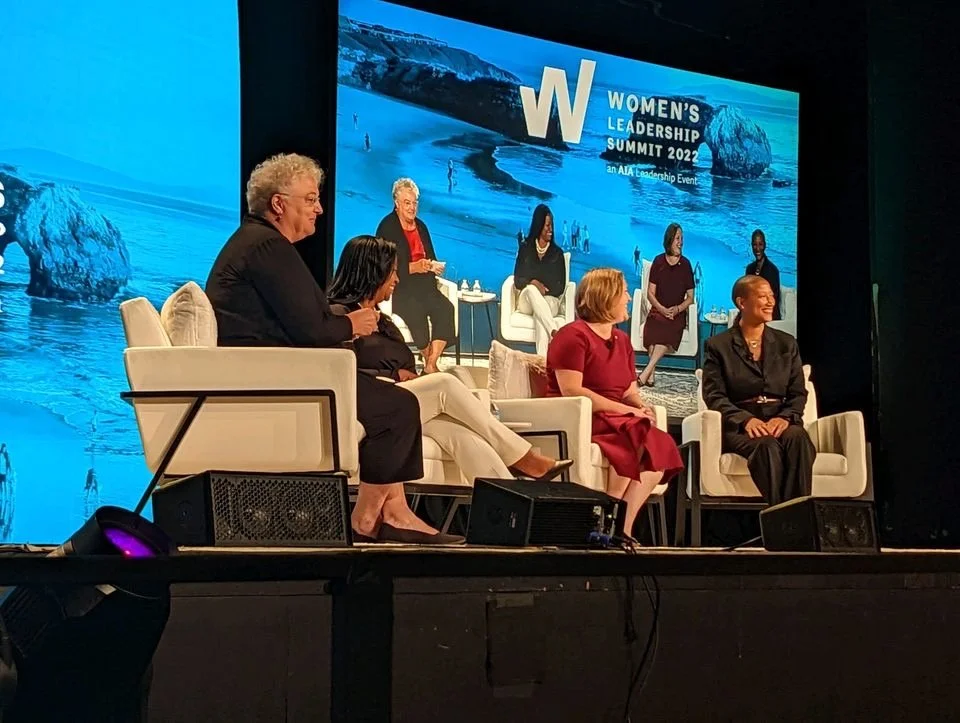
Carol Wedge, Lakisha Woods, Emily Grandstaff-Rice and Kimberly Dowdell at the 2022 Women’s Leadership Summit. Photo courtesy of AIA National.
What is your mission now?
I tweaked my mission ever so slightly during the pandemic. Originally, my mission was to improve the quality of life for people living in cities. But when we went through the pandemic, it really underscored how connected we all are — not just people in cities, but people in suburbia, in rural areas. My mission now is to improve the quality of people’s lives, period, by design.
What advice would you give to people looking to pivot or level up in their careers?
Define your values. I highly recommend creating a mission statement — it’s been a guiding light for me.
And then, think about what’s important to you and pursue it relentlessly. Don’t be afraid to make a change. Listen to your inner voice, and when you decide to make a move, commit to it fully.
This interview has been edited and condensed for clarity.