Creative Process: Machado Silvetti's Stephanie Randazzo Dwyer on Leadership, Reuse, and Designing for Moments of Joy
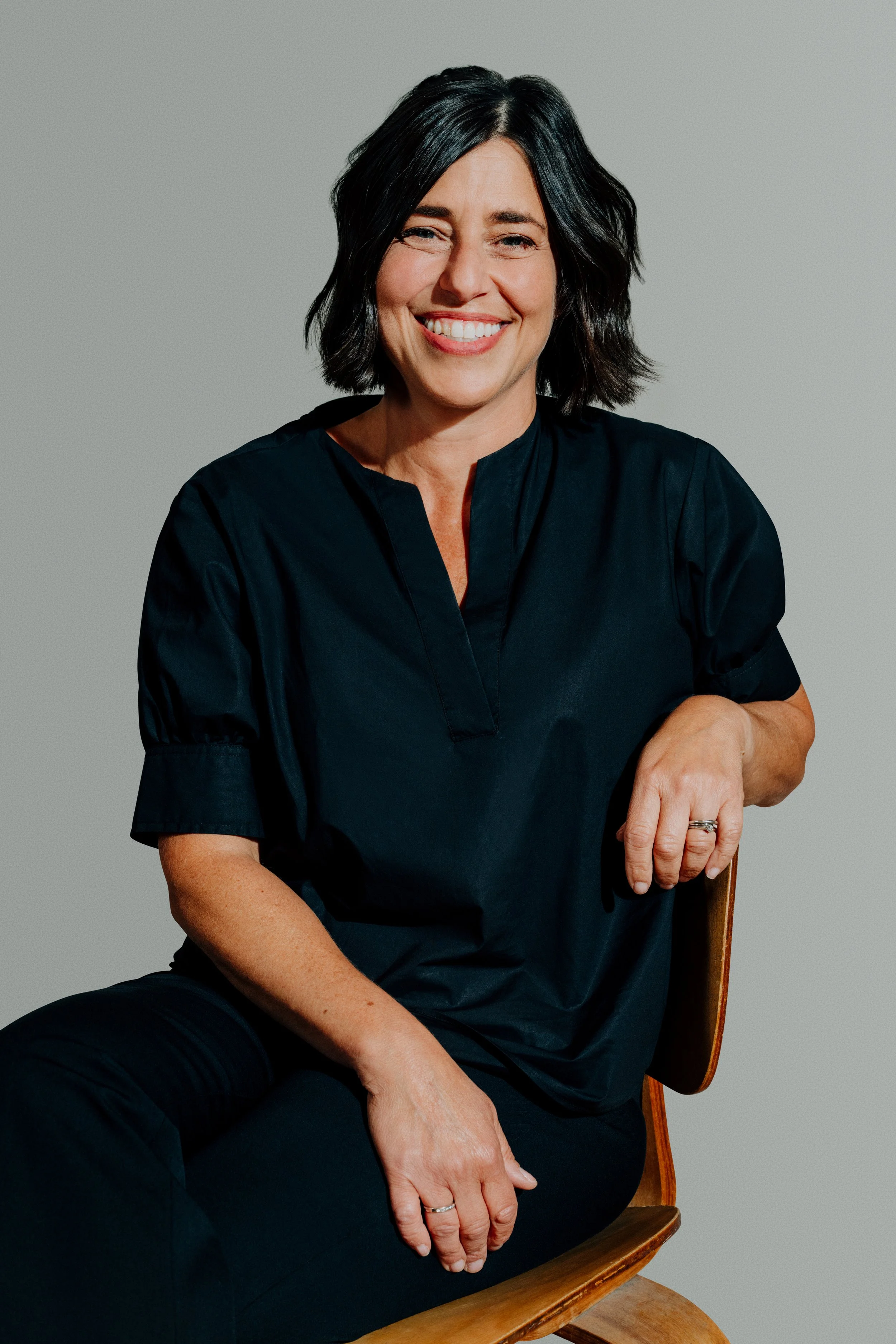
Stephanie Randazzo Dwyer by Cole Wilson.
By Julia Gamolina
Stephanie Randazzo Dwyer is an architect and Principal at Machado Silvetti. Building on thirty years of experience in the field, Stephanie is embedded in the day-to-day management and vision of the company while overseeing many of the firm’s cultural and educational projects. In addition to her work creating new cultural, institutional, commercial and public projects, Stephanie has special expertise and interest in the re-use of existing buildings and working within historic contexts.
Stephanie’s curiosity and interest in the dynamic relationship between contemporary work within existing structures began at an early age in Buffalo, New York, surrounded by some of the most impressive industrial and Art Deco buildings — and one of the largest modern art museum collections — in the country.
JG: Alongside Jeffry Burchard, you are leading Machado Silvetti into its next phase. I imagine that being one of the two firm leaders is very different from being a project leader. What's top of mind for you most these days, and how do you feel yourself and your role changing?
SRD: In some ways this role feels brand new, and in other ways, Jeffry and I have been in a leadership role for the past ten years, and this feels like a natural extension of that. We’ve been gearing up for this transition for a long long time — both officially and unofficially — and so we’ve been thinking about the future of the office, the health of the staff, and the overall shape and arc of the projects and what they represent for years. That said, it’s definitely been a transition! We’ve been able to have our colleagues take on more of the project leadership roles, which let Jeffrey and me keep our eyes on the big picture.
Top of mind is keeping the incredible legacy that Jorge and Rodolfo started alive and keeping the quality of the work incredibly high. Jeffry and I have our hands in every project, but maybe we’re doing a little less geeking out on masonry details and a little more focusing on the future of the office, making sure our new project leaders are supported in all the day-to-day decisions they have to make. A good example is our New Bedford project, which is being managed by this really smart great young architect, Austin Ward. I might get called in to do a mock-up review or chime in on a particularly challenging condition, but my role now is really design oversight and to make sure Austin is able to do his best work.
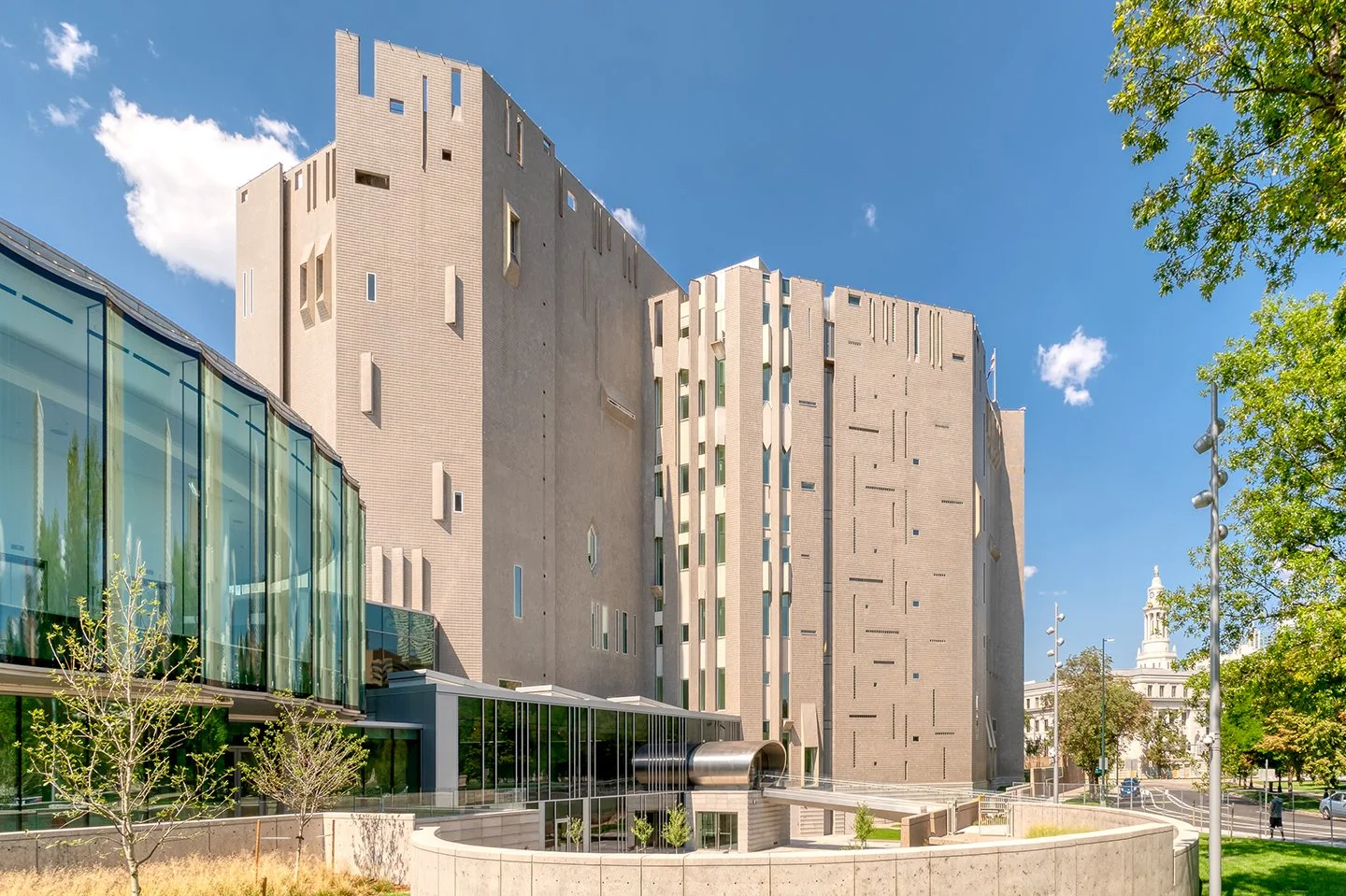
Denver Art Museum. Photography by Atom Stevens.
You studied architecture in Buffalo, a city that has such a rich architectural history from Louis Sullivan, to Frank Lloyd Wright, to Louise Blanchard Bethune. What were you hoping to do in the world, and what were your biggest takeaways from this time?
I just wanted to graduate and practice architecture; I had a single-minded focus on just getting out there and into an office and drawing and creating. You’re right about the rich history; my most memorable class was as a first year undergrad, a drawing class in Bethune Hall. The building is a 1915 industrial daylight factory building with light-filled large open bays. Later on when I went to grad school, I did my thesis on the reuse of industrial buildings, which is when I found out who Louise Blanchard was. Came to find out that building I’d loved had actually inspired Reyner Banham, who was of course enormously influential to me and so many others. Studying in this enormously rich architectural field was incredible. I think it affected how I view the built environment, and my passion for reusing existing buildings. You can see the origins of my approach to projects like the Menokin, for instance, where we’re really working with old and new, in my studies at Buffalo.
“So much of our work is about figuring out exactly what our clients want. Our role is to transform a tremendous amount of often conflicting information into a creative process, which then leads to a successful building.”
What was some of the best advice you got early on that has informed your approach to your work and career?
This might sound a little hackneyed, but the best advice I ever got was from my mom. She always said, “Just do what you love,” and I believed her, because when I was growing up she went back to school and did what she loved. I remember being a teenager and watching her study on a Sunday with a ton of text books out on the dining room table…I got to see her get her degree. When she said that piece of advice, it had real weight behind it.
The other great piece of advice I got was from my mentor who brought me to Machado Silvetti twenty-six years ago. On my second day, he asked me “Are you a one-hour, a one-day, or a one-week type of person?” I had no idea what he was asking me. He then explained that there are people who need an hourly check-in, a daily check-in, or a weekly check-in. The question forced me to think really carefully about the level of support and interaction I needed in the moment and has helped me now to assess all of our colleagues in the studio in terms of support, which I think can be so often overlooked during the day-to-day grind and rush of getting buildings designed.
You have been at Machado Silvetti now for over two decades. What have been the biggest lessons and takeaways for you? How have you grown in this time?
The biggest lesson is how important it is to listen. So much of our work is about figuring out exactly what our clients want. Our role is to transform a tremendous amount of often conflicting information into a creative process, which then leads to a successful building. The lesson has been in wholeheartedly embracing the process, seeing that our intense attention to preparatory work and interviews and research is actually part of how we design.
Looking back at it all, what have been the biggest challenges? How did you both manage through perceived disappointments or setbacks?
One of our biggest challenges has always been in accurately communicating what we do, and why it’s so essential to us to stick to how we do it. Our architecture is always rigorously grounded in the specific context and history of a particular place. Because of this, no two of our projects look alike, and one of the biggest things we struggle with his how to convey to potential clients in the interview stage that it’s okay that we don’t yet know how the building is going to look. Sometimes they’ll have seen one of our projects and be resistant to maybe the color or the form, and we try really hard to reassure them that the color we chose for that project was just for that project.
We’ve gotten better at this over the years as we’ve been able to formalize and articulate this as an approach, always highlighting the process that has led us to the form. But it’s been disappointing when we know we could do an amazing job for a client, but they’ve seen a glass building and think all our work is going to be “too glassy.” We get through it by remembering that finding good clients is like dating; sometimes you find someone and it feels like a magical perfect match, and sometimes you’re both incredibly wonderful people but you just don’t click. Learning to accept that and move on has been essential.
“Simply put, good design makes people happy...I’m often reminded of how important moments of awe, or joy, or surprise can be and how it’s up to architects to create those. ”
Who were your mentors through it all?
Of course Rodolfo and Jorge have been mentors this whole time. And then I really rely on my Women’s Principals Group, a small collective of women architects working as principals in architectural firms throughout Boston. Caroline Fitzgerald has been an extraordinary role model.
Who are you admiring now and why?
There’s this small woman-owned firm called River Architects, based in the Hudson Valley. It’s run by James Hartford and Juhee Lee-Hartford, and they do incredible work, including passive house. I love how I can see both James and Juhee’s influences play out in their work, James in his love for the environment and Juhee with her strong Korean heritage. I also love what Co Adaptive in Brooklyn are doing — they have carpenters on staff, which shows such a commitment to craft. And they do some of the nicest adaptive reuse projects around.
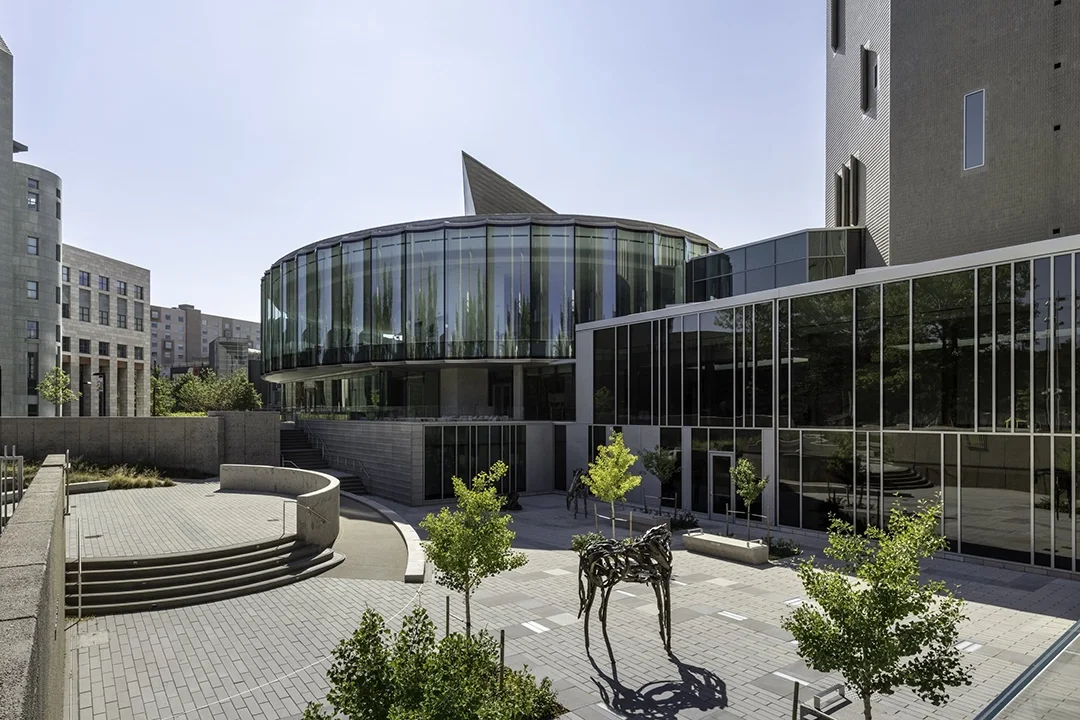
Denver Art Museum. Photography by Atom Stevens.
What is the impact you’d like to have on the world? What is your core mission? And, what does success in that look like to you?
Simply put, good design makes people happy! When I look at how much people love Downtown Cary Park in North Carolina, where we did a series of pavilions, I’m reminded of how important moments of awe, or joy, or surprise can be and how it’s up to architects to create those. I love thinking about some of our work as timeless, seeing how places are able to endure, thrive, and adapt over time. Success for me looks like doing a few of those places over my lifetime — hopefully more than a few!
Finally, what advice do you have for those starting their career?
Have fun, keep pushing the envelope of what is possible in architecture, and remember that we have a real duty as the makers of physical form to think about how our work is affecting the planet.
This interview has been edited and condensed for clarity.