Superpowers: Illya Azaroff on Leadership Roles, Moments of Transformation, and Keeping Hope Alive
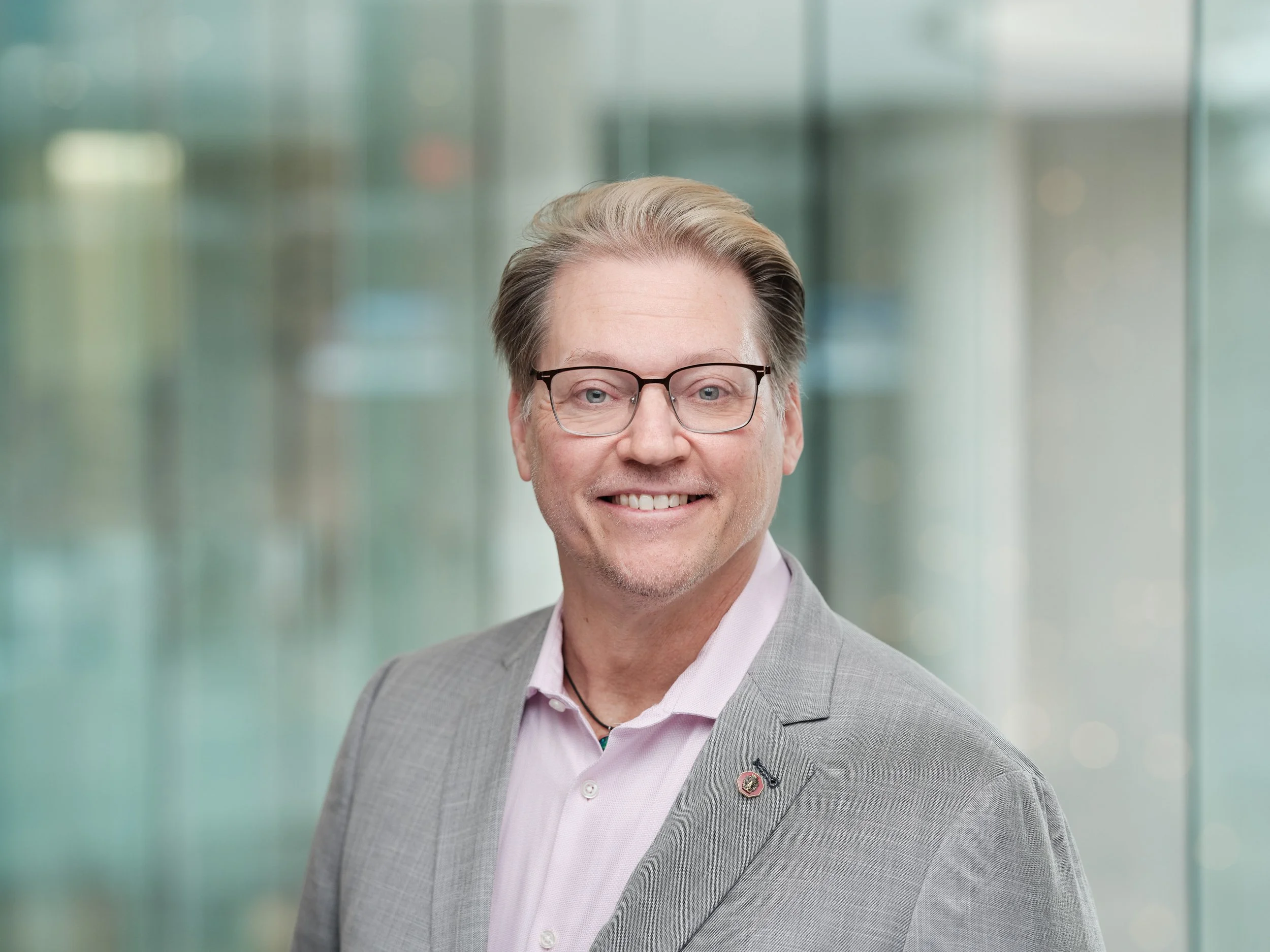
Illya Azaroff, courtesy of AIA National.
By Julia Gamolina
Illya Azaroff, FAIA, is founding principal of +lab Architect based in New York City and Los Angeles, and a professor at New York City College of Technology (CUNY). An architect and geographer, he advances resilient and regenerative design for underserved communities. He co-founded the Kalinago Institute in Dominica and was named a 2023 Star of Oceana. With over thirty years of global practice, including in Moldova and Türkiye, he leads in climate strategy, disaster mitigation, and hazard planning, serving as the 2026 AIA National President and as a member of the AIA National Board of Directors.
JG: You’ve had a very dedicated focus in professional practice on climate, sustainability and disaster relief. Now that you’re AIA President, how are those two focuses converging?
IA: I appreciate the question because I think the convergence is why I was elected. Resilience and sustainability seem to resonate with a lot of professionals, especially young professionals. I do do a lot of work in disaster response and I’ve really seen the need for an uptake in climate action, particularly in disaster risk reduction, or DRR, along with regenerative design.
In my role as AIA President, I’m really dedicated to driving the profession to greater action on those elements. I both appreciate the opportunity and believe that we have to transform practice toward the ideas in regenerative design, ideas of healing versus curing.
What are your goals for your presidency term, and how are you getting there?
I have one simple goal: I want to change the world, and I need our 110,000 members to help me do that. Activating all of those folks – really all of them – in order to secure the future and a deeper climate action commitment, is the main goal. I’m asking how are we not only talking about these things as a profession, but how are we reflecting this in the marketplace, as well as letting the general public and governing bodies understand the role of architects in a much greater way.
We’re living through an incredibly disruptive time, all around the world and all at once. For us as architects and as systems thinkers dedicated to health, safety, and welfare of the public, we’re needed now more than ever. Our ability to understand that, that the greater good of society relies on us to tackle complex problems, is one of our superpowers.
Tactically, we’re looking at our new strategic plan, and how we incorporate regenerative design and disaster risk reduction into practice. We also need to deepen our commitments through the United Nations and the Sendai Framework for Disaster Risk Reduction and the things that are already out there. The AIA has already started to take up those pieces during my Vice Presidency last year, and so with that good foundation, we’re proliferating that across all of our ethos. As a follow up, we’re finding all the extraordinary people already doing this work to lead others down pathways to be successful in this work.
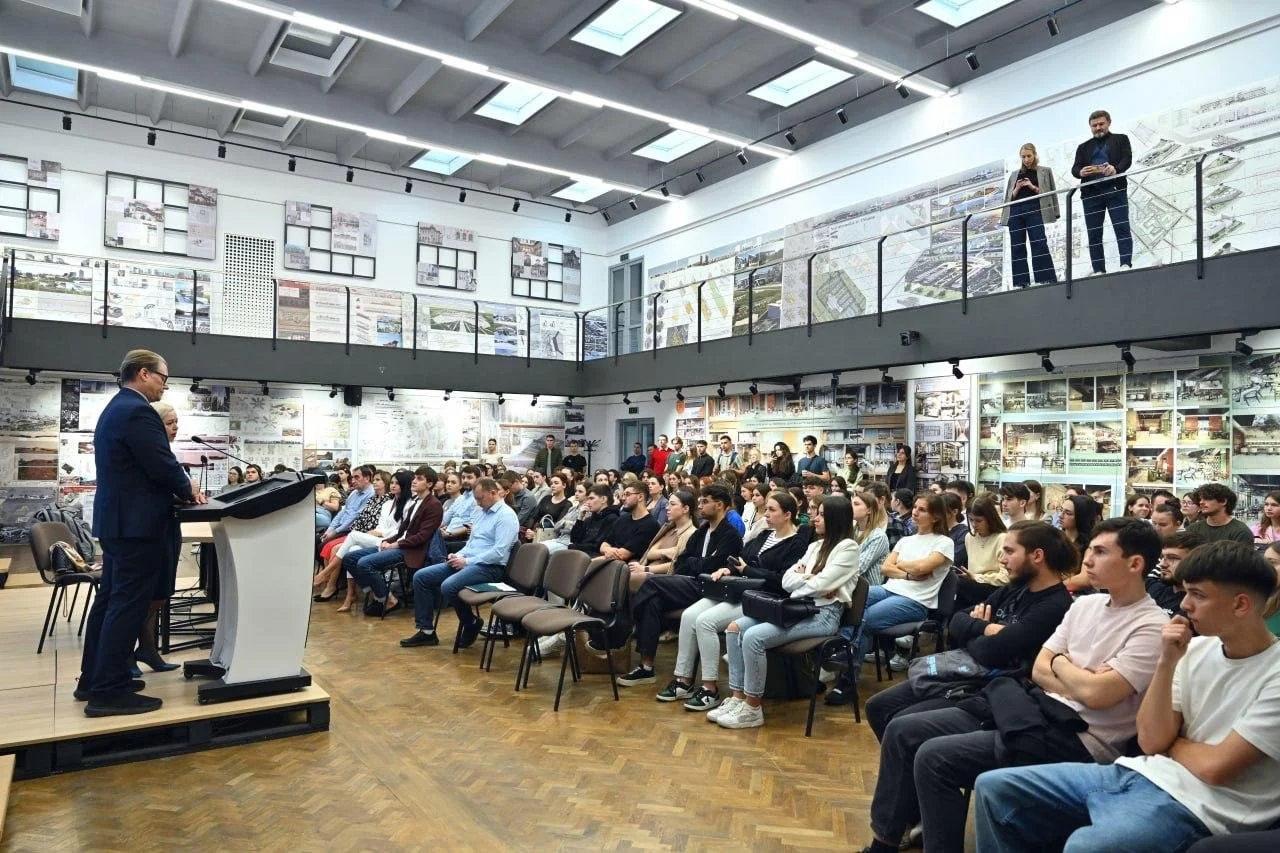
Moldova Technical University Keynote. Courtesy Illya Azaroff.
Do you remember the moment when it really clicked for you that architecture was for you?
I grew up practicing every type of art on the planet – the performing arts, the fine arts. And then there was a moment where someone mentioned that architecture is the greatest of all the seven arts, because it combines everything. And I remember this person saying to me, “You know, human history and culture is demonstrated through architecture. Architecture is the record of us.” I remember that sticking with me, and although my first degree was in geography and environmental studies, I kept coming back to that statement.
What about with resiliency and disaster relief, when did that click as a path for you?
My father is a war refugee. He was displaced during World War II and grew up in very harmful situations in forced labor camps. We grew up hearing about that at the kitchen table. Understanding that the plight of people is as close to you as the person across from you at the table gave me a perspective of always leaning towards helping neighbors in times of disaster. That just became part of what I had always done in my life.
Bringing that to practice was a very natural step. I didn’t see that at first – I worked overseas, and on international airports and all sorts of things, and that I started to understand that the purpose and passion that I had was for helping places that are at risk. But ultimately, my focus stems from family.
“In these times, things seem so insurmountable that people almost give up. The challenge is to continuously keep your energy up and your hope alive, not just for the communities that you work with, but for the existential elements that we’re working on.”
What was some of the best advice you received early on in your career?
Advice I received early on is that culture and the uniqueness of place are the greatest design determinants you could ever have, and I think that’s what drove me first to geography. I also got the advice early that we’re always in a constant state of becoming. What that means is that you’re always receiving inputs that are changing you, and hopefully turning you into a better person and someone who is always getting better at engaging the world in multi-faceted ways.
One thing that really strikes me today is something that is very important to how to approach life – and it delves into the ideas from the five wisdoms, which come out of the Pacific Ocean. My current mentor, Dr. Tusi Avegalio, told me that if you engage with humanity, embrace with respect, sustain with aloha – which means sustain with love – heal with forgiveness, and serve with integrity, that becomes how you should live your life in all aspects. That is really quite beautiful and important.
Tell me about the career steps that have been really significant for you, especially in steering you towards what you do today.
The thing about disasters that you learn is that in times of disruption, the rules no longer apply. I feel like my journey to practice is part of that ethos. When I graduated, there was no work in the US. Instead of giving up, I sought work overseas and was very fortunate to work in Germany for several years. That was a transformative moment because it opened the world to me in a different way. Letting my degree be my passport to travel was pretty huge – I eventually ended up working in Italy and Holland and a few other places before coming to New York.
When Superstorm Sandy hit New York City, that changed the trajectory of my career enormously because it took me back to my passion. The economic disruption and the climactic disturbance of that moment really shaped me.
In terms of getting to do what I do today with the AIA, I wouldn’t be here without Margaret Helfand, who is no longer with us. She tapped me on the shoulder and said, “You have a lot of opinions – why don’t you come join us at the AIA? We’d love to hear from you.” I credit her all the time for the doors that it opened.
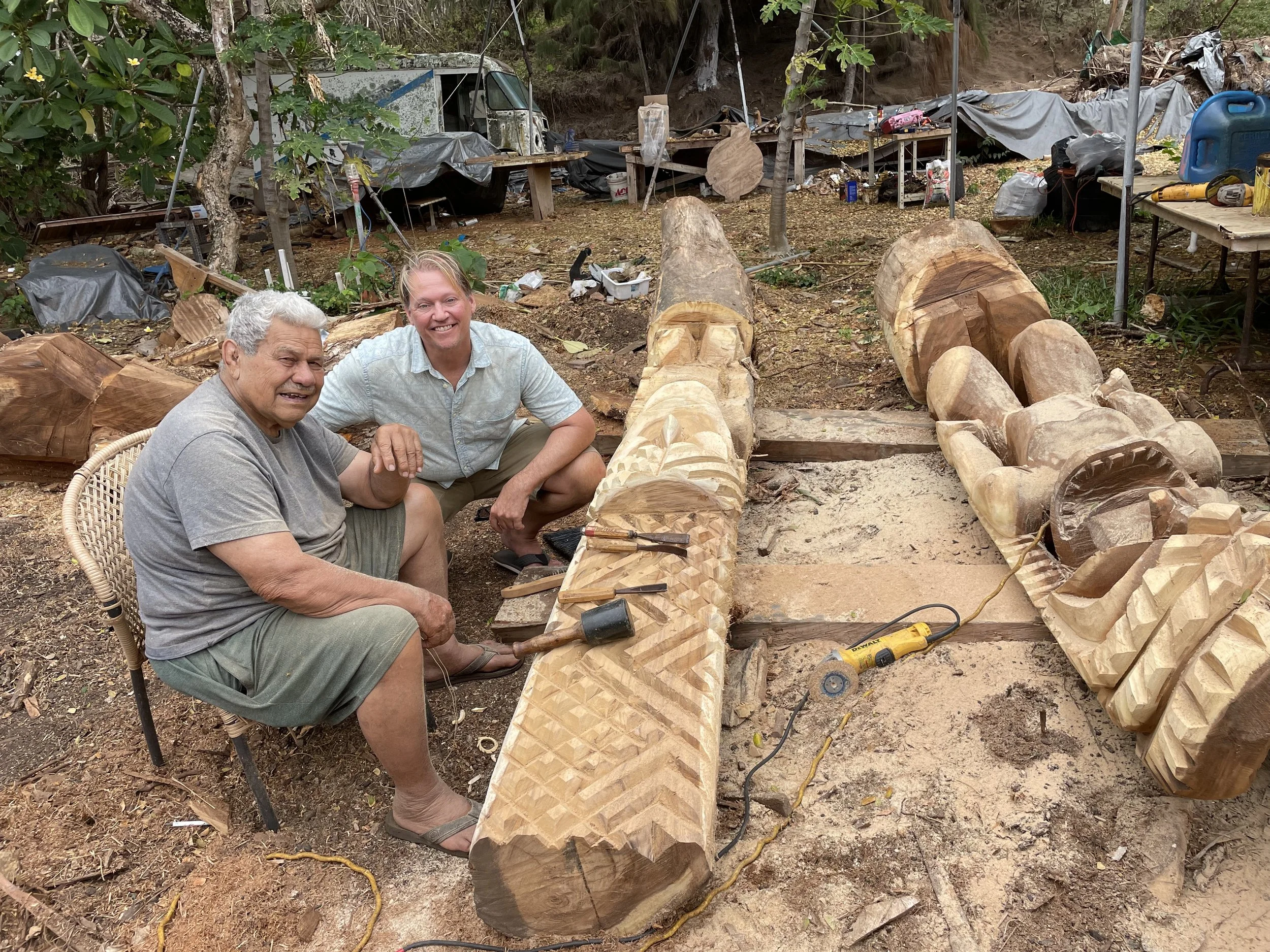
Illya with a Tuioni Master Carver who is part of +lab’s design team in the Pacific. Courtesy Illya Azaroff.
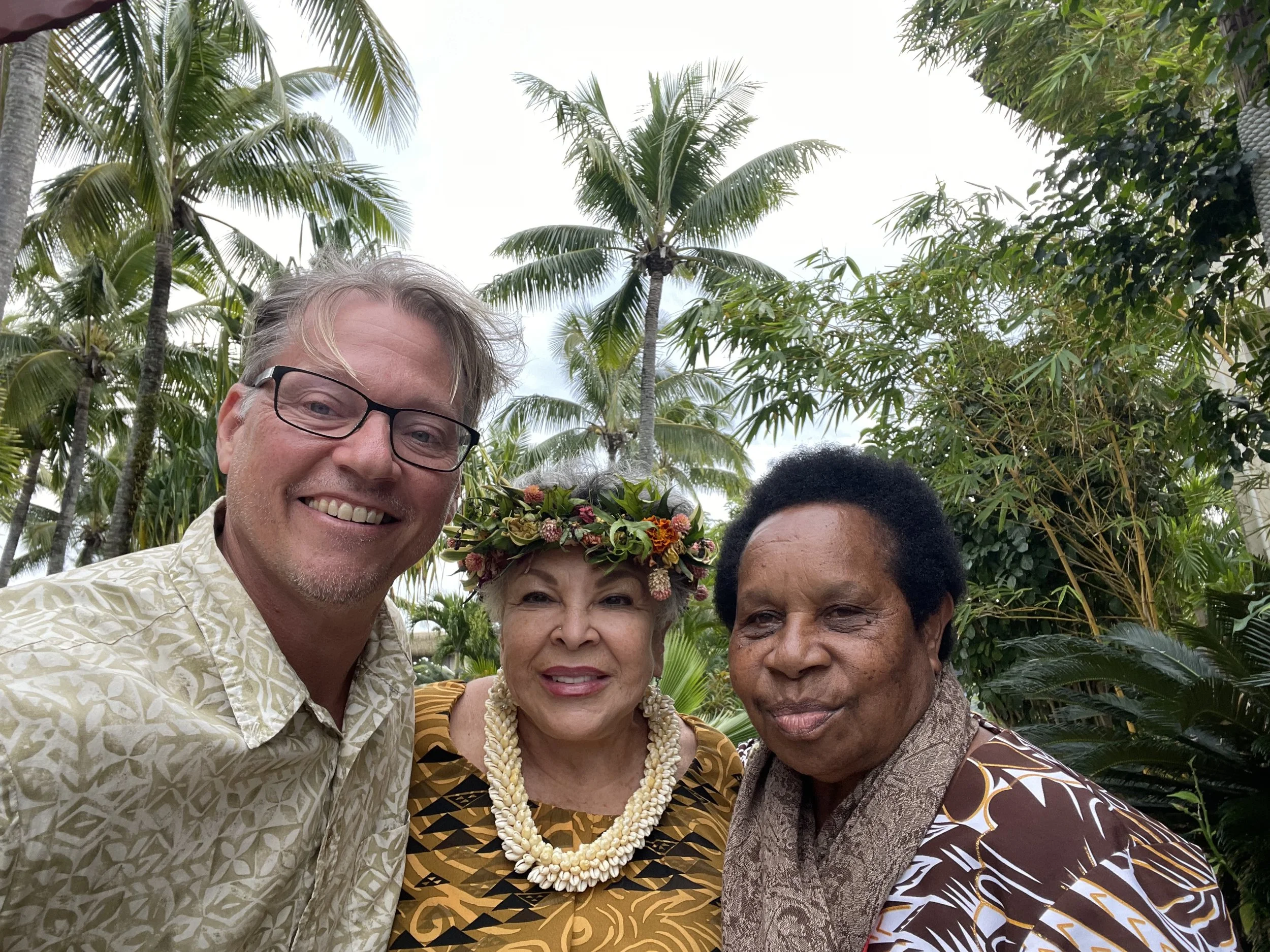
Illya with Tadia Rice and Mama Maria Limbini during his time working in the pacific. Courtesy Illya Azaroff.
Who are you admiring right now?
Sheela Patel for sure, who started two foundations – one is called Roof Over Our Heads where she works with the most marginalized informal settlements all around the world. Ken Yeang as well, out of Malaysia. Ken has really dedicated his life to regenerative design and continuously publishes and teaches. He’s not slowing down! Finally, Dune Lankard who works with indigenous communities in Alaska, and not just to bring food security, but new economies, new ways of being, and regenerative practices for his people. He just won the 2025 James Beard award for his impact on food systems.
What have been some of the biggest challenges in your career.
They have come in two categories: fighting dragons and standing in the fire. Taking on contemporary problems is always challenging, but the convincing of others that we as architects have agency in those fights, and that we're more powerful than we recognize, that is a serious challenge. In these times, things seem so insurmountable that people almost give up. The challenge is to continuously keep your energy up and your hope alive, not just for the communities that you work with, but for the existential elements that we’re working on. We want to make sure that the next seven generations are secure.
By standing in the fire, I mean standing and defending truth when you know you’re in the minority opinion. Or that others are assaulting you out of fear. Seeing the faces of people in places plagued by disaster can break you, and it's important to stand on their behalf and get the right things done. You have to take on that leadership role and stand in that fire.
“If you see something that is in need of transformation, and you have the ability to do it, don’t wait. Get in there and find your allies and achieve those goals. Leadership can’t wait.”
How do you take care of yourself mentally?
That is the best question you’ve got Julia [laughs]. I’ve been very near to a breaking point on a couple of occasions. The 2023 earthquakes in Turkey and seeing the devastation and working with families there gets me emotionally every time I think about it. I had seen devastation there that I had never seen before, and I’ve seen a lot.
There are always these things you’re taught, like taking several days to have some downtime to process and talking about it. For me, it’s always about water. The ocean heals me. Making sure that I can take time for myself, and get myself to the shore and into water, and listen to water to ensure that I have a complete understanding of myself and what I’ve gone through, all of that is very important.
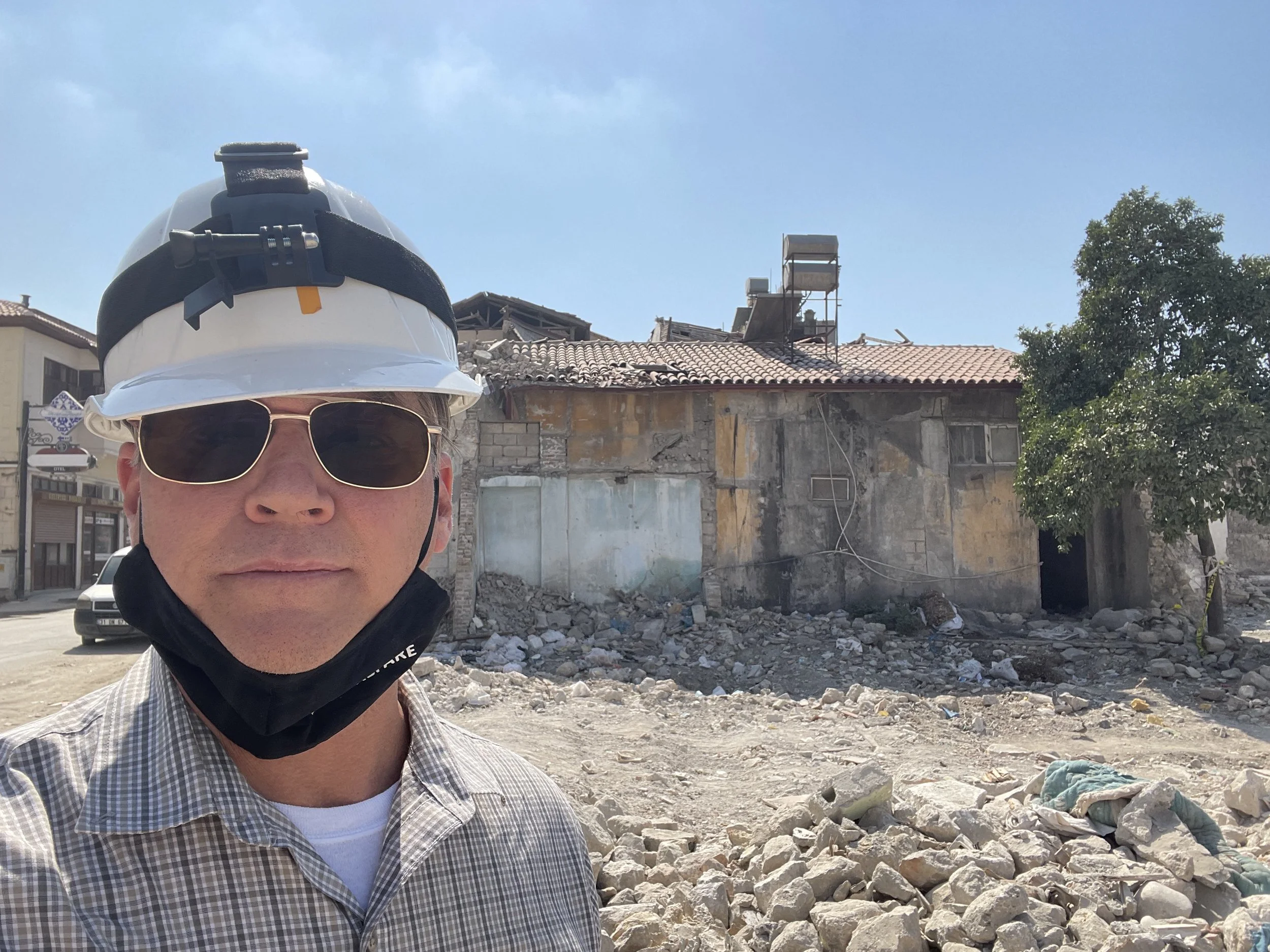
Disaster relief in Turkey, 2023. Courtesy Illya Azaroff.
Finally Illya, what is your advice for our readers, or for anyone facing career pivots, or any kind of challenge or uncertainty?
Navigating all of these pieces is always tough. I would say that when you find your passion and purpose, don’t deny it. You can’t deny it! Really look at yourself and admit what you’re truly passionate about. There are offices that align with that, and activities that align with that. But always be open to the fact that it is indeed a journey, and you have to adjust your sails, and sometimes you have to take on additional passengers and sometimes you have to forge your own way.
The one thing that I really want people to understand is that we’re in a place where people love to describe the problems rather than solve them. And if we go back to talking about water, it's easy to stand and point and describe the water – it's a lot harder to take a swim. And it's even harder to teach people how to swim. If you see something that is in need of transformation, and you have the ability to do it, don’t wait. Get in there and find your allies and achieve those goals. Leadership can’t wait.
This interview has been edited and condensed for clarity.