Rigorous Imagination: Gracie Mansion Conservancy's Executive Director Emma Osore on Stewardship, Growth, and Broadening Accessibility
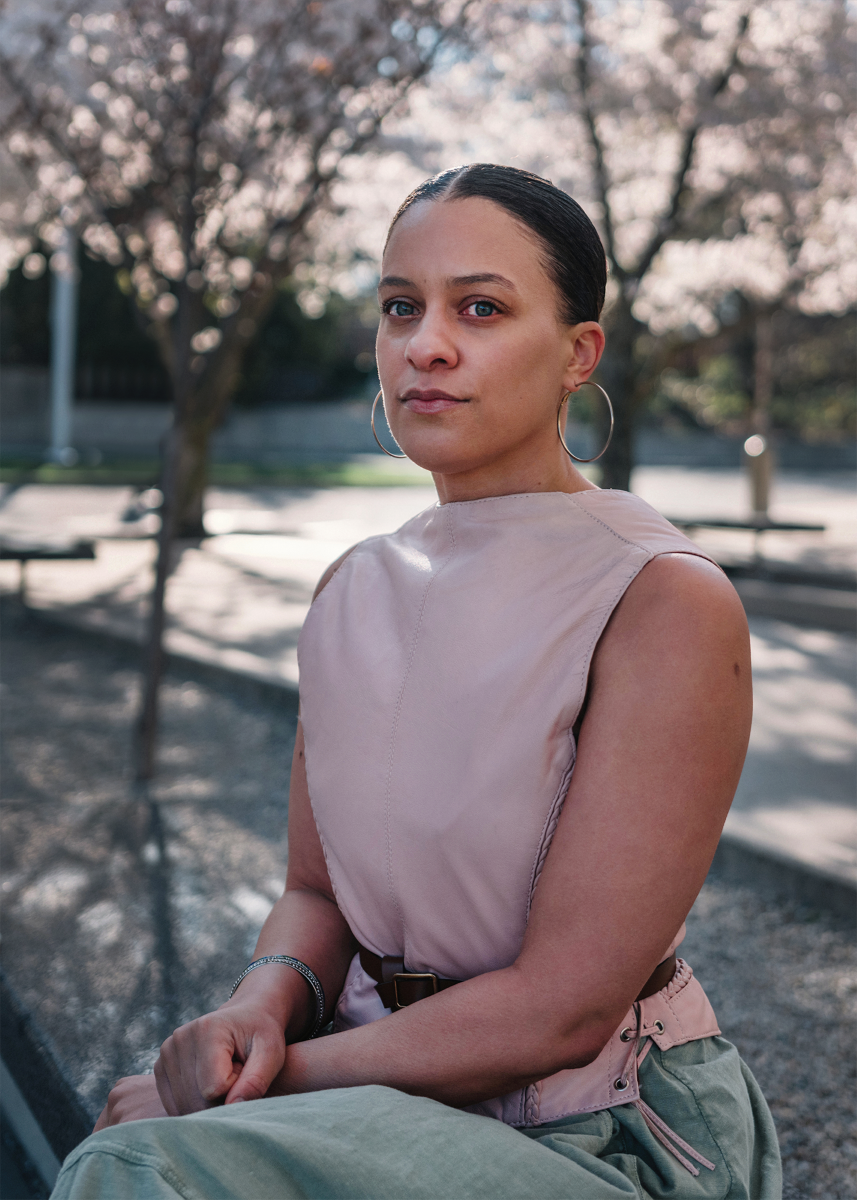
By Julia Gamolina
Emma Osore is a Brooklyn-based community designer who re-shapes public policy and practice. She is the Executive Director of Gracie Mansion Conservancy where she curates the public access, education, and interiors programming. Emma is also the Founder-in-Residence of BlackSpace, an urbanist collective she co-founded centering Blackness in public design. Previously, she led first-of-its-kind initiatives at New Museum of Contemporary Art, Americans for the Arts, City of Beverly Hills, and DC Public Schools. She’s written for Columbia University Books on Architecture and the City, Deem Journal, The Laundromat Project, and Urban Omnibus.
JG: After over ten years with the BlackSpace Urbanist Collective, you are now the Executive Director for the Gracie Mansion Conservancy. What are you thinking about the most as you settle into your new role that nobody is perhaps asking you about?
EO: I’m thinking most about how to make Gracie Mansion a welcoming place for all New Yorkers. In my seventeen years of grappling with and building arts and cultural institutions, I’ve strengthened my participatory and community design practice to specialize in bringing cosmopolitan groups together towards a clear community vision for a site. Through design prompts that are accessible and bespoke to the specific local context, we can usually agree on a way forward that is welcoming, just, and joyful. I believe that much of what is lost in the contemporary practice of working through very complex issues in the social and built environments is a lack of thoughtful listening and imaginative tangible response.
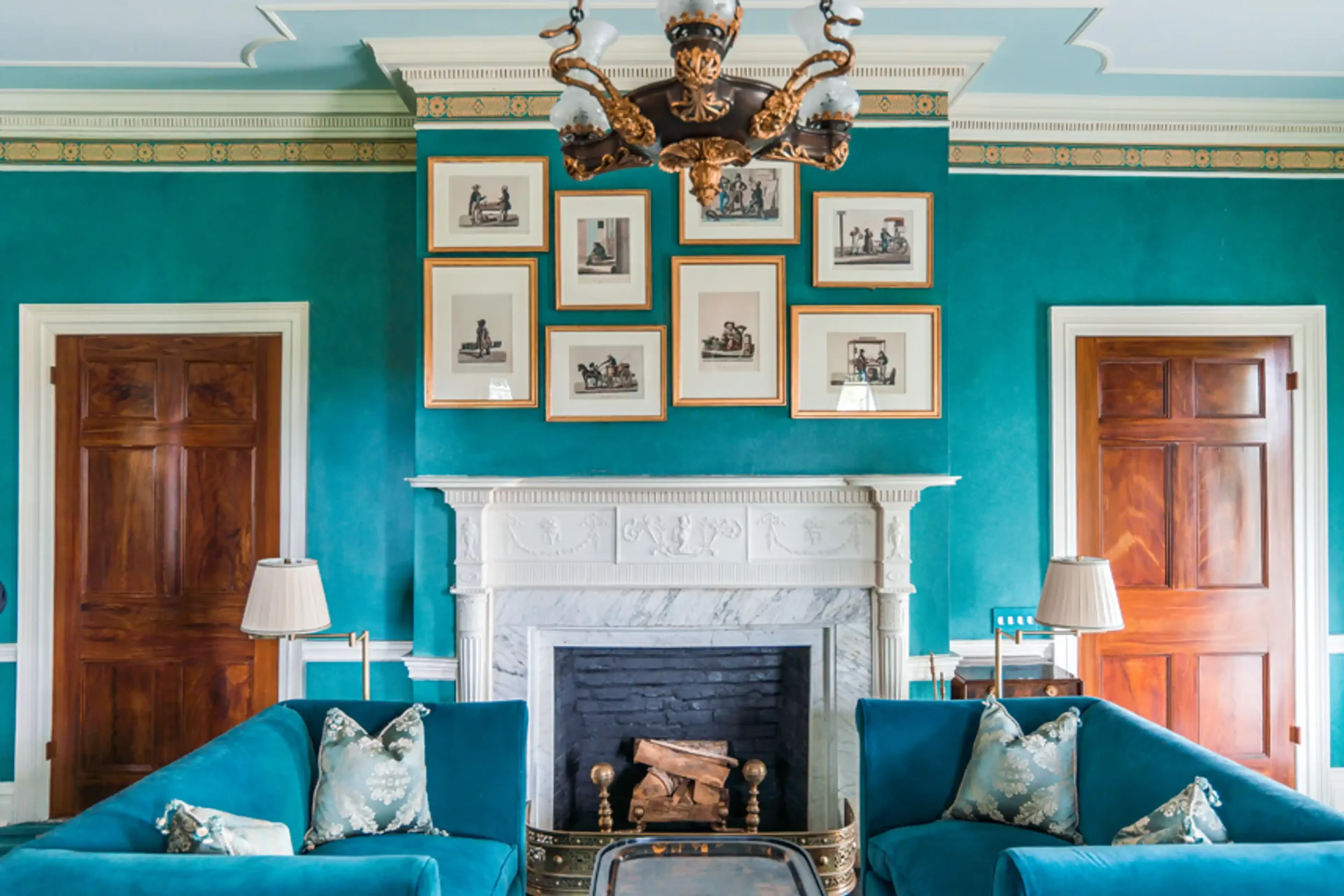
Gracie Mansion interior, courtesy of the Gracie Mansion Conservancy.
You studied urban and regional studies at Cornell and then went on to get your MPA at Baruch College. What are the biggest takeaways from your time with both institutions that you still apply to your work today?
Growing up consciously working class in an inner ring suburb of Maryland, I came into Cornell with strong politics and resolve to change unjust systems. The urban studies program contextualized urban planning, architecture, and art as materially consequential tools of change. I spent my time there questioning the violence, ethics, and downstream effects of using these very sophisticated tools. Cornell informed my sense of possibility in how to shape and subvert the world around me and equipped me with a healthy skepticism, technical tools, a global network, and encouragement to have an expansive vision.
Baruch gave me the critical thinking and policy tools rooted in real work practice to manage unwieldy and broken systems at scale. Management ethics, policy advocacy, budgeting, and how to speak publicly are all assets and systems I use today to generate resources for imaginative public change initiatives within tight constraints. Today, I might work with fifteen different departments to move just one program forward.
“My vision has remained consistent: to invest in overlooked public spaces and anti-disciplinary creatives by broadening their welcome and accessibility.”
What was some of the best advice you got early on that has informed your approach to your work and career?
A former boss said, “You can either be happy or you can be great, but you can’t do both”. Early in my career I understood this as zero sum, that I could only have a great career if I was unhappy or, I could only be happy if my career was not that great. As limiting as this advice felt, I have come back to it repeatedly when considering how a career opportunity might fit into my life.
However, I am a person who refuses to be boxed in, I have come to see the advice as win-win and that I’ll actively choose some career opportunities for happiness and some for greatness. And ultimately, the arc of any career is an expansive opportunity to find in it both happiness and greatness.
Tell me about your most significant professional experiences.
While my career has spanned education, city government, art policy, nonprofit, organizing, and museums, my vision has remained consistent: to invest in overlooked public spaces and anti-disciplinary creatives by broadening their welcome and accessibility. I began in education policy reform in DC Public Schools and later led community partnerships at a new public high school, expanding access to community and career opportunities.
At Americans for the Arts, I led a half-million-dollar portfolio supporting place-based arts advocates across the country, and at the New Museum’s creative business incubator, NEW INC, I worked to make its cohorts of artists, designers, and futurists more representative of NYC demographics.
My greatest accomplishment has been building and stewarding BlackSpace over ten years of organizing centered on the Black experience in neighborhood projects and national urbanist communities. With few resources at the beginning, we created tools and spaces rooted in racial justice, civic imagination, and culture-first community development, including an Auntie’s Living Room and a Public Backyard, built around the values of local people and for the benefit of the public.
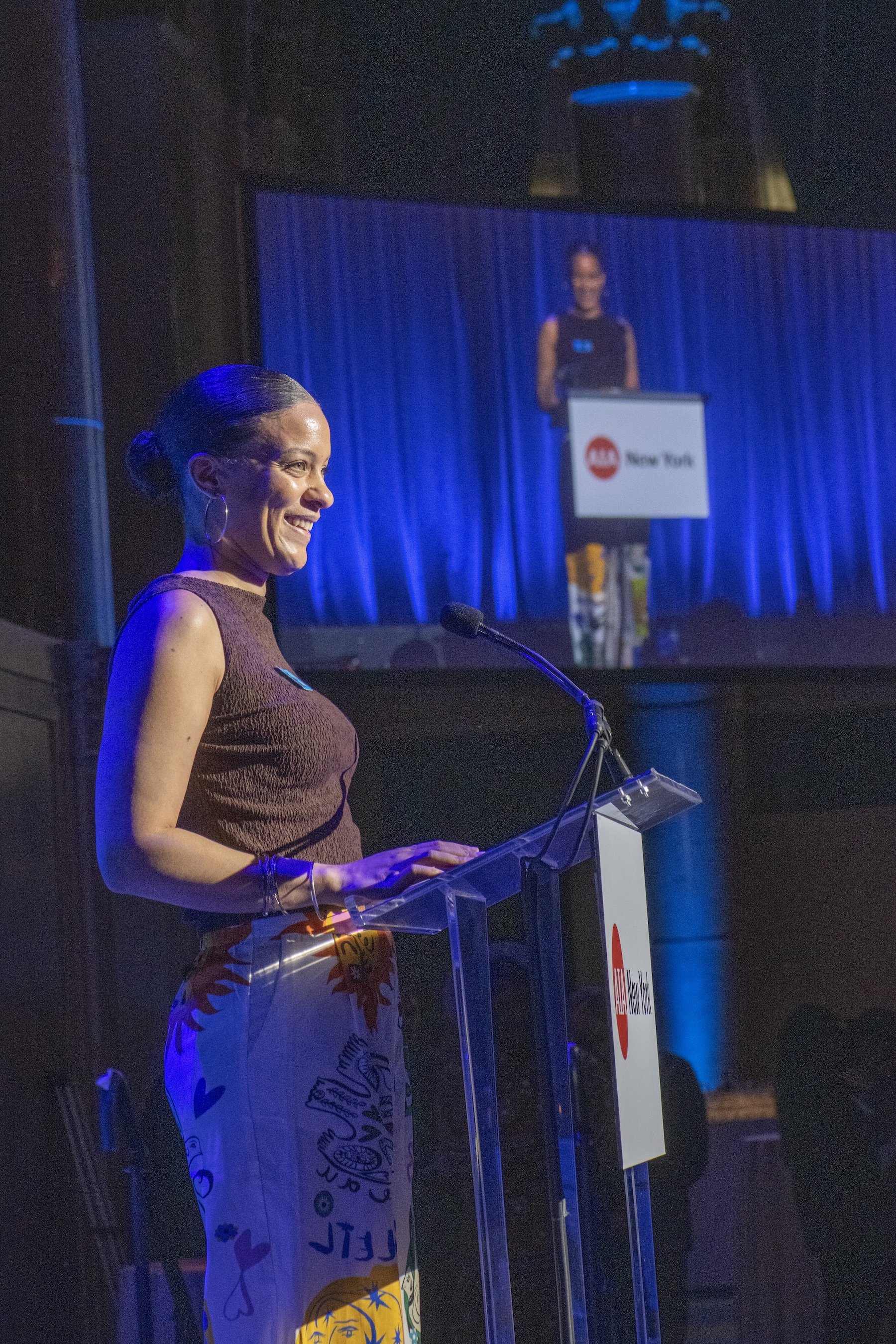
BlackSpace receiving the AIA-NY New Perspectives Award. Photography by Matthew Carasella.
Looking back at it all, what have been the biggest challenges? How did you both manage through perceived disappointments or setbacks?
It’s hard to gain legibility for a new idea and sustain an autonomous nonprofit that is internally and externally aligned in its values. At BlackSpace, founded in 2015, we sought to invest in Black spaces within neighborhoods that had been damaged by generations of policy, planning, and architectural decisions. Where we saw opportunities to engage rich neighborhood history and culture, others often saw a “bad neighborhood.”
Despite these challenges, we built the operational infrastructure to sustain and expand BlackSpace nationally. Maintaining alignment with our values meant directing 80% of our spending to Black businesses, rejecting significant grants from companies with histories of harm in Black communities, and helping design clients build the capacity to sustain investment beyond our engagement.
In my new role, I’m grappling with similarly systemic issues, including affordability for working families and artists and threats to cultural spaces and histories. At the Conservancy, my focus is on expanding its operations while sustaining public space as a free and accessible place for families and teens and a creative space that supports artists and contemporary New York City culture.
“Think of your career less as a track and more of a journey to collect and build a professional toolkit so that with every job you are leveraging an opportunity to build new skills that will serve your growth.”
Who were your mentors through it all?
There isn’t really a “career track” for anti-disciplinarians so I have had to create my own circle of fairy god parents — living and passed artists, authors, entrepreneurs, and misfits. This includes adrienne marie brown, Combahee River Collective, Garfield the Cat, Majora Carter, Maria Rosario Jackson, Octavia Butler, RuPaul Charles, Saidiya Hartman, Toni Morrison, Waangari Mathaii, Where We At arts collective. They are all imaginative worldbuilders whose work helped me put into words the value of rigorous imagination and rest despite the setbacks in the hustle.
Mostly, though, it has been the people who have trusted me to walk alongside them as we all try something new. Change is extremely hard for most people. It’s been incredibly rewarding to be trusted to bring together cosmopolitan groups to realize something that has never been done before. Not only have I been able to lift something off the ground but the ability to make it stick is where I have been most successful.

Panel with Institute for Public Architecture on Futures of Democracy. Photography by Cortney Van Jahnke.
Who are you admiring now and why?
I am admiring contemporary worldbuilders who are creating systems of culture that rely on physical space and extend beyond it to include many disciplines rooted in culture, history, and space. This includes Amy Andrieux at the Museum of Contemporary African Diasporic Arts (MoCADA) who is bringing brilliant community and art curation to new exhibit space in downtown Brooklyn.
Also Melody Capote at Center for Carribbean Cultural Center African Diaspora Institute (CCADi) who is organizing multicultural diasporas around place, culture, and archiving. And finally, Solange Knowles for producing a contemporary digital platform for interdisciplinary design archives, architecture, furniture, and sound.
Finally, what advice do you have for those starting their career?
If you don’t see a career out there that fits what you want, make your own project or role. Think of your career less as a track and more of a journey to collect and build a professional toolkit so that with every job you are leveraging an opportunity to build new skills that will serve your growth.
This interview has been edited and condensed for clarity.