Common Language: The Los Angeles Dodgers' and Canopy's Janet Marie Smith on Places that Endure and Bringing People Together
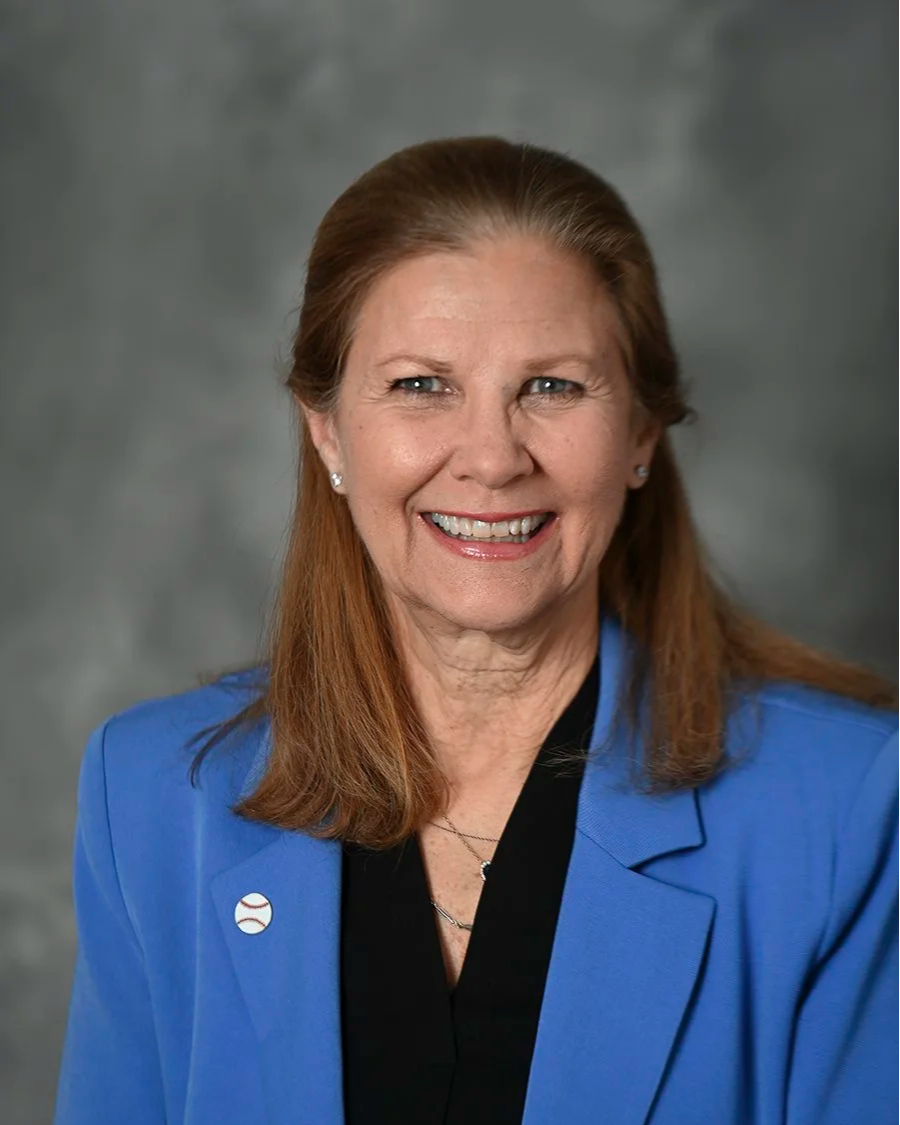
By Julia Gamolina
Janet Marie Smith is EVP of Planning and Development for the Los Angeles Dodgers and Co-Founder of Canopy Team with Fran Weld, a sports advisory firm for development of venues and adjacent areas. One of sports' most influential venue developers, she led Dodger Stadium's modernization, the renovation of Fenway Park, and creation of Oriole Park at Camden Yards. Her work is often described as changing how sports are experienced with unique spaces from Baltimore’s Eutaw Street to Boston’s Green Monster seats.
JG: This past summer felt like the summer of sports here in New York City, between the World Cup, the Knicks, and so much more. With stadiums becoming major entertainment destinations, what makes an exceptional experience for athletes, performers, and audiences alike, from an architectural and planning perspective?
JMS: What I love most about sports is their ability to bring people together. We live in an increasingly divided society, but sports give us a common language, even when we're rooting for opposing teams. The Knicks are a wonderful example: people who ordinarily have little interest in basketball were swept up in the excitement this summer! Sometimes it feels as though it takes a catastrophe to unite a city, but why shouldn't something joyful do the same? Sports teams are deeply connected to the identities of their cities, and being able to contribute to that connection through architecture is extraordinary.
At Canopy, we think about the totality of the experience, beginning with how people arrive. How do we make the journey from their homes and to their seats as seamless and enjoyable as possible? We want visitors to feel they've arrived somewhere special even before entering the venue. Technology, food, and entertainment have also become increasingly integral to the experience, from ticketing and concessions to the displays and programming that bring a stadium to life. Beyond the physical architecture, we think about how artwork, memorabilia, multilingual signage, and culturally diverse offerings can tell a team's story and make people from different backgrounds feel welcome.
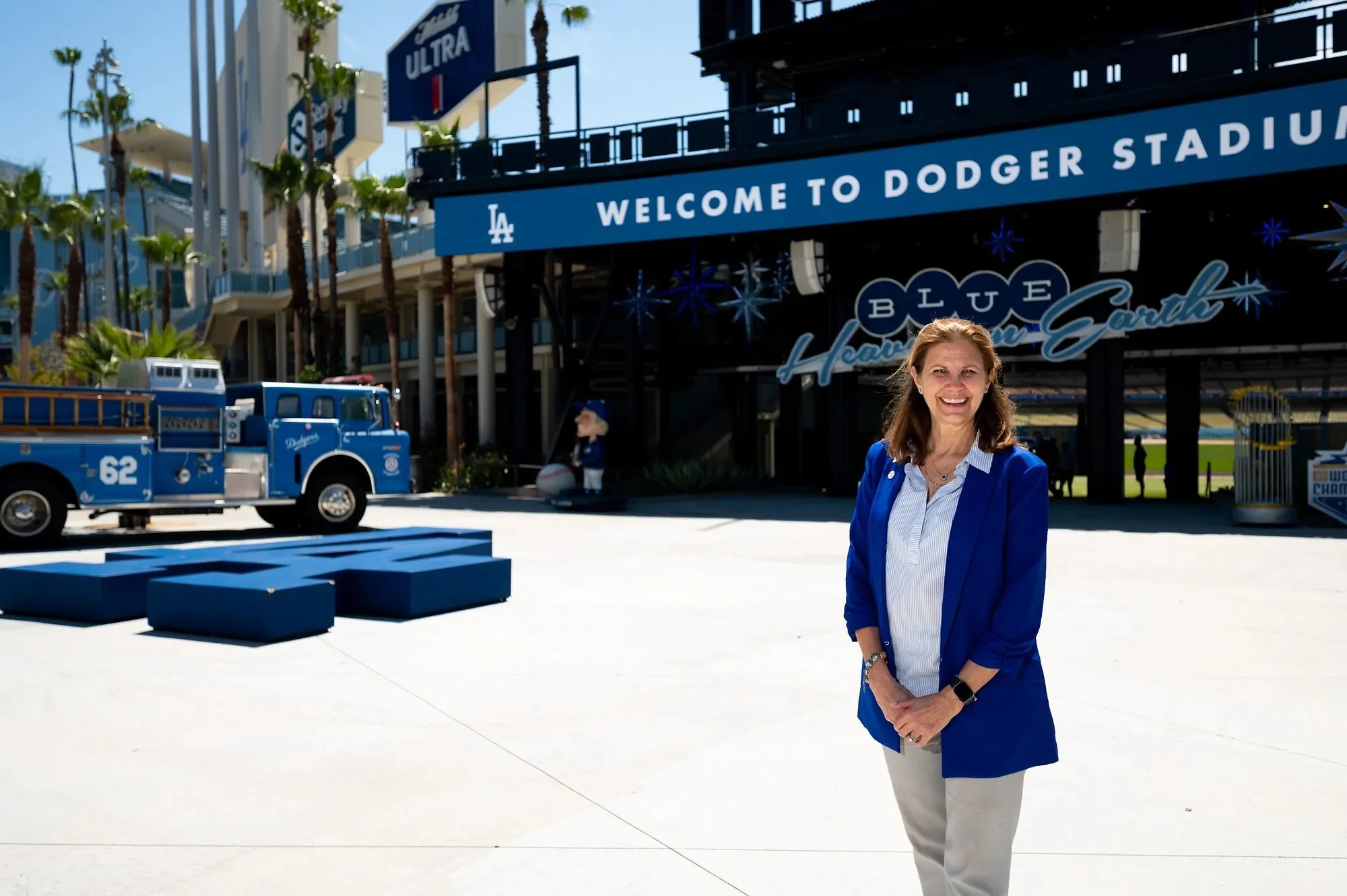
Janet Marie Smith at Centerfield Plaza at Dodger Stadium. Image courtesy of the Los Angeles Dodgers.
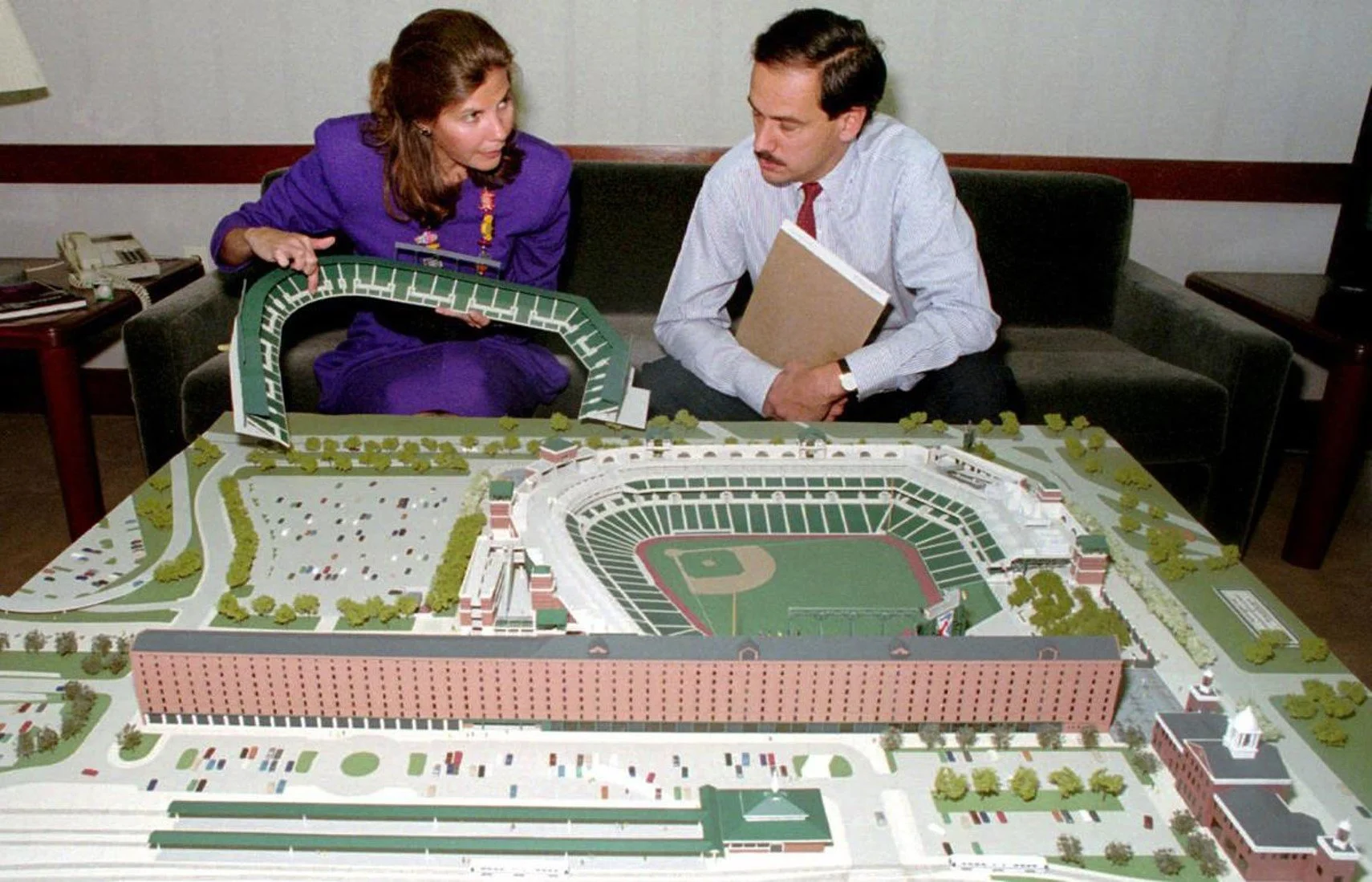
Janet Marie Smith and Larry Lucchino looking at Camden Yards model in 1990. Courtesy of Janet Marie Smith.
How did you find your way into sports architecture and planning? What drew you to this particular focus?
I studied architecture but was always interested in project management and development. Early in my career, I worked on Battery Park City in New York, where I was involved in everything from political, financial, and legal strategies to urban design and public art. That experience taught me how to create the framework for great design to happen, which I think is one of the strengths of an architectural education.
My interest in sports began simply as a fan, but when the Orioles announced plans for a new stadium in downtown Baltimore, I was fascinated by its potential to contribute to the city's revitalization. Baltimore had already transformed its waterfront into a regional destination, and bringing three million baseball fans downtown each year could support its hotels, restaurants, and cultural institutions. Just as importantly, the stadium could take advantage of existing transportation infrastructure, rather than requiring the enormous investments associated with suburban stadium development. It was an opportunity to bring together my interests in sports, urban planning, and development.
“Sports teams are deeply connected to the identities of their cities, and being able to contribute to that connection through architecture is extraordinary.”
What has been one of the most complex projects you've worked on, and what did it take to make it happen?
A good example is my work with the Boston Red Sox on the renovation of Fenway Park. Over nearly a decade, we developed a phased strategy to improve the ballpark during each off-season, with construction always needing to finish before Opening Day.
But the work went far beyond renovation. We negotiated public air rights to create the Green Monster seats, worked with the city to incorporate surrounding streets and buildings, and secured approval to use historic tax credits. It required reimagining how a century-old ballpark could function today, while respecting its history and character. That's what distinguishes our work — bringing together design, development, financing, and public policy to make ambitious projects possible.
What's fascinating to me is the extraordinary range of people involved in these projects, from architects and designers to politicians, policymakers, and economists. It's such a complex ecosystem of collaboration.
And that's before you even get to urban designers, transportation planners, interior architects, graphic designers, and sustainability specialists! The range of expertise involved continues to grow as our understanding of environmental responsibility, accessibility, and different sensory and physical needs evolves. Each perspective brings something valuable to the process.
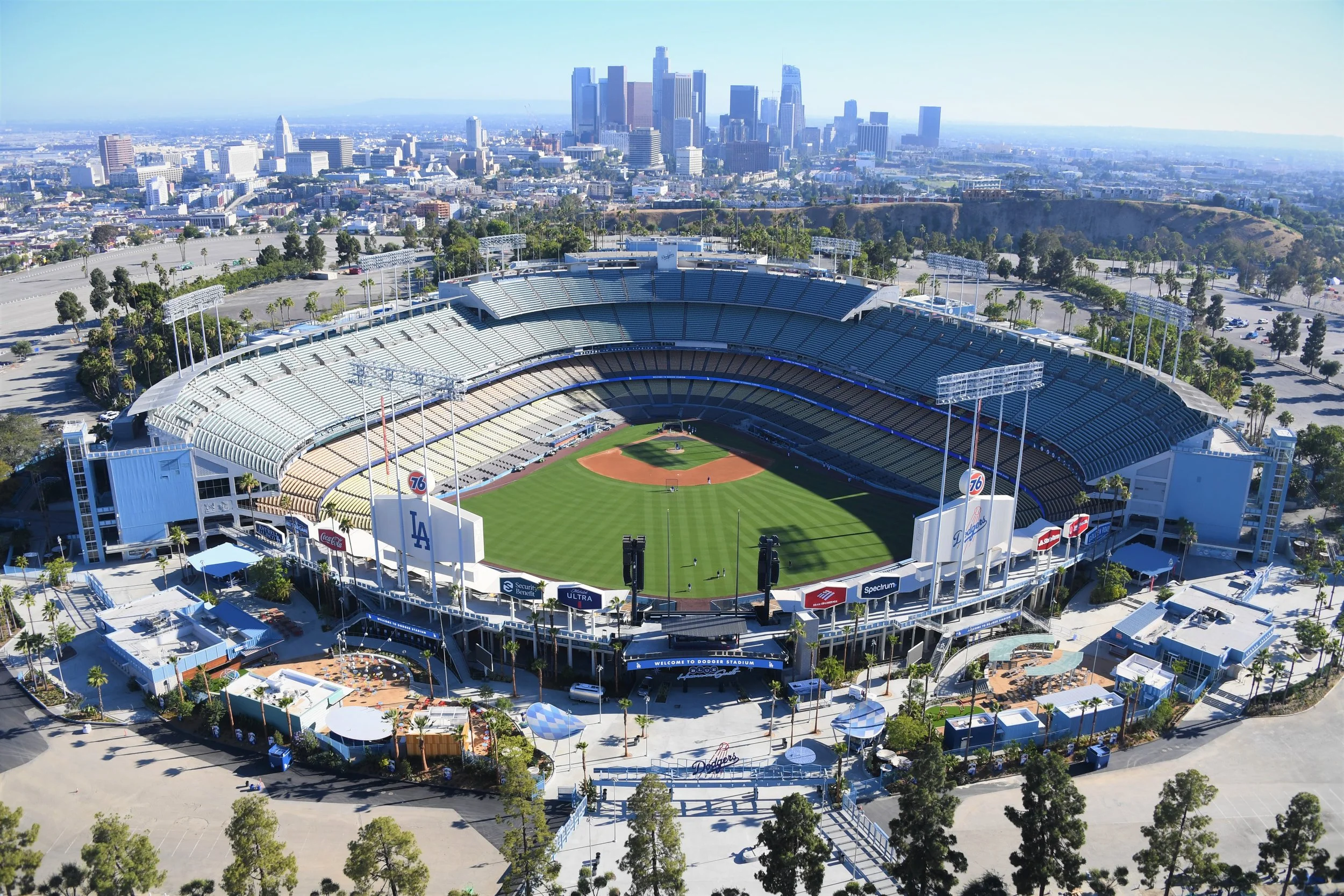
Dodger Stadium Aerial. Photography by Jon SooHoo, courtesy of the Los Angeles Dodgers.
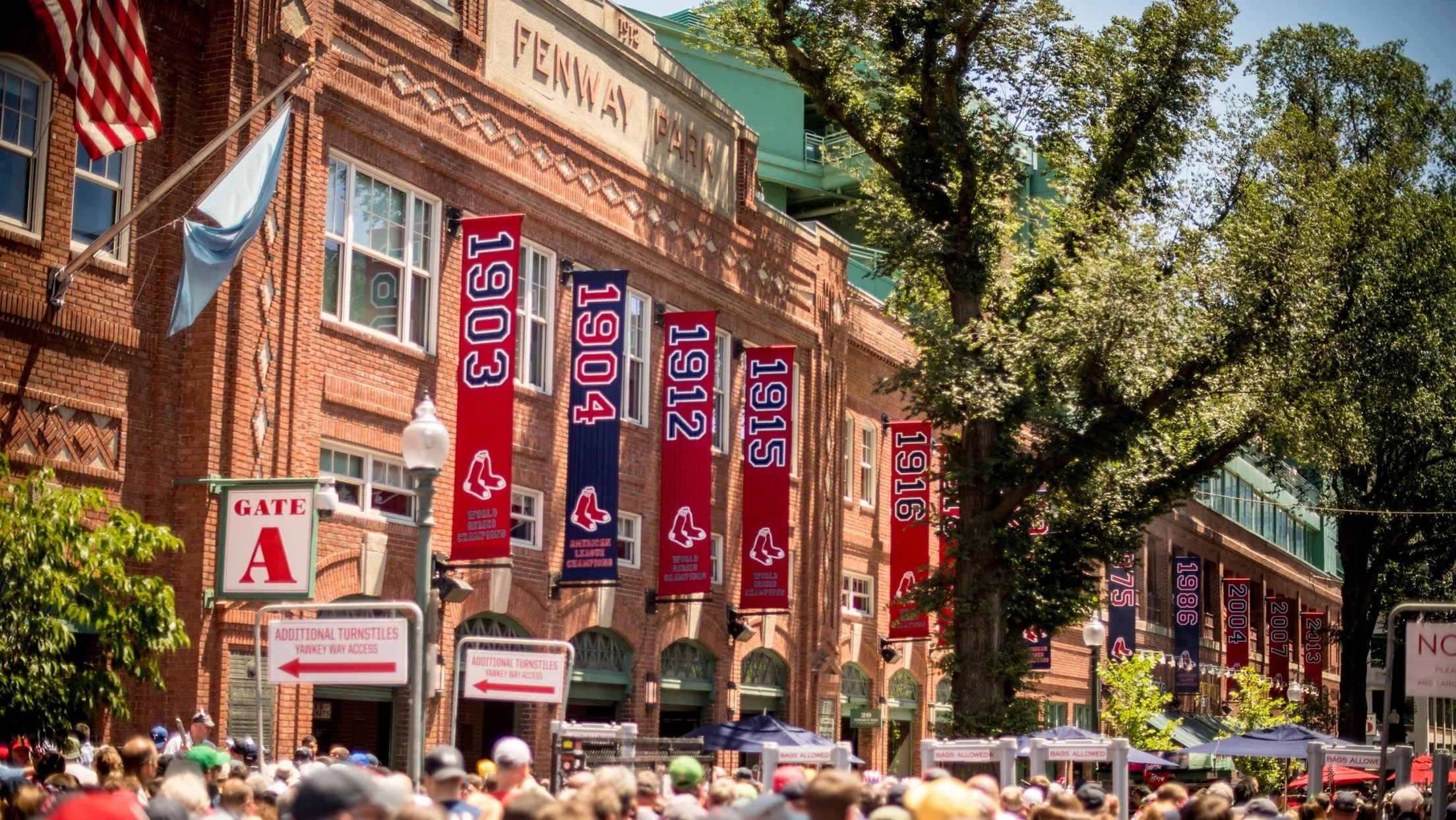
Fenway Park Jersey Street. Courtesy of Janet Marie Smith.
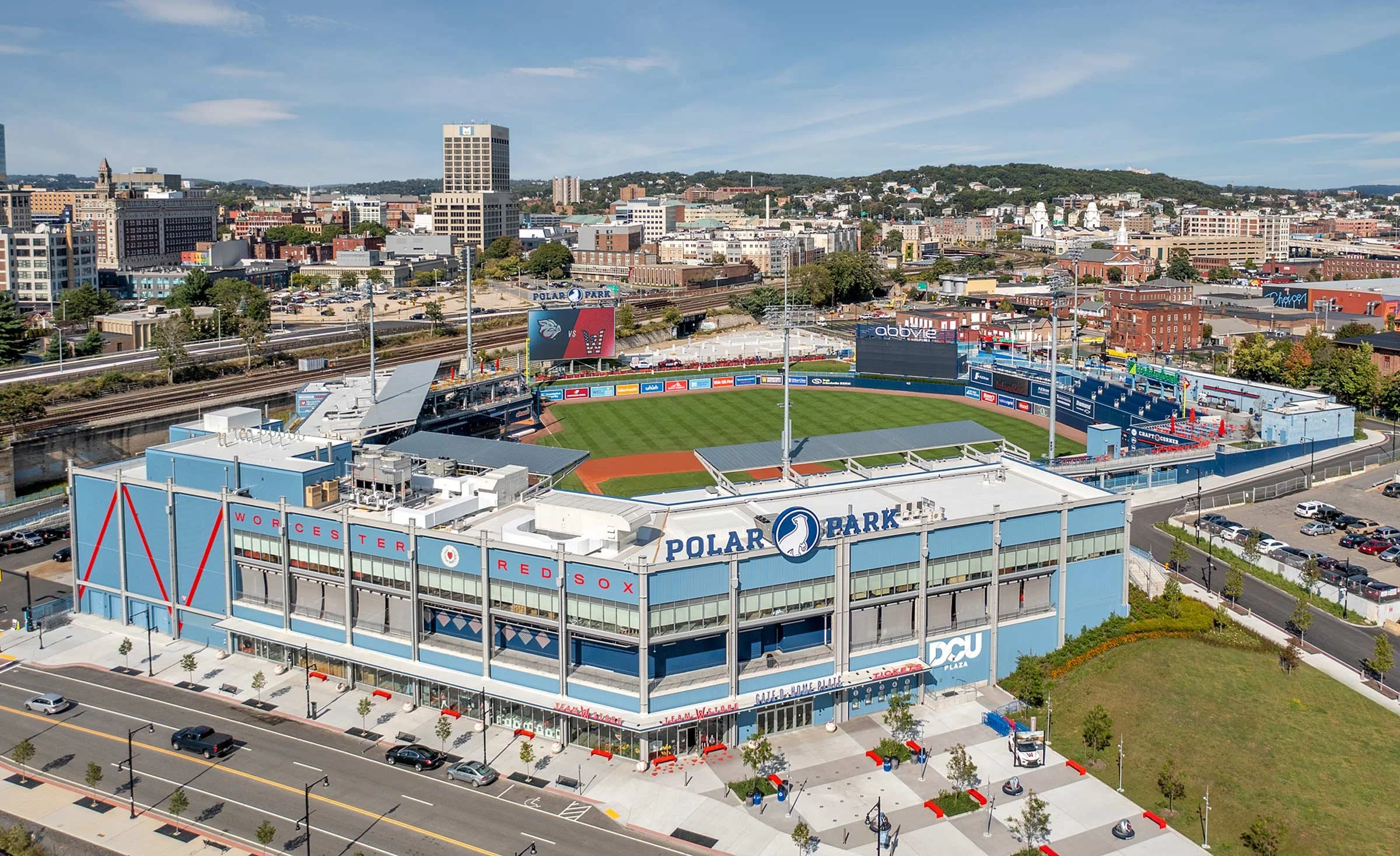
Polar Park Aerial. Photography by William Horne Photography.
How did you know it was time to start your own business with Canopy?
It was perhaps more obvious than you might expect. I'd worked with Stan Kasten for many years, first in Atlanta on Turner Field and Philips Arena, and later with the Dodgers. Throughout that time, other teams would approach us for help defining their next projects. They weren't ready to hire an architect; they needed someone to first help them understand their opportunities and determine what they actually wanted to accomplish.
Around 2020, despite the world shutting down, we started receiving more of these requests, including from minor league teams and universities. Stan said to me, "It seems like there's a business here." Around the same time, Fran Weld, whom I'd worked with at the Red Sox, was ready for a new chapter after twelve years with the San Francisco Giants, where she'd helped develop the $3 billion Mission Rock project. She ultimately turned the idea into a business, becoming Canopy's CEO, and the rest is history.
What's some of the best career advice you've received?
Sometimes the most valuable advice is the advice you choose not to take! When I was considering joining the Orioles, a former boss whom I respected said, "I can't believe you'd go work for a bunch of jocks. What kind of future is there in that?" Rather than discouraging me, it strengthened my determination to prove that this could become something special.
More broadly, I've learned that a career in architecture doesn't have to be as linear as we sometimes imagine. Architectural education gives you an extraordinary foundation for understanding different disciplines and bringing them together. My urban planning studies at City College, under Jonathan Barnett, were especially influential in helping me understand how design, real estate, politics, and public policy intersect. I've spent my career working at those intersections, and one of my greatest lessons has been recognizing the value of collaboration with government. People often see it as an obstacle, but on projects like Fenway Park and Dodger Stadium, those partnerships have been essential to our success.
“Ironically, I found my way into sports precisely because I wasn’t a sports expert! That experience has always reminded me of the importance of bringing ideas across disciplines. Otherwise, we risk recycling the same thinking.”
One of the pieces of advice I've heard through my interviews came from Mary Ann Tighe, CEO of CBRE's New York Tri-State Region, who encouraged architects to build relationships with people in government. On that note, who are you admiring right now, whether in architecture, sports, or beyond?
I really admire Billie Jean King and Ilana Kloss for their work advancing women's visibility and influence in sports, and not just women's sports. Billie Jean loves telling a story about expressing interest in investing in one of Mark Walter's teams. He suggested the Sparks, the women's basketball team, and she responded, "Well, how about the Dodgers?" Why should women only be associated with women's sports? Watching the extraordinary growth of women's sports, and seeing women claim a greater role across the entire industry, has been incredibly inspiring and feels like a validation of so much that women have worked toward for generations.
What have been some of the biggest challenges you've faced throughout your career?
Whenever you're pioneering new ideas, you need both the confidence to believe in your vision and the ability to persuade others of its value. At Camden Yards in Baltimore, for example, we were challenging the conventional notion that stadiums needed expansive, isolated sites. Instead, we wanted the ballpark to become part of the city's urban fabric, drawing on lessons I'd learned about contextualism at Battery Park City. Convincing people that this approach could succeed required a great deal of persistence.
Interestingly, I've been asked whether working in sports was intimidating as a woman, but I never really saw it that way. There were relatively few women in architecture or construction when I began my career, so sports didn't feel particularly different. The greater challenge was learning to trust my own ideas and communicate them persuasively. Self-confidence and persuasion are skills that take time and experience to develop, especially when you're asking people to think differently.
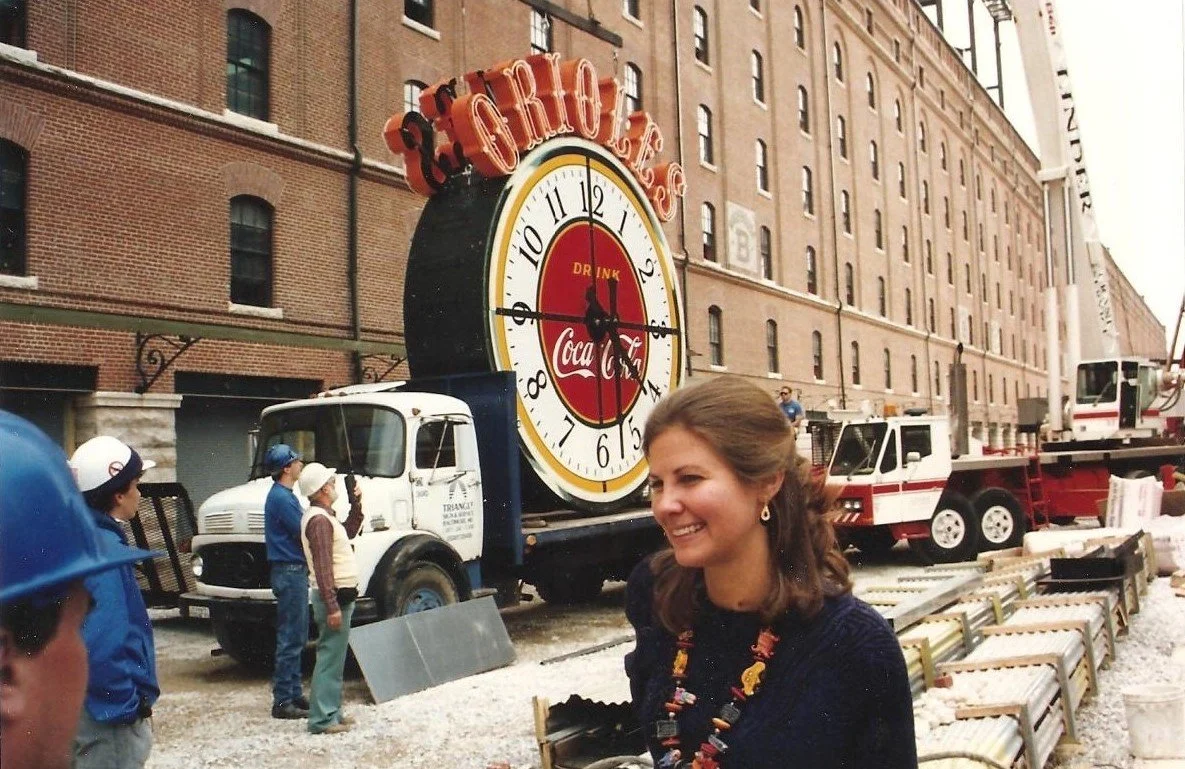
Janet Marie Smith with the Camden Yards construction clock in 1991. Courtesy of Janet Marie Smith.

Janet Marie Smith with Frank Robinson at Memorial Stadium in 1989, preparing to design Camden Yards. Courtesy of Janet Marie Smith.
How would you define the mission through your work?
I want to create places that people love, that endure, and that remain meaningful across generations. There's something incredibly rewarding about seeing a project you worked on decades ago still celebrated and enjoyed. Some of my proudest achievements have involved saving buildings that others had written off. Fenway Park is one example, but I'm equally proud of our renovation of Ed Smith Stadium, the Orioles' spring training home in Sarasota, Florida. It was a modest concrete structure from 1988 that, through the vision of architect David Schwarz and his team, became something truly memorable.
I think we're often too quick to discard buildings that have aged poorly, rather than recognizing the environmental, economic, and cultural value of adapting them. Nearly every project I've worked on has involved some form of preservation, whether reusing a warehouse at Camden Yards, retaining the concrete structure of Ed Smith Stadium, or reimagining Fenway Park. Preservation doesn't always mean treating something as precious. Sometimes it simply means recognizing that what's already there is worth saving.
Finally, what advice would you offer to those just beginning their careers, or those looking to develop a new focus or make a professional pivot?
Figure out what you want to do, and then imagine what your role in that world could be. Rather than simply looking at existing job opportunities, think boldly and creatively about the problems you'd like to solve and the perspective you could bring.
When Larry Lucchino hired me to work for the Orioles more than thirty years ago, he told me, "I'm surrounded by sports experts. I'm looking for someone who brings a different perspective." Ironically, I found my way into sports precisely because I wasn't a sports expert! That experience has always reminded me of the importance of bringing ideas across disciplines. Otherwise, we risk recycling the same thinking. Some of the greatest opportunities come from recognizing how your particular experience can contribute something entirely new.
This interview has been edited and condensed for clarity.