A Sense of Home: Chung Yuan Christian University's Jenny Liu on Her Return to Taiwan, Global Citizenship, and a Sense of Stewardship
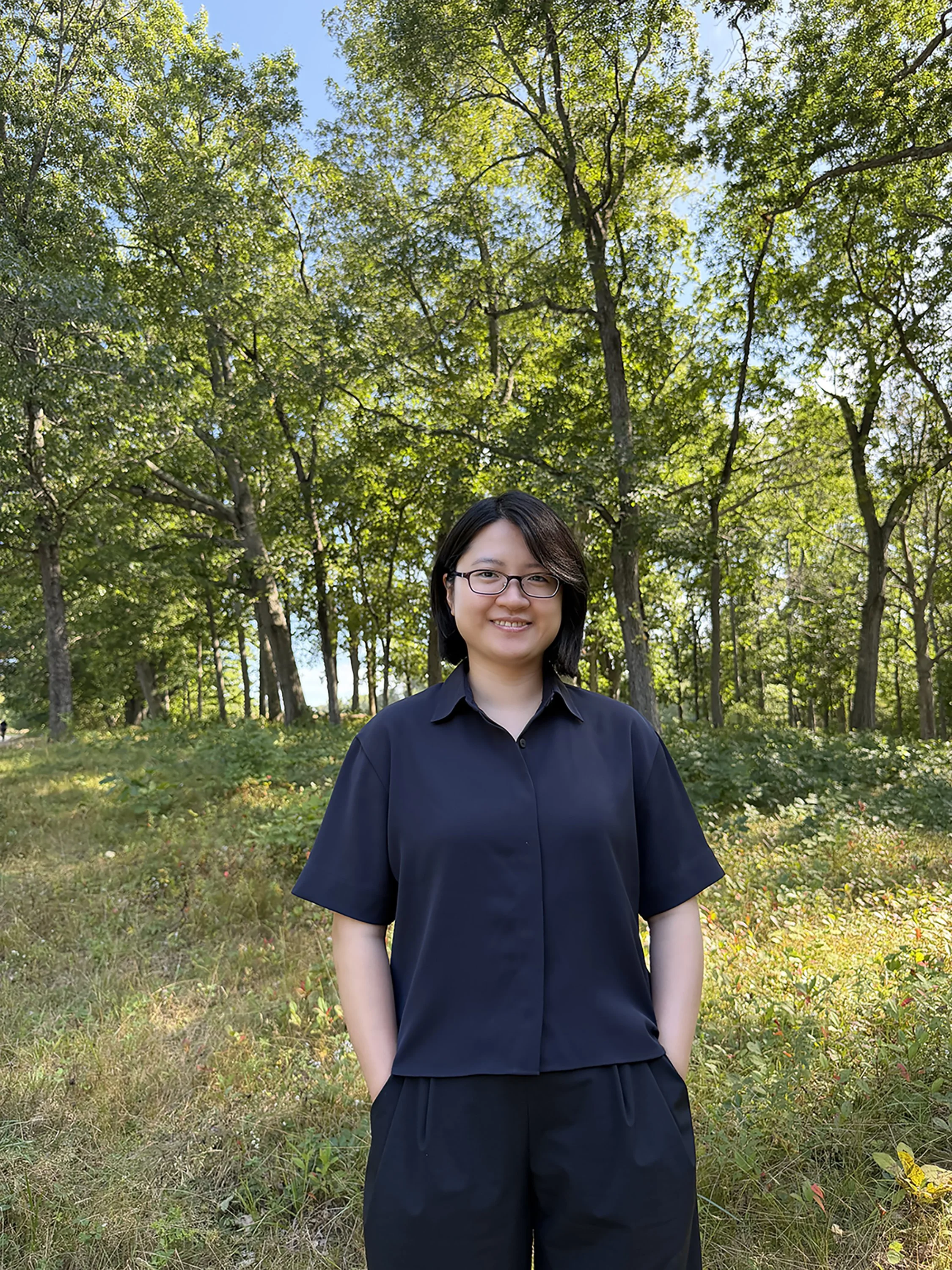
Jenny Liu by Emma Xue.
By Julia Gamolina
Ho-Ting ‘Jenny’ Liu is a landscape architect and Assistant Professor of Landscape Architecture at Chung Yuan Christian University in Taiwan. She holds a Master of Landscape Architecture from Harvard University and a Bachelor of Arts in Biology, Geography and Theater Studies from Macalester College. Before returning to Taiwan and entering academia, she practiced with AECOM, SWA Group, Reed Hilderbrand, and Raymond Jungles, working across large-scale urban and waterfront projects, cultural landscapes, and private high-end gardens in the United States and Asia.
Her interdisciplinary background informs a practice grounded in active listening—revealing the visible and invisible layers of landscape systems and seeking more resilient and meaningful relationships between people and place. She is a licensed landscape architect in the United States and a SITES Accredited Professional.
JG: You recently relocated back to Taiwan to begin your academic career. What are you thinking most about in this new stage?
JL: Taiwan has always felt both close and distant in my childhood memories — a place that constitutes a deep part of my sense of self, even though I lived there for only seven years after birth. After nearly thirty years of moving around and living overseas, I found myself slowly drawn into an inner quest: What does it mean to return to a place I have always called ‘home,’ yet have known so little about? In 2024, I finally made the decision to move back to Taiwan, seeking not simply to return, but to develop a closer affinity and a deeper understanding of this island.
There is a certain dual vulnerability in returning as both an insider and an outsider, trying to reconstruct and re-understand my own roots. Beginning my academic career here has given me an unexpected opportunity to explore that question alongside my students. Much of what we teach is grounded in the practice of active listening: learning to listen to the stories embedded in the land, and to understand the notion of interbeing through immersive experiences that engage all five senses.
What have you found through these processes?
My students and I recently took a field trip to a rural mining village in northern Taiwan and spent time with some of the remaining miners who contributed immensely to Taiwan’s economic miracle of the 1960s and ’70s. We listened to their bittersweet stories of death, struggle, resilience, and love. We hiked through abandoned mining sites and nestled in the mountains, tracing fragments of history through the paths and footsteps they left behind.
On another trip, we visited an informal settlement in the heart of Taipei — a community that emerged from the social and political upheavals following 1949 and later found itself threatened with bulldozing in the name of urban beautification. What struck us was the community’s remarkable form of opportunistic urbanism: residents salvaged whatever materials they could find and continuously adapted them to construct their homes, producing countless variations in floor plans that together form a mesmerizing three-dimensional, terraced labyrinth.
Experiences like these have prompted my students and me to ask: What exactly do we preserve or conserve for places so deeply weighted with history? Is it the buildings, the physical landscape, a way of life, or the stories? As a landscape architect, is it enough to enact only physical intervention, or is there more to it? For me, returning to Taiwan has become an exploration of the many facets that constitute a sense of home, grounded in the practice of active listening.
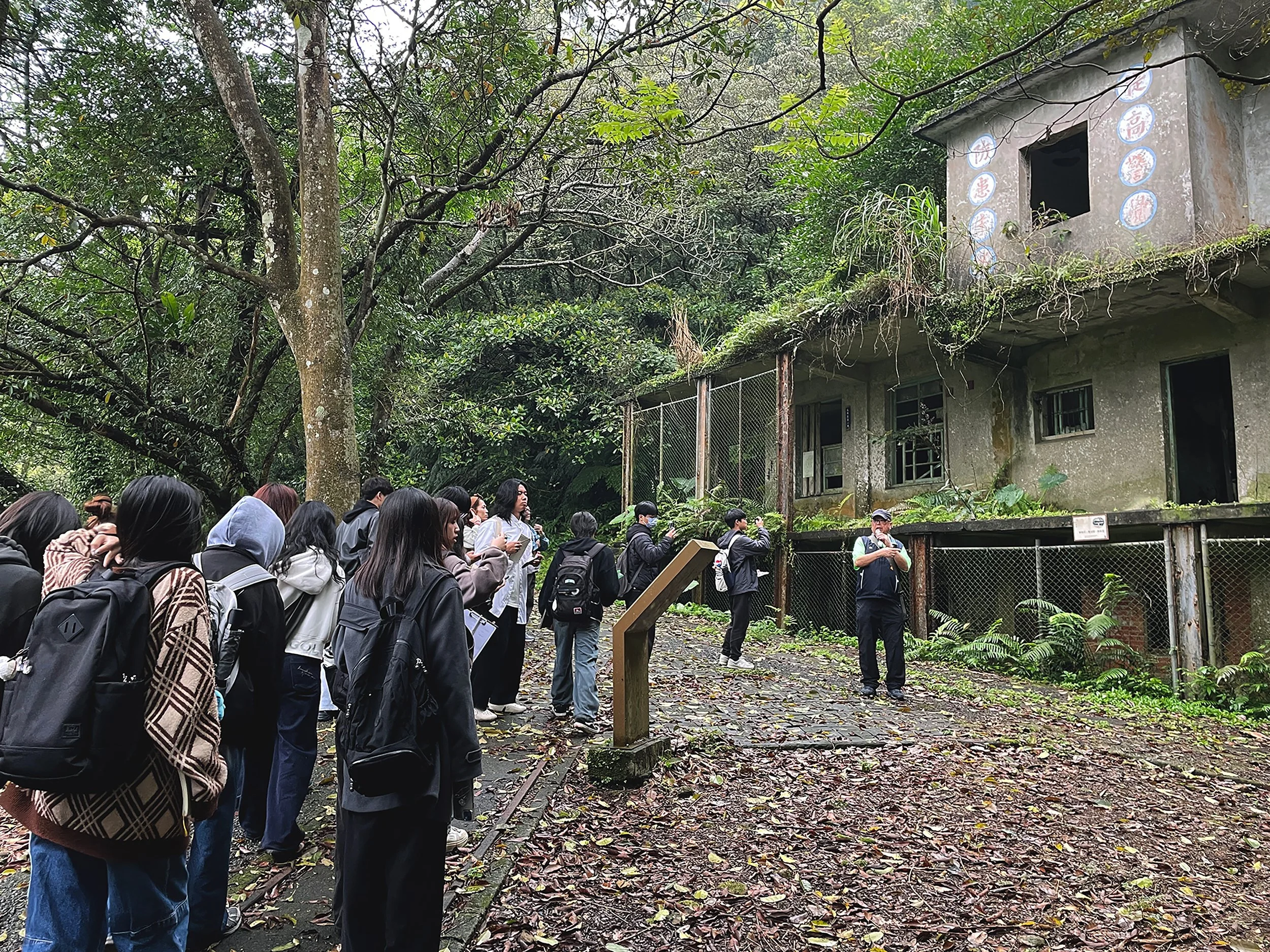
Students listened to a retired miner recount his cave mining days in front of an abandoned office. Photography by Ho-Ting Liu.
You studied at Macalester College and then at Harvard GSD for your Master of Landscape Architecture. What do you take away from your time at both institutions that still informs your approach?
At Macalester, I came to understand what multiculturalism and global citizenship truly entail, which is no preconceived judgment, but rather a pure appreciation and compassion for people of different backgrounds sharing their stories. Community engagement was also deeply woven into student life there. I was extensively involved in Mississippi watershed research, where I SCUBA dived to monitor freshwater mussels for two summers—work that later resulted in a peer-reviewed publication, as well as a set of interpretive activities I designed while volunteering at the Science Museum of Minnesota.
At Harvard, I learned never to compromise easily or accept things as given—to question assumptions logically, to examine ideas rigorously, and to fight hard for what I believe is right and just. Always have the desire to keep asking why, and to imagine what might be possible beyond the given.
The intersection of these two experiences has shaped how I see landscape architecture: to listen deeply to people and places, while questioning the systems and structures that have shaped them. I believe we don't simply solve problems—we create value.
What was some of the best advice you got early on that has informed your approach to your work and career?
I think the best advice I was ever given is that it's possible to turn a disadvantage into an advantage as long as you're willing to put in the time and effort to hone your skills persistently. Also, when you find yourself in conflict or a heated argument with others, step back, take a deep breath, and try to reassess the issue from the other person's perspective rather than your own. Communication is key to a successful outcome in the design world due to its inherently collaborative nature, whether in professional practice or in classroom.
“Communication is key to a successful outcome in the design world due to its inherently collaborative nature, whether in professional practice or in classroom.”
What did you learn with each step in your time as a landscape architect?
During my time there, SWA Group emphasized the role of landscape infrastructure in dismantling the dichotomy between humans and nature for sustainable urbanism. Reed Hilderbrand focused on uncovering the palimpsest of cultural contexts, emphasizing both the visible and invisible aspects of landscape in transforming site character through thoughtful and enduring interventions. Raymond Jungles created dynamic, experiential spaces rooted in deep respect for nature and ecological stewardship. These experiences have broadened my understanding of landscape architecture, and I am glad to have been able to share these insights with my students.
Looking back at it all, what have been the biggest challenges? How did you manage through disappointments or setbacks?
I believe the challenge remains the same for all design professionals—too little time, and yet so much still to be crafted to perfection! Always stay calm, cool, and collected when facing disappointments, and try to find solutions once I am in a better headspace.
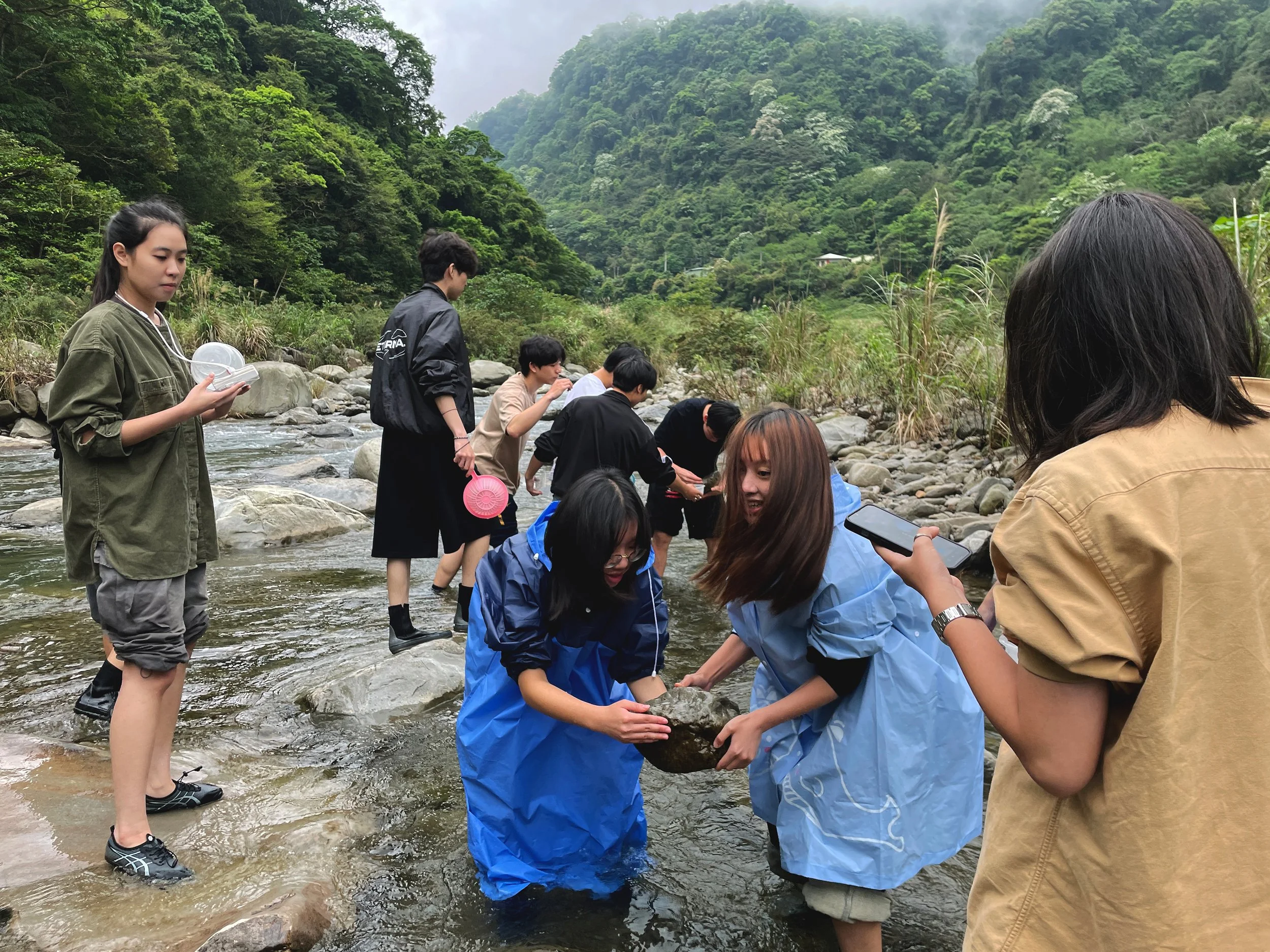
Students investigated water quality in a river near an indigenous community by identifying key insect species, and studied the river's morphology to gain inspiration for naturalizing channeled waterways in urban environments. Photography by Ho-Ting Liu.
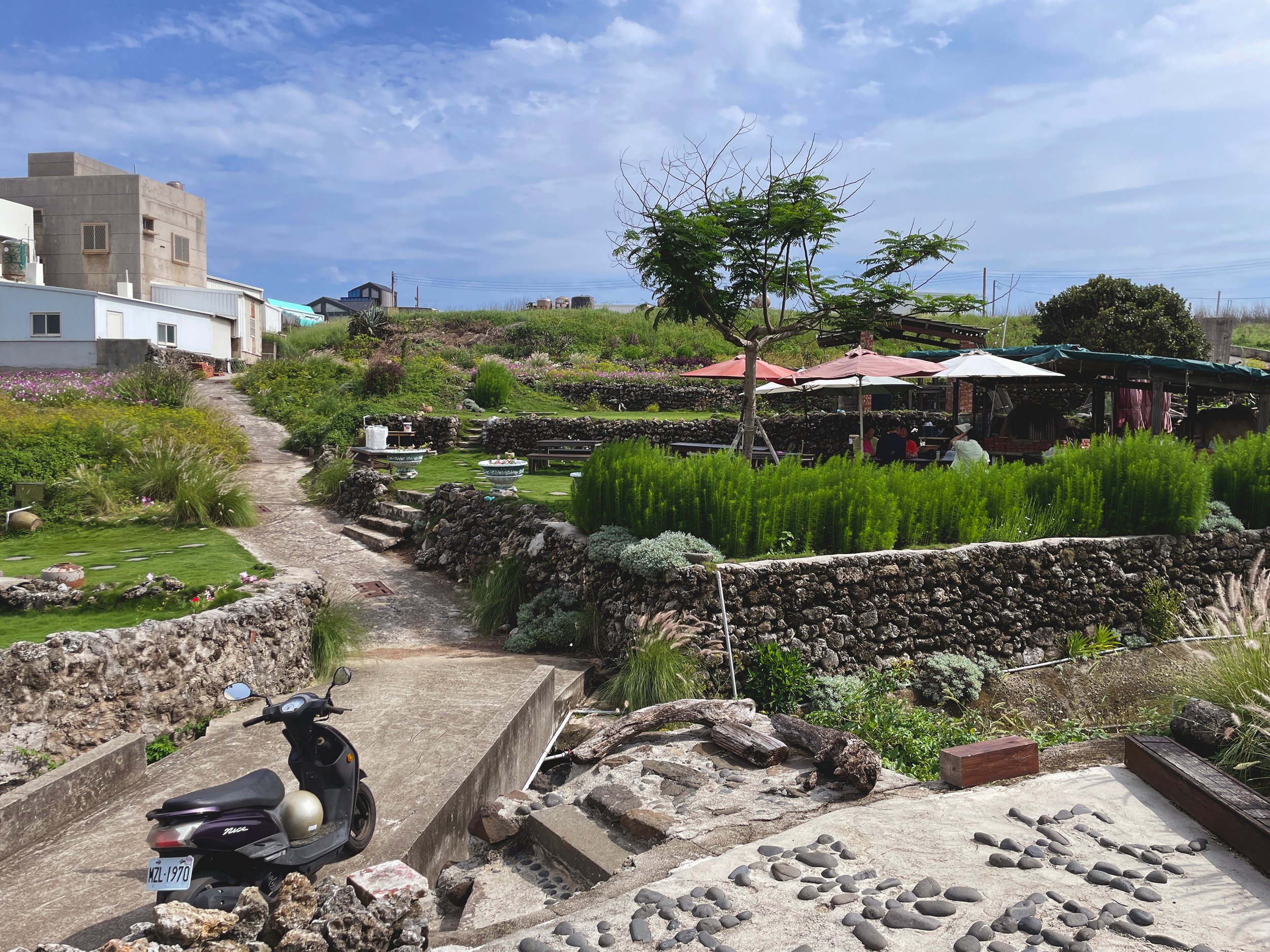
A terraced communal space built by the local community using locally sourced coral stone and basalt, in the traditional ‘Caizhai’ style — low stone walls that serve as windbreaks for vegetable gardens in Penghu, Taiwan. Photography by Ho-Ting Liu.
Who are you admiring now and why?
I recently took our students to Singapore for an exchange program and was very impressed by the lead female designers we spoke with at Henning Larsen Singapore, formerly Ramboll Studio Dreiseit. The design team has been a primary planning and design catalyst for Singapore's national "City in Nature" vision and the Singapore Green Plan 2030.
They have fundamentally shaped Singapore's approach to blue-green infrastructure by treating it as "performance infrastructure" that manages water, mitigates climate risk, and fosters biodiversity. Their design philosophy and approach have been studied and drawn upon by other Asian cities facing escalating environmental vulnerabilities.
“We ought to remember that exceptional design does not merely entail ‘creating’ a new physical environment upon a blank slate. Rather, it represents an act of stewardship, dialogue, and interpretive re-disclosure toward the layers of life that already exist within a site.”
What drives you the most? What's the impact you'd like your work to have?
A thirst for exploring new territories—whether physical landscapes or new realms of study—is what drives my pursuit of landscape architecture. I am drawn to places and questions that I don't fully understand, where there is no single right answer and where the process of discovery becomes part of the work itself.
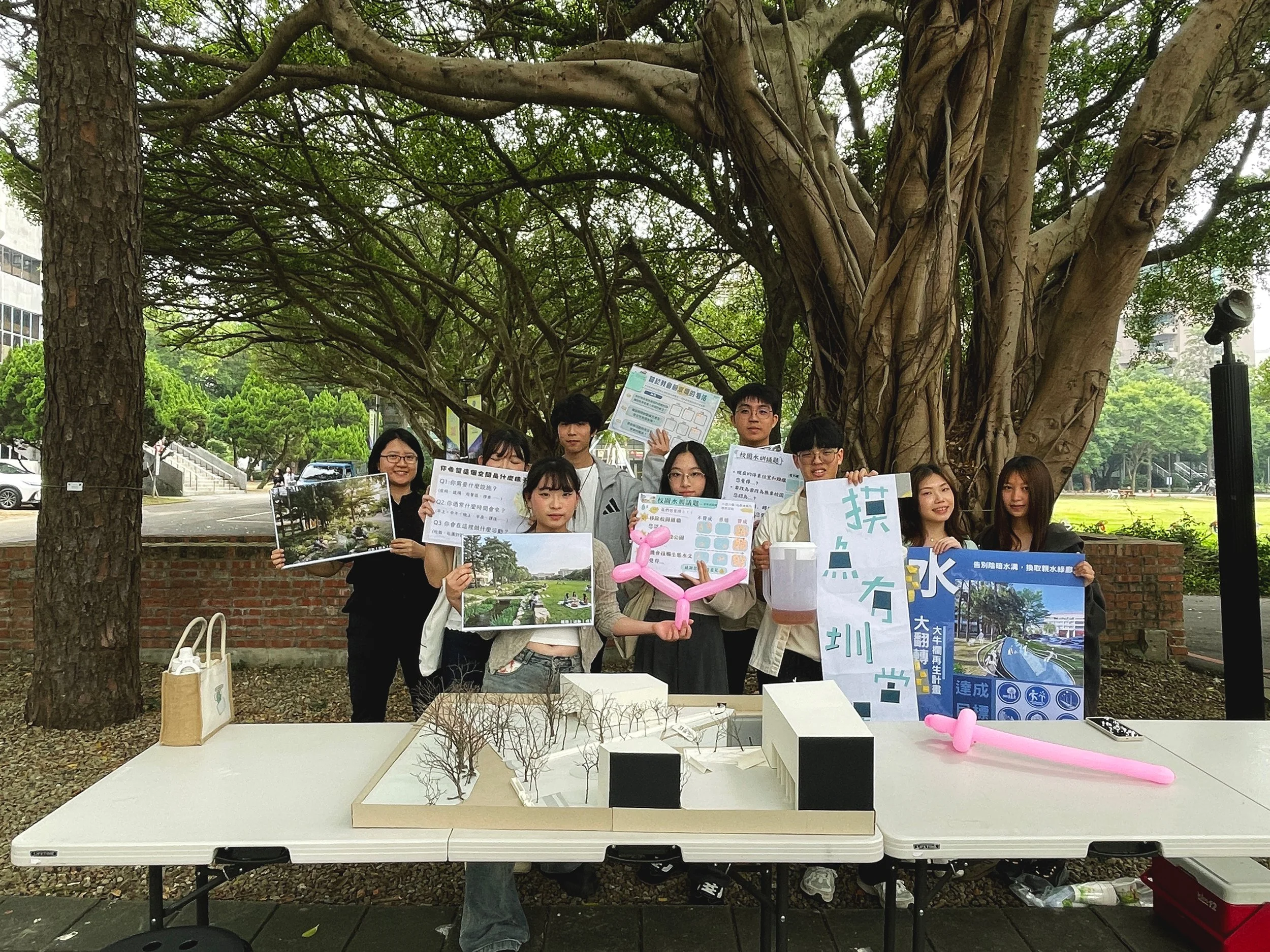
First-year undergraduate studio exploring participatory design to transform a disused irrigation ditch into a multifunctional, climate-resilient campus landscape. Photography courtesy of Chen-pei Chou.
Finally, what advice do you have for those starting their career?
Always have a sense of wonder and never limit yourself to what you think you already know. Practice active listening and sense the world from vastly different perspectives. We ought to remember that exceptional design does not merely entail ‘creating’ a new physical environment upon a blank slate. Rather, it represents an act of stewardship, dialogue, and interpretive re-disclosure toward the layers of life that already exist within a site.
This interview has been edited and condensed for clarity.