Instilling Kuleana: University of Hawai’i's Cathi Ho Schar on Accountability, Relationships, and Connections to Place
By Julia Gamolina
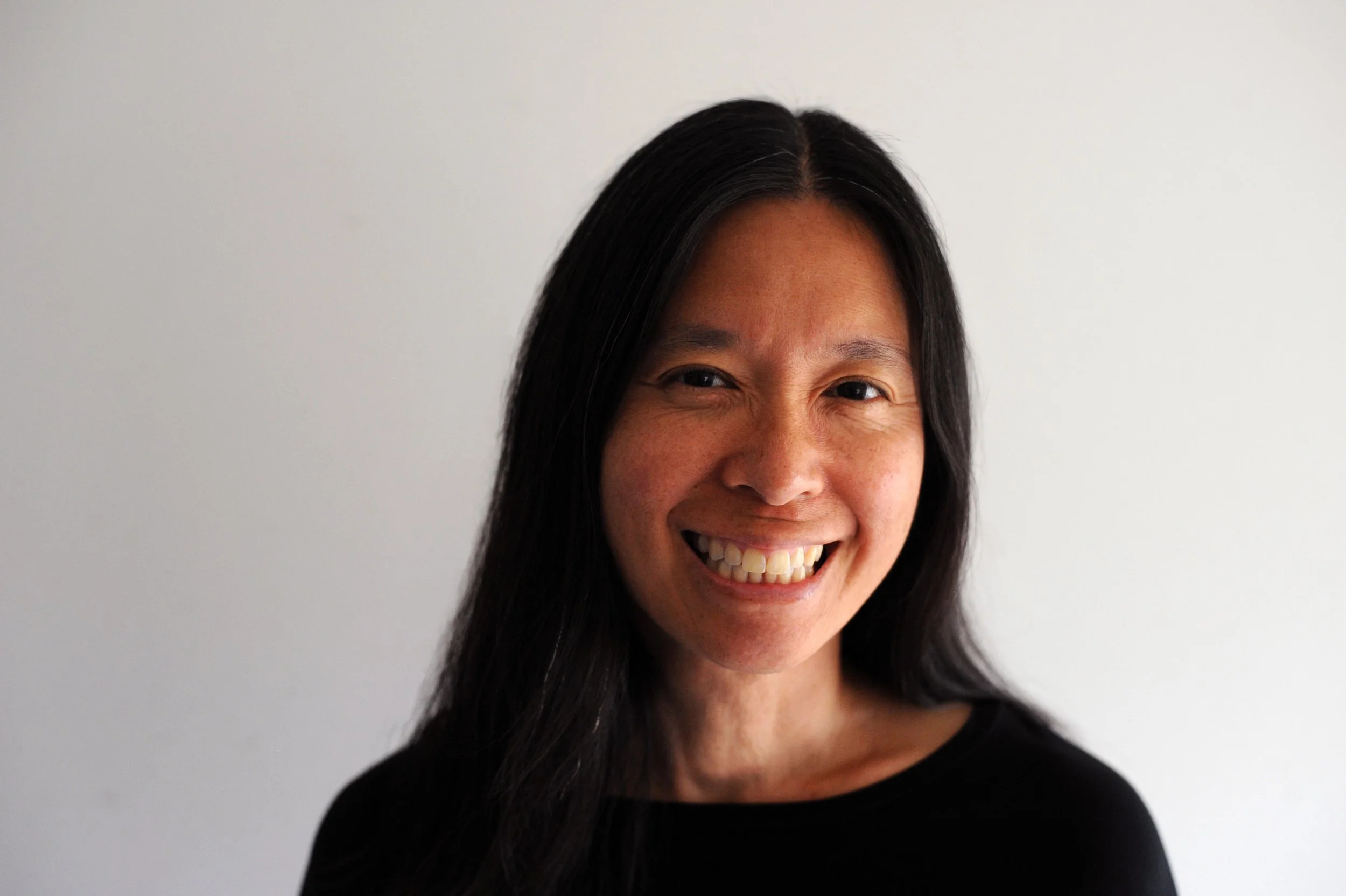
Cathi Ho Schar is an Associate Professor at the University of Hawai’i at Mānoa School of Architecture. Since 2016 she has served as the inaugural director of the University of Hawai’i Community Design Center, where she focuses on public-sector, public-interest teaching and practice. Her work operates at the intersection of university, government, and community stakeholders with a focus on health, housing, justice, and food systems.
In 2021, she was elevated to membership in the AIA College of Fellows and elected to a four-year term on the ACSA board of directors, serving as president from 2024-25. Cathi was born and raised in Honolulu, Hawai’i. She received her B.A. from Stanford University and M.Arch from U.C. Berkeley and led a small women-owned architectural practice before joining the university.
JG: What's the most interesting thing you're thinking about these days as it relates to your work? What would you like more people to know about?
CHS: I am thinking about the recent effects of climate change on our islands and the world. In the last six months the state closed four times for storm events and sustained over a billion dollars in damages, with El Nino still ahead. Right now we are surrounded by three hurricanes. Our planners and designers are balancing disaster resilience, response, and recovery all at once, with limited resources available for each.
Our students need to learn how to do this too, along with developing the knowledge and skills to work with communities who have experienced profound loss. I am thinking about what we need to do to prepare students and faculty to work more effectively in this context.
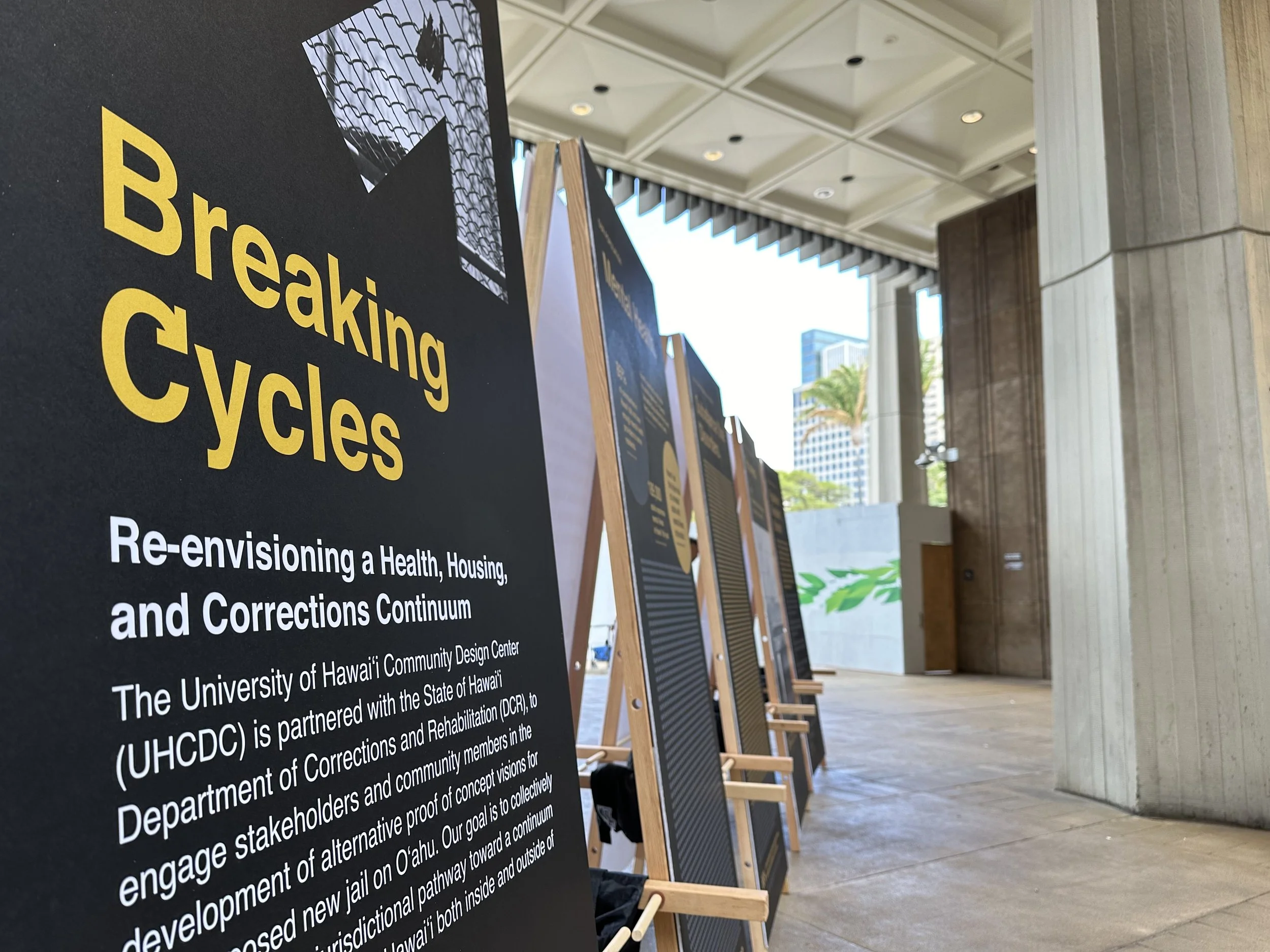
Breaking Cycles Exhibit at the State Capitol. Image credit UHCDC Breaking Cycles team.
You studied fist at Stanford and then at UC Berkeley. What do you take away from your time at both schools that informs your approach today? How did both places shape you?
I was at Stanford before the formalization of the Design School and Architecture program. Without those options, I developed an individually designed major that provided me with a foundation in design thinking and the firm belief that design can solve any problem.
UC Berkeley strengthened this foundation with critical and analytical skills and a peer group of rigorous thinkers and lifelong friends. I treasure the text threads, email chains, and reunions with this group that keep us connected. My core values come from my upbringing in Hawaiʻi, but my optimism, criticism, and support network started in these places with these people.
What was some of the best advice you got early on that has informed your approach to your work and career?
I was in a summer internship at the Corporation Counsel for the City & County of Honolulu when one of the lawyers made a compelling argument for pursuing what I cared about most, which I realized was not law. This led to me changing majors and pursuing architecture at a university without an architecture program. In retrospect, I think I designed a degree, started a practice, and then moved to the university with the same motivation.
Very early on someone also told me that relationships matter, which is true everywhere but is even more important to all of us living and working on an island. Relationships anchor everything we do as a community design center. They underlie the opportunities and agency that we have as individuals and as a collective. They also represent years of trust-building and follow-through. Through this work, students learn about their accountability to the people we work with and engage. Their work is situated within a much broader network of relationships.
“Very early on someone also told me that relationships matter, which is true everywhere but is even more important to all of us living and working on an island.”
Tell me about your professional experiences before coming to the University of Hawai'i. What did you learn with each step?
After graduate school, I returned home, worked for Urban Works, a firm known for itʻs light touch and design sensitivity, and started teaching design studios at the university. Four years later, I co-founded a small architectural practice, Collaborative Studio LLC, with a colleague, Kelly Irvine, now Kelly Cathey. We were both thirty years old and quickly learned what it felt like to be accountable for every part of both a business and an architectural practice, including getting the printer to print. The experience simultaneously pushed us to be self-sufficient and to know when to ask for help.
Our work explored affordability almost at a shoestring scale. We were sourcing materials — flooring, windows, doors, finishes, even insulation — through salvage and re-use and re-thinking construction assemblies, especially conventional wood framing and pre-manufactured truss systems. Our work minimized materials and labor while maximizing space, light, and ventilation. All of our projects that received AIA Honolulu Design Awards were constructed for $400K or less. One of our design award certificates reads, “Creative efficiency and maximized budget.” That ethos absolutely transferred to my ten years teaching at a public university and working with public sector partners. I feel like I am always working with a do-more-with-less set of parameters and aspirations.
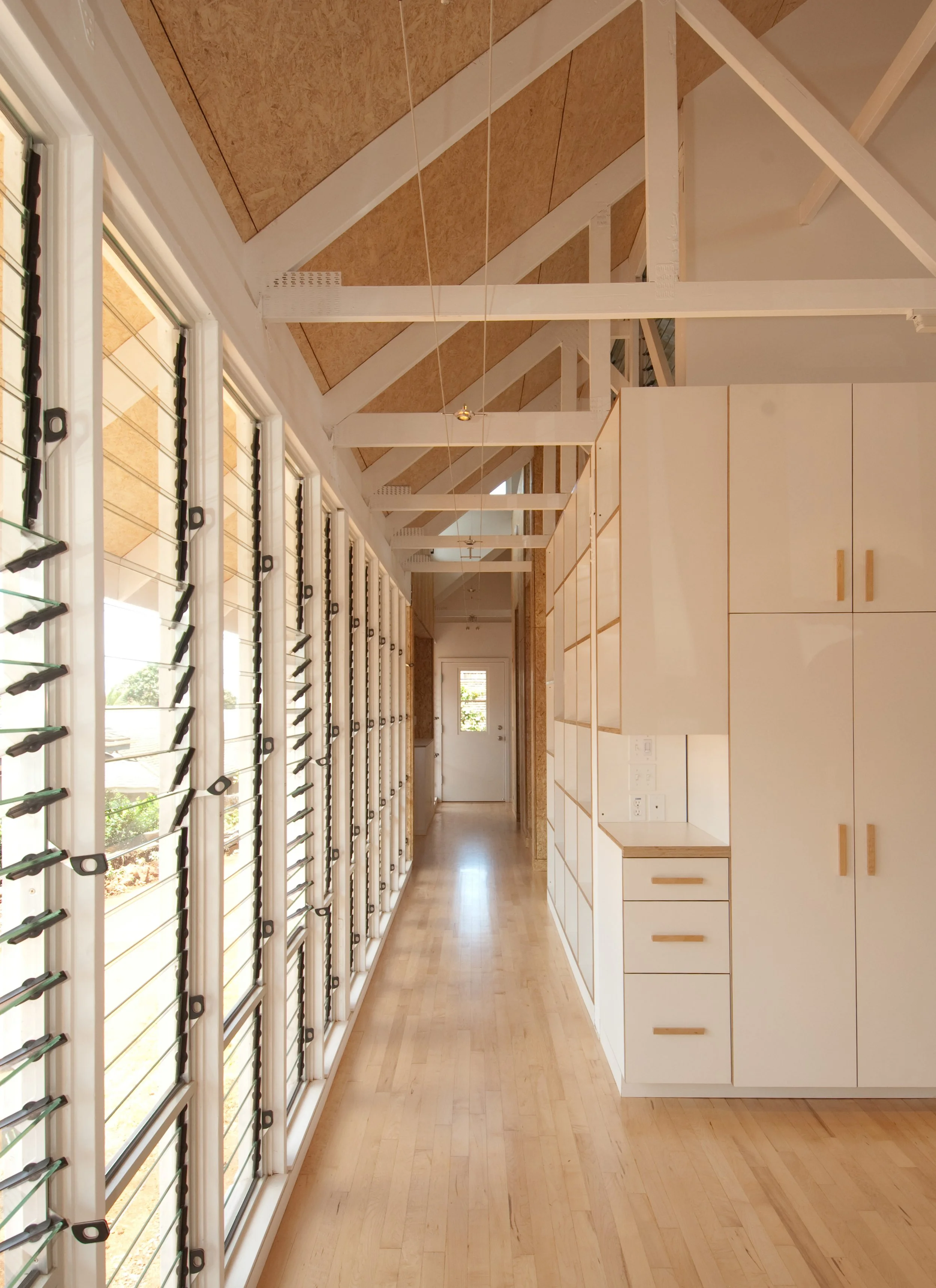
Ariyoshi Residence. Photography by Collaborative Studio LLC.
Looking back at it all, what have been the biggest challenges? How did you both manage through perceived disappointments or setbacks?
What I find most challenging is life balance. As an educator, director, community designer, and mom, I feel accountable to students, faculty, staff, clients, community members, and my children. My disappointment is in disappointing them, which is sometimes unavoidable and sometimes unintentional. Those disappointments stick. I continually work to manage this.
I learned to seek out guidance and accept support from peers, mentors, and coaches. I also accept that I can only be myself, and that being myself comes with limitations. Self-care is important — healthier foods, better sleep, more exercise, quality family time, watching Ted Lasso. Getting into an outrigger canoe is rare for me these days, but is instantly mind-clearing and heart-filling. I am relieved by the direct connection to the ocean and land and the unspoken commitment to paddling together. And then, with most setbacks, the only option is to learn and live on.

A rare off-season outrigger canoe practice with Hui Nalu on Maunalua Bay. Courtesy of Cathi Ho Schar.
Who were your mentors through it all?
At home, both my parents modeled generosity, reciprocity, and accountability in the way they interacted with us and in their orientation to others. They instilled a responsibility to give back and pay forward.
During my early years in practice, I was supported by a professional family at Urban Works Inc., who are still peers and mentors today. The AIA Honolulu community became an expanded support network when I became a young firm owner. Within the university, I was recruited and supported by Daniel Friedman, the former dean who established the center and provided opportunity, space, and advocacy in ways that redefined what mentorship means to me. Hawaiʻi State Senator Donovan Dela Cruz redefined what support and partnership can look like between a university and government.
I entered the community design center world with guidance from the greatest— Dan Pitera and Ceara OʻLeary from the Detroit Collaborative Design Center, Ann Yoachim and Nick Jehnish from the Small Center for Collaborative Design, and Stephen Luoni from the University of Arkansas Community Design Center. I encourage students to seek out mentors throughout their lives because these people have been so transformative to mine.
“Kuleana is a Hawaiian word and concept that describes a sense of privilege and responsibility to place and community...I have seen our School of Architecture embrace our own institutional kuleana, and I believe that all architecture schools have the same potential.”
Who are you admiring now and why?
I appreciate the talents and tenacity of other community designers. I am continuously impressed with the sustained work of my peers at the University of Hawaiʻi — Karla Sierralta, Judith Stilgenbauer, Priyam Das, Kimi Makaiau, Lorinda Riley. Their long-term work to advance housing access, coastal resilience, community planning, food independence, and health equity demonstrate the potential for university-based practices that span architecture, landscape architecture, and planning, and public health.
In addition to those people who I consider mentors, I also deeply admire Michaele Pride and Janette Kim, at the University of New Mexico Design and Planning Assistance Center. I am very much looking forward to welcoming Deanna Van Buren from Designing Spaces + Designing Justice to our university this fall. Over the last ten years, I've had the chance to partner broadly on projects related to our carceral and criminal justice system, and I am excited to sit down with someone whose work enriched and informed our project.
What drives you the most? And what is the impact you’d like to have on the world?
Kuleana is a Hawaiian word and concept that describes a sense of privilege and responsibility to place and community. I hope that our students leave our school with this sense. I hope that the opportunities that we offer to connect them to community voices and needs contributes to this. I have seen our School of Architecture embrace our own institutional kuleana, and I believe that all architecture schools have the same potential. I hope that UHCDC makes the case for architecture schools and community design centers as catalysts for multi-disciplinary collaboration, long term partnership, and broader impact.
I have colleagues at community design centers that are twenty, forty, and over fifty years old. My deep hope is that UHCDC will continue to serve generations of students, staff, faculty, and community partners with similar longevity and impact.
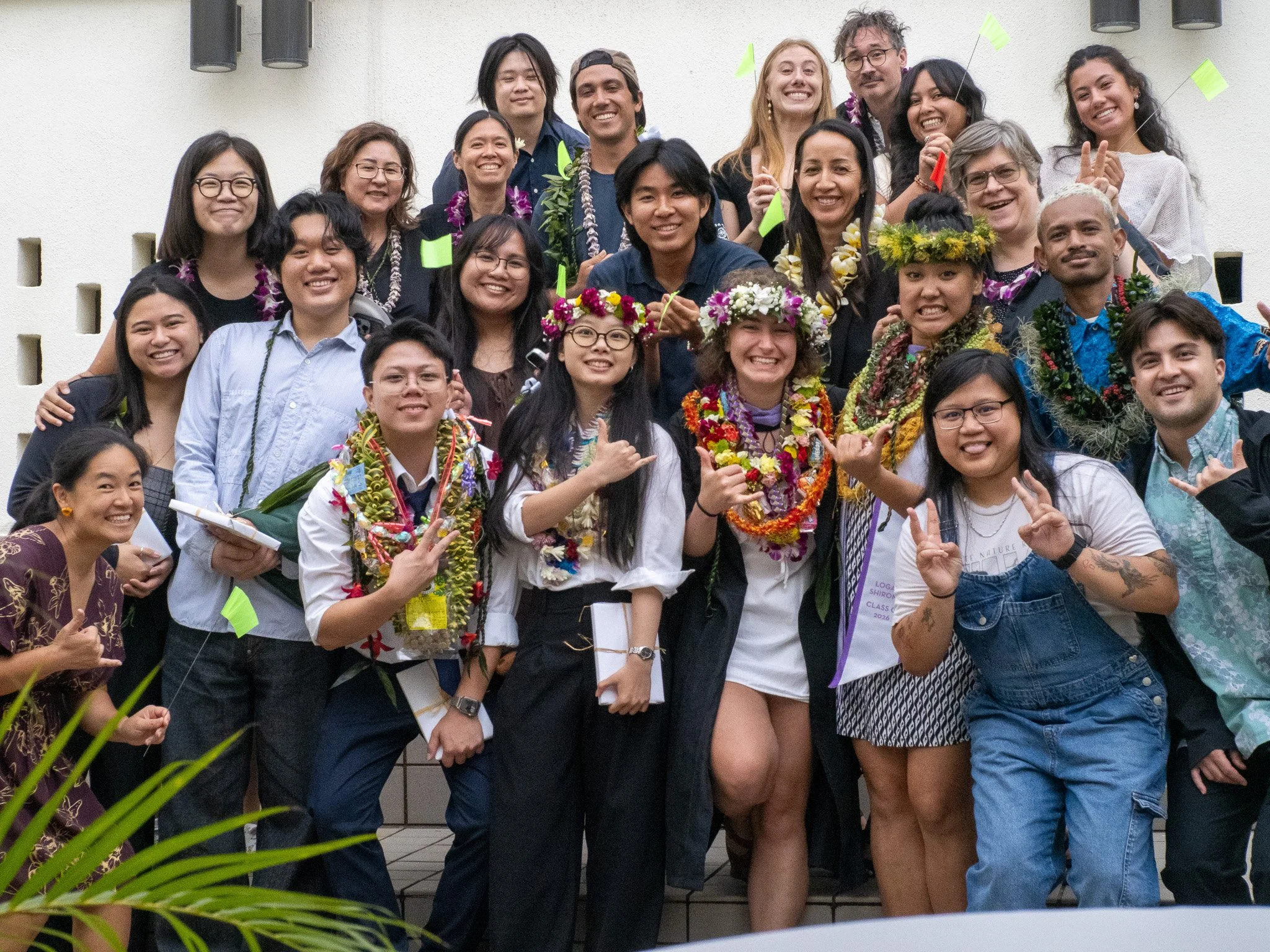
UHCDC/University of Hawaiʻi at Mānoa School of Architecture 2026 graduates. Photography by UHCDC.
Finally, what advice do you have for those starting their career?
I’m surrounded by students about to start their careers, so there’s always a lot to say. I do remind students to give themselves grace, ask for help, and take care of each other. These are life skills they will need to navigate lives, careers, and uncertain futures together. What I appreciate most about getting to know students and their work is the opportunity to help them see their own value and full potential. That, more than any advice from me, is more important for them to carry forward.
This interview has been edited and condensed for clarity.