Feminist Approaches: Yale University's Professor Emerita Dolores Hayden on 21st Century Cities and Infrastructure to Support Women
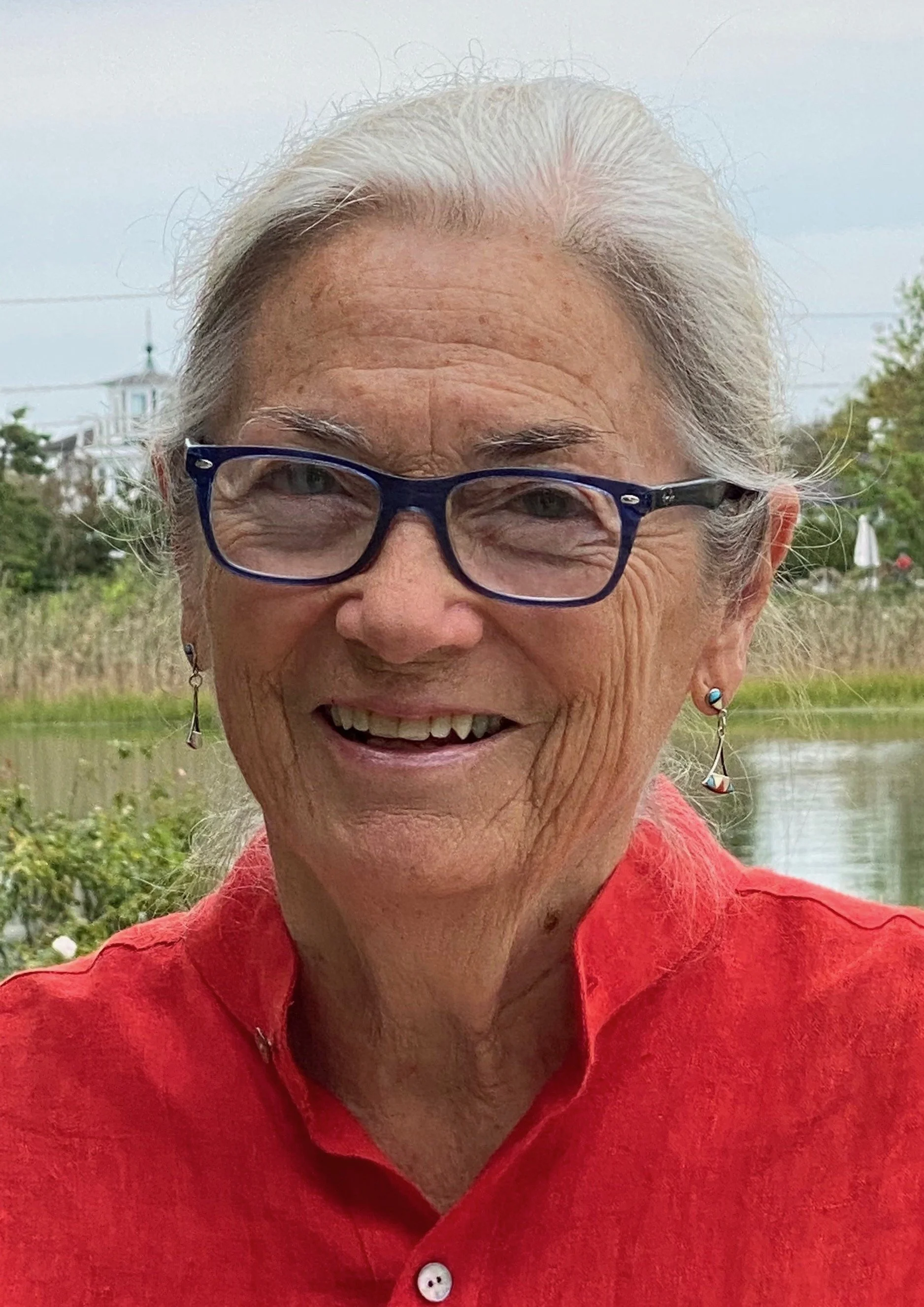
Dolores Hayden. Photograph by Barbara Marks.
By Julia Gamolina
Dolores Hayden is professor emerita of architecture, urbanism, and American studies at Yale University. An urban historian and architect, her books on the politics of the built environment include The Grand Domestic Revolution, Redesigning the American Dream, The Power of Place and Building Suburbia. In the 1980s, she founded a non-profit preservation practice in Los Angeles recognizing the women, men, and children of all ethnic and racial backgrounds whose labor built the city, The Power of Place.
JG: You've written so much on the social importance of urban spaces, on domesticity — which you also looked at critically during the pandemic — and on landscape. What are you thinking most about these days?
DH: "How do you define a domestic revolution or a feminist city?" Tatiana Bilbao asked me in our keynote conversation for a recent Yale symposium, "Domestic Revolutions and Feminist Cities." Tatiana and Annie Barrett organized the symposium to highlight housing and infrastructure designed to support women, and dedicated it to me.
Back in 1980, I wrote an article, "What Would a Non-Sexist City be Like?" for Signs. I argued that the 19th century idea of "woman's sphere" was spatial segregation that restricted women to domestic pursuits, while men could go anywhere.
A domestic revolution was required and so I wrote The Grand Domestic Revolution, where I identified a group of 19th century women who did reject "woman's sphere." One of my favorite experiments in Cambridge, Massachusetts, was a producers’ cooperative for cooking, laundry, and mending. Wives presented cooked food and clean clothing to husbands, for cash on delivery. A sensation! A Chicago suffragist formed a neighborhood dining club for women who took over their own dining rooms as movement offices. A woman scientist designed public kitchens like MIT labs to provide nutritious food in working-class neighborhoods. A single-parent writer promoted a Feminist Apartment Hotel with childcare in Greenwich Village. A philosopher created a work-life curriculum for students at a women’s college, as well as child care and takeout food for faculty members. And both women and men wrote novels about feminist cities of the future, where women were equal citizens.
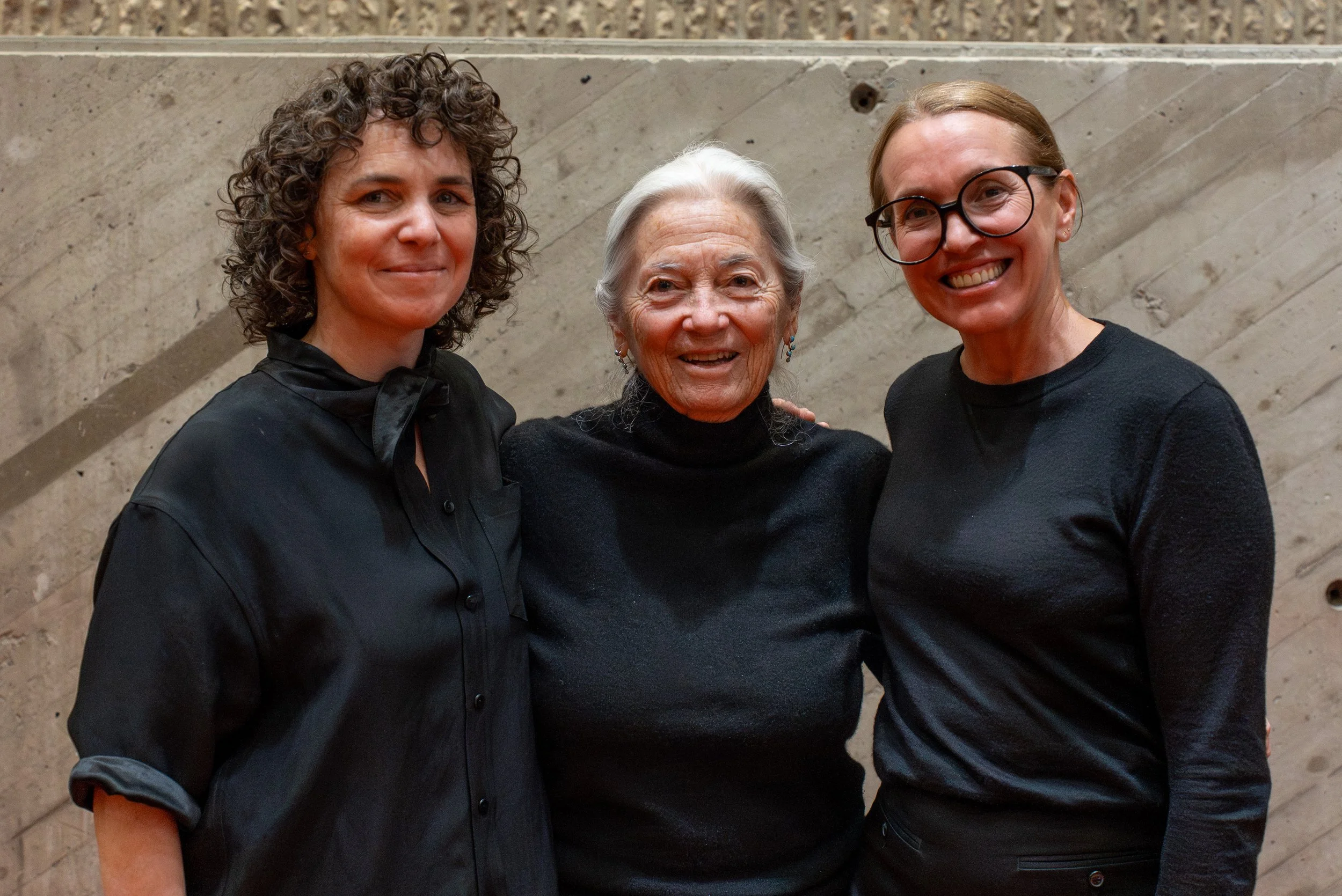
Annie Barrett (co-organizer), Dolores Hayden, and Tatiana Bilbao (co-organizer), "Domestic Revolutions and Feminist Cities," Yale School of Architecture, April 9-10, 2026. Photograph by Benjamin Piascik.
Where are we in all of this today?
I predicted that cities in the 21st century would need to be very different to meet the needs of women who were balancing paid work and public life with traditional nurturing, but the legacy of the material feminists' work has mainly been forgotten, although their projects still sound very contemporary. Some efforts continued through World War II, yet they vanished when Rosie the Riveter was laid off and wartime child care centers shut down. Nurturing work became invisible again in metropolitan regions dominated by single family houses.
In contrast to the United States experience since 1945, the recent Yale symposium featured architects, urban planners, and political leaders who are designing and constructing feminist projects around the world. They aim to “Rediscover the city through women’s eyes.” Attendees saw cutting-edge work mostly unknown here. The enthusiastic audience in New Haven and on livestream was the largest anyone could remember for a Yale School of Architecture event.
Over those two days in April, we had many lively conversations about women, but no one is asking me about girls yet. I'm intrigued by "Make Space for Girls" campaigns in England advocating an egalitarian approach to the design of parks and playgrounds. I'm also intrigued by a Danish project on the transformation of single-family neighborhoods.
“...we had many lively conversations about women, but no one is asking me about girls yet. I’m intrigued by ‘Make Space for Girls’ campaigns in England advocating an egalitarian approach to the design of parks and playgrounds.”
How did studying at Mount Holyoke and Harvard shape your approach to the built world and to your writing and poetry?
As an undergraduate at Mount Holyoke, I took courses in literature, creative writing, art history, and studio art. A distinguished poet and translator, Robert Fitzgerald, taught a lively versification seminar. Dorothy Cogswell, head of the art department, encouraged me to pursue art history and found me a part-time job with Jean and Leonard Brown, prominent collectors of Dada, Surrealism, and Fluxus. She supervised my senior essay on Dada, where the highlight of my research was interviewing Marcel Duchamp in New York. Both Fitzgerald and Cogswell taught me skills I needed.
In 1967 I headed to the Harvard GSD to earn a professional degree in architecture. Here I developed design skills along with a lifelong interest in the design of housing and neighborhoods, but the Harvard architecture professors, all white men, did not encourage women students. There were very few of us and no extensive feminist analysis had yet been developed on gender and architecture. With several other students, I founded WALAP — Women in Architecture, Landscape Architecture, and Planning. Two of us handed out fliers at graduation to demand that the department hire women architects to teach studios. The next year, they hired Joan Goody, but recognizing the gender stereotypes embedded in the built environment would take decades.
Who were your mentors through it all?
Women of my generation found it difficult to locate mentors in architecture. As a third year grad student, when I researched the design of nineteenth century communitarian socialist towns in the United States, my advisors — all outside architecture — included architectural historian John Coolidge, writer J. B. Jackson, planner Chester Hartman, and landscape historian Albert Fein. As I was about to graduate, the professional job market in architecture crashed. I was rejected for thirty jobs, so I applied for a Beatrix Farrand Fellowship to continue my research.
Winning that fellowship, named for a famous woman landscape architect, led me to mentors and colleagues at the College of Environmental Design at UC Berkeley, where Catherine Bauer Wurster had been an early faculty member. My office mate was Clare Cooper, a housing expert, and I was hired for a brief teaching stint by architecture professor Rosalyn Lindheim.
Next I taught at MIT, where I met Whitney Chadwick, a feminist assistant professor and lifelong friend whose Women, Art, and Society became a pathbreaking art history textbook. As a fellow at the Radcliffe Institute in Cambridge, I encountered women professors in the humanities who urged me to develop the spatial argument of The Grand Domestic Revolution: A History of Feminist Designs for American Homes, Neighborhoods, and Cities. At UCLA, my urban planning colleagues offered strong support, and beginning in 1979, we held five conferences on feminist approaches to architecture and urban planning.
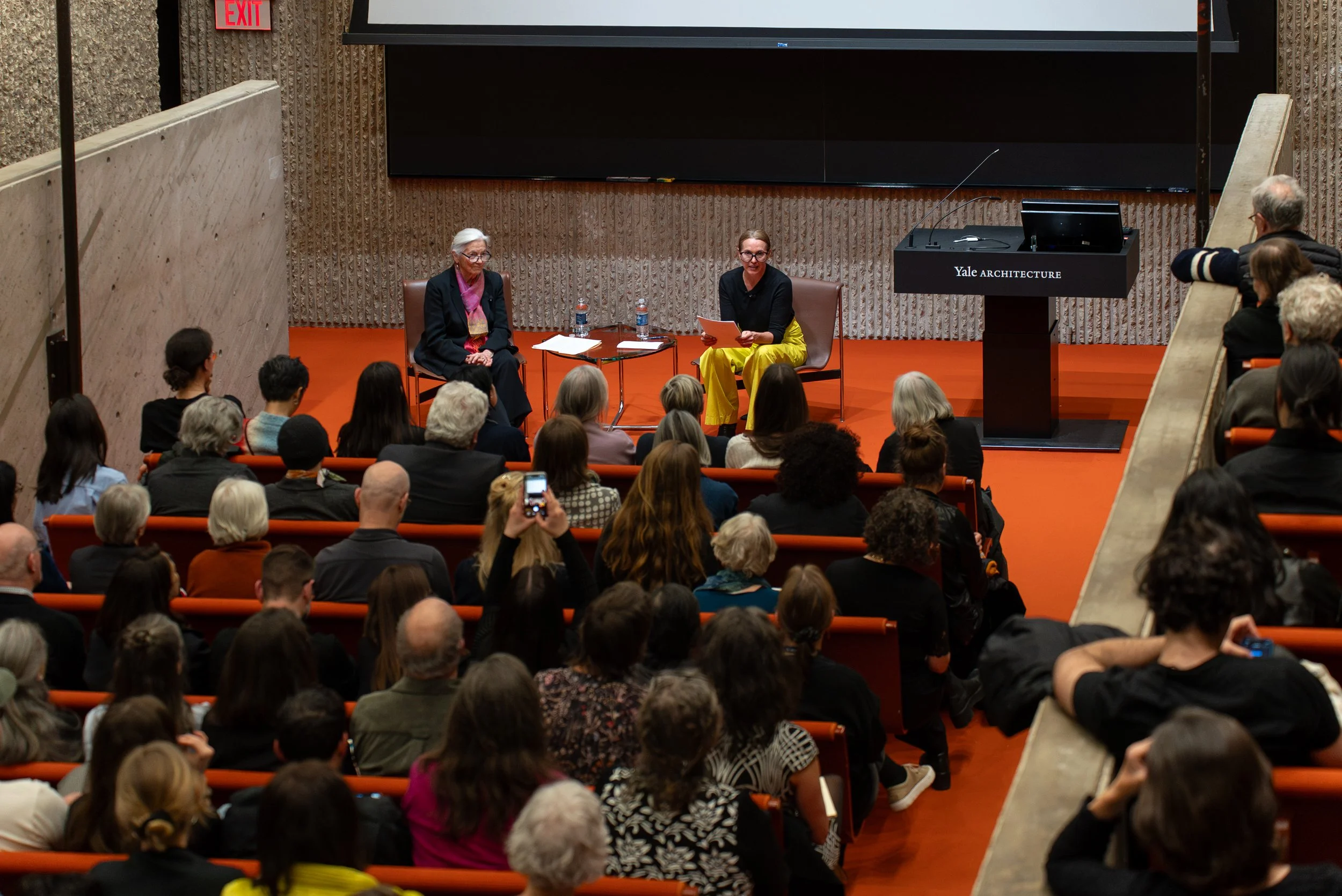
Dolores Hayden and Tatiana Bilbao, keynote conversation, "Domestic Revolutions and Feminist Cities," Yale School of Architecture, April 9-10, 2026. Photograph by Benjamin Piascik.
What was some of the best advice you got early on that has informed your approach to your work and career?
Early on, my husband, Peter Marris, a sociologist, helped me to master the art of writing strong grant proposals. Fellowships from the NEH and the Rockefeller Foundation allowed me to finish The Grand Domestic Revolution. A Guggenheim Fellowship supported Redesigning the American Dream and another from The American Council of Learned Societies funded the start of The Power of Place.
Architects interested in the humanities or the social sciences might want to explore similar funding opportunities.
How do your years of focusing on the built environment inform your poetry, and vice versa?
Understanding of time and place undergirds all storytelling, but poems are never about arguments and evidence. "I Have Seen the Future," my presidential lecture on Interstate highways for the Urban History Association, is very different from "Without a Particle of Car Trouble," my narrative poem for the Missouri Review in the voice of Alice Ramsey, the first woman to drive across the country in 1909.
Poetry thrives on close attention to sight, sound, touch, taste, and smell, so writing a poem can be a bit like designing a site-specific building. Surprises and swerves add verve. In Exuberance, my most recent collection, I capture the voices of stunt pilots from the earliest years of aviation, men and women who performed in the air at a time when most Americans had never seen a plane.
“Poetry thrives on close attention to sight, sound, touch, taste, and smell, so writing a poem can be a bit like designing a site-specific building. Surprises and swerves add verve.”
Looking back at it all, what have been the biggest challenges? How did you both manage through perceived disappointments or setbacks?
Though I was trained and licensed in architecture, my career expanded to urban history, then to women's history, urban planning, and American studies. As I pursued spatial issues larger than the scale of a single building, I moved from thinking about small model towns to large cities and vast suburban regions. Something similar happens to architects who engage with sustainability; soon they are thinking beyond the building to the region, the nation, and the globe.
Through it all, the most important challenge was finding work-life balance. I am fortunate my late husband Peter, and my daughter, Laura Hayden Marris, both writers themselves, created a joyous family life with me. One setback even became the tag line for a family joke: when a committee of architects vetoed me for a book prize, complaining The Power of Place: Urban Landscapes as Public History had "too many people in it," sociologists and anthropologists rallied to my defense and awarded me the equivalent prize in their field.
Who are you admiring now and why?
I admire Heather Cox Richardson's Substack, "Letters from an American." She is a courageous professor of American history who analyzes contemporary political events in their historical context for over two million readers daily. I'm also cheering for the former Secretary of Transportation, Pete Buttigieg, who asks, "Want change? You are not alone."
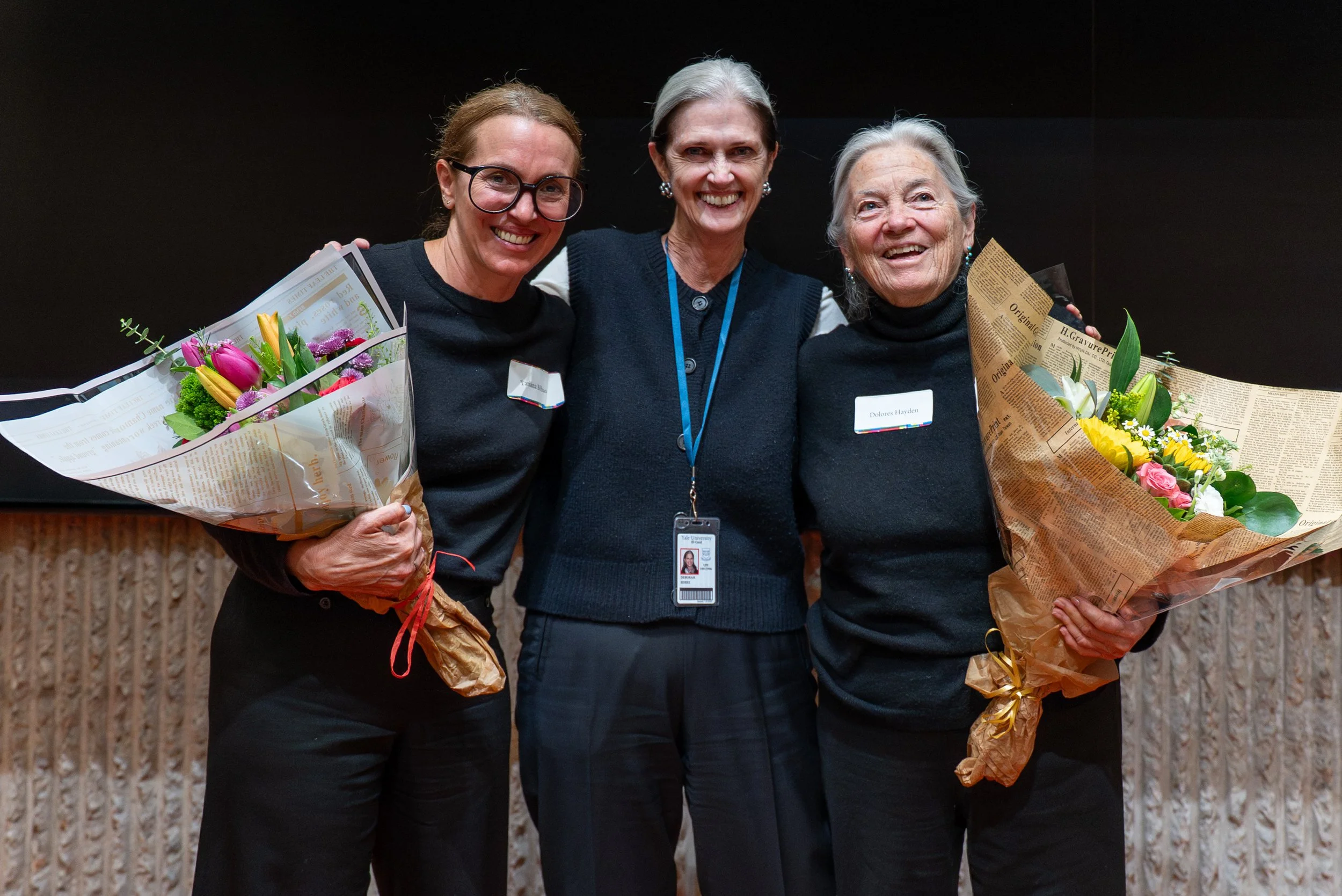
Tatiana Bilbao, Deborah Berke (Dean of YSoA), and Dolores Hayden, "Domestic Revolutions and Feminist Cities," Yale School of Architecture, April 9-10, 2026. Photograph by Benjamin Piascik.
What drives you the most to do the work that you do? What is the impact you’d like to have on the world?
Infrastructure for care work is still missing in the US, although reproductive labor, usually done by women, often unpaid and unrecognized, undergirds all economic activity. Care work must be understood as foundational to housing design and urban design, because it is the necessary labor that makes all other work possible.
In terms of impact, I retired from teaching a decade ago, but my articles and books have been translated into ten languages. I work as a volunteer to elect leaders who support economic and social justice.
Finally, what advice do you have for those starting their career? Do you have any specific advice for women?
Seek out multiple mentors, rather than waiting for one mentor to choose you. Then, stay in touch with all your mentors over the years to build multiple types of support. Network with colleagues. Read widely. Observe the places where you live and work with close attention. Above all, cultivate curiosity and keep asking questions. Women can expect to be challenged in their careers more often than men, but workplaces are better than they were half a century ago when I started.
This interview has been edited and condensed for clarity.