Connections to Land: Coen + Partners' McKenzie Wilhelm on Value, Regeneration, and Protecting Your Sense of Wonder
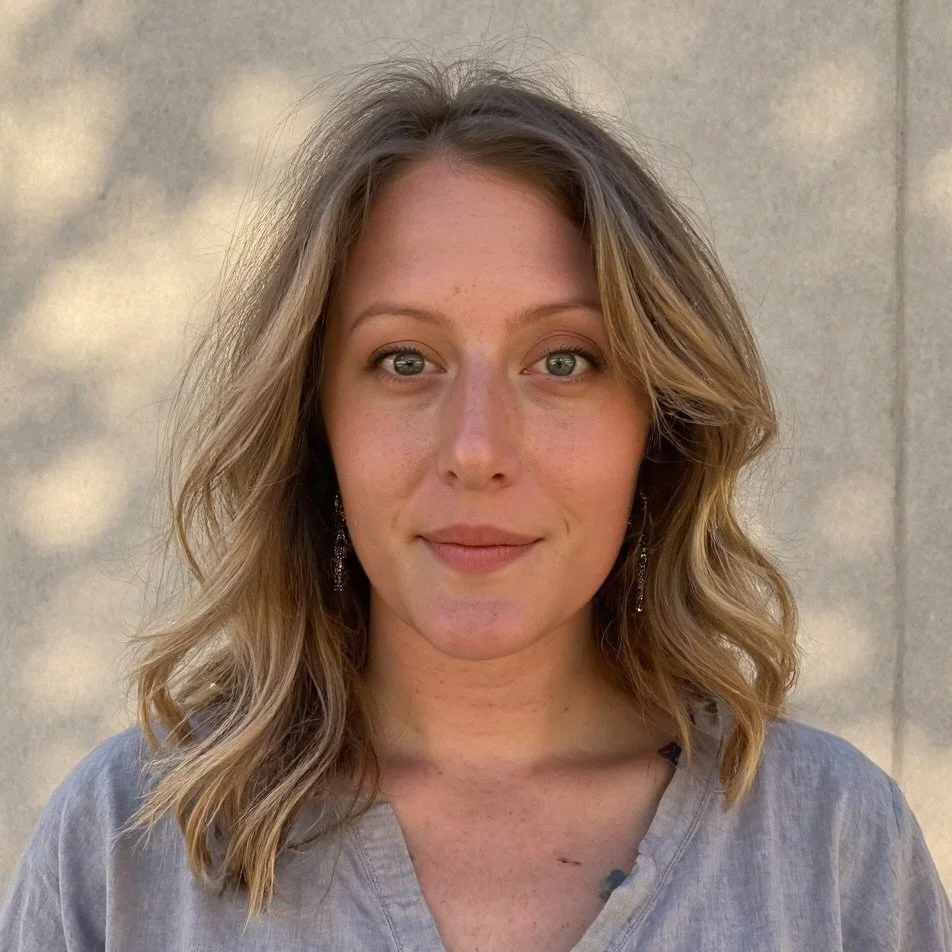
By Julia Gamolina
McKenzie Wilhelm, PLA, is a Partner and owner at Coen + Partners, where she leads the firm’s Regeneration Studio and advances land-based work at the intersection of ecology, culture, hospitality, wellness, and public life. Most recently, she led the Crystal Bridges Museum Expansion in Bentonville, Arkansas, designed alongside Safdie Architects. She serves on the ASLA Foundation Board and is focused on expanding the role of landscape architecture in shaping regenerative, culturally grounded, and deeply human places.
JG: You’ve written that “the most valuable places of the next era will be regenerative.” What are you focused most on these days that aims toward this?
MW: I am most focused on helping clients, teams, and communities understand that regeneration is not a niche sustainability position, but a more intelligent way of creating value. For a long time, I have seen land treated as a site, a parcel, an asset, or a backdrop for a development pro forma. But land is living infrastructure, holding a complex web of relationships that range from microbes and mycelia to watersheds, as well as cultural memory. The most successful places of the next era will be the ones that understand the deeper systems already at work and know how to participate in them.
That is where my work is focused now: shaping places where ecology, human health, culture, and economic performance operate as one system. At Crystal Bridges, the movement of water became a defining framework. When we work with the land’s natural intelligence and capacity to flourish, we compound long-term value for people, ecology, culture, and climate.

Crystal Bridges Museum Expansion Landscape in Bentonville, Arkansas. Photography by Tim Hursley.
Since the start of your studies, you’ve always focused on landscape architecture. Why did you want to enter this field, and what were you hoping to do in the world?
I grew up in a farming family in Northwest Ohio where I watched my parents read land through weather, soil, water, timing, and care. Agriculture teaches you that land is alive and responsive and that you are never separate from it. I also had an aunt who was a portrait photographer, and from her I learned another form of attention — how to see not just the image of a person, but to frame and capture their essence.
Landscape architecture eventually became the place where those two ways of seeing came together for me, the material and the emotional. Landscape architecture is also one of the few design disciplines that asks us to think across time. We have to design not just the moment of opening, but for the way a place will grow, evolve, adapt, and be loved for years to come. What I was hoping to do in the world, even early on, was help people feel more connected to land, to each other, to time, and to something larger than themselves.
What was some of the best advice you got early on that has informed your approach to your work and career?
Early in my career, I read Gary Hilderbrand’s essay “On Seeing,” and it stopped me in my tracks. That essay gave language to something I already felt in my bones: that this work is not only about making places, but about cultivating a way of perceiving the world. That idea has stayed with me because landscape architecture rewards patience. The best work often comes from slowing down enough to understand the forces beneath the surface. Where does water want to move? What plants already belong here? What would make people feel safe, alive, restored, or connected?
I also learned that rigor and intuition are not opposites. The strongest designers I admire are not choosing between research and feeling. They are building enough knowledge that their intuition becomes more precise. That has shaped how I lead. I push teams to bring craft, discipline, and technical excellence, but I also encourage them to stay awake to wonder and their own creative genius.
“...rigor and intuition are not opposites. The strongest designers I admire are not choosing between research and feeling. They are building enough knowledge that their intuition becomes more precise.”
Tell me about your earlier professional experiences. What did you learn with each step?
During my time in Boston, especially at Reed Hilderbrand, I deepened my understanding of craft, restraint, and contextual thinking. That experience sharpened my eye and taught me that not every project needs to announce itself loudly. Some of the most profound design moves frame the wonder of the natural world without overwhelming it.
At MKSK, I was exposed to planning, civic work, and the complexity of large-scale urban systems. I began to understand how landscape architecture operates within the realities of cities, infrastructure, public process, and development. I learned how much clarity and relationships matter when many stakeholders are involved, and the stakes are high.
What have you learned so far in your role at Coen+Partners?
I learned that restraint and discipline did not mean thinking small. We’ve turned a high-voltage electricity corridor in Riyadh into the largest linear park ever to exist, an 83-mile-long community space programmed for gathering and activity. We’re working on projects that will turn now-arid regions into fertile places again. As ambitious as these projects sound, the success of them rely on the restraint that defines our approach. The key is not to erase complexity, but to integrate it so gracefully that the systems recede and go quiet.
When I became a Partner in 2023, my role shifted from delivering strong work to helping shape the conditions for strong work to happen across the practice. That has been one of the biggest transformations of my career and I am increasingly realizing that great leadership means stewardship: expressing a clear vision, developing the structure to realize it, inspiring others to join you, and empowering them to do their best work.
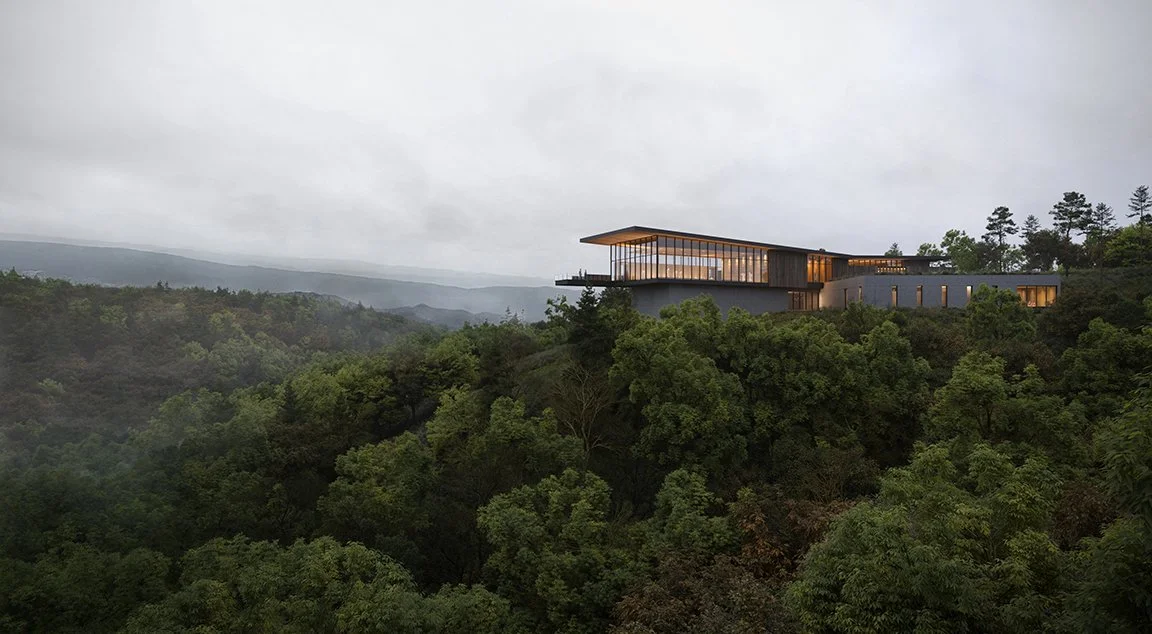
Shenandoah Nature Retreat in Star Tannery, Virginia. Courtesy of Coen+Partners.
Looking back at it all, what have been the biggest challenges? How did you manage through perceived disappointments or setbacks?
My biggest challenge, and triumph, has been to be disappointed without becoming cynical. I think cynicism is one of the great risks of creativity and leadership. You have to be both ambitious and patient, to remain discerning but not let the disappointments close your aperture.
I have always had a strong sense of possibility and can often see where a project, a team, or a practice could go before the structure exists to support it. That can be energizing and it can be painful, but in the end, it is motivating. There are seasons when the vision is ahead of the system, and part of leadership is learning how to build the bridge between the two.
Who were your mentors through it all?
Shane Coen has had an enormous influence on me; he helped define a way of working where landscape is not decorative or secondary, but essential. The Landscape Architecture Foundation and ASLA communities have also been important to me. Serving in those spaces exposed me to other people who see the profession not just as a career path, but as a civic and planetary responsibility.
And then there are the quieter supporters: my husband, my family, the land I grew up on, the places I return to, and the women I have watched build meaningful careers with courage and generosity. I think mentorship is often cumulative. You gather fragments from many people, and over time they become part of your own internal compass.
“Every hard and rewarding experience is data, and every gap in your knowledge is an invitation to shape the designer you are becoming.”
Who are you admiring now and why?
Ian McHarg gave ecological planning a language and urgency that still feels foundational. Cornelia Hahn Oberlander brought rigor, restraint, and deep ecological care to work that served both people and living systems. Andy Goldsworthy and James Turrell have shaped how I think about light, time, decay, material, and the quiet intelligence of natural processes. Agnes Denes showed that art can operate at the scale of ecology, philosophy, and collective consciousness. Christo and Jeanne-Claude made people see familiar landscapes anew, reminding us that a temporary act can permanently shift perception.
And beyond design and art, I am increasingly interested in people working at the scale of land stewardship itself. Ted Turner interests me for the scale of his conservation work and the question it raises: what is possible when ownership is paired with the ambition of ecological renewal and true land stewardship? I am also inspired by Doug and Kristine Tompkins, who have built a life around a relationship with land, and whose work in South America reflects an extraordinary commitment to rewilding, biodiversity, and long-term protection of living systems.
What is the impact you’d like to have on the world?
My core mission is simple: reconnect people to the earth and each other. So many of our generation’s greatest challenges — ecological, social, civic, spiritual, even personal — are symptoms of disconnection. We have become disconnected from land, from seasons, from food systems, from water, from community, from our own bodies, and from the consequences of what we build in the name of greater efficiency. I do not see that as an end state, but an opportunity for recognition and repair. We have never had better science, better technology or better tools to enable Landscape architects, owners, developers and our greater community to repair those relationships in tangible ways.
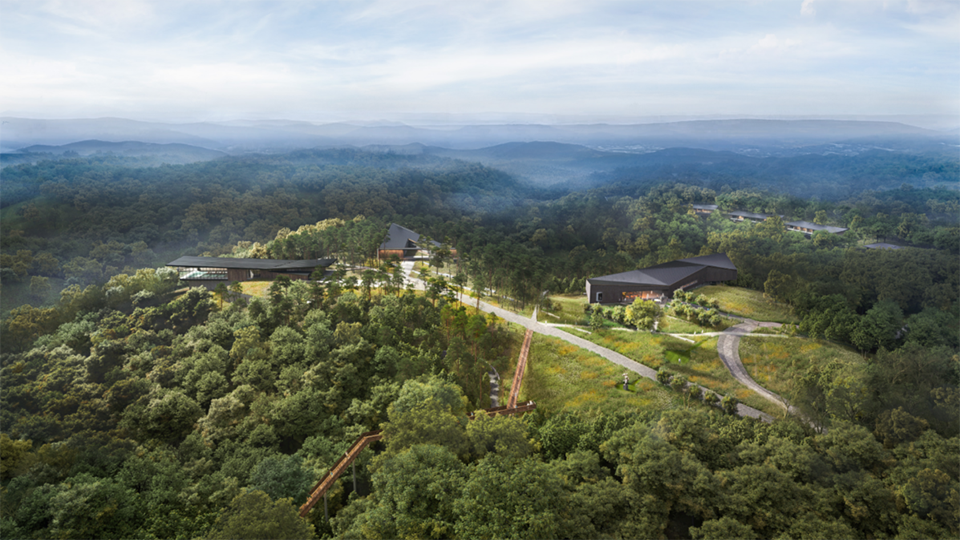
Shenandoah Nature Retreat aerial. Courtesy of Coen+Partners.
Finally, what advice do you have for those starting their career?
Protect your sense of wonder. This profession, and any profession solving difficult and complex problems, can be demanding. The work is ultimately about life and your career is something you cultivate. Choose the rooms, projects, mentors, collaborators, and questions that make you more courageous, make your work more impactful, and your soul feel more alive. Every hard and rewarding experience is data, and every gap in your knowledge is an invitation to shape the designer you are becoming.
This interview has been edited and condensed for clarity.