Remaining Fearless: COLLECTIVE's Betty Ng on Multiplicity, Openness, and Managing the Ecology of Practice
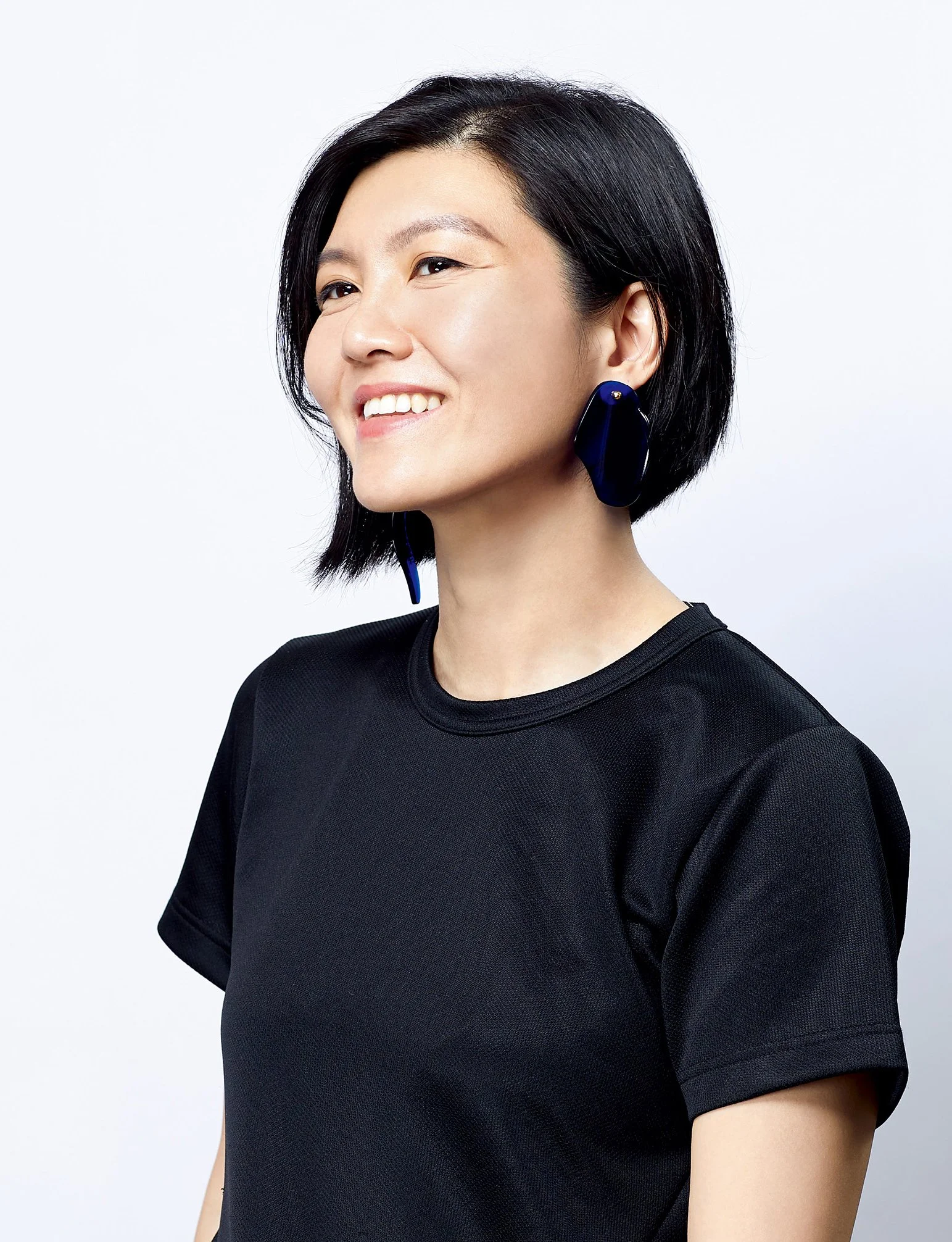
Betty Ng courtesy of COLLECTIVE.
By Julia Gamolina
Betty is the Founder of COLLECTIVE, a RIBA Chartered architecture office practicing Architecture, Interiors and Exhibition Design, headquartered in Hong Kong, with team members in London, Madrid, and Perth. Betty is a Registered Architect in the Netherlands, a RIBA Chartered Architect in the United Kingdom and an International Associate member of AIA, United States. Prior setting up COLLECTIVE, Betty was Design Director at OMA Rotterdam with Pritzker Prize Laureate Rem Koolhaas, leading a team of over forty architects. Betty has also practiced at Herzog & de Meuron in Basel, Massimiliano Fuksas in Rome, participated in on-site research for Chinese vernacular architecture at the Tibet Heritage Fund and the “Kaiping Diaolou and Villages” in Guangdong which is later recognized as an UNESCO designated World Heritage Site.
Betty is active in academia as an Adjunct Associate Professor at the Chinese University of Hong Kong (CUHK), teaching Master Architecture Design Studio. She holds an M. Arch. Post Graduate Degree from Harvard University and a B. Arch. Professional Degree from Cornell University. Engaged with the industry as a practitioner, Betty is a Nominating Committee of The American Institute of Architects (AIA) Hong Kong Chapter and just stepped down as a Committee Member of Royal Institute of British Architects (RIBA) Hong Kong Chapter. She is a Member of the International Women’s Forum, a Fellow of the Aspen Institute's China Fellowship Program.
In her interview with Julia Gamolina, Betty talks about an editorial lens for design, the power of the partons of architecture, and architecture as a team sport with strong captains.
JG: You've lived and worked all over the world — in Europe, North America, and Asia. What is top of mind for you for our profession, given that you’ve seen how architecture is executed in so many places?
BN: It’s funny you start with that because I’m currently on a business trip in Hangzhou. Two weeks ago, I was on-site in Shangri-La; last year we executed projects in Tokyo and Seoul; and we are currently developing a project in Massachusetts while collaborating with a German artist based in New York.
Living and working across vastly different geographies breeds an instinctual open-mindedness and a recognition that no single question has only one answer. This is precisely what I want to see reflected in our profession; there may be clear design principles, but there should never be a rigid formula. Rules are not to be broken — they are meant to be engineered, rewired, and penetrated.
What would you like to see for the future of the profession?
Patrons carry an equal weight of responsibility. We must refuse the industry's race to the bottom, the reliance on the lowest bidder, the loudest consultants, or the impossibly compressed schedules imagined by those who disregard hands-on design experience. We will transform the profession only when architecture is understood as an essential added value to life, culture, and business, rather than merely a marketing token used by decision-makers looking to spend the least capital in the shortest amount of time.
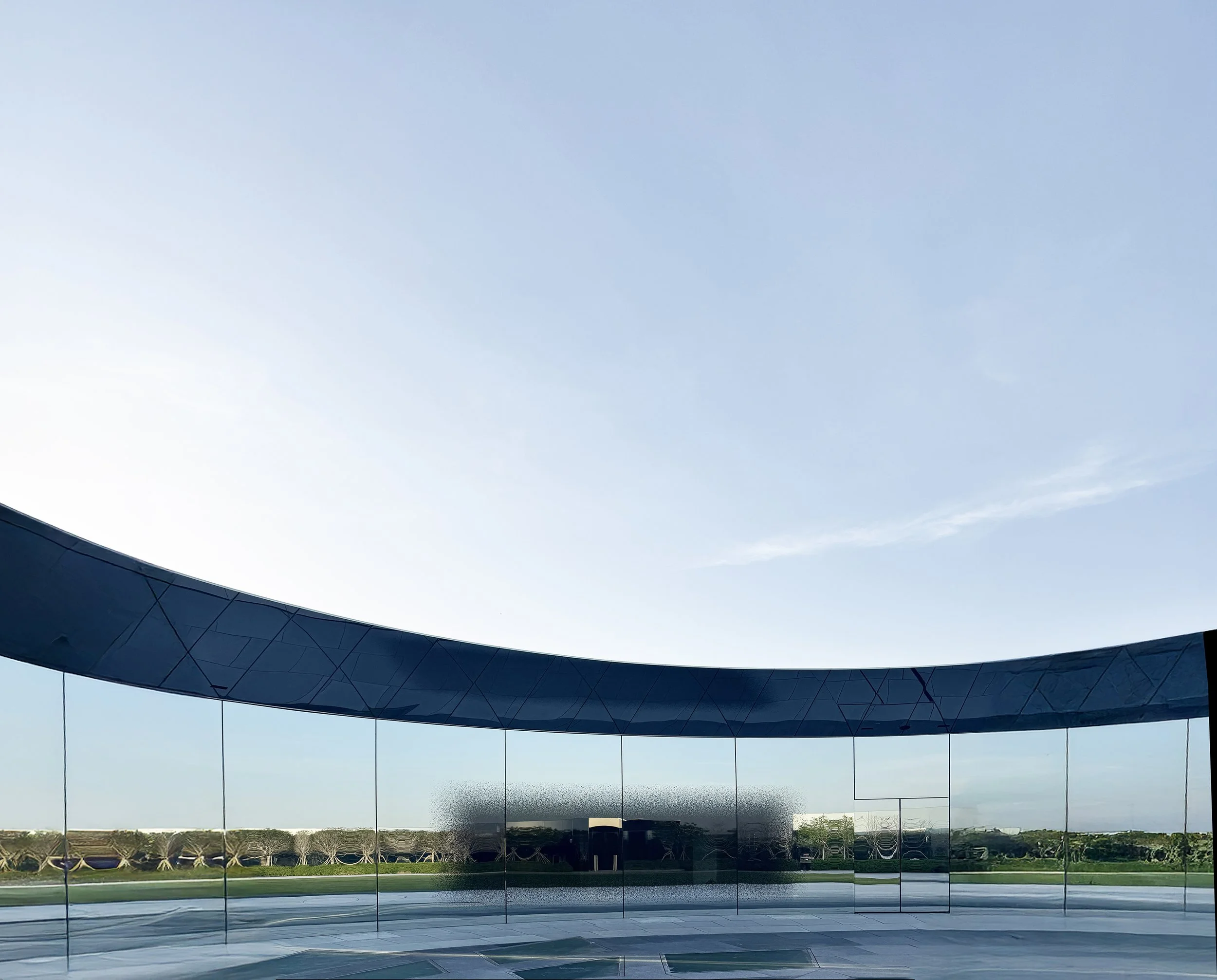
11Skies Plane Observation Roof Garden. Image Courtesy of COLLECTIVE Studio.
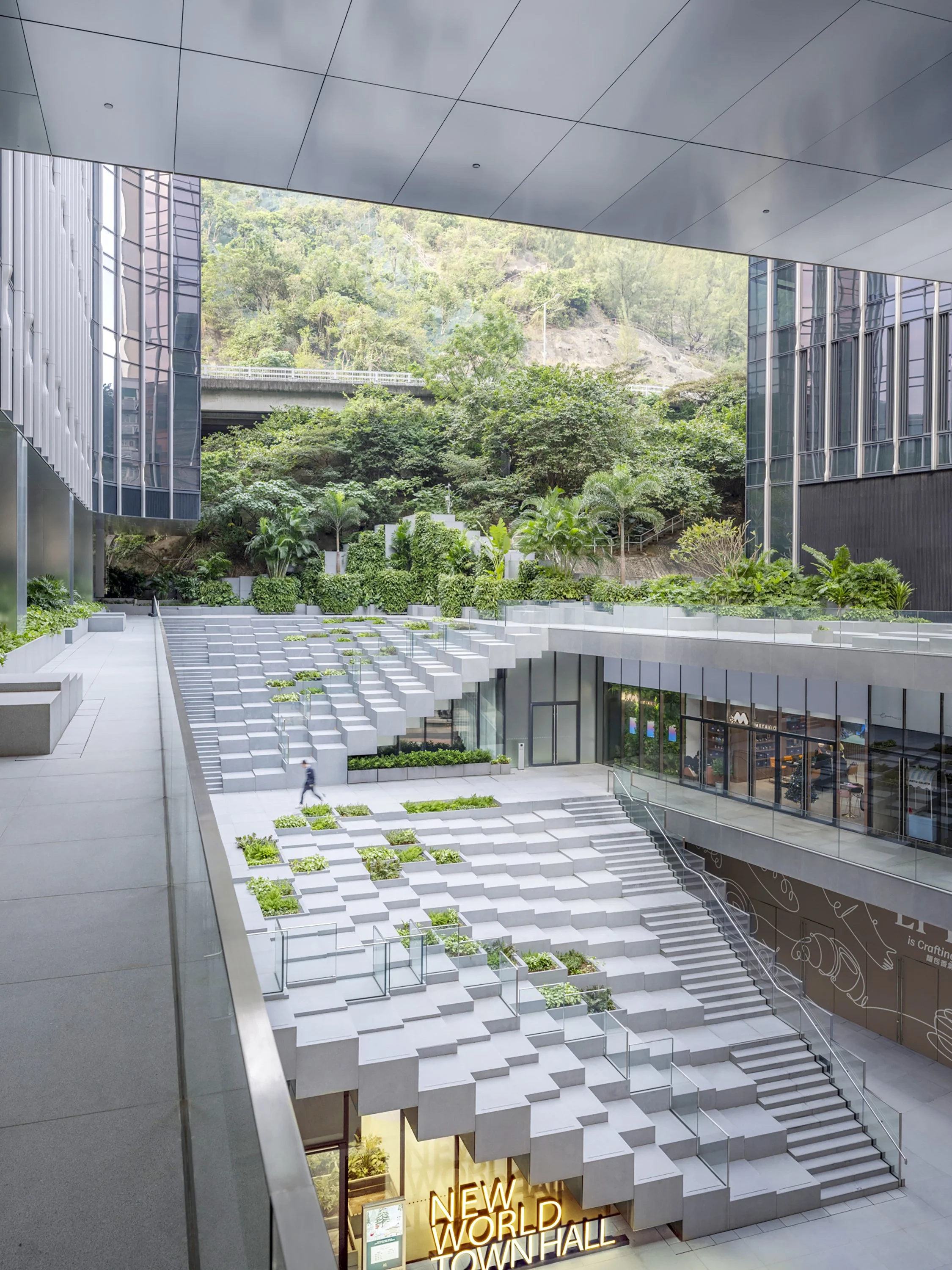
83 King Lam Street Public Terrace. Photo: Tian Fong Fong. Image Courtesy of COLLECTIVE Studio.
Do you remember a moment or experience that solidified for you that architecture is what you wanted to learn more about and be a part of?
Growing up in Hong Kong within a traditional education system where achieving top grades was treated as one’s sole responsibility, I developed a defiant streak and insisted on occupying myself with multiplicity. Throughout secondary school, I constantly navigated between sports, arts, and sciences — playing competitive team sports, producing theatre, and maintaining the grades required for medical school.
The turning point occurred during my A-Levels when I visited an upperclassman at an architecture school. I was instantly mesmerized by the studio environment: a space where every student had their own dedicated workspace, completely immersed in their projects through a continuous feedback loop known as the review. I knew that I wanted to actively dictate my own learning — to create, experiment, and engage in a process of trial and error where a singular "right answer" was not the aim. Given my training in theater, painting and sciences, architecture school presented a way for me to enter into the intersection of the artistic and the technical.
What did you take away from studying architecture?
That institutional "Architecture with a capital A" was not my immediate focus. At Cornell, I actively snooped outside the discipline — delving into film, art, visual studies and history, while mingling with field research on vernacular built environments with contemporary theories. I loved to mix and match.
These shifts and agilities I enjoyed finally make sense to me when I encountered the work of OMA. I observed how OMA implemented these shifts into built and unbuilt elements. The methodology drew me into architecture driven by programs, narratives, and contexts, where form is the ultimate consequence rather than the origin. I was profoundly relieved that the architecture I resonate with could fundamentally be a socio-civic negotiation and a rigorous intellectual tool.
“I knew that I wanted to actively dictate my own learning — to create, experiment, and engage in a process of trial and error where a singular ‘right answer’ was not the aim.”
Tell me about your most significant professional experiences and lessons learned before founding COLLECTIVE.
My formative professional years were split between architectural powerhouses that sit on opposite ends of corporate culture: OMA and Herzog & de Meuron. At OMA I learned to practice with an editorial, hyper-critical lens. In OMA Rotterdam, from 2012 to 2015, my colleague Alain Fouraux and I co-ran a forty-person studio internally nicknamed "The 5th Floor". It was a space dedicated entirely to relentless design experimentation, and a brief chapter of OMA’s history that may never be formally documented. I am incredibly grateful to have co-led it. The majority of us from that floor remain close friends, and it is lovely to witness so many of my former colleagues now running their own independent practices globally.
The most vital lesson I took from this era is the absolute necessity of protecting human relationships from dilution. OMA was a radical repository of exceptionally intelligent, passionate, and ambitious designers, as well as an intense ecosystem that was inherently strenuous to inhabit permanently. However, for those who cared, the enduring friendships and collaborative spirit emphasized how crucial people are to the discipline. Collaboration, trust, honesty, empathy, and responsibility are the baseline ingredients required to produce meaningful work. Observing the work my former colleagues are producing, we all carried that realization into our respective independent practices. This foundational belief is precisely why I chose to name our studio COLLECTIVE, and it informs how the office is run.
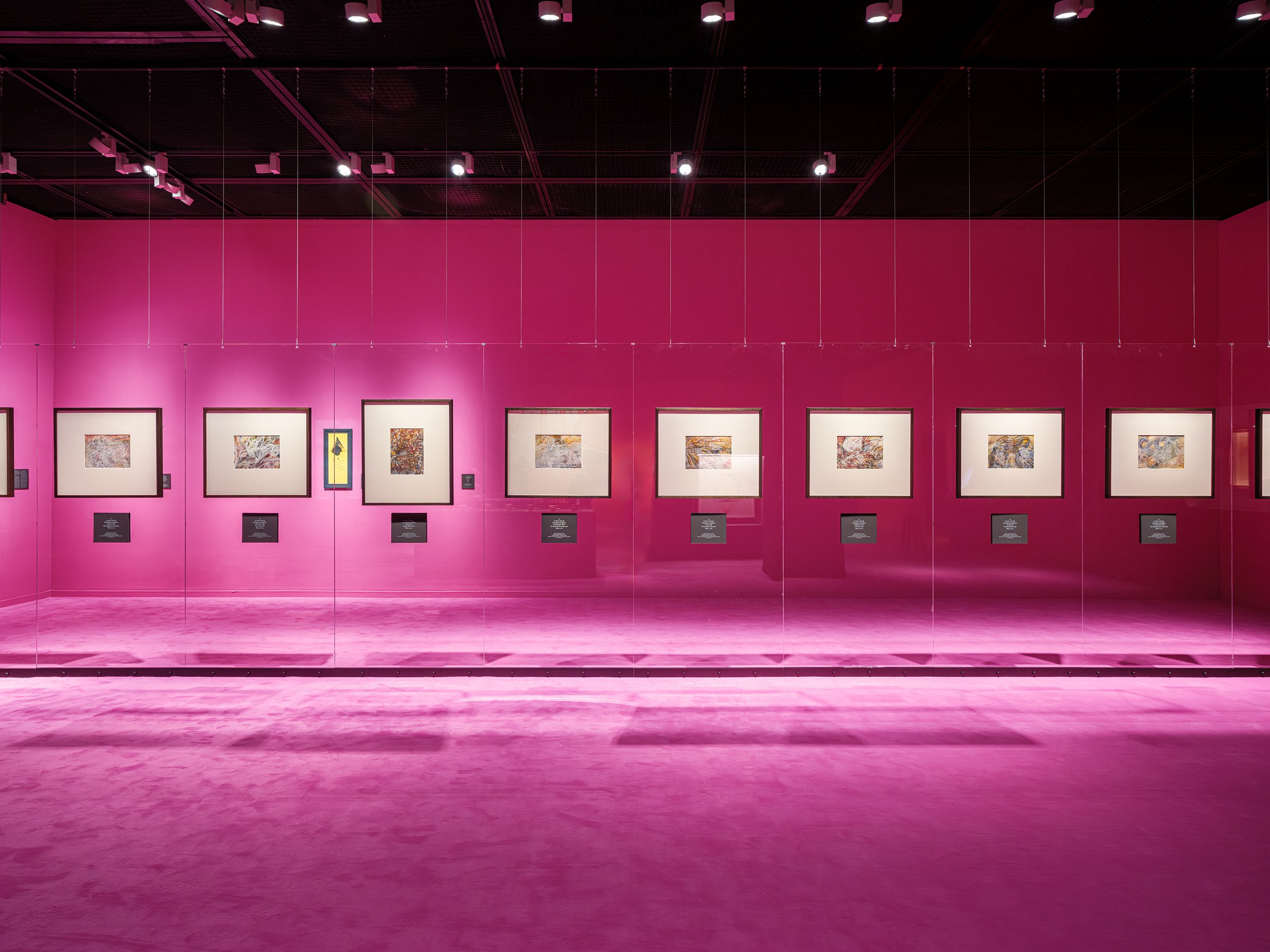
The 13th Seoul Mediacity Biennale 2025 Séance: Technology of Spirit. Seoul Museum of Art, 2025. Photography by Hong Cheolki. Image Courtesy of the Seoul Museum of Art.
Looking back at it all, what have been the biggest challenges? How did you both manage through perceived disappointments or setbacks?
The day-to-day reality of running an architectural office remains my most acute and ongoing challenge. I cannot allow myself to dwell on disappointments or setbacks; instead, we evaluate the situation, extract constructive critiques, and immediately move forward.
Who were your mentors through it all?
Mentorship manifests for me in vertical, horizontal, and radial formats. My vertical mentorship is clear: having spent years at OMA and Herzog & de Meuron, I was fortunate to practice directly alongside the founders and partners of both firms.
Over the eleven years of operating COLLECTIVE, it is horizontal mentorship that sustains me. Today, my most vital mentors are my co-directors: Chi Yan Chan, Juan Minguez, and Sarah Lo. We act as each other’s fiercest critics and most trusted consuls, continuously pushing the firm forward together.
“...the enduring friendships and collaborative spirit emphasized how crucial people are to the discipline. Collaboration, trust, honesty, empathy, and responsibility are the baseline ingredients required to produce meaningful work.”
What is the impact you'd like to have on the world? What is your core mission? And, what does success in that look like to you?
COLLECTIVE is a continuous experiment driven by a shared refusal to become complacent, regardless of the typology or geography of the work we take on. Our undertaking is to disassemble the pervasive myth of the lone architectural genius and replace it with a recognized framework of shared authorship within a global setting. The industry remains deeply obsessed with single-name firms, but exceptional architecture is fundamentally a team sport that requires highly capable captains.
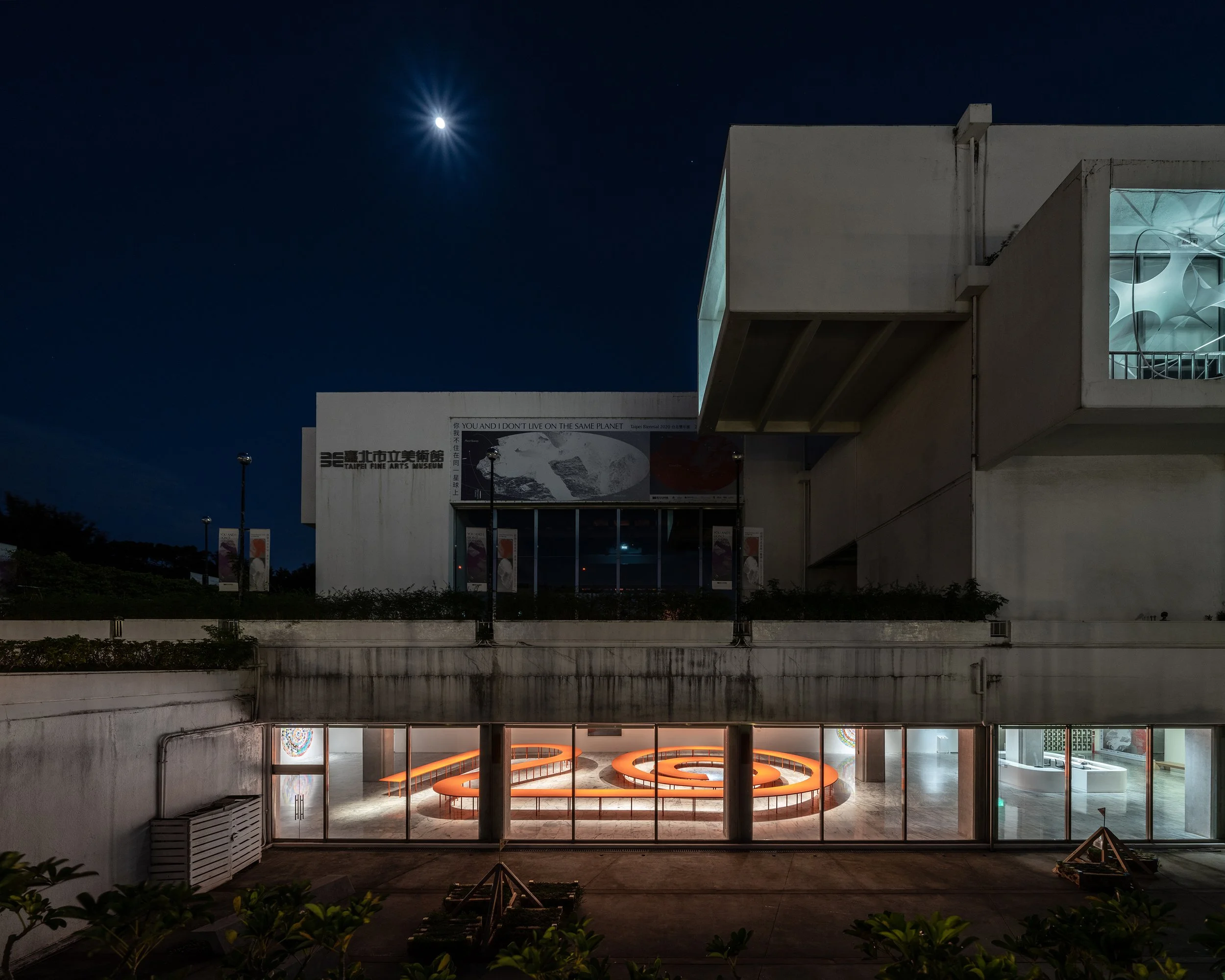
“New Diplomatic Encounters” Installation at the 12th Taipei Biennial 2020 You and I don’t Live on the Same Planet. Photo and Image. Courtesy of Taipei Fine Arts Museum.
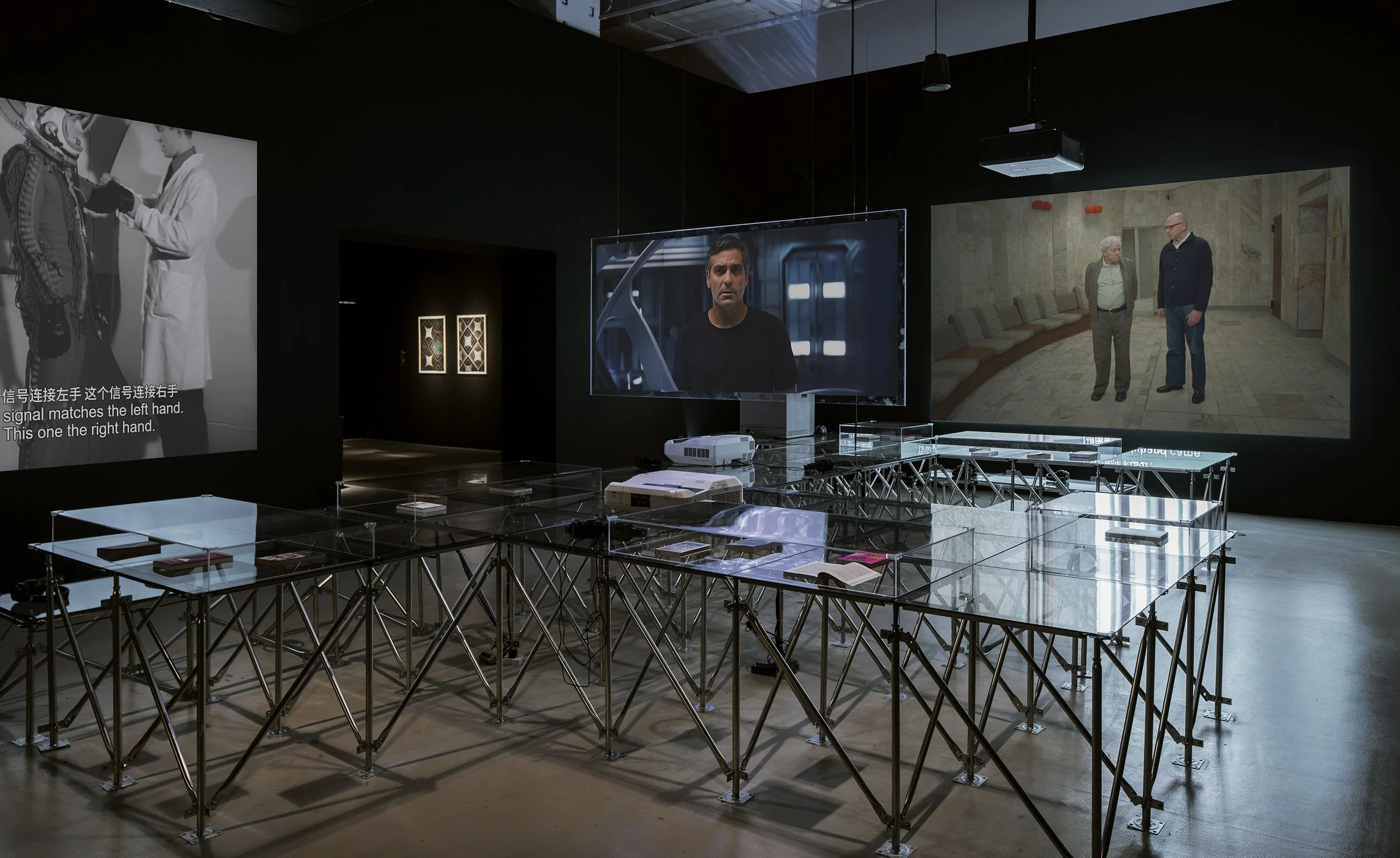
The 14th Shanghai Biennale 2024 Cosmos Cinema. Photo and Image Courtesy of Shanghai Power Station of Arts.
Finally, what advice do you have for those starting their career?
I feel intensely challenged by this profession every single day, but there are a few hard-won honesties I believe in about building an independent practice. From our very first day, we have reminded ourselves to remain as fearless as possible across the entire professional spectrum — from design and construction to contract negotiations and confronting industry bullies. We constantly remind ourselves never to retreat into complacency out of fear. This is not an endorsement of recklessness; we calculate our risks as thoroughly as realistically possible before charting unknown waters for new adventures.
Furthermore, running a practice driven by deep design passion requires navigating a brutal economic reality. The amount of time a studio invests in design often has an inverse relationship to its immediate monetary yield. The architecture business model operates on the margin of manpower, which is essentially a question of how much time you are willing to allocate for experimentation.
At COLLECTIVE, we deliberately factor "inefficiencies", which is “design process”, into our business model, explicitly protecting the hours required to explore for trial and error. Consequently, our design yield remains high. Sustaining this model depends entirely on the nature of the people you surround your practice with. Authenticity, generosity, and openness have been our guiding principles in managing the ecology of practice, and they continue to serve us well.
This interview has been edited and condensed for clarity.