Leading by Example: Beyer Blinder Belle's Managing Partner Liz Leber on Learning From Cities and From Each Other
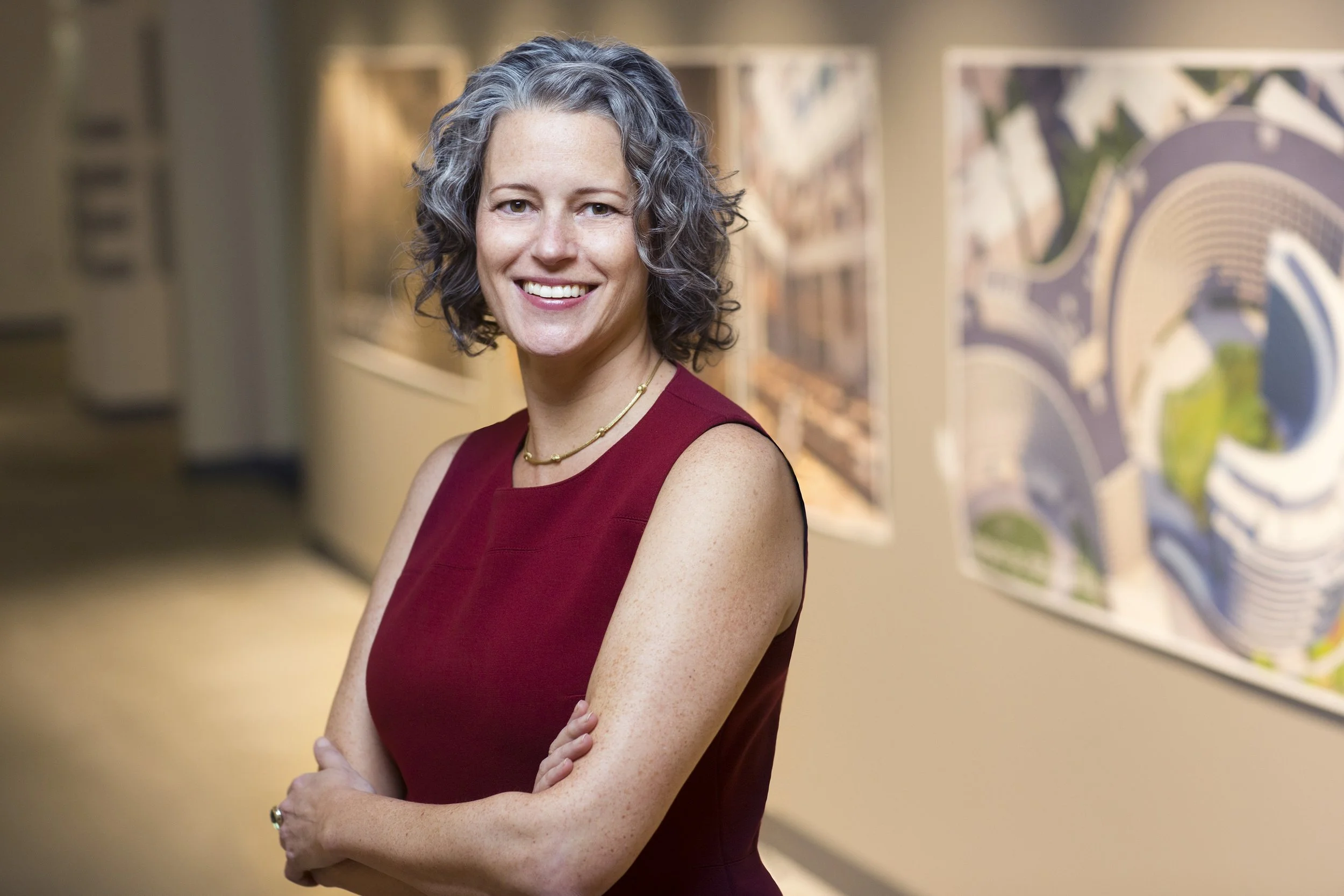
Liz Leber by Michael Falco.
By Julia Gamolina
Liz Leber is dedicated to advancing mission-based institutions through forward-looking architecture and planning projects. Liz's clients include the New York Public Library, 92NY, and Harvard University. She is recognized for her ability to approach every challenge with a balance of creativity, pragmatism, and unfailing optimism. Liz applies these skills and energy to her role as Managing Partner of Beyer Blinder Belle. Her position affirms the firm's successful transition to a third generation of leadership and ensures BBB's forward-looking sustainability and vision.
JG: You are in the third generation of leadership at BBB, and have been there for over twenty-five years. That's a significant tenure and role! What do you think was successful about the culture and strategic vision of BBB that has propelled its third generation of leaders?
LL: The founding partners of Beyer Blinder Belle set us up for success in multiple ways. One of the most important was their generosity in divesting, so that new partners could come in. For them, legacy was more important than cashing in, or the “buy-out.” That is easy to say now, but it was a profound act of stewardship. They understood that the firm would only remain meaningful if it could outlast them.
Thanks to that vision, our partnership now has a greater sense of planned sustainability, predictability, and transparency. We want new partners to understand what they are committing to, what the potential arc of their partnership can be, and how a planned transition can work over time. Putting that in writing in 2019 was new. It made something that had been guided by values and precedent into something that could be more clearly understood and passed on. Of course, this is very much on my mind these days, with the January 2026 passing of our last founding partner, Jack Beyer. It has made me think even more deeply about legacy: not as something fixed or ceremonial, but as something we carry forward through everyday decisions.
What are you most focused on this year?
Leading by example. I want the next generation of architects at BBB to see that this profession is demanding, yes, but also deeply rewarding. I want them to see that leadership and long-term commitment are not burdensome obligations but creative and fulfilling ones. They can give you a sense of purpose and impact. I think that matters, especially in a profession that asks a great deal of people. I want those coming up in the firm to know that the effort can be worth it. That there is satisfaction in building something over time — a body of work, a set of relationships, a firm, a culture — and in helping make a place for others to do their best work.
About five years ago, some of the staff asked for a clearer definition of what BBB’s culture really stood for. I think that emerged because we had been growing. At some point, what those of us who had been at the firm for a long time had taken for granted needed to be articulated. You cannot rely on osmosis forever, especially as a firm evolves. Through staff-led focus groups, we were able to define our culture more clearly, and that definition is now reflected in our strategic plan. That process was important because it did not come from leadership telling the staff what the culture was. It came from listening to how people experienced the firm, what they valued, and what they wanted to protect.

Henry Street Settlement, Dale Jones Burch Neighborhood Center. Photography by Max Touhey.
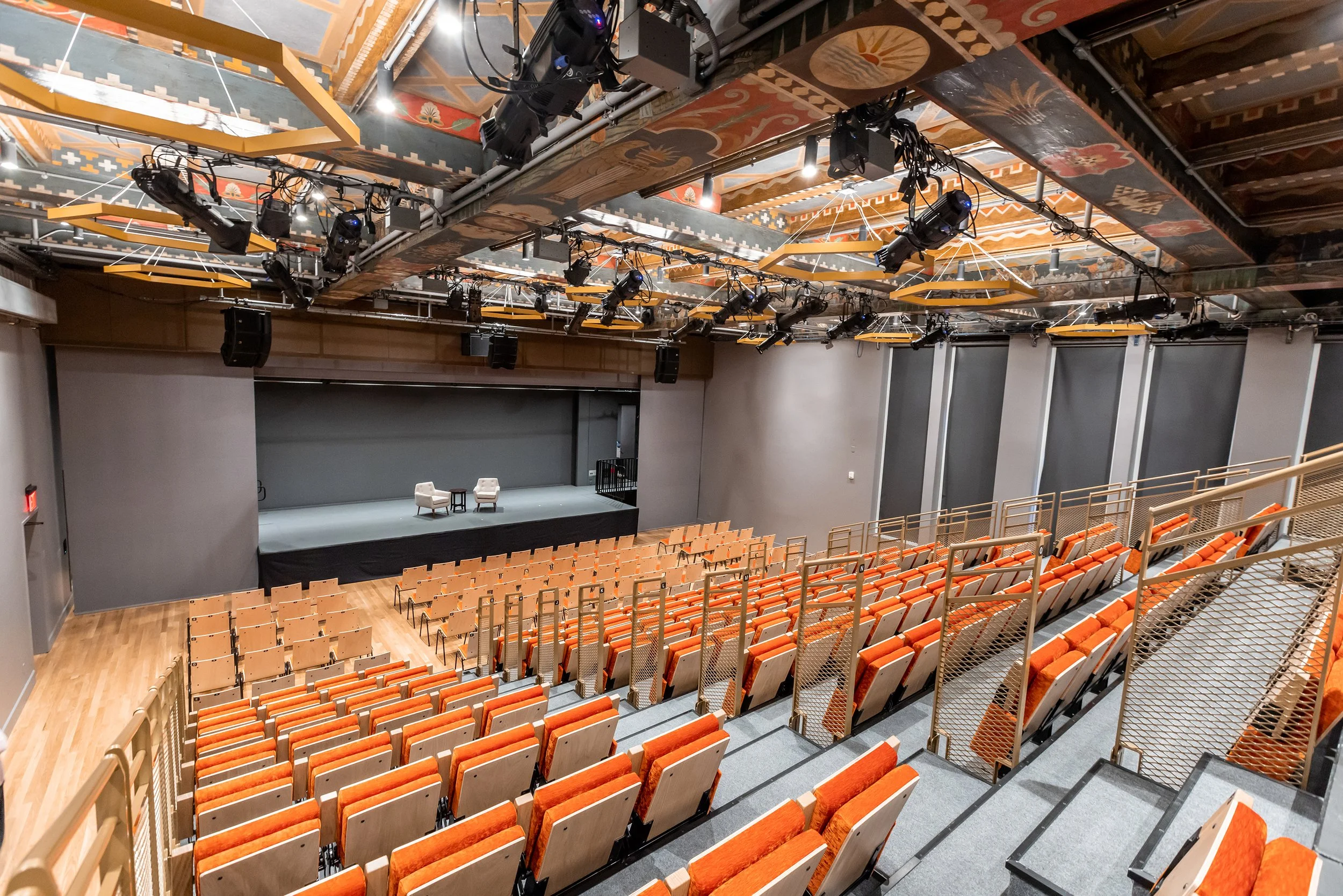
92NY Buttenwieser Hall. Photography by Vladimir Kolesnikov of Michael Priest Photography.
You first studied art history and then came to your focus on architecture. What were you hoping to do in and learn about the world with both degrees?
I knew I wanted to be an architect when I was eight; my best friend’s father was an architect, and I was enraptured by the very contemporary house he built for their family in our very traditional neighborhood. When I went to college though, I saw a whole world of topics to study. After a couple of years of casting a wide net, I landed in art history, with a focus on the history of architecture.
I appreciate the background that gave me, especially because so many of my projects now revolve around historic buildings. It gave me a way to understand architecture not only as form or style, but as evidence of culture, values, ambition, and change. It also gave me rigor in research, writing, and communication. Those are not always the skills people immediately associate with architects — the assumptions are usually about math and drawing — but they have turned out to be very important to me.
Eventually, graduate school felt like a necessity because I had decided to rededicate myself to architecture. I came to architecture school with a strong foundation in words, research, and observation, and then I had to learn how to translate ideas into drawings, space, and buildings. Art history did not distract me from architecture but helped shape my perspective on it.
“Cities change, institutions change, communities change, and buildings need to change to continue serving them. My mission is to keep learning from the city, to keep pace with its changes, and to help shape places that remain useful and meaningful over time.”
What was some of the best advice you got early on that has informed your approach to your work and career?
One of the most valuable lessons I learned early on came through observation. There is a reason we sit in an open workspace. It allows us to communicate more easily with each other, but it also allows us to absorb what is going on around us. You overhear how a project manager speaks to a client, how a project architect provides input, or how a team member asks for help. We share knowledge when we do not even realize we are doing it. It is a form of passive mentoring, and I think it is invaluable.
That has led to the single piece of advice I give most often to people coming up in the profession: take your headphones off and listen to what is going on around you. I mean that literally, but also more broadly. Be present. Architecture is learned through active participation, but also through proximity. You learn by doing the work in front of you, and you also learn by listening to the work happening around you. The more you engage, the more you learn — and the more you are seen as an active, interested participant in your studio.
Tell me about your professional experiences before joining BBB. What were the most significant lessons?
Directly out of graduate school, I worked for about five years at what was known as Kliment Halsband Architects, now a studio of Perkins Eastman. Those five years launched me into my career in an extraordinary and accelerated way. What taught me so much was the diversity of the projects I worked on. I was able to see how different kinds of projects are organized, how teams are structured, and how design ideas move from early planning through detailing and documentation.
I also worked directly with Robert Kliment and Frances Halsband, and with the three principals who worked for them, who continue to be important people to me. They put their faith in me and allowed me independence because I proved I could and would do the work. It was only after that experience that I felt prepared to manage the work of others, either as a project architect or a project manager. By the time I arrived at BBB, I felt ready to work with others in a management role. I had enough grounding in the work itself to understand what I was asking of people, how to support them, and how to help move a project forward.
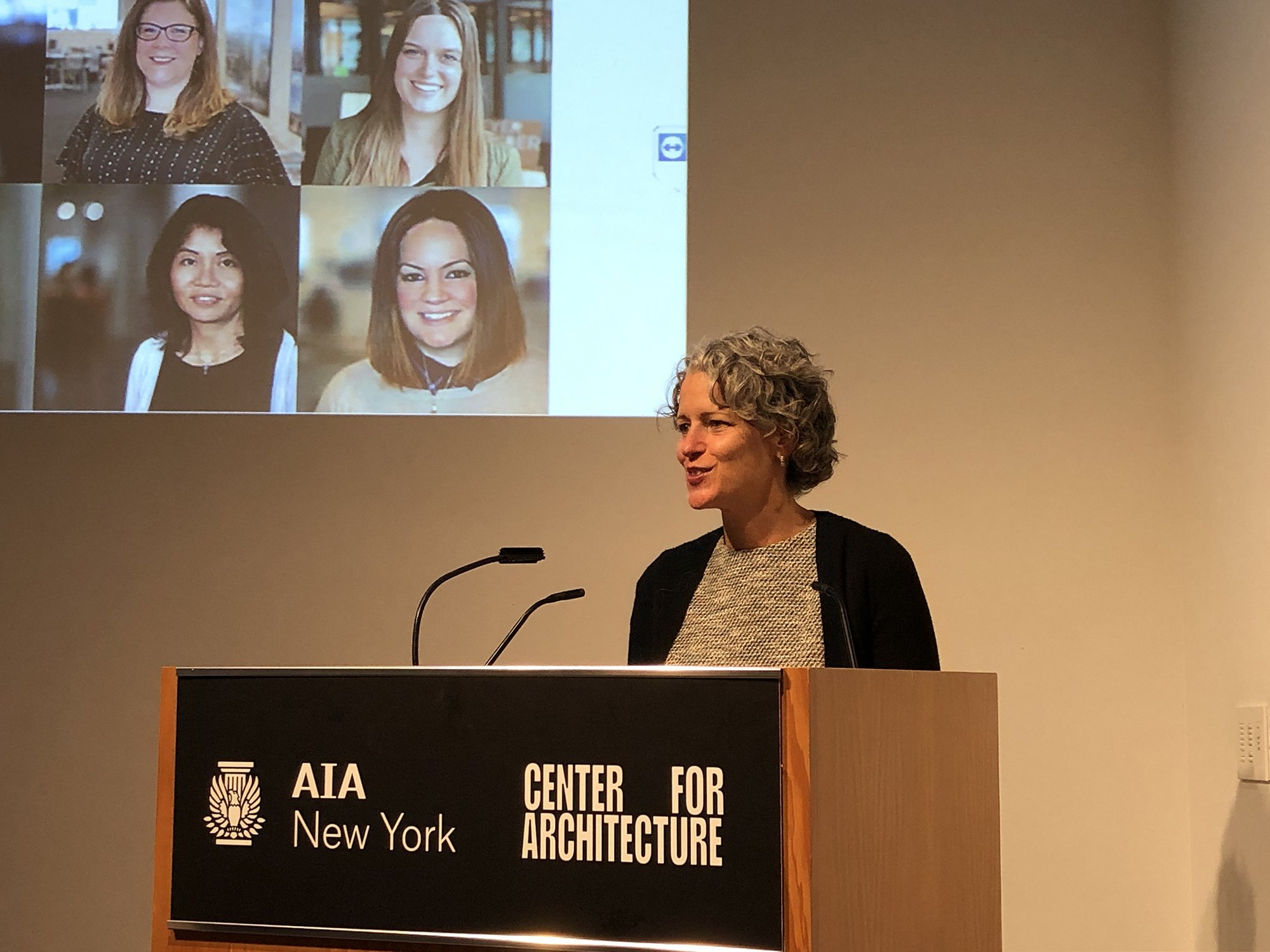
AIANY WIA “Women At The Helm”, 2021. Courtesy of Center for Architecture.
Who were your mentors through it all?
From Robert Kliment I learned how to design through process: explore your options, draw through the problem to understand it, and rely on context to give you clues. Design was presented to me not as a sudden act of inspiration, or as the imposition of a pre-determined approach, but as a way of analysis — the parameters begin to tell you what the answer might be. That way of thinking has stayed with me throughout my career, especially in work that involves existing buildings and campuses.
I have also learned a lot about leadership from my own clients, whether they were executives at nonprofits or the deans of universities I have worked with for years. I have learned as much by observing them as I have through my work in the studio. I have watched leaders build consensus, elicit conversation, and communicate to different audiences. I have been inspired to be transparent rather than to obfuscate, and to be vulnerable without losing others’ confidence.
Looking back at it all, what have been the biggest challenges? How did you both manage through perceived disappointments or setbacks?
I think many of us can recall the “ones that got away” as if they happened yesterday: the pursuits lost, the projects unfinished, and, frankly, the first time you lose a commission underway; fortunately, that is very infrequent. But those moments stay with you. You invest so much in the work, and so much of that work unfolds over a long period of time, with so many people involved. When something does not go the way you hoped, it can feel very disappointing. But one of Jack Beyer’s mottos was “onward.” You live, you learn, and you move on. That has been an important lesson. You have to be honest about what happened, to understand what you could have done differently. But you cannot let disappointment define the next commission or steal the joy of the many positive experiences. Honestly, I’ve learned to derive satisfaction from even a single conversation in a day, when I’ve felt that I’ve given good advice, good design direction, good support.
Taking the position of managing partner of the firm during the pandemic was also a significant challenge. Like the recessions I have weathered in my career, those moments when forces beyond your control take over — and when you cannot see the light at the end of the tunnel — can be very destabilizing. To project strength and stability to the firm as a leader, when inside you are still questioning the way forward, is a true test. But it forced me, and my partners, to become more intentional about almost everything: how we communicated, how we made decisions, how we took care of people. I am proud of how we found our way through it, although we were not perfect. No one was. But I do think we came out the other end more connected and more accountable to each other.
“Be present. Architecture is learned through active participation, but also through proximity. You learn by doing the work in front of you, and you also learn by listening to the work happening around you.”
Who are you admiring now and why?
I admire my nine partners. There is real harmony at the table, which does not mean that we always agree. It means that we trust each other, listen to each other, and are working toward the same outcome.
Outside the firm, I had a terrific eight-year collaboration with Francine Houben, the creative director and founding partner of Mecanoo. We completed the New York Public Library Midtown Campus Renovation projects — at the Stephen A. Schwarzman Building and the Stavros Niarchos Foundation Library — together as true equals, perhaps because our firms were more similar than different. I admire her creative approach to the interpretation of context, her optimism and unflappability, and, of course, her Dutch directness.
That collaboration taught me a great deal about what true partnership can look like. It was not about protecting territory or credit. It was about making the work better. We each brought different strengths, but we shared a collective interest in the success of the project. I could write a book about collaboration, and the chapter about ours would be, to me, the exemplar.
What is the impact you’d like to have on the world? What is your core mission? And, what does success in that look like to you?
I would like to have an impact on New York City, the place of my birth and the place I am sure I will always call home. My great-great-grandfather came here in 1861 and started the pawnbroker business that my grandfather ran until his retirement. The building, across from the Port Authority Bus Terminal, is still there. My mother and father both grew up in New York City, and I walk their neighborhoods with a sense of belonging. And in my thirty-five years living here, I’ve lived in seven neighborhoods. New York is an ever-changing city. It is resilient, defiant, confident, and hard to impress.
I am already proud of the impact my work at BBB has had on museums, libraries, cultural institutions, and schools, and of our efforts not only to preserve but also to evolve the extraordinary historic fabric of our neighborhoods. Cities change, institutions change, communities change, and buildings need to change to continue serving them. My mission is to keep learning from the city, to keep pace with its changes, and to help shape places that remain useful and meaningful over time. And I am actively working to pass that responsibility to others. As a leader, my core mission is making sure that Beyer Blinder Belle is healthy and thriving past my generation, on to the next one, and to the ones after that.
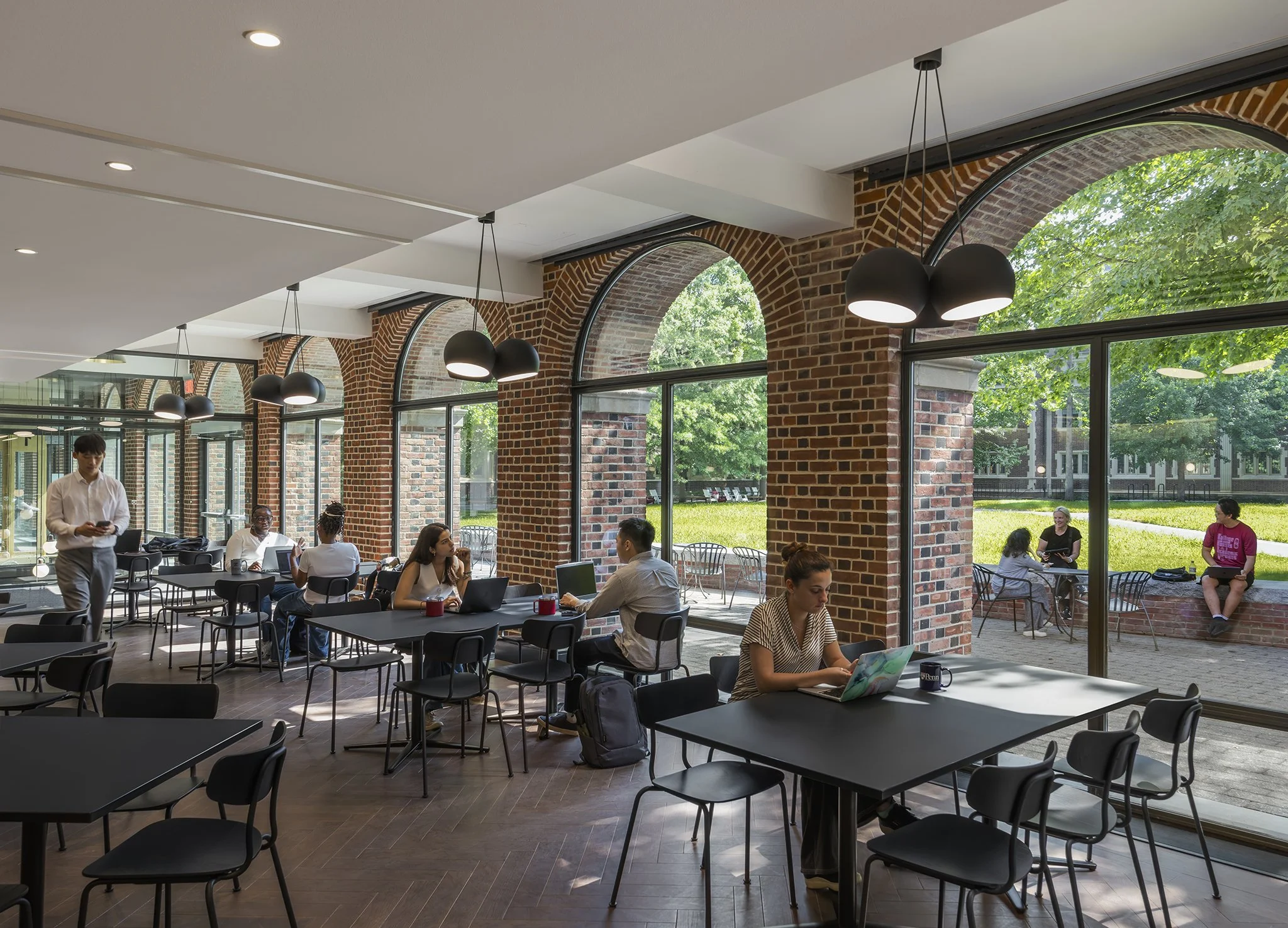
PennQuad Ware McClelland. Photography by Jeff Goldberg-Esto.
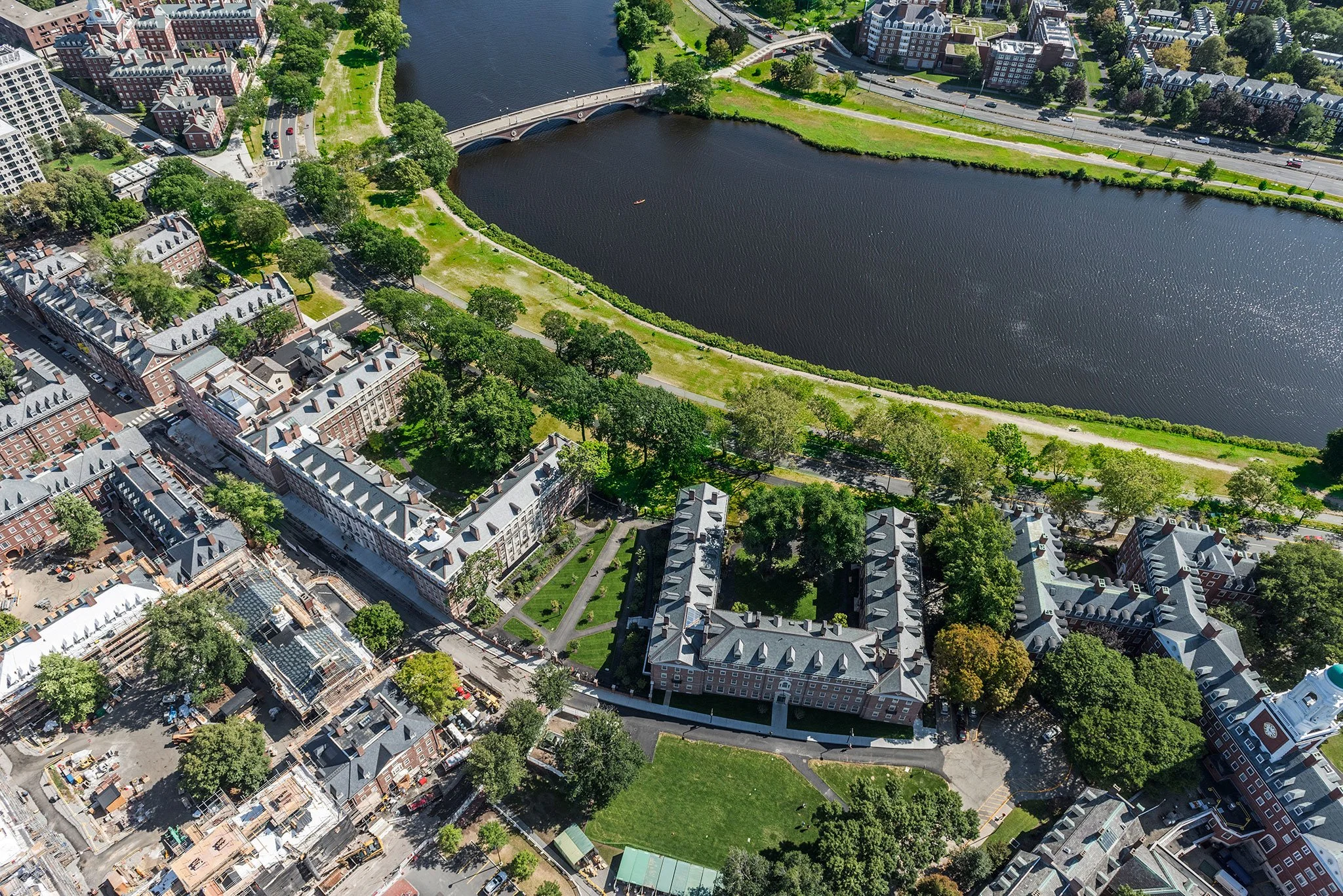
Harvard UHR Winthrop. Photography by Peter Vanderwarker.
Finally, what advice do you have for those starting their career?
Besides taking off your headphones? Be a sponge. Ask as many questions as you can, and exercise your own resourcefulness. I remember one of my first days at work after graduate school. I was tasked with drafting interior elevations for a public school project, and I asked the project architect how I would know the dimensions of the light switches to draw. He picked up a tape measure, walked me over to the nearest switch, and measured it. He was not being snarky. He was teaching me to think logically, to look around. Architecture is everywhere!
Have patience, because it takes a long time to truly learn how to be an architect, and the joy is in the learning. There is not a single assignment that does not have something to teach you. And the learning never ends. It is a good day if I feel I have learned something from a consultant, a client, or a team member. I am happy to say that happens just about everyday.
This interview has been edited and condensed for clarity.