Healthy Beginnings: MASS's Amie Shao on the Power of Birth Spaces and Conditions for Care
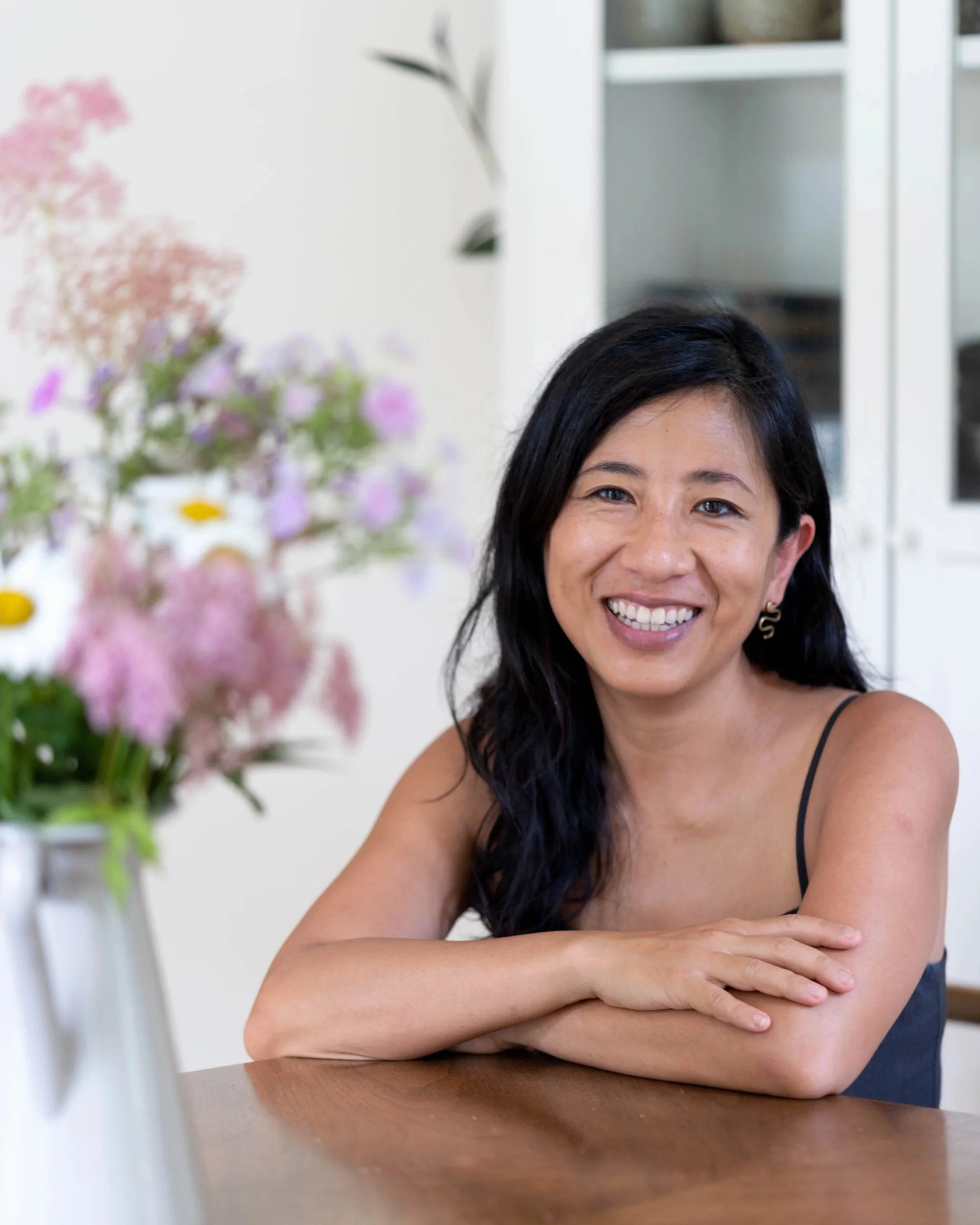
By Julia Gamolina
Amie Shao is a Principal at MASS (Model of Architecture Serving Society) and Director of the Maternal & Newborn Health Design Lab, where she works at the intersection of architecture, public health, and reproductive justice. Her work is focused on championing the design of safe and culturally reverent childbirth spaces and advancing understanding of how the built environment shapes health, equity, dignity, and care.
Over the past fifteen years, Amie has worked across the U.S., Africa, and South Asia on projects ranging from infectious disease hospitals and national health infrastructure standards to maternity wards, birth centers, and health systems research. She is currently leading the design of the Neighborhood Birth Center in Boston as well as global initiatives to improve maternal and newborn care environments such as Delivering More and the Beginnings Fund.
In her interview with Julia Gamolina, Amie reflects on building an interdisciplinary career, the power of birth spaces, and using design to help create the conditions for healthy beginnings.
JG: Your career is so impressive, from all the places you've lived and worked to your focus on maternal and newborn health. On this important topic, what's most top of mind for you right now?
AS: The thing that always stays with me is how profoundly the physical environment shapes how we come into the world — whether care is safe, whether families can stay together, and whether one of life's most important moments feels empowering or traumatic.
I've seen women laboring in crowded rooms with no privacy, not even a curtain between them. I've seen family members waiting outside because there simply wasn't room for them to stay close. I've met providers sleeping under desks during night shifts so they could remain near their patients. I've also been in well-resourced hospitals where every piece of technology was available, yet mothers still felt unheard or disconnected from decisions about their own care.
At the same time, I've seen what's possible when birth spaces are designed with care and intention. Places where families can stay together; where laboring women can move freely; where the environment itself communicates calm, dignity, and trust. Those experiences changed the way I think about architecture. Birth spaces don't simply house care — they help shape the kind of care that's possible. That's what's top of mind for me right now: helping create the conditions for healthy beginnings.
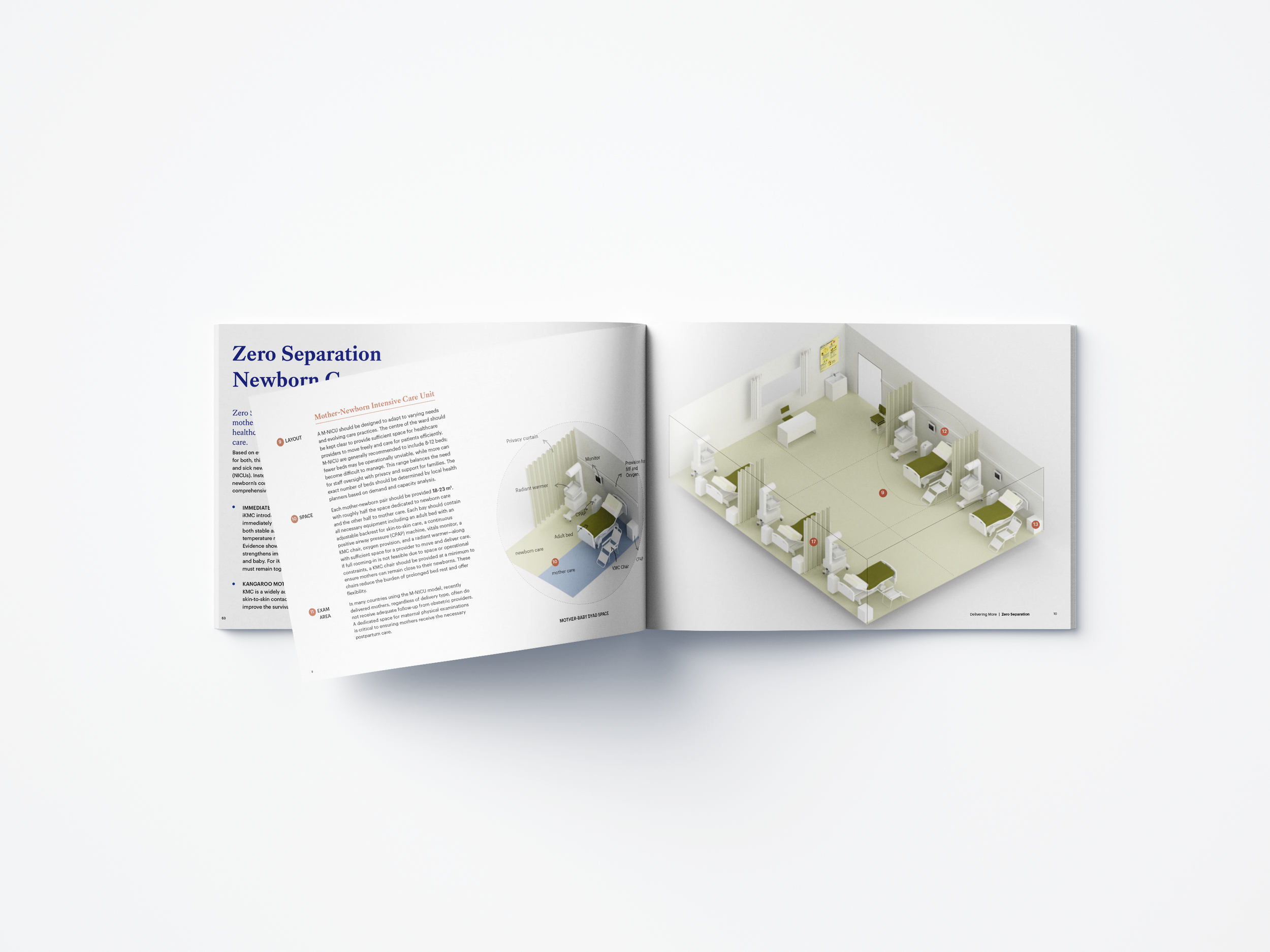
Delivering More Zero Separation Design Principles.
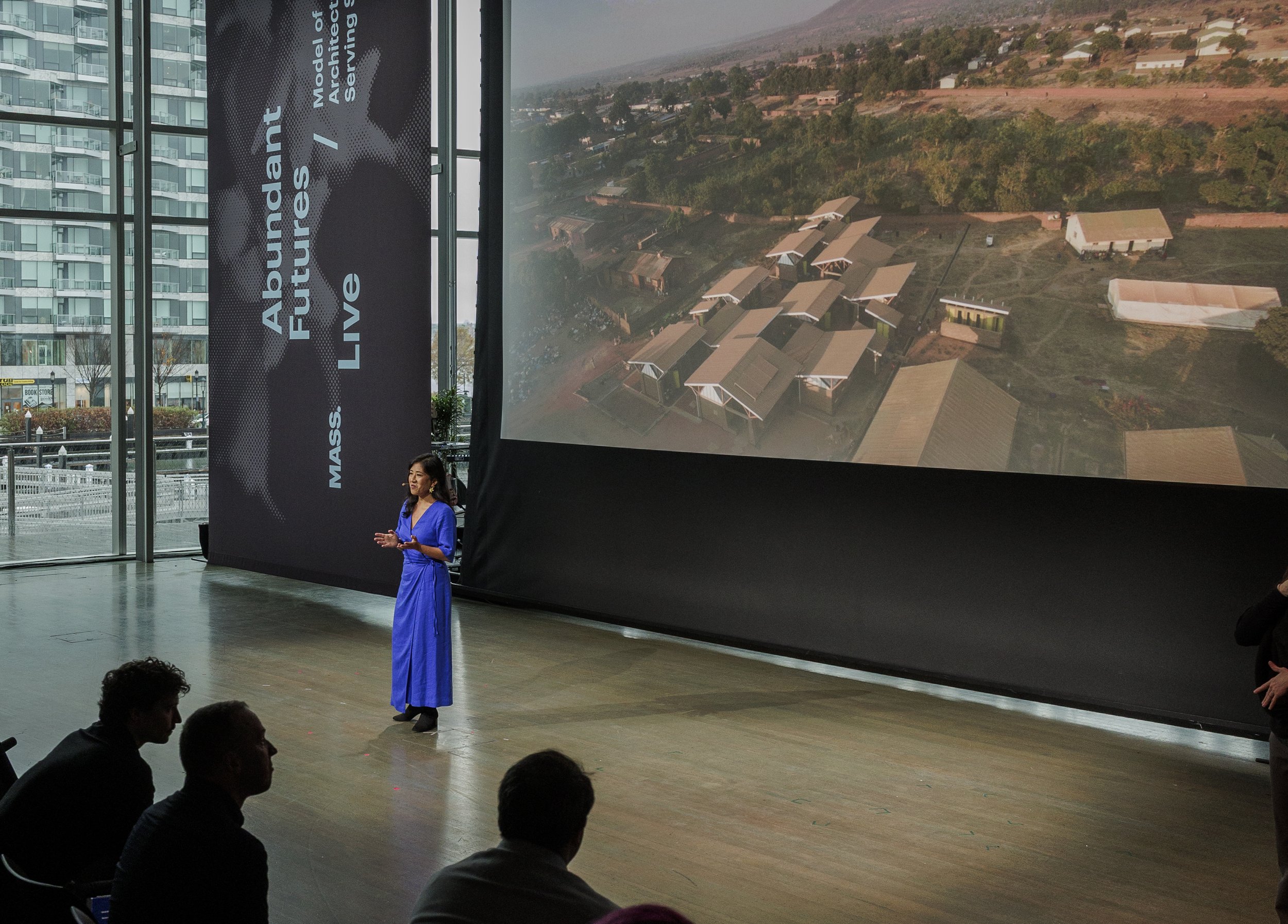
Presenting the work of the Maternal Newborn Health Lab. Photography by Matthew Teuten.
What should all of us know about the state of maternal and newborn health these days, and what isn’t being talked about enough?
Despite enormous progress over the last couple decades, far too many mothers and babies are still dying from causes we know how to prevent. Much of the work ahead isn't about waiting for a breakthrough but about follow-through: making sure the knowledge, tools, and models of care we already have actually reach the people who need them. Through efforts like the Beginnings Fund, and the leadership of local partners, providers, governments, and advocates, people are working together in new ways to tackle these challenges.
One area we're especially focused on is newborn care. Many premature babies don't need highly specialized technology. They need warmth, feeding support, infection prevention, and most importantly, to stay close to their parents. Most facilities however are still organized in ways that separate sick or premature babies from their families. We've learned that you can't deliver Zero-Separation care in spaces that were designed for separation. The environment has to support the model of care, and we know what good care looks like. The challenge now is creating the conditions that allow it to happen consistently, so it becomes the norm rather than the exception.
What were you hoping to do in the world initially by pursuing architecture?
One of the most formative experiences I had in undergrad was a studio that took us to Panama. It was the first time I saw how deeply design is intertwined with economic development, environmental stewardship, tourism, and community change. I came away fascinated less by buildings than by the messy systems and human dynamics that shape places.
After graduation, I moved to Beijing to work at a global architecture firm during the building boom leading up to the Olympics. It was an incredible experience, but it also left me questioning what kind of architect I wanted to be. Much of the work was driven by formal expression and iconic buildings. While I had fun cutting blue foam, I found myself wanting a stronger connection between design and impact.
By the time I finished grad school, I wasn't sure architecture was a path I wanted to continue. Then I stumbled into MASS. I'd been searching for examples of architecture that felt both beautiful and purposeful, and Butaro Hospital completely changed my understanding of what was possible. MASS offered me a short-term role helping on a few projects while I figured out what came next. Sixteen years later, I'm still here.
“Architecture isn’t just about drawings—it’s about making a compelling case for ideas...I’ve found that many of the opportunities I’ve had weren’t about designing buildings, but about helping people imagine a different way of doing things.”
What was some of the best advice you got early on that has informed your approach to your work and career?
One piece of advice I didn't fully appreciate at the time came from my professors, who put a huge emphasis on writing. It felt rather academic, but looking back, it may have been one of the most practical skills they taught me. Architecture isn't just about drawings—it's about making a compelling case for ideas. Whether writing a grant proposal, launching a new initiative, or advocating for why design matters, I've found that many of the opportunities I've had weren't about designing buildings, but about helping people imagine a different way of doing things.
Tell me about your professional experiences before your focus on maternal and newborn health at MASS. What are some of the most important lessons that you learned?
My first projects were in Haiti, where I worked on tuberculosis and cholera treatment facilities after the 2010 earthquake. I was learning a lot of technical things about infection control, but what stayed with me was realizing that space isn't neutral. Poor ventilation and layouts could contribute to the spread of disease, while thoughtful design could support healing and dignity.
A few years later, I had the opportunity to lead the development of National Health Infrastructure Standards in Liberia. Instead of focusing on a single building, we tackled the larger systems that shape healthcare infrastructure — policy, funding, operations, maintenance, and governance. It made me realize that if you want to improve health outcomes at scale, buildings alone aren't enough.
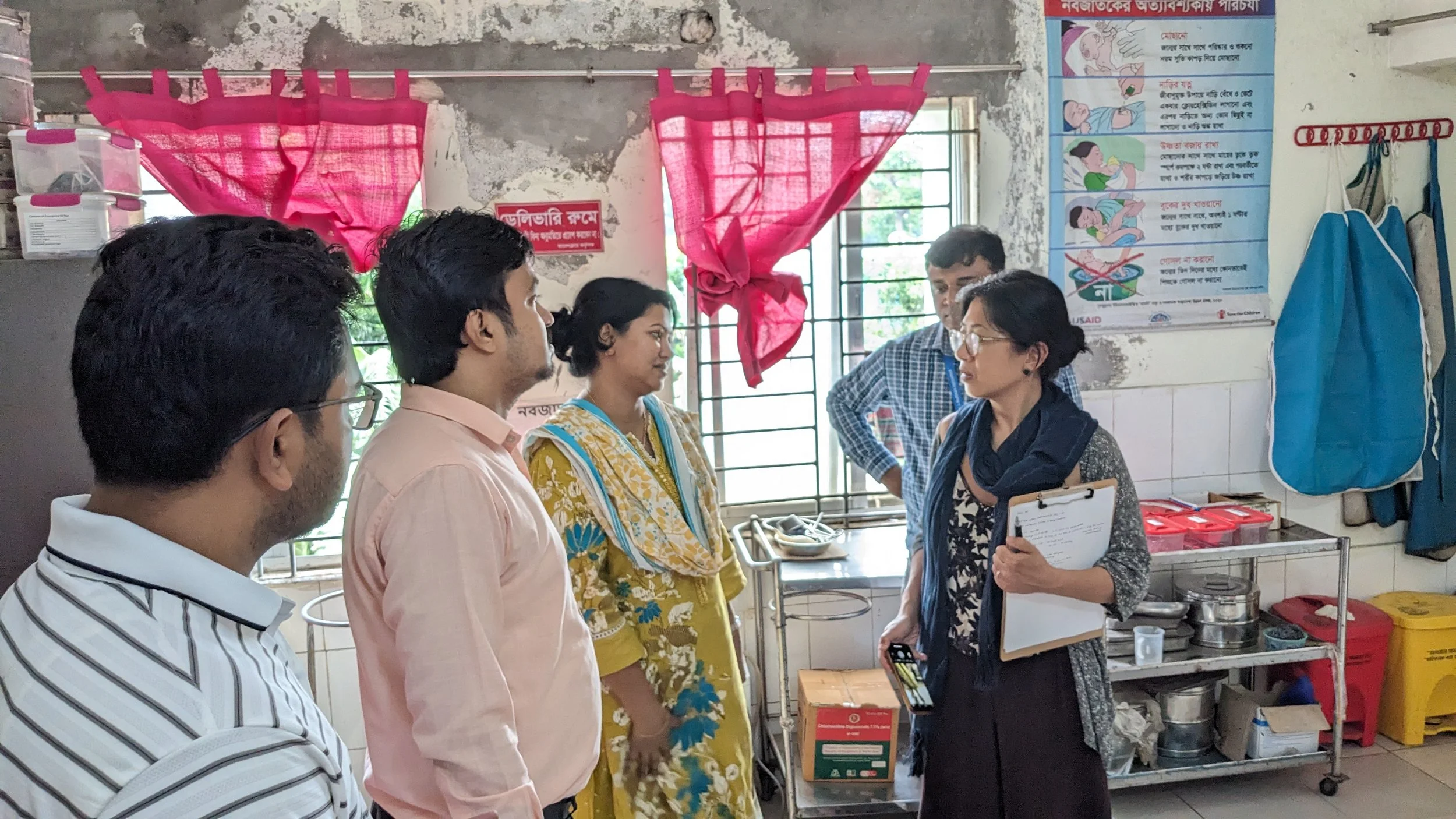
Engaging healthcare workers in Bangladesh. Photography by Andrew Brose.
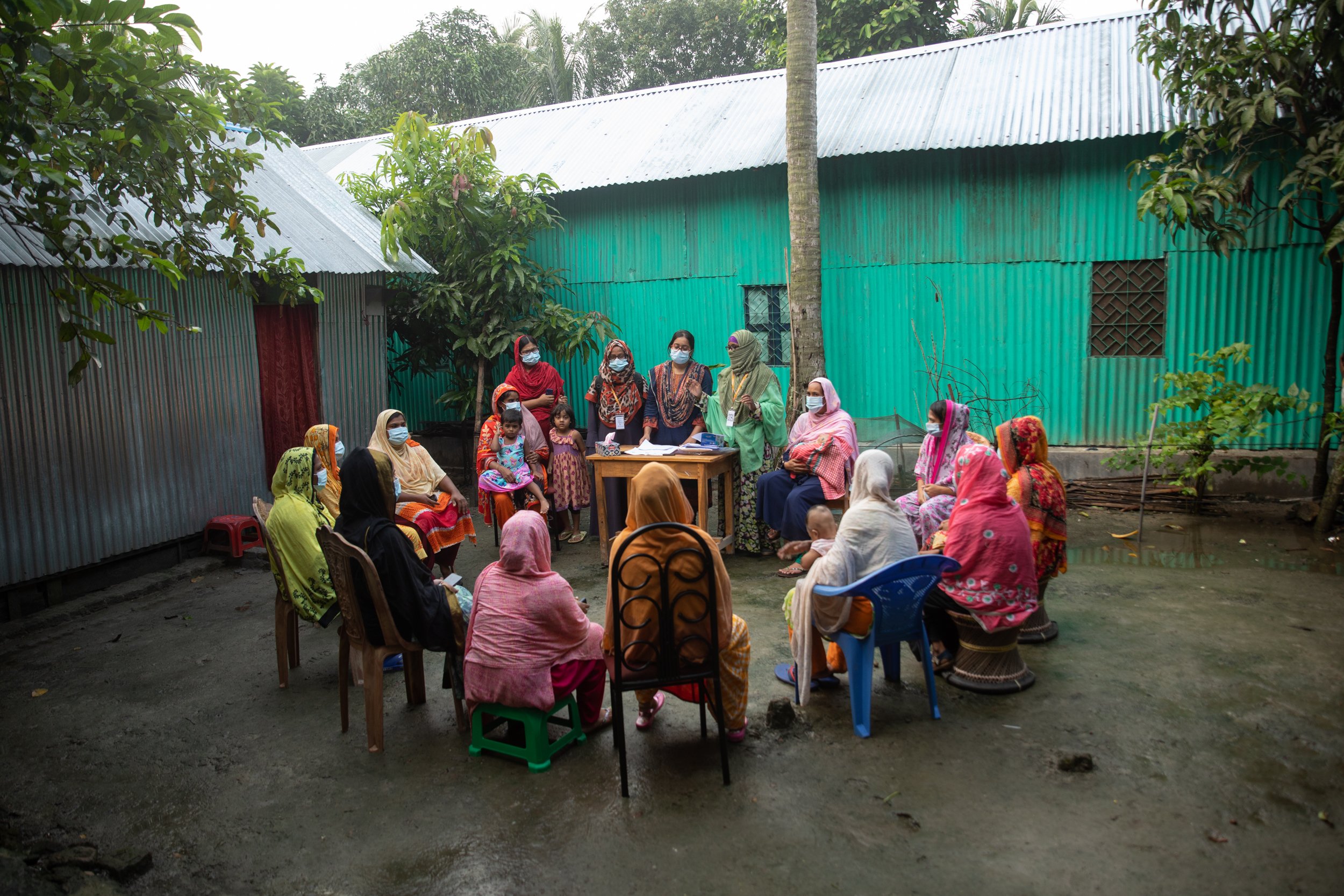
Community focus group in Bangladesh. Photography by Kamrul Hasan.
How did the focus on maternal and newborn health come about?
Around the same time I became a mother, I began working on projects related to birth — everything from efforts to reduce unnecessary cesarean births to evaluating maternity waiting homes. Then my twin daughters arrived six weeks early and spent a month in the NICU. Like many preemie parents, I suddenly found myself on the other side of the healthcare system — immersed in a world of uncertainty, dependence, gratitude, and fear. That experience deepened my appreciation for caregivers, but also for how profoundly environments shape patients and families.
In 2020, the Institute for Healthcare Improvement approached MASS with a challenge. They recognized that the physical environment was often constraining providers' ability to deliver high-quality maternal and newborn care and wanted to better understand the role of design. That work became Delivering More, bringing together so many threads from my earlier experiences: healthcare design, systems thinking, research, implementation, and equity.
Looking back, maternal and newborn health feels like a natural culmination of everything that came before. Birth sits at the intersection of health, dignity, equity, systems, policy, and human experience — the very issues I'd been drawn to throughout my career, even before I realized they would all lead me here.
Looking back at it all, what have been the biggest challenges? How did you both manage through perceived disappointments or setbacks?
One of the hardest parts of this work is holding optimism and heartbreak at the same time. I've met families experiencing unimaginable loss, and I've seen providers doing extraordinary work in incredibly difficult conditions. Those moments stay with you and its impossible not to carry them home.
At the same time, one of the biggest practical challenges is that the need for investment in maternal and newborn health infrastructure far exceeds the resources available. Global shifts in development funding have only made that more difficult. It means constantly asking hard questions about where limited funding can have the greatest impact, and how to design facilities that are flexible, resilient, and able to serve communities well for decades.
I think what has helped me navigate those challenges is remembering who we're doing this work for. It's easy to get caught up in budgets, construction schedules, policy discussions, and technical details. But then I think about the families we've met, the providers we've worked alongside, and the moments we've shared with them. Those faces have a way of cutting through everything else and reminding me why the work matters.
“For a long time, I thought I needed to keep my personal and professional worlds separate. Looking back, some of my most meaningful work emerged when those worlds started to overlap. The experiences that shape you often give you a perspective no one else has.”
Who were your mentors through it all?
Neel Shah — an obstetrician, researcher, and Chief Medical Officer at Maven Clinic — helped me understand childbirth not only as a clinical event, but as a systems challenge shaped by policy, incentives, culture, and the environments where care takes place. I've also learned enormously from colleagues in healthcare delivery, quality improvement, and public health who challenged me to think beyond individual buildings and ask how change actually happens at scale.
Some of my most important teachers are the nurses, midwives, facility managers, patients, and families that I’ve worked with. So much of my work has involved listening — shadowing providers, observing workflows, and trying to understand the realities of everyday care. Those experiences fundamentally changed how I practice architecture. Expertise is distributed much more broadly than we usually assume.
Who are you admiring now and why?
Two people who immediately come to mind are Nashira Baril and Nafisa Jiddawi. Nashira founded the Neighborhood Birth Center in Boston. When we first met in 2018, it was still just an ambitious idea. Watching her build a movement around reproductive justice, bring together an incredible coalition of partners, raise funding, and help change state policy has been remarkable. She has an extraordinary ability to help people believe in a shared vision and then make it happen.
Nafisa leads WAJAMAMA in Zanzibar, an organization that's reimagining maternal and newborn care through everything from community outreach and group antenatal care to strengthening the health system itself. I've never met anyone who builds relationships quite like she does. She somehow knows everyone, brings people together with warmth and humor, and has an incredible instinct for navigating policy, funding, and partnerships to move ideas forward.
I'm also inspired by women working at the intersection of design, craft, and care, like Eva Zasloff, a family physician and artist exploring themes of birth and motherhood; Jo Zasloff, a midwife whose joyful children's book Midwife Wha?! has become a favorite in our house; and Michelle Millar Fisher, whose Designing Motherhood project explores the fascinating history of pregnancy, birth, and caregiving through design, objects, and everyday life. What connects all of these women is that they're creating things that didn’t exist before — organizations, movements, artwork, and communities of care.
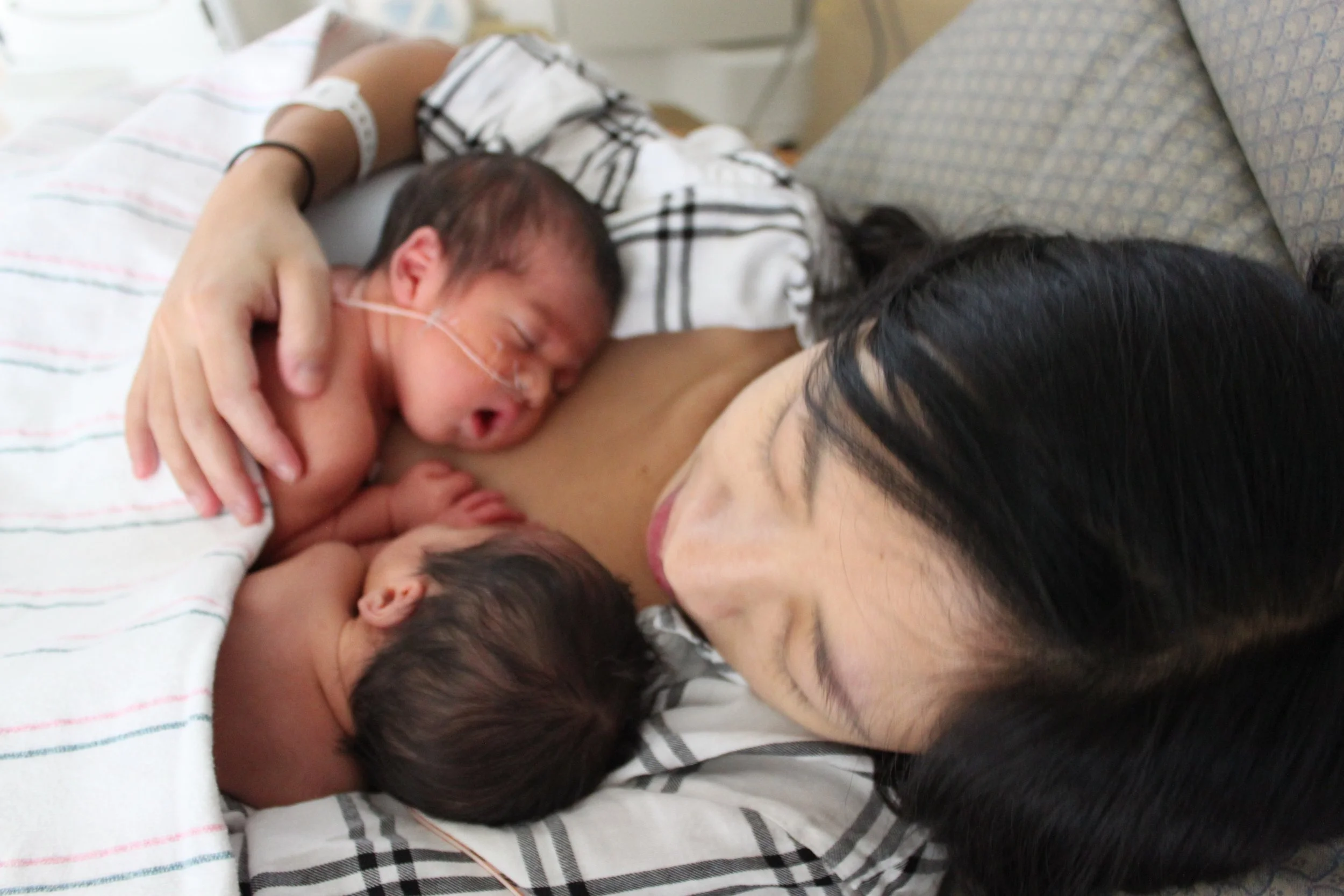
Amie with her newborn daughters. Photography by David Saladik.
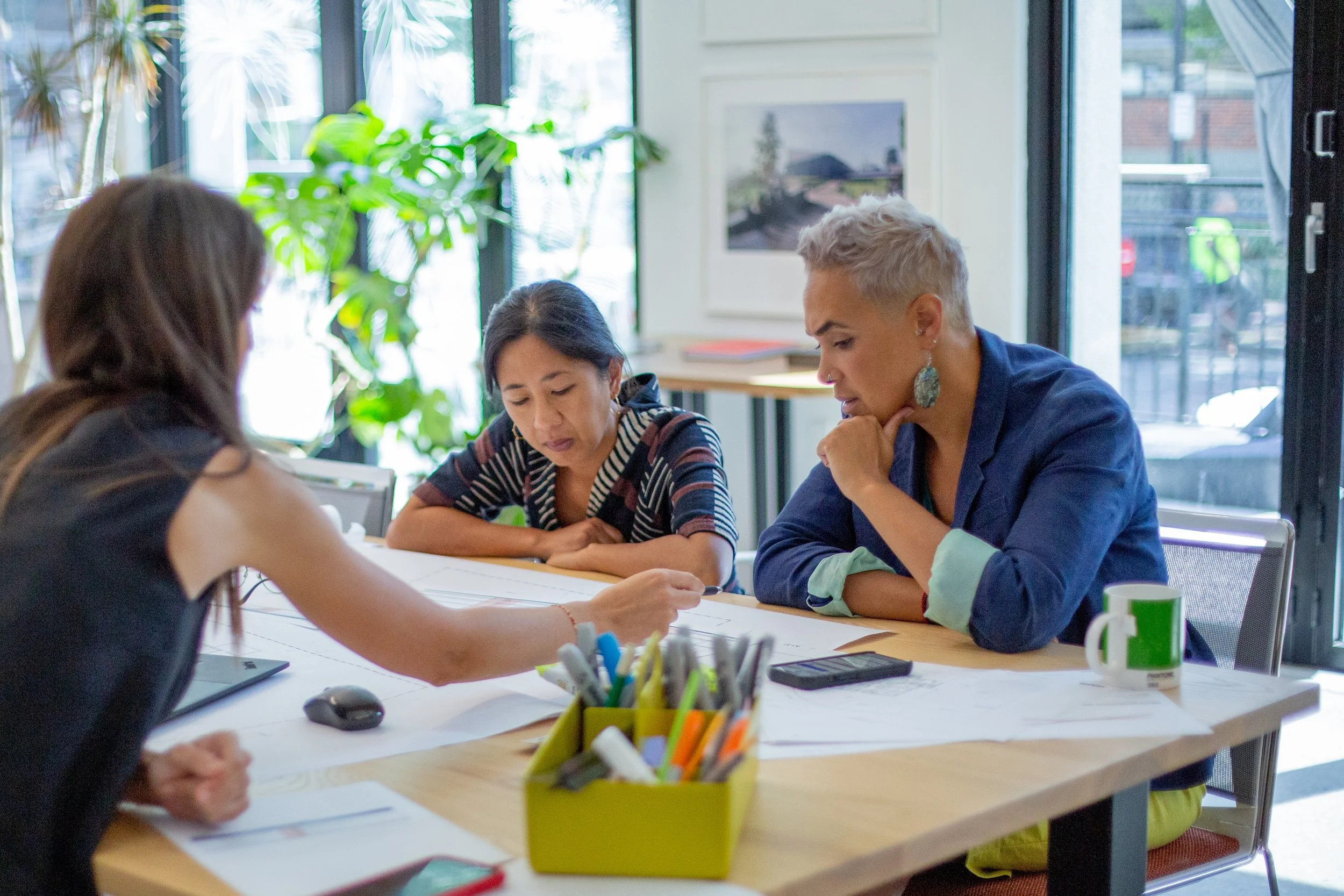
Working with Nashira on the design of the Neighborhood Birth Center. Photography by Carolina Kammel.
What is the impact you’d like to have on the world? What is your core mission? And, what does success in that look like to you?
I think my purpose is pretty simple: to help create the conditions for healthy beginnings. Shortly after my twins were born prematurely, I found myself working alongside hospitals and health systems where many families faced very different odds. That realization — that where you're born can still shape whether you survive or thrive — has stayed with me ever since.
Success, to me, would mean a world where birth spaces uplift rather than impede care. Where providers have environments that help them do their jobs well. Where parents can stay close to their babies whenever possible. Where safe, evidence-based care is easier to deliver because the space supports it instead of working against it.
Finally, what advice do you have for those starting their career?
Something I've learned is that some of the most meaningful opportunities can happen at the edges of your job description. I've always been drawn to research, user engagement, strategy, policy, and systems thinking. For a long time I worried that meant I was unfocused. Looking back, those interests were all pointing toward the work I was most excited by. So pay attention to what you naturally gravitate toward. Early in your career, it's easy to focus on what you're supposed to be interested in or what everyone else seems to be doing. But I've found that the questions, experiences, and frustrations you keep coming back to are often pointing toward your unique contribution.
And finally, don't underestimate the value of your own lived experience. For a long time, I thought I needed to keep my personal and professional worlds separate. Looking back, some of my most meaningful work emerged when those worlds started to overlap. The experiences that shape you often give you a perspective no one else has.
This interview has been edited and condensed for clarity.