A New Language: MIT and DESIGN EARTH's Rania Ghosn on Research, World-Making, and Humor
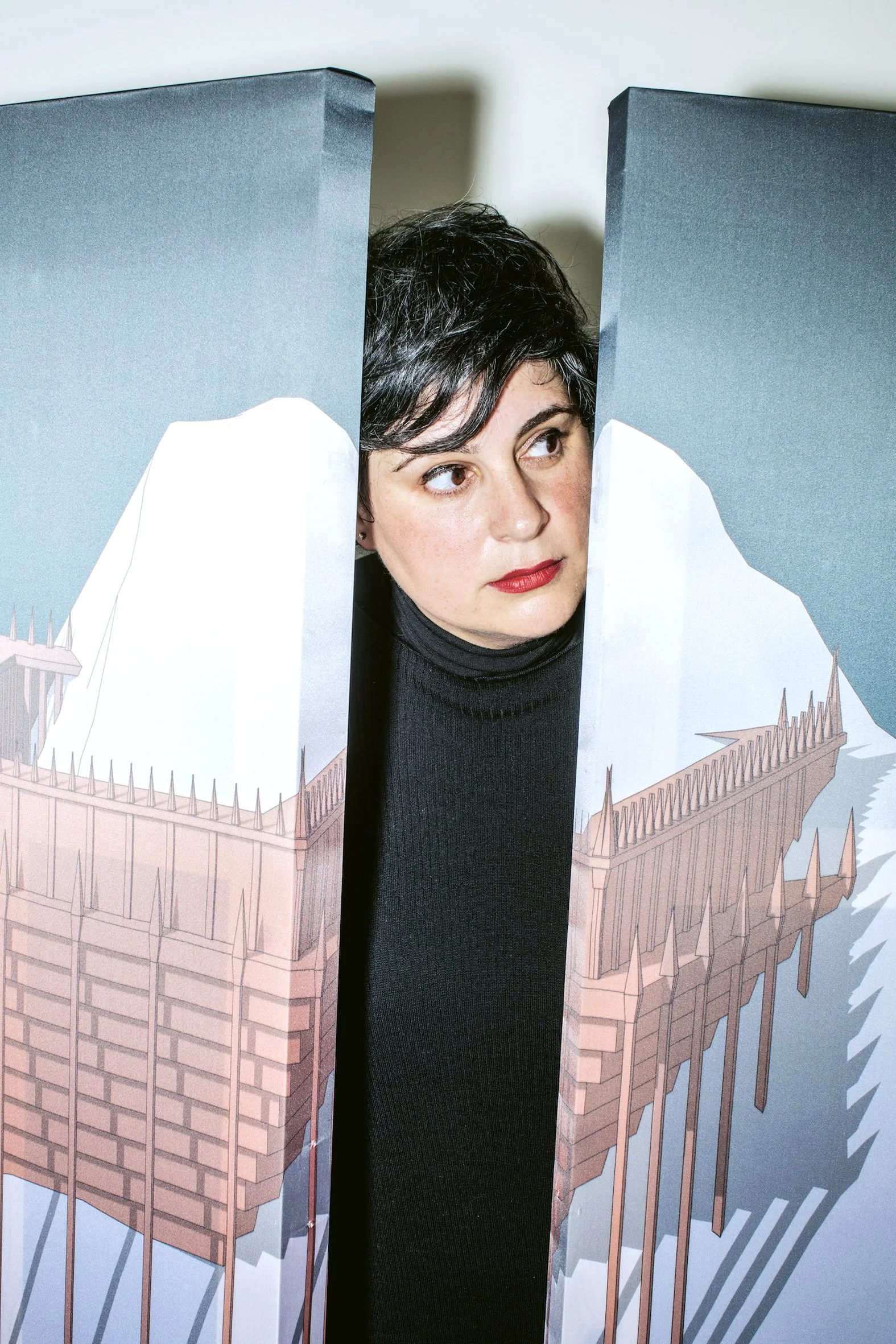
Rania Ghosn by M. Scott Brauer.
By Julia Gamolina
Rania Ghosn is associate professor at MIT Architecture, where she directs the post-professional urbanism program; and partner with DESIGN EARTH, an internationally recognized studio practice that deploys the speculative architectural project to make public the climate crisis. They are authors of Geographies of Trash (2015), Geostories: Another Architecture for the Environment (3rd ed. 2022; 2018), The Planet After Geoengineering (2021), and Climate Inheritance (2023). Ghosn is recipient of the United States Artist Fellowship, Architectural League Prize for Young Architects + Designers, and Faculty Design Awards.
JG: I love what you're doing with Design Earth, which you describe as engaging "the medium of the speculative architectural project to make public the climate crisis." In these terms, what are your priorities for the rest of 2026? What is the biggest element within the climate crisis that you think needs to be spotlighted currently, and what should all of us be paying attention to and learning more about?
RG: I want to keep reckoning with the violences of the present moment — war, military destruction, impoverishment, and also the slower violence of climate change — but to do that with some levity and humor. I find fables especially compelling in dark times because they let the designer speak through animal figures and ventriloquized voices in ways that can hold difficulty without flattening it. That is very much what we have been exploring in Elephant in the Room series, Design Earth’s speculative ecofeminist fable for the climate crisis, and also in Climate Inheritance, which turns heritage into a spotlight medium for making climate risk visible, arguable, and politically consequential.
For me, the question is no longer only how to map climate destruction analytically, but how to make environmental destruction felt, argued over, and acted on institutionally. The challenge is how to dwell with the ghosts of destruction without giving up on the desire, and the practice, of action. Humor matters because it points to the structural absurdity of the present while making hard things bearable enough to face; it is also a survival practice.
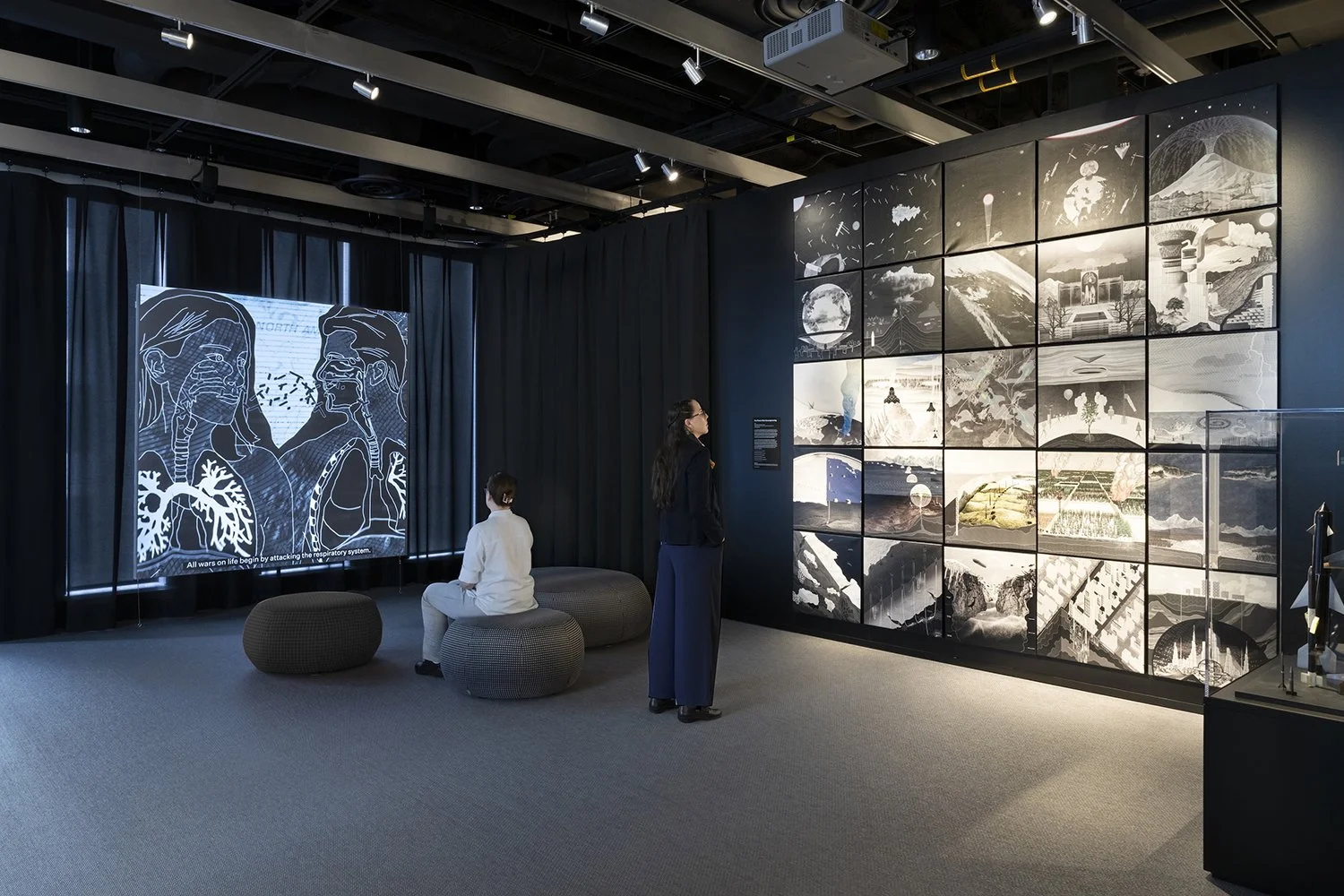
DESIGN EARTH, The Planet After Geoengineering in “Cosmograph: Speculative Fiction for the New Space Age,” MIT Museum, 2025. Photograph: Anna Olivella.
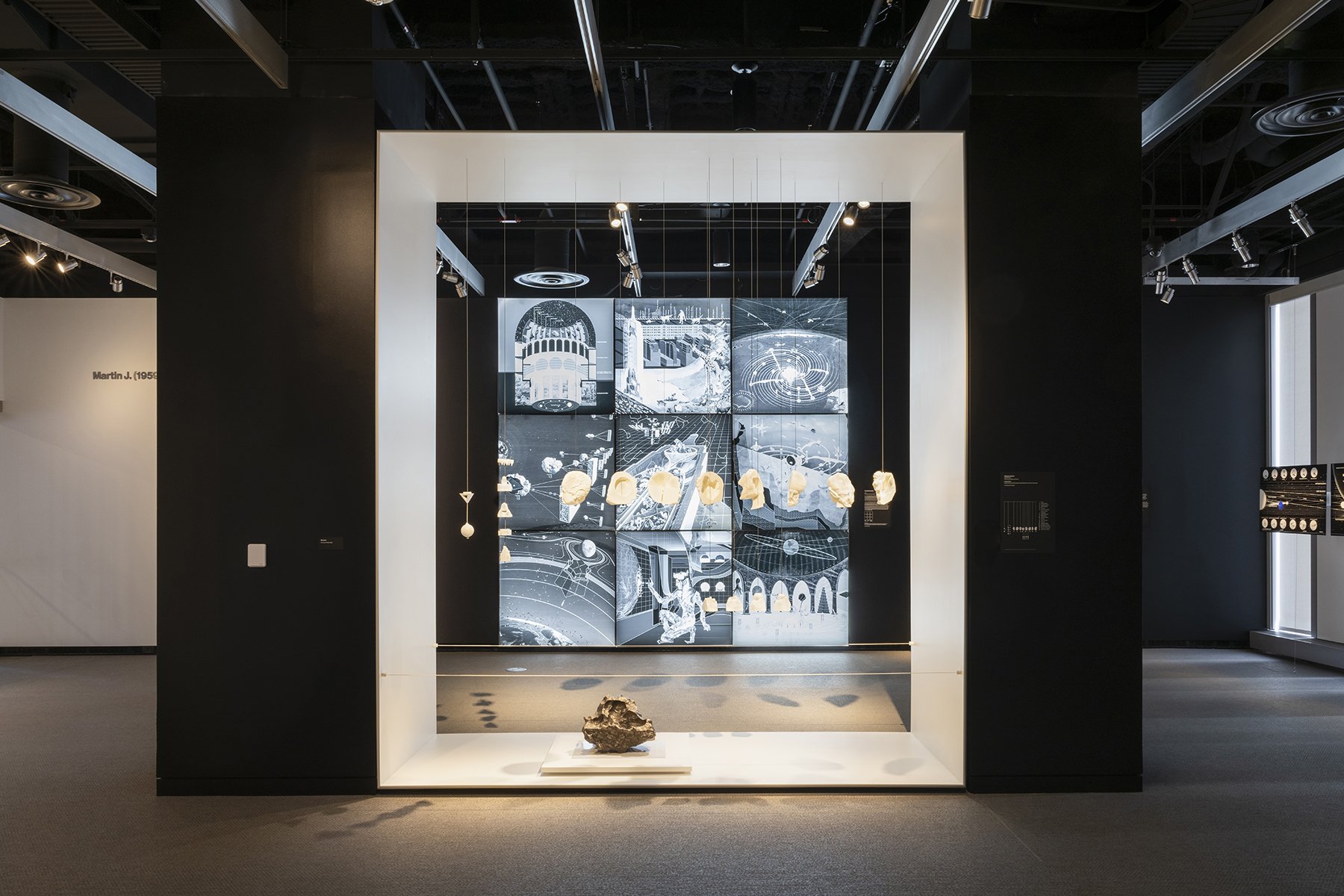
DESIGN EARTH, Cosmorama in “Cosmograph: Speculative Fiction for the New Space Age,” MIT Museum, 2025. Photograph: Anna Olivella.
You first studied architecture in Beirut, then geography in London, and then pursued your Doctor of Design in Architecture and Planning at the GSD. What were you hoping to do in the world with each step? And how is the approach to architecture different in all of the places you've studied?
I grew up in Beirut during the civil war and the postwar reconstruction, so for me architecture was never separate from conflict or from the politics of infrastructure. That context gave me a distrust of official narratives and ready-made solutions, many of which promised brighter futures even as the world was continuing to collapse. It also gave me an appreciation for tragi-comedy as a way of thinking through crisis, and that voice still resonates in my work today, though now at a planetary scale.
London changed the scale of the question. Through my masters in geography, it became clear to me that architecture is inseparable from oil fields, mines, waste landscapes, atmospheric systems, and territories far beyond the bounded architectural object. Then at Harvard GSD, especially in the Doctor of Design program and around the journal New Geographies, the question became how to bring those systemic strands back into design—to treat technological and environmental representation as central design questions rather than external concerns.
“For me, the question is no longer only how to map climate destruction analytically, but how to make environmental destruction felt, argued over, and acted on institutionally...Humor matters because it points to the structural absurdity of the present while making hard things bearable enough to face; it is also a survival practice.”
What was some of the best advice you got early on that has informed your approach to your work and career?
One of the best pieces of advice I got early on was not to wait for permission or for the “perfect” commission to define my practice. Instead, I was encouraged to treat every drawing and every project as a site of research and world-making. That really became central to Design Earth. We’re often interested in looking precisely where we’re told there is “nothing to see,” in order to produce other ways of seeing, and valuing, the world. Rather than simply responding to or solving for predefined problems, we use research, speculative projects, and drawings to initiate conversations, even debates in the form of exhibitions, books, and visual narratives.
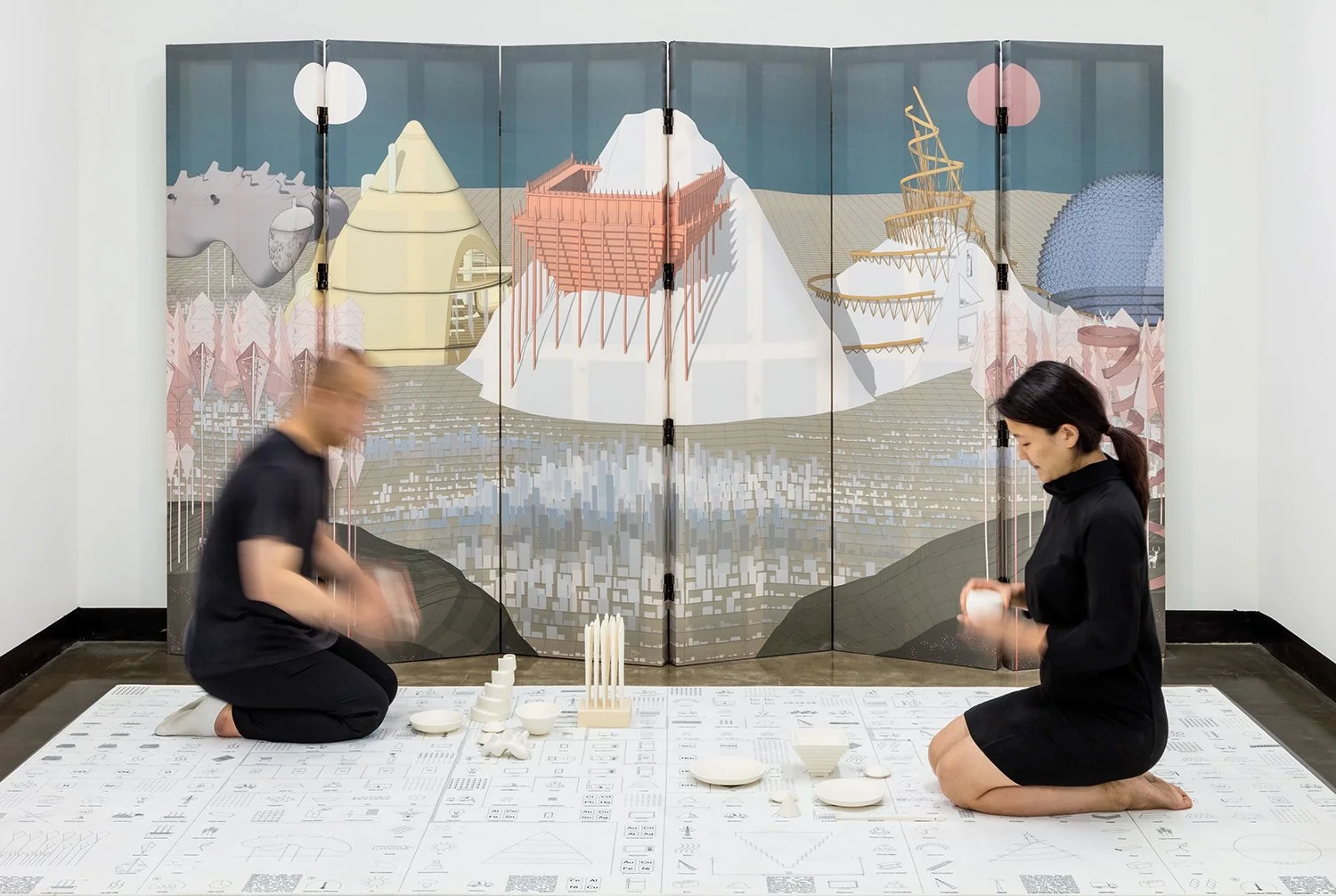
DESIGN EARTH, “Trash Peaks,” Seoul Biennale of Architecture and Urbanism, 2017. Photograph: Kynugsub Shin.
In addition to your practice, you have spent many of your professional years in academia. How have you seen architecture pedagogy evolve and what are your thoughts on what’s most important to prepare students for practice, and for impact, today? Do you think more business or entrepreneurship exposure should be incorporated into the curriculum?
Architecture pedagogy has changed in really important ways. At its best, it is about giving students the tools to expand and redefine what architectural practice might be. That means situating the architectural object within larger systems—ecology, economy, race, labor—rather than treating it as an isolated form. The climate crisis has been a major force in upending modes of practice. Today, the challenge is to confront the many scales and entanglements a project is part of, without reducing it to optimization and technical performance alone.
In terms of preparing students for practice and impact today, entrepreneurship can be useful, but only if it is not reduced to learning how to fit into existing economic systems bur rather framed as financial literacy, on how systems of commissioning shape what gets built and for whom. Architecture education then has the potential to reshape the financial arrangements and markets that call architecture into being and to rethink how value is distributed, especially in terms of what is internalized and accounted for and what burdens and externalities are displaced and who bears the costs.
“When someone tells you, ‘not now,’ claim your space anyway, whether that’s in public debate, on juries, in publications, and within institutions. The moment rarely arrives on its own. Most times you have to take it.”
Looking back at it all, what have been the biggest challenges? How did you both manage through perceived disappointments or setbacks?
My story is not so different from that of many international students who come to the U.S. to study and then stay, trying to build a home and a practice here. For me, that has also meant mothering without the village I was born into. For the practice, one of the biggest challenges has been that funding structures do not always know how to support speculative work, especially if responding to technical infrastructures when it does not present itself as a solution or prototype.
That speculative format has also been a source of resilience at moments of setbacks. There is always another way to stage the conversation—through drawings, exhibitions, books, or animations. There is also still some suspicion toward so-called “paper architecture,” as if it sits outside practice and the “real” word. For me, speculative practice can work like a weapon of the weak in that it allows you to speak obliquely, reclaim erased histories, and imagine otherwise when existing futures feel foreclosed.
Who are you admiring now and why?
I’m drawn to people and collectives who refuse both despair and false optimism. I’m thinking, for example, of the Lebanese singer and architect Mayssa Jallad. Her album Marjaa revisits the 1975–76 Battle of the Hotels during the Lebanese Civil War through the perspectives of Beirut’s damaged landmark buildings. It’s a remarkable act of storytelling—architectural, musical, and political at once.
I’m also thinking of Ala Tannir’s The Small Old House by the Sea, a work that stays with questions of memory and survival with extraordinary tenderness. It’s the kind of project that reminds us how intimate scales of life can hold wider histories of endurance.
And finally I’m thinking of Dzidula Kpodo, whose MIT MArch thesis, Ending Well, expands a harvest path among neighbors in the birthplace of Ghana’s cocoa industry, and in doing so imagines an alternative model of development for the region.
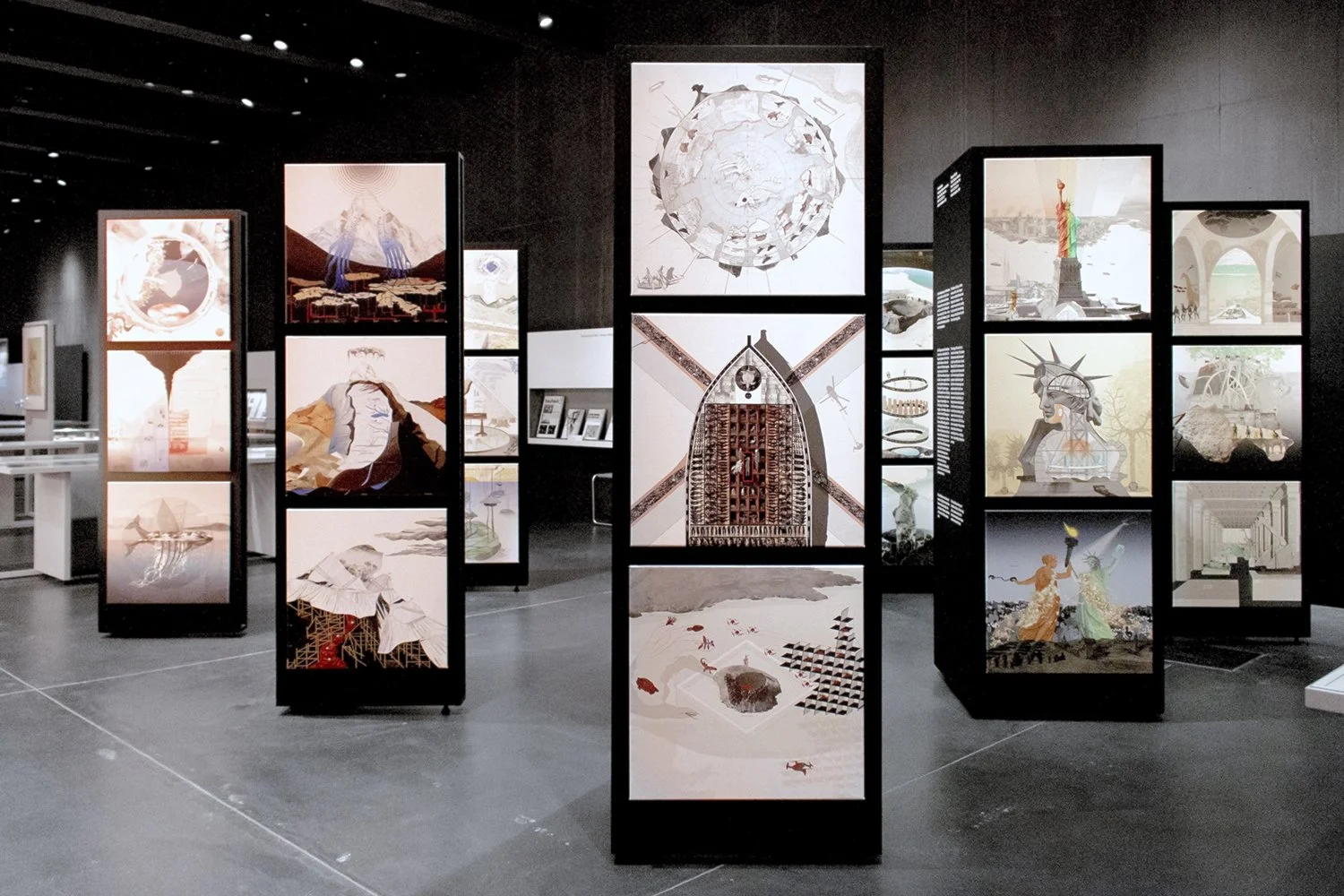
DESIGN EARTH, “Climate Inheritance,” Bauhaus Museum Dessau, 2021.
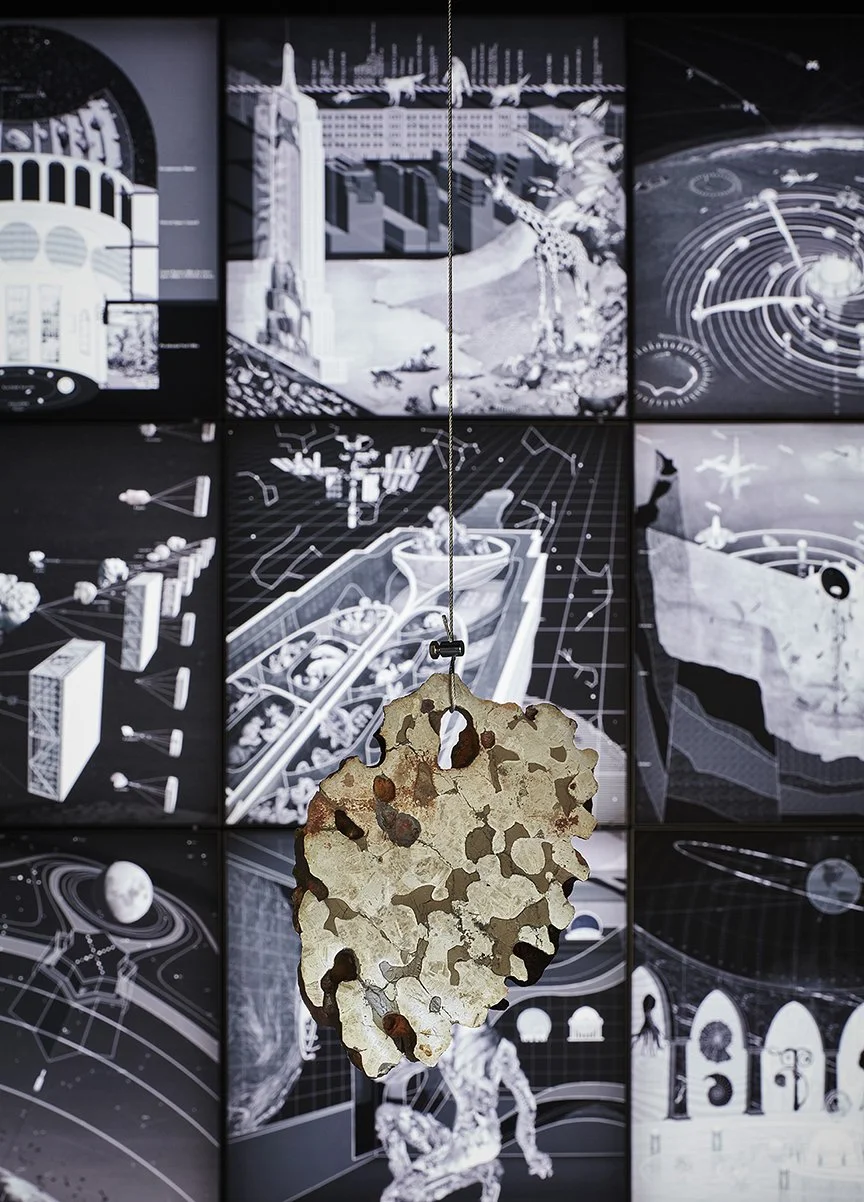
DESIGN EARTH, “Cosmorama,” United States Pavilion, Venice Architecture Biennale, 2018. Photograph: Tom Harris.
What is the impact you’d like to have on the world? What is your core mission? And, what does success in that look like to you?
At a moment when so many modern systems reward novelty and acceleration, I hope, in some small way, to slow things down and to do that through stories that age well. As an educator and designer, the impact I would most like to have is to help build an architectural language for thinking about the Earth in the age of climate change. I want that language to circulate across schools, museums, and broader publics, so that these question can be argued over before they become faits accomplis.
To me, success would look like a real shift in how we see and argue about the world; not simply reacting to environmental damage after the fact, but building the cultural and pedagogical tools to think, question, and act earlier. And most importantly, who gets to speak and whose voice is listened to!
Finally, what advice do you have for those starting their career? Would your advice be any different for women?
Curiosity and passion matter—follow what genuinely speaks to you. Don’t wait to be granted authority before allowing yourself to be exploratory. Many of our projects—including the Elephant in the Room series—began with a creature that demanded another way of seeing. Protect your time, be generous where it matters, especially with collaborators, and don’t confuse being legible to the discipline with being valuable to it. If your work feels too hybrid, too political, or too difficult to classify, that may simply mean you’ve found a place where the discipline itself might need to grow.
For women, and for others whose voices are still treated as non-normative in the field, the advice is not fundamentally different, but the friction often is. So, I would add to seek out solidarities and mentors who can recognize your work on its own terms and have your back through it all. When someone tells you, “not now,” claim your space anyway, whether that’s in public debate, on juries, in publications, and within institutions. The moment rarely arrives on its own. Most times you have to take it.
This interview has been edited and condensed for clarity.