Land and People: The WholeTrees Structures' CEO Amelia Baxter on Rural Communities, Servant Leadership, and Prosperity Between Forests and Communities
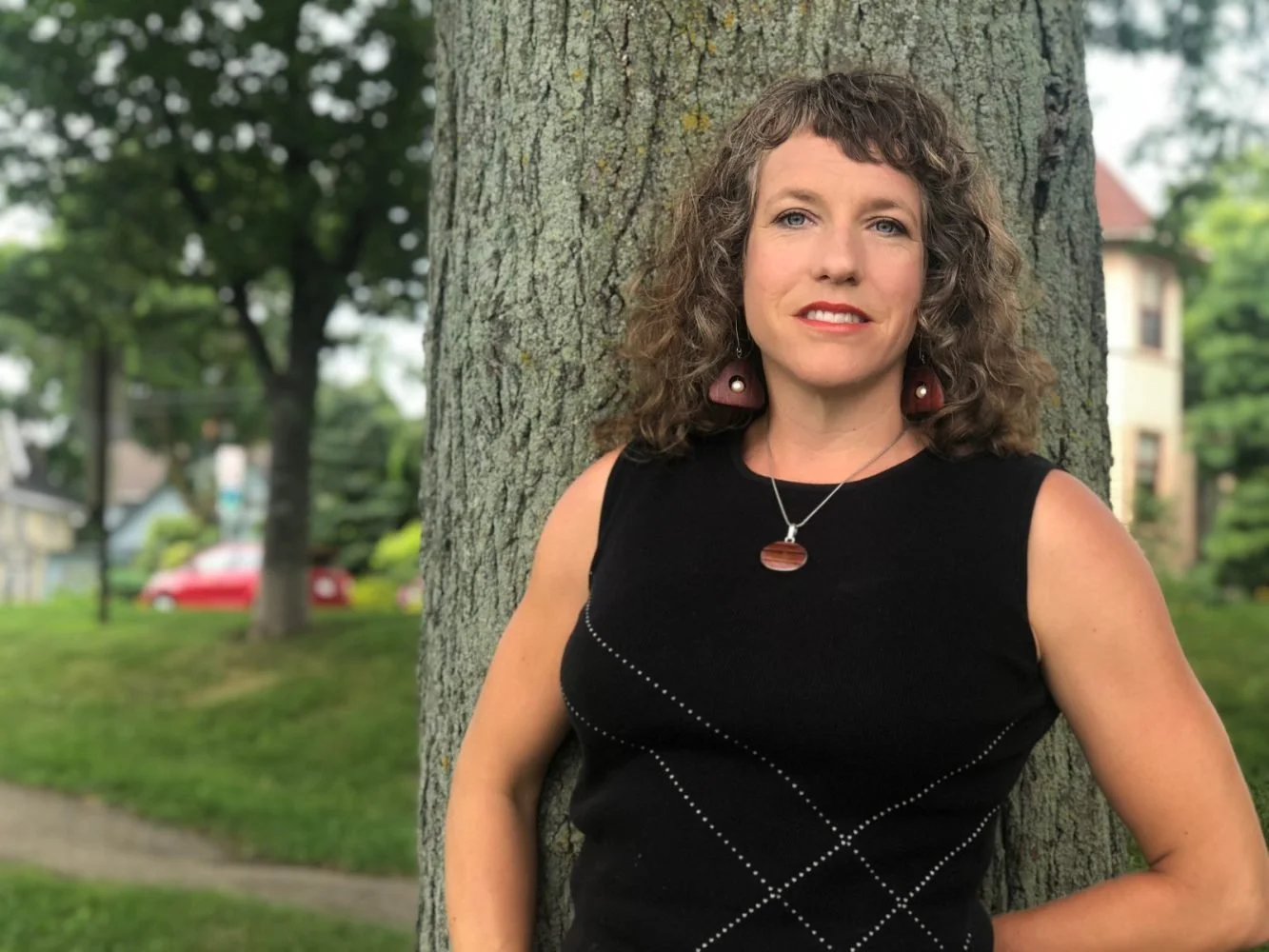
Amelia Baxter courtesy of WholeTrees.
By Julia Gamolina
Amelia Baxter believes the twenty-first century built environment holds major opportunities for trees. She co-founded WholeTrees in 2007 to scale the use of waste trees in commercial construction, creating new revenue streams for forests and a new structural material for green building. Baxter has led teams securing more than $2M in USDA research grants advancing the commercialization of trees’ natural engineering. She holds a BA from the University of Chicago and enjoys gardening, biking, and mushroom hunting.
JG: I love what you're doing with WholeTrees. What are you most focused on for the company this year? What should all of us looking to engage with climate initiatives be paying attention to and thinking most about as well in 2026?
AB: In 2026, following our eventful participation in last year’s Venice Architectural Biennale, I’m focused on how WholeTrees can forge connections between that global event’s radical homage to natural material and the day-to-day business of architecture. It’s gratifying that every year, more architects approach WholeTrees with designs that exquisitely pair the tree form as accent against conventional super structures, often of steel. This tells me the zeitgeist for raw, non-machined material is growing in modern design.
Next, what I want to explore with the architectural community is how to bring more non-machined materials into scaled applications — beyond accent to the superstructure itself. I encourage architects to consider from a project’s inception the web of decision makers involved, and how to integrate into this web the carbon negative product experts. For carbon neutral projects to reach fruition, all decision makers need to be kept in lockstep toward a holistic vision. Otherwise, material swap-outs are inevitable when ease and immediate cost savings become the driving factor. Product companies can serve as effective influencers as projects move from schematic design to bidding documents. I am spending more time in 2026 honing our messaging to all our pending project’s decision makers, helping radical materials and carbon smart vision become a reality at scale.
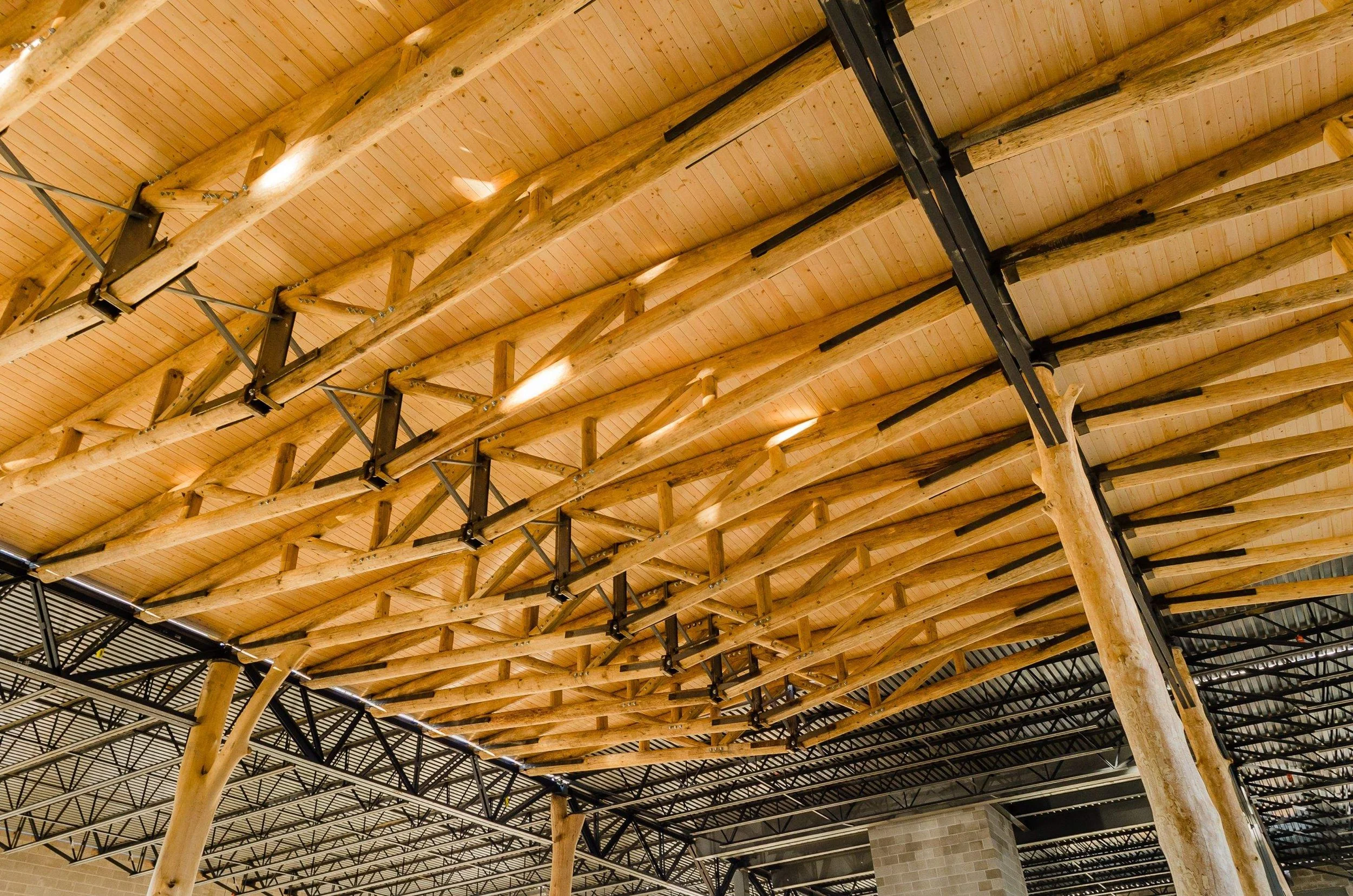
WholeTrees’ beams and trusses from a grocery store project in Madison, WI.
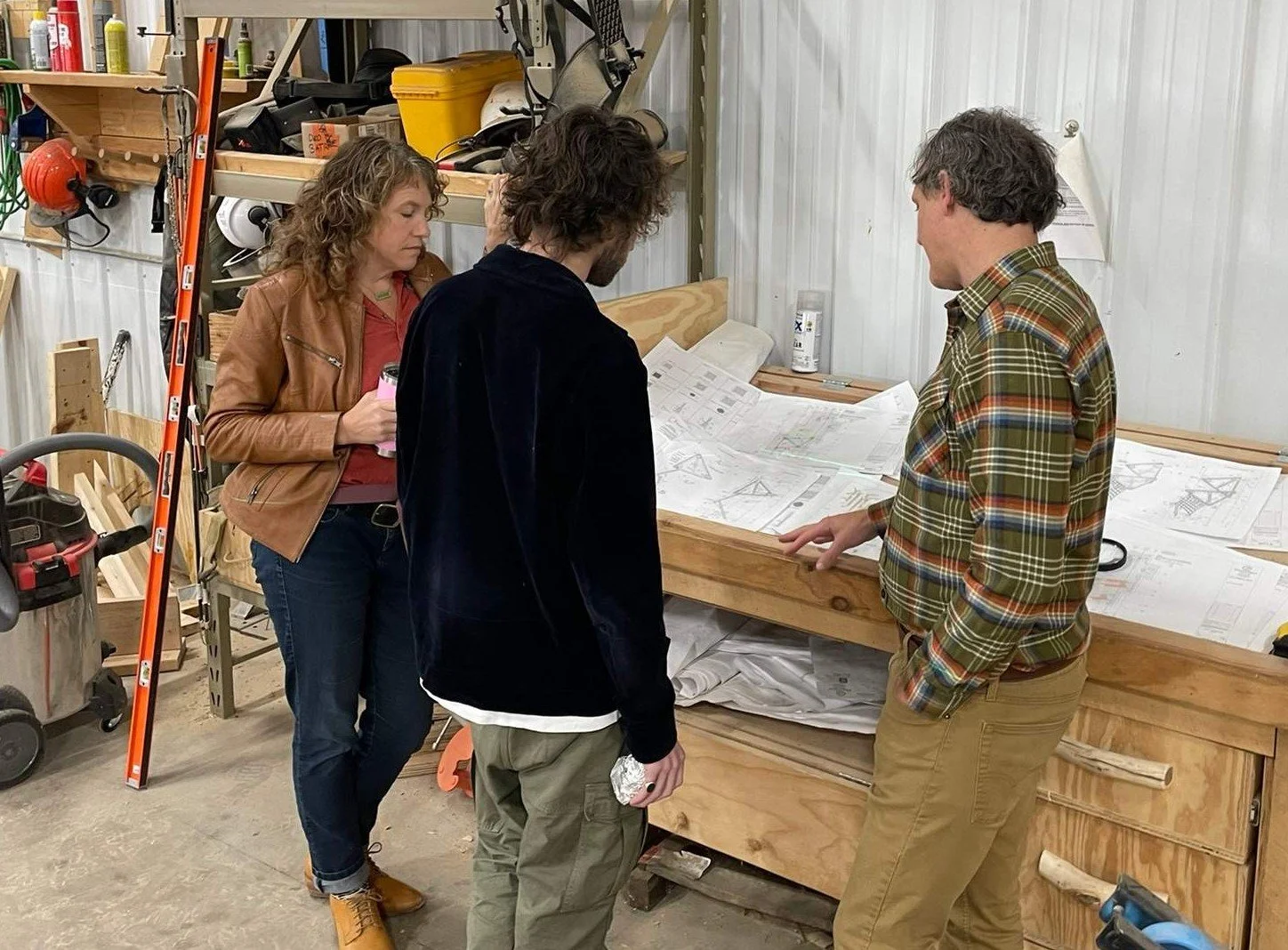
Amelix Baxter reviews a current project at the WholeTrees’ Westby, Wisconsin fabrication facility.
Now let's go back a little bit — you focused on all things environment when you were at the University of Chicago. How did you come to this and what were you hoping to do in the world with your degree?
I grew up surrounded by trees. From an early age, I would seek out activities that placed me outside and in relationship with nature. Vocationally, I knew I wanted to work at the intersection of land and people. Growing up at the edge of a state forest in Connecticut, the trees were my constant companions. Most of my afternoons were spent outdoors, sitting under their branches, each one a part of my intimate community. My father designed our home to feel like an extension of the outside world — the trees not a backdrop but an integral part of our daily lives. It taught me early on that nature wasn't something to be worked around, but something to work with.
While my brother followed in our father's footsteps and became an architect, I felt called elsewhere. I wanted to find a way to directly affect the way we humans care for the land itself. In college, I was drawn to interdisciplinary studies about managing natural resources sustainably. I earned a bachelor’s degree in environmental studies and religion from the University of Chicago. During summer breaks, I was interning on farms in Maine through their Organic Farmers and Growers Association. I assumed my degree would put me at the intersection of agricultural production and the people and natural resources meeting new sustainable markets for these products.
I just got back from my first time in Maine! What incredible landscapes.
What was some of the best advice you got early on that has informed your approach to your work and career?
My mother taught comparative religion and she is an ordained minister that taught the Eightfold Path from the Buddhist tradition which includes the concept of “right livelihood.” The gist of right livelihood is to hurt no one and hurt nothing while creating your life, which is a tricky thing. I have always used that philosophy to guide my decision making and life and it has greatly influenced the values at WholeTrees. My early mentors also took seriously the effort to thread a needle between material livelihood and spiritual practice. They have modeled for me a balance between the striving and scarcity inherent in business and the wide horizons we experience in communion with others, in silence, and for me, with trees.
“My early mentors...modeled for me a balance between the striving and scarcity inherent in business and the wide horizons we experience in communion with others, in silence, and for me, with trees.”
Tell me about your professional experiences before founding WholeTrees. What did you learn with each step that you still bring to your role today?
In 2000 and 2001, at college, and again after graduating, I lived in Nicaragua, where I worked with a twenty-year-old NGO teaching and supporting local farmers who were transitioning to organic practices in order to reach new markets for coffee and food. This experience deepened my commitment to environmental stewardship and the ways that markets can and do shift our interactions with the land. This experience planted the seed for what eventually would become WholeTrees.
I returned to the U.S. and worked for a regional agricultural nonprofit, opening a Chicago office of urban agriculture. I was steeped in the city’s South Side traditions of activism. Surprisingly, these lessons of humility, popular education, and community organizing translated well to the creation of a growing WholeTrees staff, as well as timber vendor networks across rural regions. Rural communities are dedicated to upholding our country’s natural resources yet often discounted and undermined by those in power. My early career taught me the servant leadership required to build new systems for people to achieve new things.
How and why did you start WholeTrees in the first place?
I met my co-founder, Roald Gundersen, in 2004. He was an architect yet he was perhaps more deeply committed to trees and forests than most in his career — I think architects tend to gravitate to the commissions and recognition available in urban settings. My Connecticut hometown, twenty minutes from Yale, was filled with architects. Thanks to my brother and his architectural classmates, I had a sense of how environmental consciousness was changing the aesthetics of my generation. I was profoundly moved by Roald’s use of structural trees in construction, and knew that architects of my generation would be similarly moved. Roald’s timber designs were getting more attention and commissions than a sole proprietor could handle, and I had the training — and the youthful naivete — to organize and build systems required for a complex business. We founded WholeTrees in 2007.
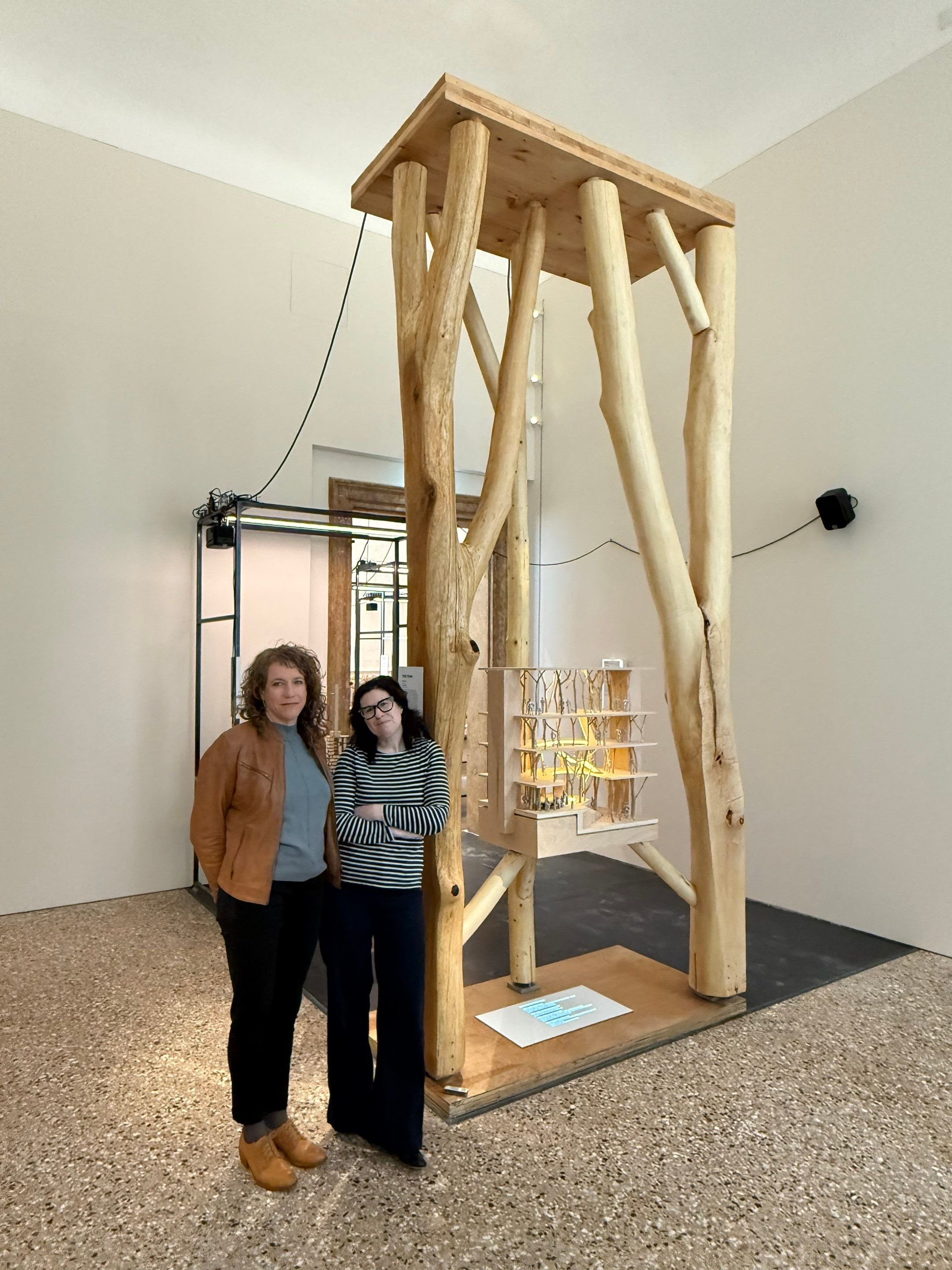
Amelia Baxter with colleague in front of the TREE FORM exhibit, a collaboration between MIT Architecture Researchers and KVA Matx, ahead of the opening night of the 19th Venice Architecture Biennale. TREE FORM Architectural Design by KVA Matx with MIT Digital Structures; Industry Partner, WholeTrees Structures
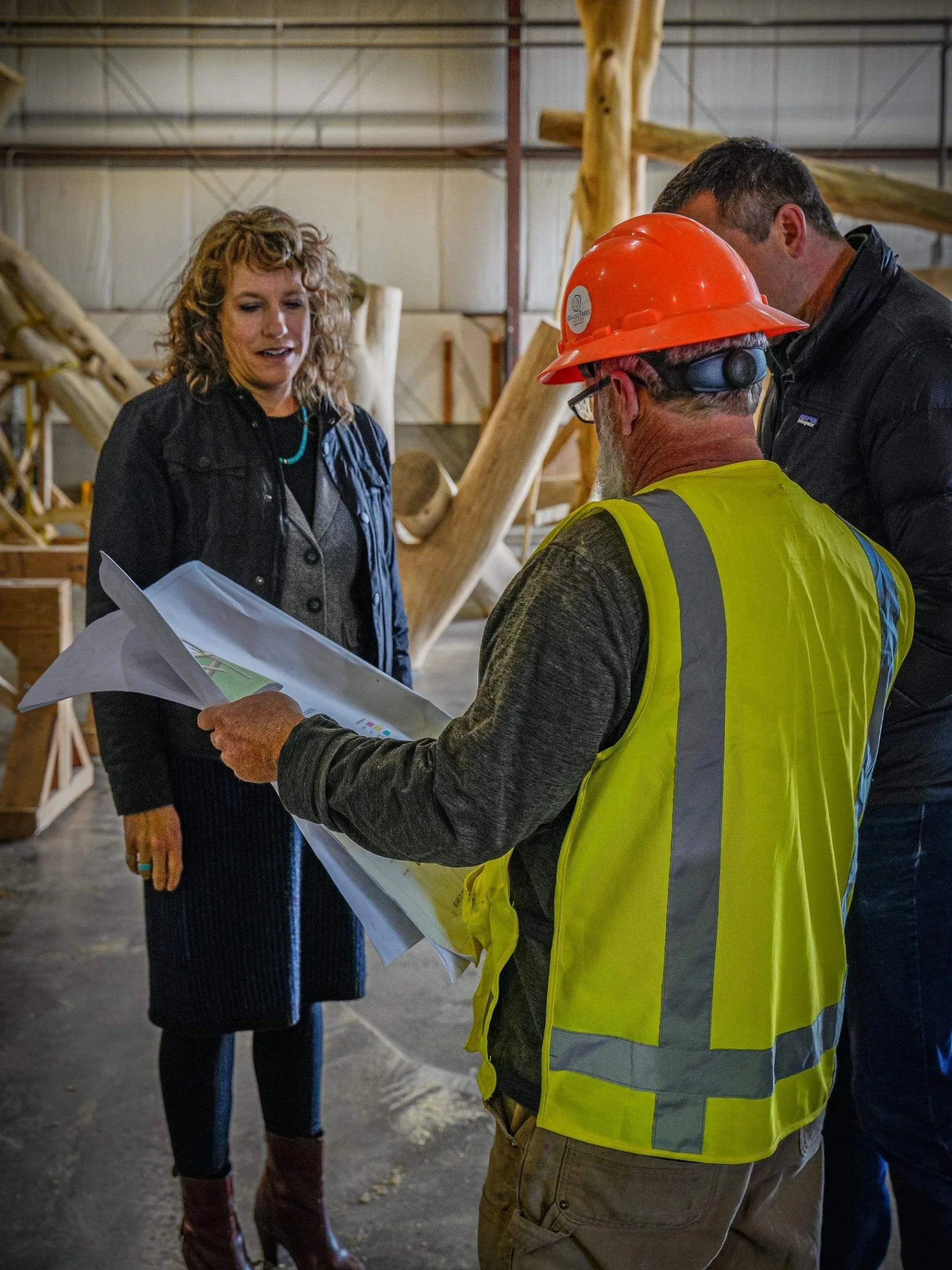
Amelia Baxter reviews a current project at WholeTrees’ Ashland, Maine fabrication facility.
Looking back at it all, what have been the biggest challenges? How did you both manage through perceived disappointments or setbacks?
When we were first working with the federal Small Business Innovation Research (SBIR) grant program, we were encouraged to learn to raise investment to help commercialize the intellectual property we were developing. I realized that investment dollars were one of the greatest methods of bringing an idea much bigger than ourselves to the market and underwent an immersive training that brought us to early regional accelerators and culminated in WholeTrees winning the National Cleantech Open in San Jose, California. I then took my current state, “fly by the seat of our pants,” operational activity, paired it with the big vision I had been trained to speak about and we raised our first round of investment. What I learned, as we inevitably encountered cash crunches after our first investment, is that it is detrimental to the company and my own role as CEO to allow the passion with which I speak distract investors from the very real risks of the construction industry. This led to inevitable conflicts and concerns with the founders and the board.
Since then, we have always led with a pairing of passion and data respected by our contractors, architects and new investors. I learned that it was more important to lead with data than with passion. You can be a visionary and passionate entrepreneur, but let the passion burn inside and leverage it sparingly while focusing on the numbers. In the early days of this venture, the going was tough and adrenaline-fed. The idea was new, the industry conservative, and wins such as national press coverage or our growing contract sizes were humbled by crushing challenges such as cash management and inter-staff conflicts. It was during these years that I learned to lean into my values of authenticity and resilience. I wanted WholeTrees to be more than just a business; I wanted it to embody a set of principles that aligned with the natural world, where first and foremost, the most true form is the most useful.
“...watch for the women that are successfully leading groups, and cultivate an awareness of what female leadership looks like.”
Who were your mentors through it all?
We applied for, and won an award for a business plan competition in 2015 run by the U.S. National Forest Foundation. The competition was for market-based solutions to healthier forest management. We went to the awards ceremony in D.C. and I met the chair of the foundation, Craig Barrett, the former CEO of Intel, and the founder of the award. I told him that more important than the $100,000 we had won would be the advice in his head and I would fly anywhere to meet him for lunch sometime to be able to have some of that advice. And, he said, “Sure, I’m open to that.” He became an incredible influence during these early days of growth.
Later, when we first encountered the B Corp movement, we were deep in the midst of a challenging time of conflict for the board and founders and it did not seem like the right time to take on such a large task. An executive mentor of mine from Patagonia was lending me wisdom on a weekly basis, and this same mentor was one of the founders of the B Corp movement. He, along with my co-founder, strongly encouraged me to persevere with the requirements to achieve B Corp status, even though it would be a challenge while navigating these times of conflict. They were right and the positive strides and reflection it took to become a B Corp during this time was just the balance, sanity and higher vision we all needed to mature
Who are you admiring now and why?
Trevor Noah, Kamala Harris, and my partners at MIT, Caitlin Mueller and Sheila Kennedy. Both Trevor Noah and Kamala Harris embody and then communicate an incredibly complex global consciousness, in part due to their varied heritages, and in part due to their brave decisions to grapple with modernity from these authentic backgrounds. They are both so funny and wise, and both have captured attention and power from a largely white male world while maintaining authenticity.
Caitlin Mueller and Sheila Kennedy, both professors at MIT’s School of Architecture and Planning, use their singularly prestigious positions and their unrivaled intellects to show the world how carbon negative building materials can be scaled, and beautifully. They pair a foundation of impeccable design credentials with cutting edge computational skills and building material innovation that inspires both their students and the larger global architectural community. In our 2025 partnership, I was struck with the pleasure of being on a team of best-in-class women, something that, frankly, my career had not previously provided to me.
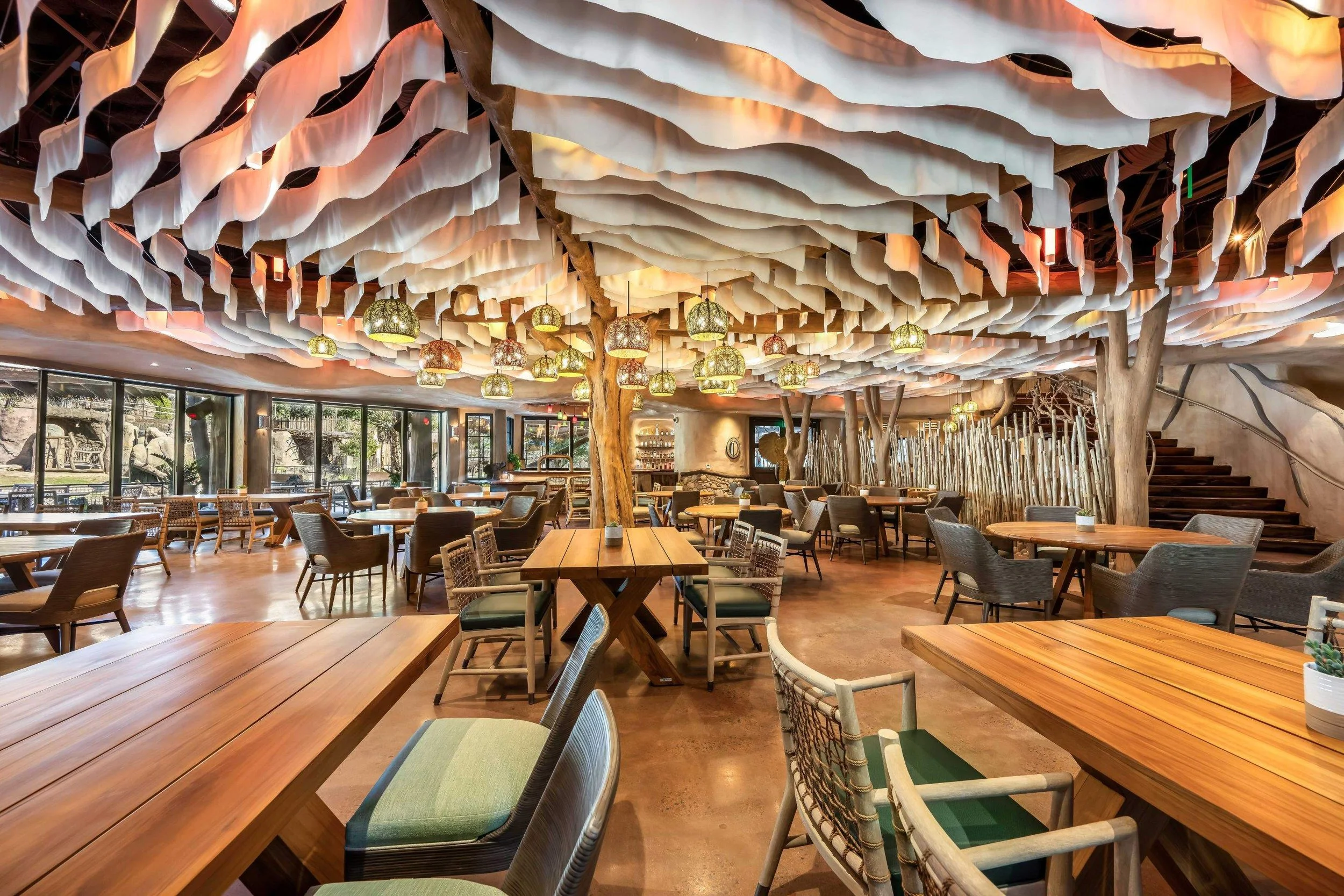
A restaurant and event space designed around the vision of using “whole trees” at a zoo in San Diego. Photography by Pink Media Productions.
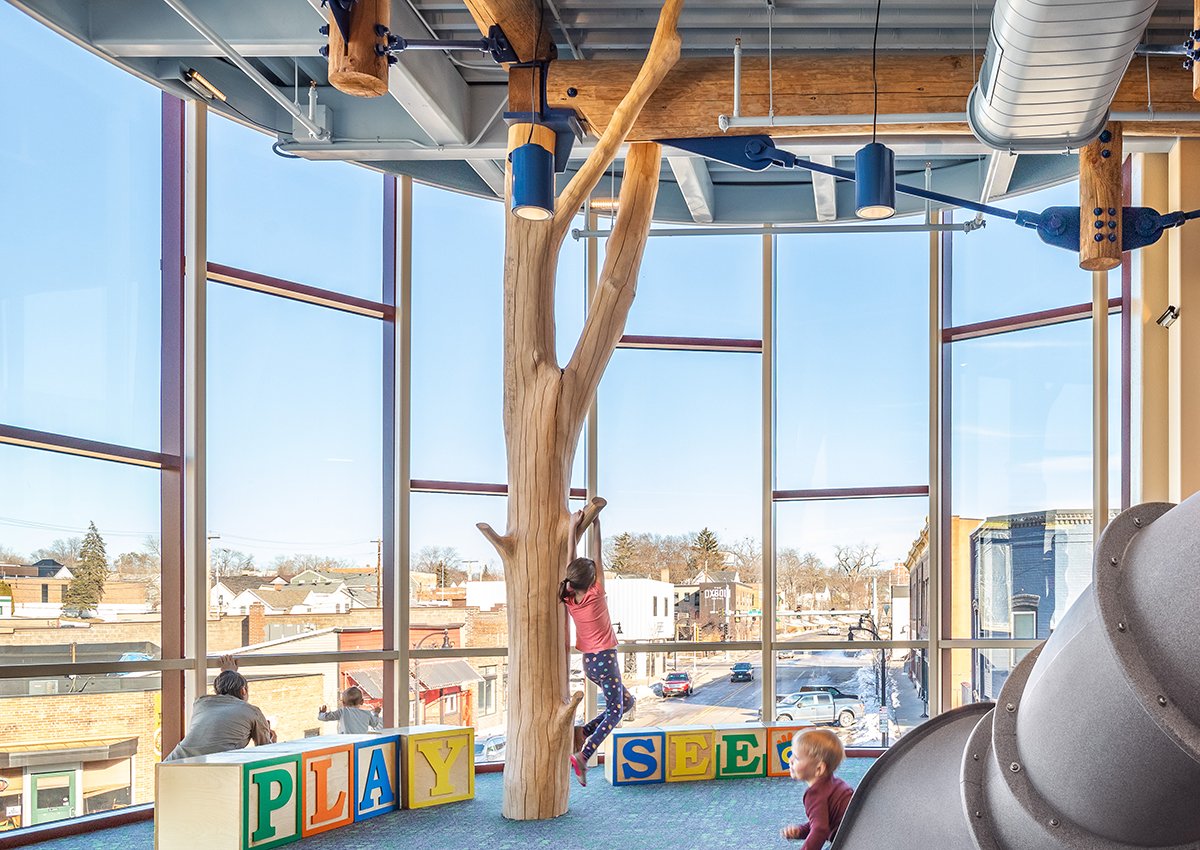
The Children’s Museum of Eau Claire project done with Steinberg Hart architects. Photography by Kleine Leonard Photography.
What is the impact you’d like to have on the world? What is your core mission? And, what does success in that look like to you?
WholeTrees’ guiding vision has always been to create prosperity between forests and communities. This still drives my strategic and personal plans. I find satisfaction in a life that bridges urban and rural communities and landscapes, so often divided by politics, economics, and worldview. Success for WholeTrees will be more timbers purchased every year from more sustainably managed forests for structural use in more buildings. Each year, I want to see greater impact to rural communities, forests, and building-users. Success for me personally will be to support and enjoy my family and my inner world, while watching how more designers each year celebrate trees in structure.
Finally, what advice do you have for those starting their career? Would your advice be any different for women?
Wisely select mentors who understand both business and purpose-driven companies. Without mentors who have been through the rapids of purpose-driven businesses, you will either have mentors that cut you down to a purely financial reality, or you will have mentors that are too dreamy and don’t make you stick to a business plan. Get coached in life balance as early as you are able. Leaders who have yet to establish inner balance between work and personal requirements create conflicts in their teams simply by leading with a “threadbare” energy. Reflection time provides wisdom about what not to do each day, and what others can, or ought, to do.
Our society has near zero examples of firm strong female leadership — not in politics or in pop culture. This means we are not programmed to effectively receive strong female leadership, and on the contrary, often hold an implicit bias against it. I advise women to first, study how they feel inside when they assert themselves publicly, and then coach themselves to continue to do so even when feedback feels critical or even disdainful. And second, watch for the women that are successfully leading groups, and cultivate an awareness of what female leadership looks like.
This interview has been edited and condensed for clarity.