Force for Healing: Habitable's CEO Gina Zaitz Ciganik on Momentum, Influence, and Thinking Big
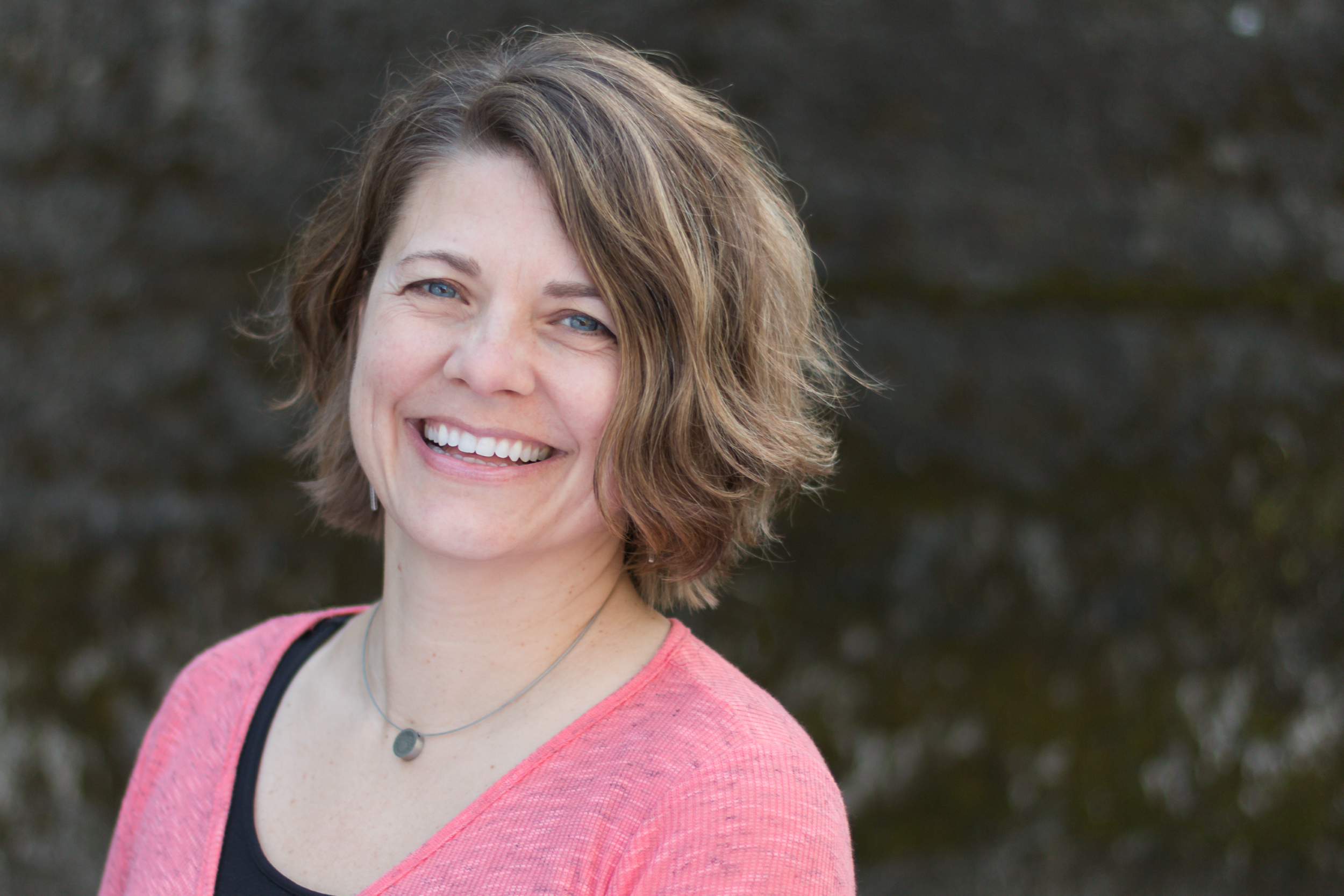
Gina Zaitz Ciganik, courtesy of Habitable.
By Julia Gamolina
Gina Ciganik, CEO of Habitable, has been instrumental in growing and scaling the organization's vision since assuming the role in 2016. Recognized nationally for her leadership in transforming human and environmental health, Gina’s strategic partnerships and innovative practices have reshaped housing standards across the affordable housing sector. With a proven track record of creating healthier spaces–including the groundbreaking 90-unit apartment building, The Rose–Gina’s leadership drives Habitable’s mission forward. She sees herself as a “dot-connector” and translator who amplifies the organization’s impact, fostering holistic solutions for planetary health. Determined, curious, and joyful, Gina is committed to creating healthier environments for communities worldwide.
JG: As someone who is allergic to many chemicals — that are in products we use daily like hand soap and shampoo — I always appreciate seeing just as much emphasis on human health in our built environment and in our construction materials as there is on protecting the environment. In your professional focus on human and environmental health, what is the number one priority for Habitable specifically this year? What's the biggest challenge you're grappling with currently?
GC: I love that you opened with that because your experience is exactly what we’re up against. Most people intuitively understand that what they put on or in their bodies matters. What’s less obvious is that we are also impacted by what surrounds us. Tiny molecules from the materials in our homes, workplaces, and schools are constantly moving into the air we breathe and onto the surfaces we touch. Throughout their entire life cycle — from extraction, manufacture, installation, occupancy, and disposal — building products release pollution and toxic chemicals that affect our health and the environment. And we spend about 90% of our time indoors, so the materials in our buildings are with us every hour of every day.
At Habitable, our top priority this year is accelerating the transition away from plastic building products. When people think about plastics, they picture packaging—bottles, bags, straws. But the building and construction sector is actually the second-largest use of plastic globally, and it’s on track to become the largest. We are, quite literally, encasing ourselves in plastic. These materials show up everywhere, like nylon carpet, foam insulation, laminate countertops, vinyl flooring, even latex paint. And they don’t just contain problematic chemicals—plastics are also made from fossil fuels, so they contribute to climate change.
The biggest challenge we’re grappling with is urgency versus inertia. The science linking these materials to cancer, reproductive harm, and developmental impacts—especially for children—is clear. But the industry still defaults to them because they’re artificially cheap due to heavy government subsidies for oil and gas, familiar, and deeply embedded in supply chains and procurement practices. What gives me hope is that change is happening. Leading architecture firms are rethinking material choices. Green building standards are integrating our Informed™ product guidance into their requirements. More and more practitioners are working with us to make healthier decisions. The tide is turning — our job is to work with the leading sustainability professionals to help it turn faster.
You studied housing at the University of Minnesota and then focused on community development leadership at the Harvard Kennedy School. What were you hoping to do in the world that led to both degrees?
The University of Minnesota gave me a strong practical foundation in housing—finance, development, design, and policy. But what really shaped me was a class called Community and the Environment, which opened my eyes to how deeply our built and natural environments are connected—and how much they influence health and opportunity. From there, I spent two decades at a nonprofit affordable housing developer and learned by doing: pulling together financing, leading sustainable developments, and working alongside communities to bring projects to life. During that time, I was selected for a fellowship at the Harvard Kennedy School, which helped me step back and think bigger. I was ready to move beyond individual developments and understand how to drive change at a systems level.
Both experiences were grounded in the same question: how do we build sustainable, healthy communities that allow all people to thrive? I learned a lot, and I also now know that it is important that architecture schools start to build a curriculum that looks more critically at the building materials these future designers will use. Tomorrow’s designers need to understand what is happening in the communities where building products are made. For instance, I learned well into my career that the stretch between Baton Rouge and New Orleans, Louisiana, is called Cancer Alley because the manufacturing there is causing unimaginable pollution, and the Black and Brown communities living in those areas suffer severe health consequences. When I learned that, I could not look away, and from then on I wanted to know more about how the products I was specifying impacted people and the environment.
What was some of the best advice you got early on that has informed your approach to your work and career?
Be unafraid to try big things. I learned early on that waiting until you feel ready is a trap—especially for women, who are often expected to prove more before being given the same shot. Some of the most important moments in my career came from saying yes before I had all the answers—but trusting that I could learn, and that I didn’t have to do it alone.
That mindset led to the biggest leap in my career: leaving real estate to lead Habitable—an organization of brilliant researchers, material scientists, and chemists. I was a terrible chemistry student, so on paper it didn’t make much sense. But I knew I could translate complex science related to healthier materials into actionable solutions for the building industry. And I knew how to build strong teams—people who brought the expertise I didn’t have—and learn alongside them.
“...innovation only matters if it scales. Too often, we celebrate one-off, high-budget projects that can’t be replicated. I was interested in proving you could do something both ambitious and repeatable—and that affordable housing could lead the way.”
Tell me about your professional experiences leading up to your tenure at Habitable. What were some of the biggest lessons learned that you still apply to your work today?
My last project as a developer was The Rose, which opened in 2015. It was an early application of the Living Building Challenge—at the time, the most ambitious green building standard—built around a simple but powerful idea: what if every act of design and construction made the world a better place? The project left me with two defining lessons. First: innovation only matters if it scales. Too often, we celebrate one-off, high-budget projects that can’t be replicated. I was interested in proving you could do something both ambitious and repeatable—and that affordable housing could lead the way. That belief still drives my work today.
Second: the materials we use every day are largely untested for human health. The Living Building Challenge pushed us to ask harder questions, and I quickly realized how little we actually know about the long-term impacts of common building products. The Rose is what led me to Habitable. The project drew national attention, and I was recruited to help translate the organization’s deep scientific research into tools and strategies practitioners could actually use. I went from a micro view—one building, one site—to a macro one: the entire built environment and its role in the global materials economy. I used to think in terms of 100,000 square feet. Now I think about how the 2.5 trillion square feet of buildings projected to be constructed by 2060 can be built in a fundamentally healthier way—and how to make that the norm, not the exception.
Looking back at it all, what have been the biggest challenges? How did you both manage through perceived disappointments or setbacks?
The biggest challenge has been navigating all the misinformation and greenwashing in the marketplace. Many claims and product certifications sound legitimate, but they don’t always hold up under real scrutiny. What’s helped me manage that is having access to independent, non-conflicted material scientists—people I trust to provide clear, evidence-based guidance without industry influence.
When I was a developer, I assumed someone else was ensuring those claims were accurate—that regulators or manufacturers were being held to a high standard. I’ve since learned that’s rarely the case. And when I see building professionals selecting products they believe are healthy—only to find those claims don’t stand up to science—it’s deeply frustrating. But those moments have ultimately reinforced something essential: independent science is critical. It keeps us grounded, empowers us to make better decisions, and pushes the market toward greater accountability, which is why we created our Informed product guidance—to ensure that designers, developers, contractors, governments, and others have access to trustworthy, science-based information they can rely on.
Who were your mentors through it all?
Bill Walsh, who founded what is now Habitable (formerly Healthy Building Network), has been a profound influence. He brought me into this work and trusted me to lead it. Bill has a rare combination of scientific rigor and moral clarity. He helped me see that this work isn’t just about buildings or products but about health and justice. The communities most burdened by toxic chemical exposure are too often low-income communities and communities of color, and affordable housing sits right at that intersection.
I’ve also been mentored by the scientists and researchers who do the painstaking work of understanding what’s actually in our building products and what those materials do to human health and the environment. Teresa McGrath, our Chief Research Officer, has been especially influential. She was an early leader in the green chemistry movement and has experience across government, industry, and the nonprofit sector—so she brings both technical depth and a systems-level perspective. Also, she is super cool.
“Stay close to the people most affected by your work. That proximity shapes your values, sharpens your instincts, and keeps you grounded when the work gets hard, which it will.”
Who are you admiring now and why?
Danny Dejarlais is one of the most inspiring partners I’ve worked with. He’s leading innovative hempcrete work at the Lower Sioux Indian Community in Minnesota, where they are putting healthier building materials into practice in a very tangible way.
I’ve also been deeply influenced by the work of Dr. Robin Wall Kimmerer, a Potawatomi botanist, professor, and author whose work bridges Western science and Indigenous ecological knowledge. Her book Braiding Sweetgrass has fundamentally shaped how I think about my relationship to the natural world.
Finally, I draw real inspiration from the next generation—my kids, my nieces and nephews, and the young people entering this field. They’re inheriting the consequences of legacy decisions, but they’re also bringing fresh thinking, creativity, and a deep sense of responsibility. They don’t just give me hope—they are actively influencing how I approach this work and what I believe is possible.
What is the impact you’d like to have on the world? What is your core mission? And, what does success in that look like to you?
I want to help transform the built environment into a force for healing—one that works in balance with nature, rather than against it. That may sound ambitious, but I’ve spent my career working alongside some of the most innovative people in the building sector, especially in affordable housing. When we ground our decisions in independent science and work together, meaningful change is absolutely possible.
What success looks like to me is not perfection, but momentum. It’s architects, developers, and owners choosing to step up from red-ranked products, asking better questions, and shifting specifications in ways that ripple across projects and portfolios. I can imagine the next generation of leaders that treat human and environmental health as non-negotiable design criteria.
The call to action is this: use your influence. Every specification, every detail, every project is an opportunity to choose differently—and to help shift the system toward something better. I feel incredibly fortunate to be part of a movement that aligns so closely with my values, and I’m excited to see how much further we can go together.
Finally, what advice do you have for those starting their career? Would your advice be any different for women?
Stay close to the people most affected by your work. That proximity shapes your values, sharpens your instincts, and keeps you grounded when the work gets hard, which it will. Also find your people. Changing systems isn’t individual work; it’s coalition work. The most meaningful progress I’ve been part of has come from collaborating with others willing to take on complex, stubborn problems together. And mentor someone. Investing in another’s career is one of the most powerful ways to extend your impact. Make sure the path gets wider for those coming next.
For women, especially: don’t wait to be invited. For a long time, the rooms where decisions are made in the built environment weren’t designed with us in mind. That’s changing—but mostly because women are building new tables and pulling up more chairs.
This interview has been edited and condensed for clarity.