Enriching Architecture: A+W NZ's Co-Founder Lynda Simmons on Flexibility, Visibility, and a Meaningful Life
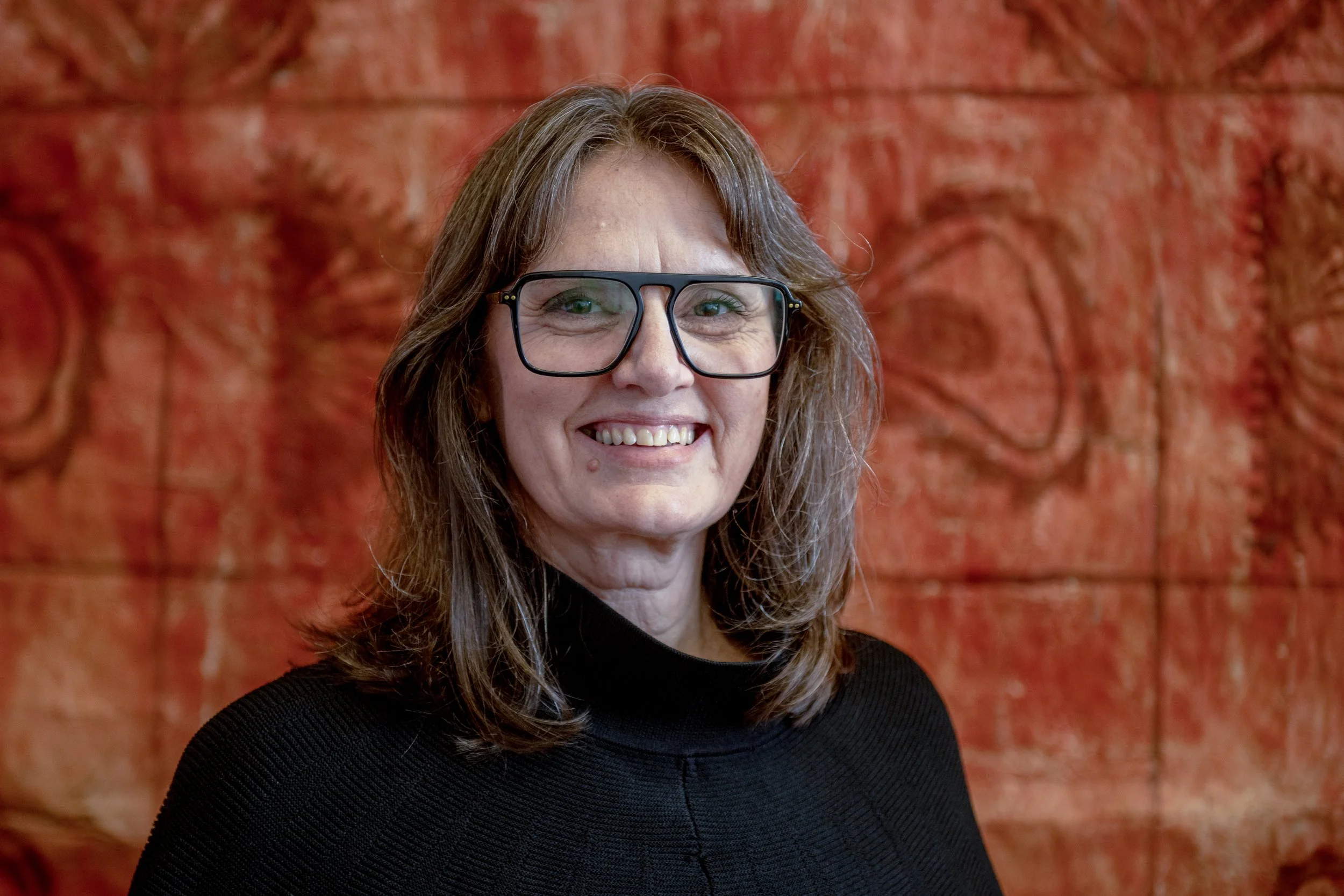
Lynda Simmons by Raymond Sagapolutele.
By Julia Gamolina
Based in Aotearoa, New Zealand, Lynda Simmons combines her award-winning architectural practice LSA Ltd with education, academic research and advocacy, each in a part-time capacity. Lynda is a Fellow of the Institute, and works at the University of Auckland Waipapa Taumata Rau where she teaches and publishes across several disciplines: history, professional practice, media, design and as supervisor to Masters thesis candidates. She is Co-Founder and past Co-Chair of Architecture+Women NZ (A+W NZ), which was established in 2011. Since leaving A+W NZ in 2022, Lynda’s ongoing advocacy work involves normalising non-gendered part-time work in the profession and academia.
JG: You cofounded Architecture + Women NZ in 2011. I want to ask you about something that I've encountered a couple of times, which is that some people think that women shouldn't be highlighted in spaces created only for women. While I completely agree that women shouldn't only be highlighted in these spaces, I wholeheartedly believe that we do need these spaces and platforms to rebalance the existing record and patterns of recognition. What would you say to that? What was your vision in starting Architecture + Women NZ?
LS: In order for women to be highlighted in all architectural spaces, as should so clearly be the case, they need to be seen first. Professional and industry structures hold so many barriers — invisible to some —that for this to occur, groups such as A+W NZ and others from all around the globe are designed to offer that visibility. One of the organization’s slogans is that “A+W NZ simply shines the spotlight on women working in the field of architecture, because it so often misses them.” A+W NZ was designed to create positive and inclusive methods for ensuring that the contributions of women in the profession and academia are not overlooked.
Your question also suggests that some people find the approach of segregation-to-build-strength to be a problem, as has occurred in previous feminist waves. In the establishment of A+W NZ, the co-founders deliberately avoided this assumption of segregation by ensuring that all activities as well as events, policy, research and some networks — except for the A+W NZ database — are open to all genders. The A+W NZ website is a resource for everyone interested in architecture, and it is not gender-specific.
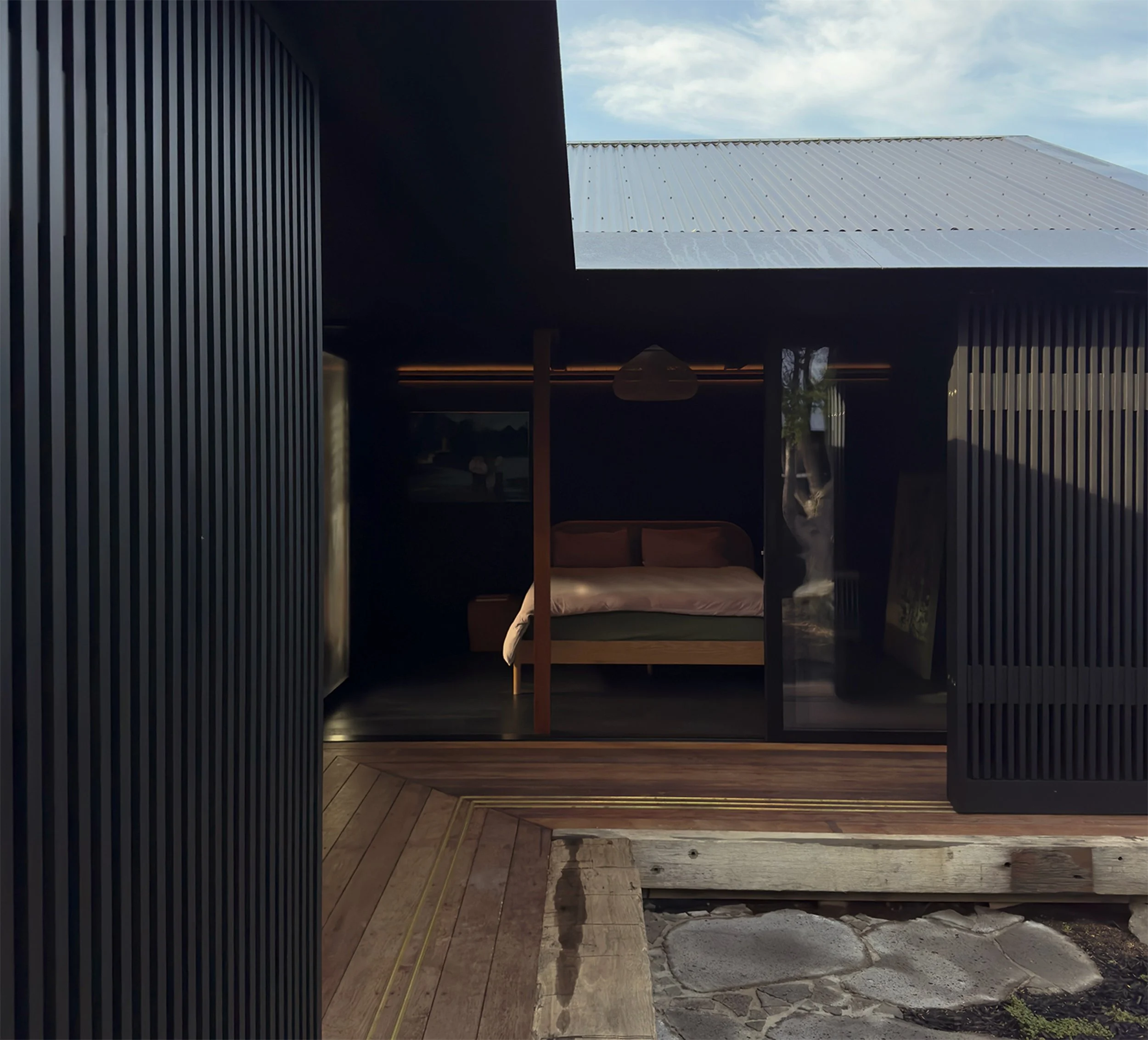
Onetangi Pavilions 2025. Photography by Martyn Williams.
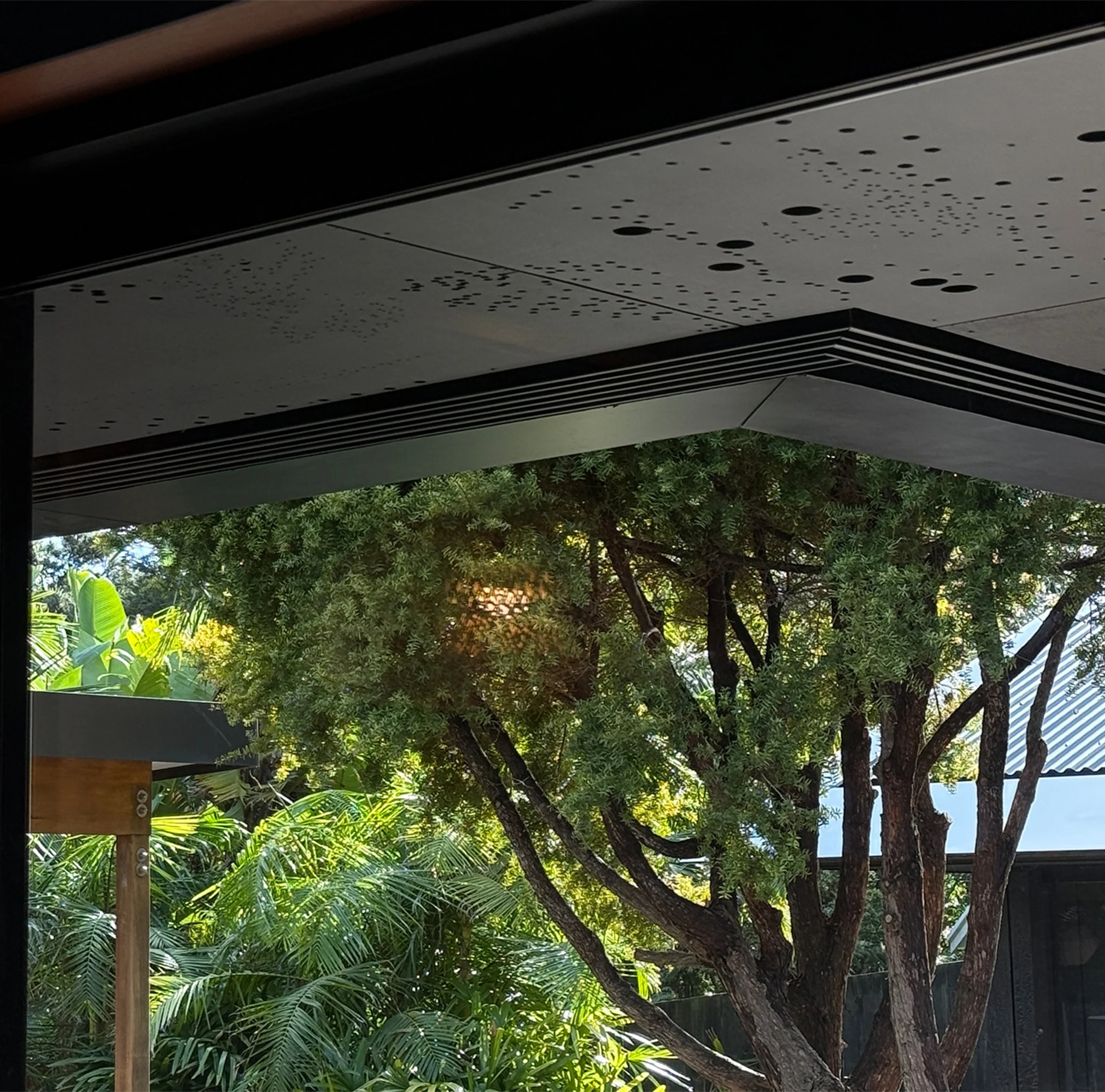
Onetangi Pavilions 2025, soffit towards the courtyard. Photography by Madalena Refiti.
I've read that you dream for the “unpaid labor of care" to be included in paid work. I am with you on this. How do we get there?
The dream would need to tackle the entire Gross Domestic Product system, which at the time of its post-World War II full-adoption deliberately excluded the quantification of care work in the annual calculations. There are notes from 1953 documents that show it was considered and rejected. GDP economic modelling responded to Industrial Age workforce priorities and was designed in an era of reinforced patriarchal ideals and social structures, between the 1930s depression and 1940s post-war recovery. In other words, the exclusion of care work was not accidental, and so while my dream may be wild, the re-design of GDP calculation methods is entirely possible. I refer here to the excellent work of New Zealand scholar and ex-politician Marilyn Waring, who has argued for years for the inclusion of care work in GDP assessments, and has shown how the value of care work to a society out-performs many other major industries such as financial services and construction.
But that’s the long-term and bigger picture, and for immediate solutions affecting the daily lives for those working in both architecture and care, I advocate for the shifting of perceptions around part-time work. If current practice management biases are removed for the broader profession, those who need to work reduced hours to provide unpaid care work for families would then benefit. To achieve such a shift towards valuing part-time work, it needs to be non-gendered, not necessarily temporary, and available to all.
An example of an event run by A+W NZ to remove the gender bias from part-time workers is the A+W NZ Fathers’ Forum, which highlighted the reduced-hour working weeks of male architects in leadership and mid-career positions, and who offer such working flexibility to their teams. The panellists — all parents — shared their differing reasons for not working fulltime, and how their reduced hours enhanced their architectural life and practice. Having male parenting visible in the architectural workplace is a powerful way to increase the value of care, and therefore to make room for it. There are a myriad of other reasons for working part-time, such as academic pursuits, contribution to charitable organizations, art careers, professional sport participation and more, all which can enrich architecture and benefit the wider community, beyond caregivers.
Let's go back a little bit — can you describe a moment in which things clicked for you as to why you wanted to be an architect? And what did you learn in studying architecture?
I was heading towards a Fine Arts degree, having assumed for my whole life that was the direction to take. I was also strong in mathematics and physics — meaning that no presumed profile or school timetable fitted well — and my mentor and art teacher, sculptor Martē Szirmay, encouraged me towards architecture. It helped that my childhood was filled with family construction site visits with my father, architect Neil Simmons, and had grown up in the house he designed and built for our family in Auckland, New Zealand. The house is still one of my favorite buildings.
The moment of decision came when I accepted the offer of a place in the Architecture School over the Fine Arts School, having reasoned that if I didn’t enjoy it after one year of study then I could transfer. However I found that architectural education opened up my whole world, and that to study architecture meant to also consider sociology, politics, philosophy, history, tectonics and more. I stayed.
“In order for women to be highlighted in all architectural spaces, as should so clearly be the case, they need to be seen first.”
What was some of the best advice you got early on that has informed your approach to your work and career?
I am lucky enough to have had three significant mentors during my education and practice — the aforementioned high school art teacher Martē Szirmay, my father architect Neil Simmons, as well as my university lecturer Dr. Sarah Treadwell, who was the first female academic appointed to staff at the University of Auckland Architecture School, and also a Co-Founder of A+W NZ. All three have operated in the muddy middle ground that exists between architecture and art, which is where I like to be. They each showed me that my version would also be possible, advising me to continue to resist fixed disciplinary boundaries. Also, two of my fellow A+W NZ Co-Chairs Elisapeta Heta (Ngāti Wai, Tainui) and Divya Purushotham, prove that the mentor and mentee relationship is multidirectional.
Your evolution as an architect has involved both your own practice and teaching. Tell me how you personally evolved through both.
After seven years in practice I had become itchy to return to academia, as the nine-to-five working model didn’t satisfy the breadth of what I knew an architectural life could be. Just as I was considering post-graduate work in art history and possibly leaving architecture, a new architecture school opened in Tāmaki Makaurau Auckland and I was employed, as the first female on teaching staff, in a part-time capacity to teach in design studio. This balance between education and practice fulfilled what I was seeking, and I have stayed in education in various ways and at various universities since 1994, as well as running my own practice to allow for the flexibility to do so.
Creating a career in both practice and education allowed each to enrich the other — my students benefit from seeing the ideas we discuss in some of my built work and I can bring a material, tectonic understanding to their sometimes ephemeral ideas. I am able to research and publish and teach in areas of interest: architectural drawing, sociology, practice management and history, and my practice benefits through the constant testing of ideas with students.
I should add that this has not been simple. In Aotearoa, New Zealand, neither the universities nor the profession are structured to cater for those who want to have serious career progression in both. Having experienced the under-valuing of part-time work in many ways, the advocacy work around enhancing career progression for reduced-hour workers obviously emerges from this, although it extends well beyond gender and all part-time workers are affected. I am very pleased with my choice to resist full-time work in any one area, because structuring my architectural life in the way I have has allowed room for the work required in the collaborative establishment and running of A+W NZ, as well as the care work involved in raising my now-adult children.
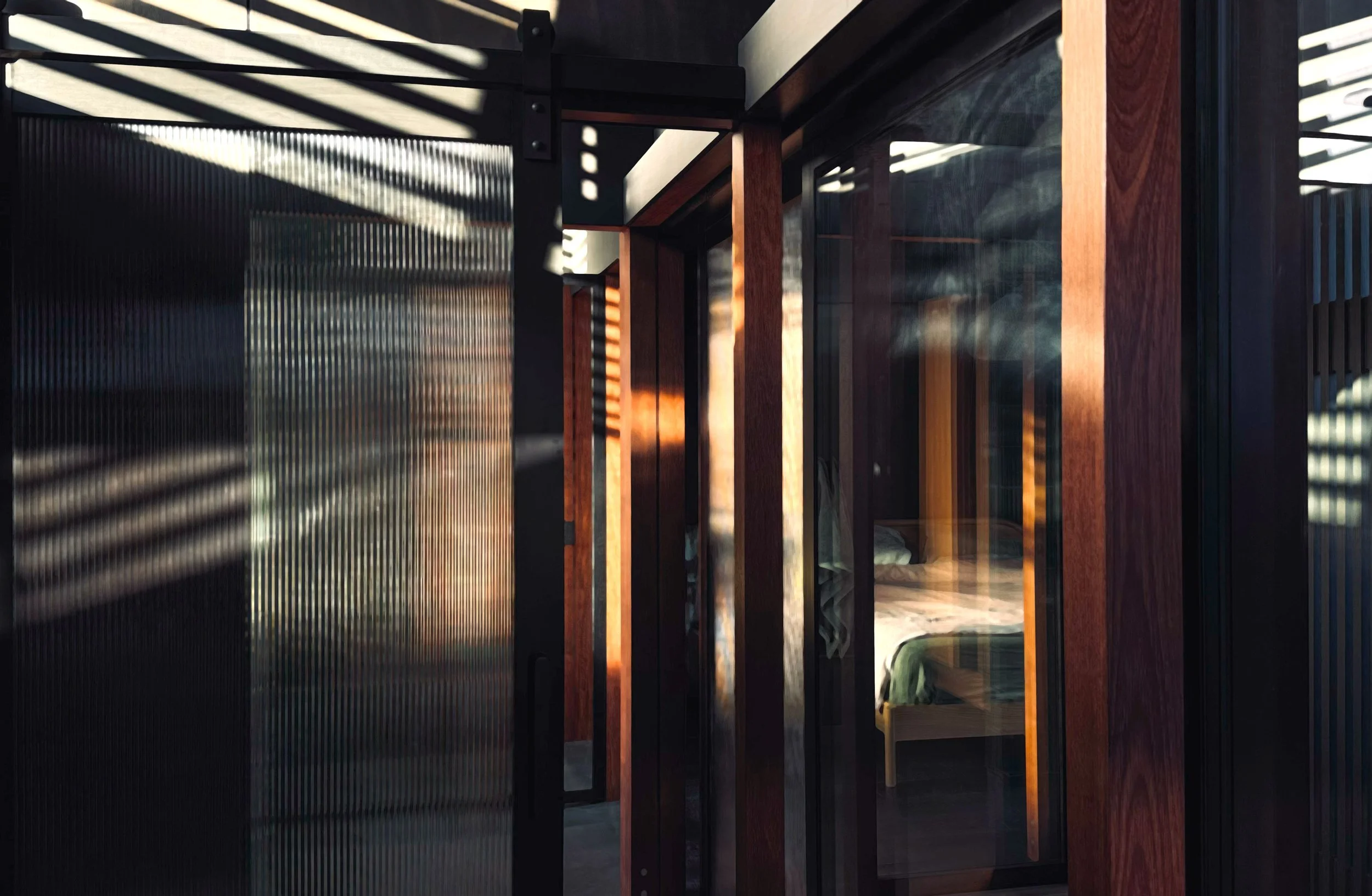
Onetangi Pavilions 2025, screen layers. Photography by Martyn Williams.
Looking back at it all, what have been the biggest challenges? How did you both manage through perceived disappointments or setbacks?
The biggest challenges for me have definitely come from what I have already flagged: the obstacles to career progression while working part-time. However with challenges come creative solutions, and the ability to build a non-typical architectural life with flexibility and autonomy has provided great satisfaction over many years.
An example of this is in the creation of A+W NZ with the other co-founders, where we saw a gap to fill and made the spontaneous decision to do something about it in a positive and effective way. I do wonder whether my contribution would have been possible had I not already established flexibility into my working life by that stage. Since 2022, I have had no involvement with A+W NZ, and this has again freed up time for other areas of current research interest: architectural drawing.
Any disappointments over the years in all three areas — practice, academia and with A+W NZ — have been the result of unhealthy team relationships. We all understand that great architecture comes from good relationships between all teams: contractors, clients, consultants and architects. And when these are strained, the built outcome somehow reflects it. The same is also true when working in education and advocacy, and to manage this, I choose to keep great people around me.
“Architectural satisfaction can come not only from what you produce, but also from how you produce it. It is worthwhile to be conscious of your own ‘how’ — to keep good people around you, invest in your teams and in the wider community, and be aware of your priorities and ethics.”
Who are you admiring now and why?
I am admiring the work of some young Māori architects and graduates such as Elisapeta Heta and Raukura Turei (Ngāi Tai ki Tāmaki, Ngā Rauru Kītahi), who have, through immense talent and accident of time, become important leaders in the significant changes currently occurring in the architectural profession.
In Aotearoa, New Zealand there are some socio-political and cultural shifts which have occurred due to the settling of claims under Te Tiriti o Waitangi (the Treaty of Waitangi). Large compensation settlements since 1995 have meant that many iwi (tribes) are investing in high-value projects, and for architectural practices to gain the commissions and carry out the projects, they have therefore needed to upskill their teams in Māori cultural practices — something so long overdue in a bicultural country. Both Elisapeta Heta (Jasmax) and Raukura Turei (Monk Mackenzie) have led their practices in the ability to deliver culturally-meaningful built projects, and it has been a pleasure to observe their power, soft skills and architectural talent.
Other important work that I hold in great regard is that done by the Australian-based advocacy and activism organisation Parlour, established in 2012 as part of a wider research project led by Dr. Naomi Stead and which has since developed into one of the most important architectural equity resources for the architectural community globally, and especially for the Australian/Pacific region. A+W NZ has always relied heavily on the research published by Parlour, and I especially want to acknowledge the work carried out by fellow New Zealanders Justine Clark AM, director, editor and general driving force, and Gill Matthewson, director, treasurer and data researcher extraordinaire.
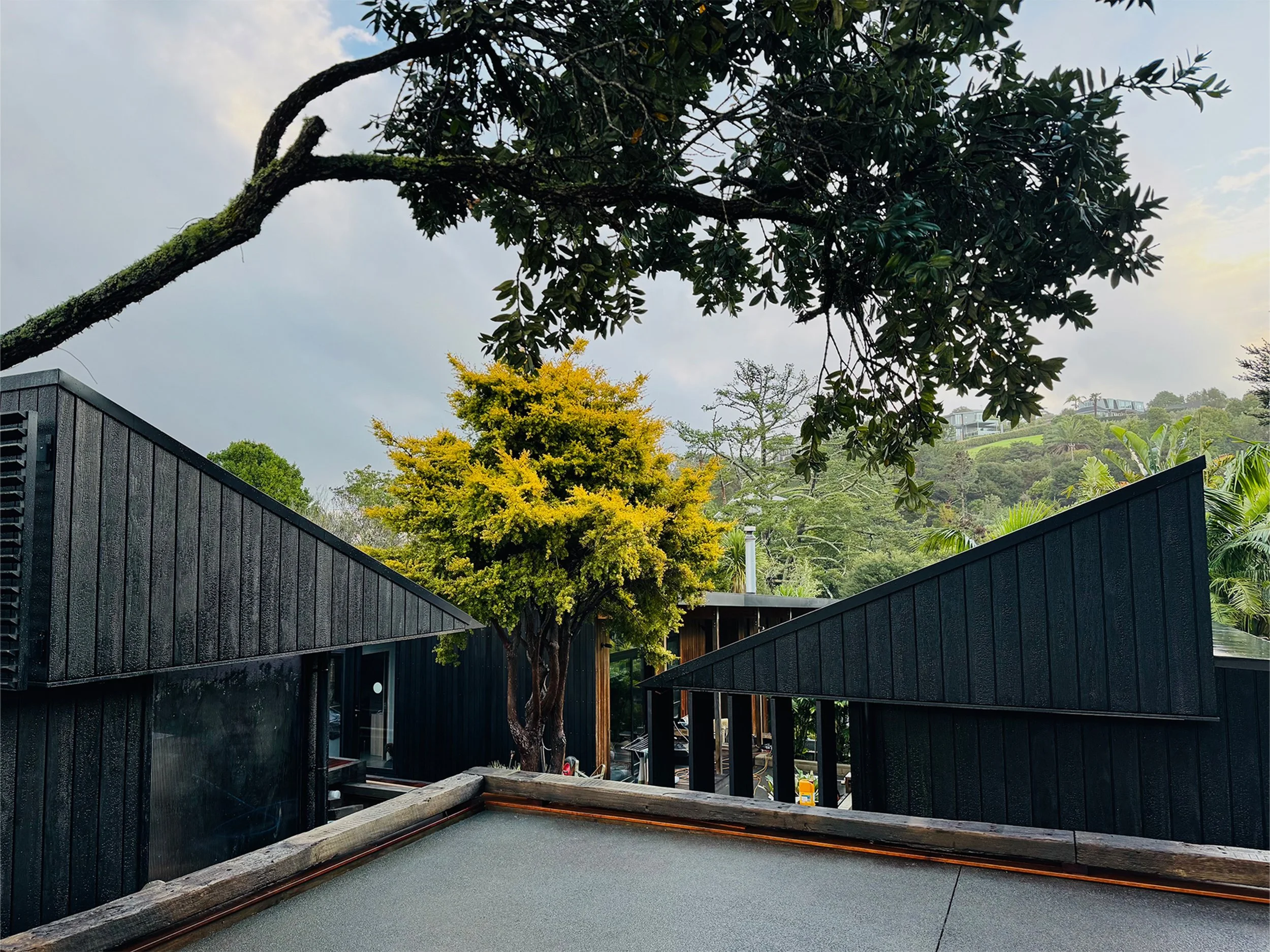
OnetangiPavilions 2025, view from the street entry. Photography by Martyn Williams.
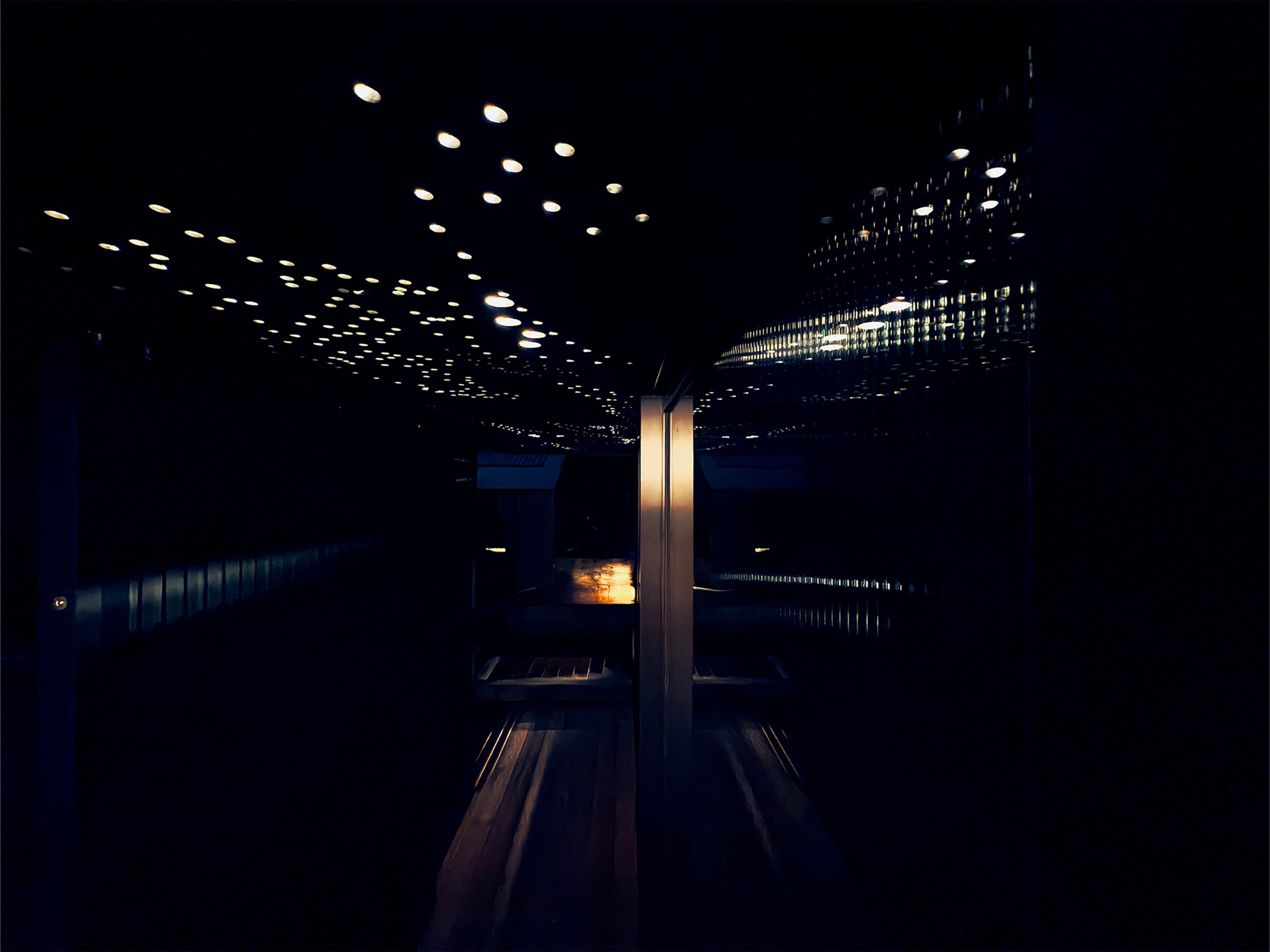
Onetangi Pavilions 2025, soffit at night. Photography by Martyn Williams.
Finally, what advice do you have for those starting their career? Would your advice be any different for women?
The advice I have for all of my students, gender irrespective, is to observe and absorb the many versions that architectural practice can take, and to take time in considering what makes a meaningful life in architecture. Then, to be brave enough to shape that life, even where it pushes against some often unnecessary or outdated restrictions that may be in place. There are more ways to practice than the presumed model our industry offers.
Architectural satisfaction can come not only from what you produce, but also from how you produce it. It is worthwhile to be conscious of your own 'how' — to keep good people around you, invest in your teams and in the wider community, and be aware of your priorities and ethics.
I often speak with students and graduates about the effects of care work on architectural careers, and when this conversation is gender-specific, it is firmly directed at men: make sure you decide on the care workload with your partner before having children. Gender-blind parental leave is essential. And then if and when I have this conversation with women, I say: get it in writing.
This interview has been edited and condensed for clarity.