Reading Architecture: Nidus Studio's Ana and Annelen Vollenbroich on Permanence, Patina, and Precision
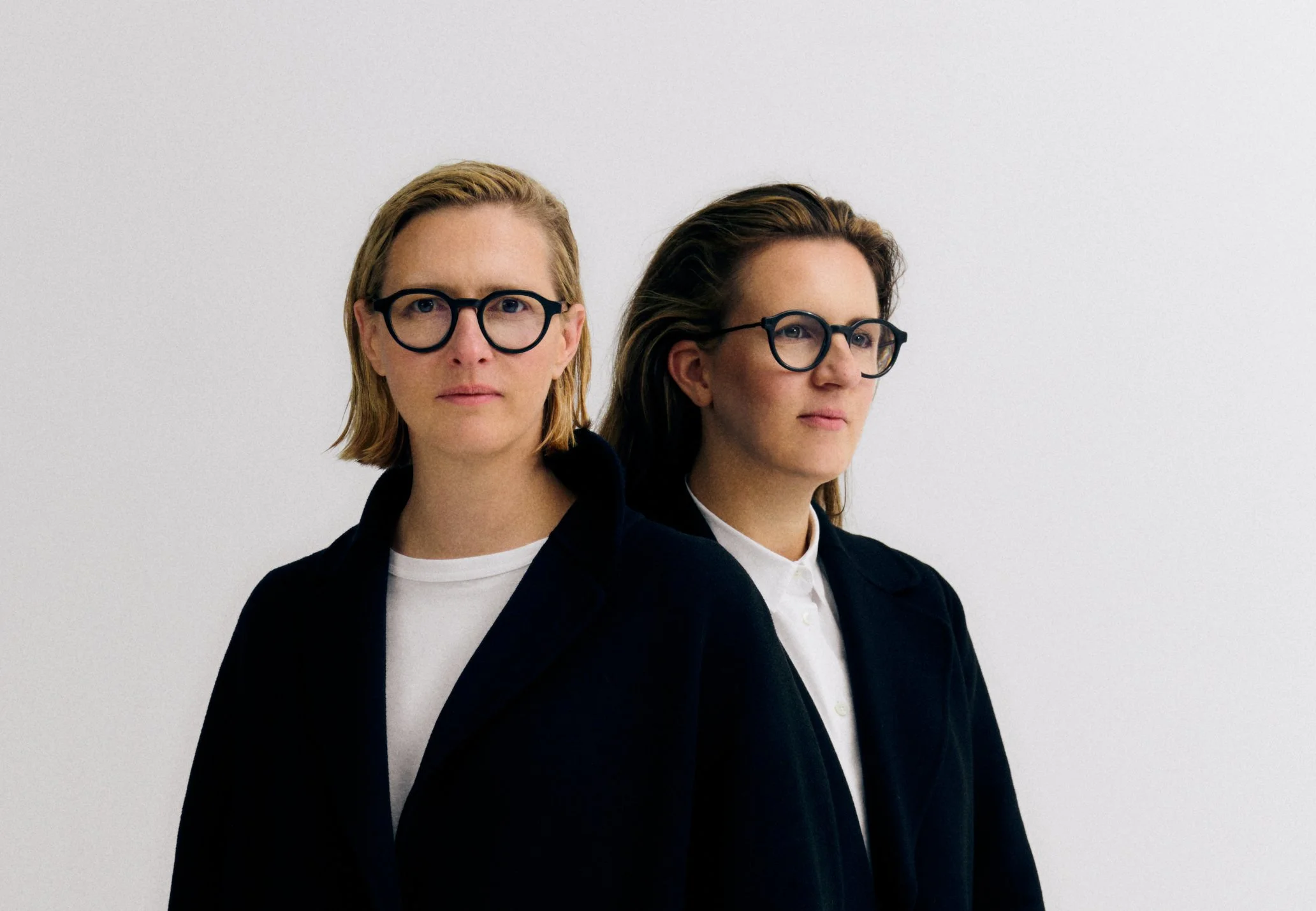
Ana and Annelen Vollenbroich.
By Julia Gamolina
Nidus is an architecture and development studio founded in 2016 by Ana and Annelen Vollenbroich. The practice combines architectural design with project development, focusing on adaptive reuse, building within existing structures, and carefully rooted new construction. Projects range from housing and ensembles to heritage sites and cultural initiatives. Nidus stands for clear structures, honest materials, and spatial precision. The studio also invests in its own projects and understands architecture as a cultural practice.
JG: Ana, your background is in law, and Annelen, yours in architecture! Tell me about how you decided to start Nidus given your different backgrounds, and what you were looking to start in the field of architecture that didn't already exist.
Ana: Coming from law and real estate economics, what drew me to architecture was its permanence. Law operates through abstraction, but architecture is immediate and unavoidable. You have to turn ideas of responsibility, order and coexistence into something you can enter, touch and live with. Starting Nidus was a way to work in that space where decisions become real — and where the rules of living together are no longer theoretical, but built.
Annelen: As an architect, I was usually presented with programs, uses and briefs that were already defined. My role was to translate them into space. What I kept asking myself was: why this use and not another? Where do these concepts come from, and who gets to decide what is built in the first place?
I realized that many of the most fundamental questions of coexistence are already settled long before architecture begins. For me, this created a gap I couldn’t ignore. I wanted to be involved in shaping those decisions — not only responding through form, but actively participating in the processes that produce our built environment and economic realities.
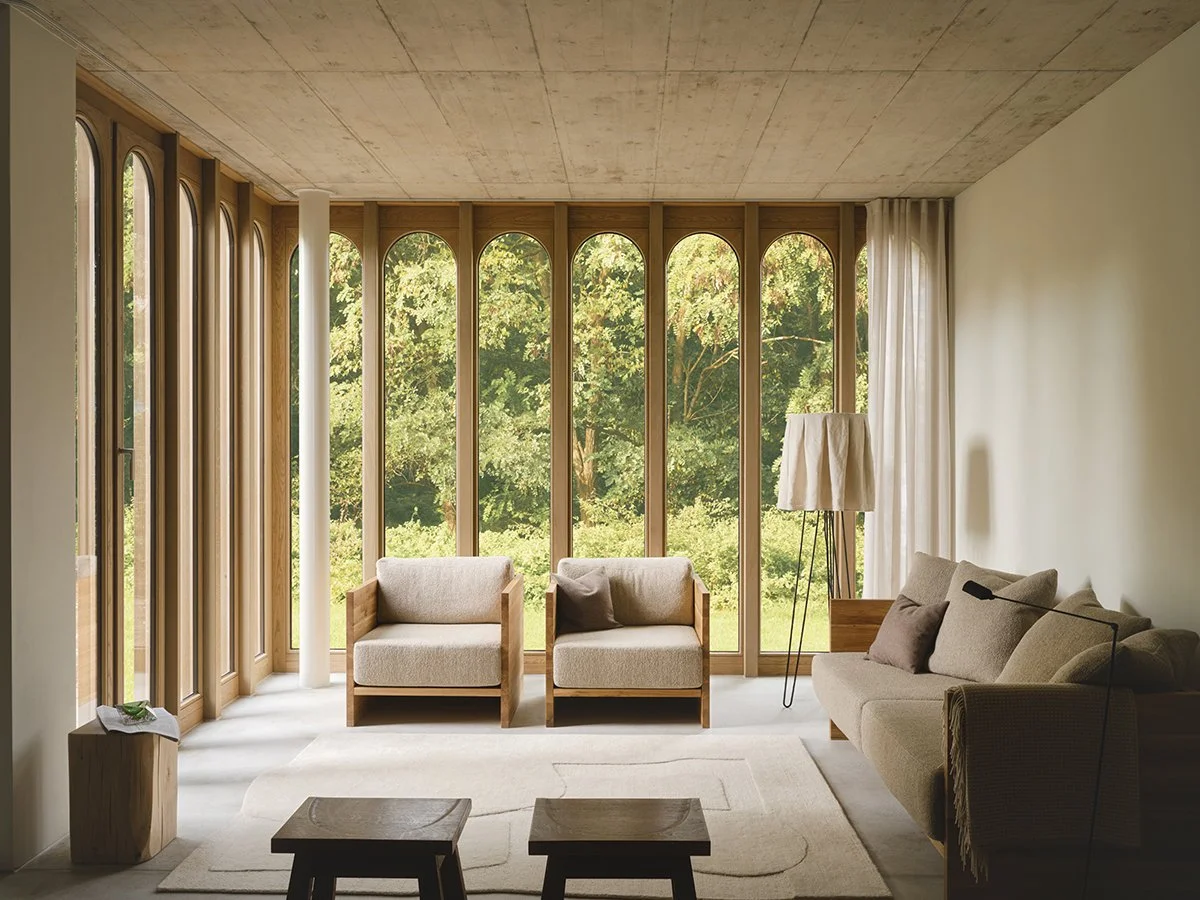
Sankt Göres Living Room. Photography by Volker Conradus.
Tell me about your professional experiences before starting your company. What did you learn that you apply towards your practice today?
Ana: Before starting our company, I worked as a lawyer. That training taught me to stay calm, not to act on first emotions, and to maintain focus in complex situations. While emotions are essential to creative work, you sometimes need distance in order to make clear decisions.
Law also trained me to quickly reduce complex situations to their core — to distinguish between what is essential and what is secondary. That way of thinking strongly shapes how I approach architecture and design today: clarifying structure, identifying priorities, and making decisions that hold up over time.
Annelen: During my time in academic research, one of my professors used to say that you could explain the history of globalization through a single Euro pallet. That sentence stayed with me. I realized that complexity doesn’t have to be complicated — in architecture or in how we talk about it.
Working in a large architectural office later showed me what it takes to translate ideas into reality: coordinating teams, structuring processes, and moving things forward collectively. Studying real estate economics alongside this is where I met Ana, and within a month we started Nidus. Looking back, that step was less about being ready and more about trusting that clarity emerges through doing.
“Buildings function like time machines. They carry stories of how people lived, thought, and organized space, allowing us to learn across generations. The fact that spatial arrangements have remained remarkably consistent throughout history points to a deeper, collective logic worth paying attention to.”
What are you most focused on and thinking most about with Nidus for 2026?
Ana: For me, 2026 is about translating what we learn from existing buildings into both new construction and other scales of practice. In contexts where building new is still the default approach, we are interested in how insights gained from transformation can inform architecture from the very beginning.
At the same time, we are thinking a lot about how our architectural principles can be carried into smaller formats. Our furniture pieces grow directly out of specific projects — usually one object per project that captures its core idea. We see them as small architectures: tangible, concentrated expressions of our attitude toward heritage, patina and durability.
Annelen: In 2026, much of my focus is on the question of comfort. We are asking which forms of comfort we actually need, which ones support meaningful ways of living together, and which ones distance us from space, material and time.
Working with patina and traces of use forces a longer perspective and resists short-term optimization. For me, architecture is a deliberately slow discipline. Especially in times of rapid social and economic change, this slowness becomes a strength — it compels us to look beyond market fluctuations and to focus on what truly remains and continues to shape us.
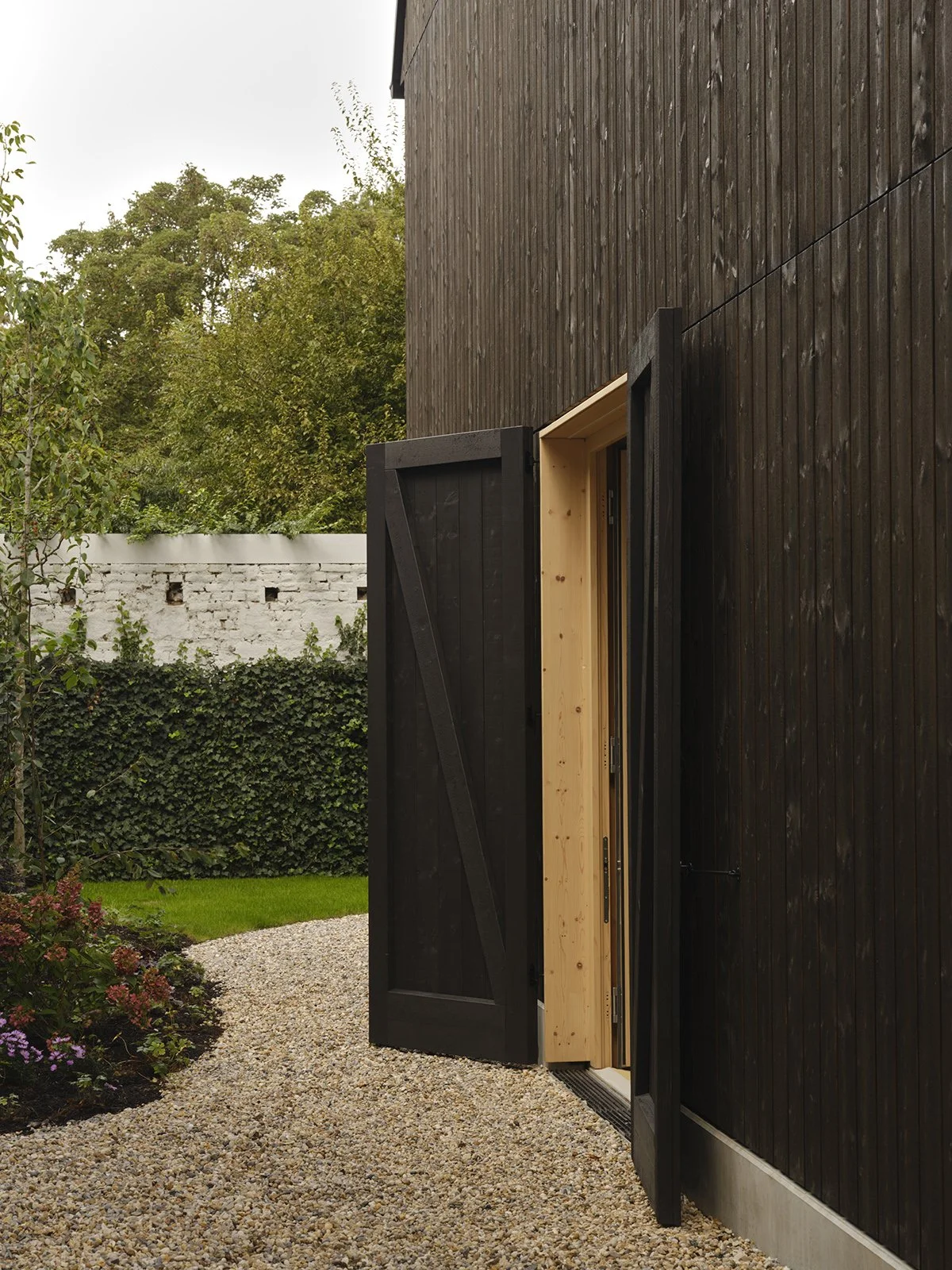
Kreuzberghof Exterior. Photography by Volker Conradus.
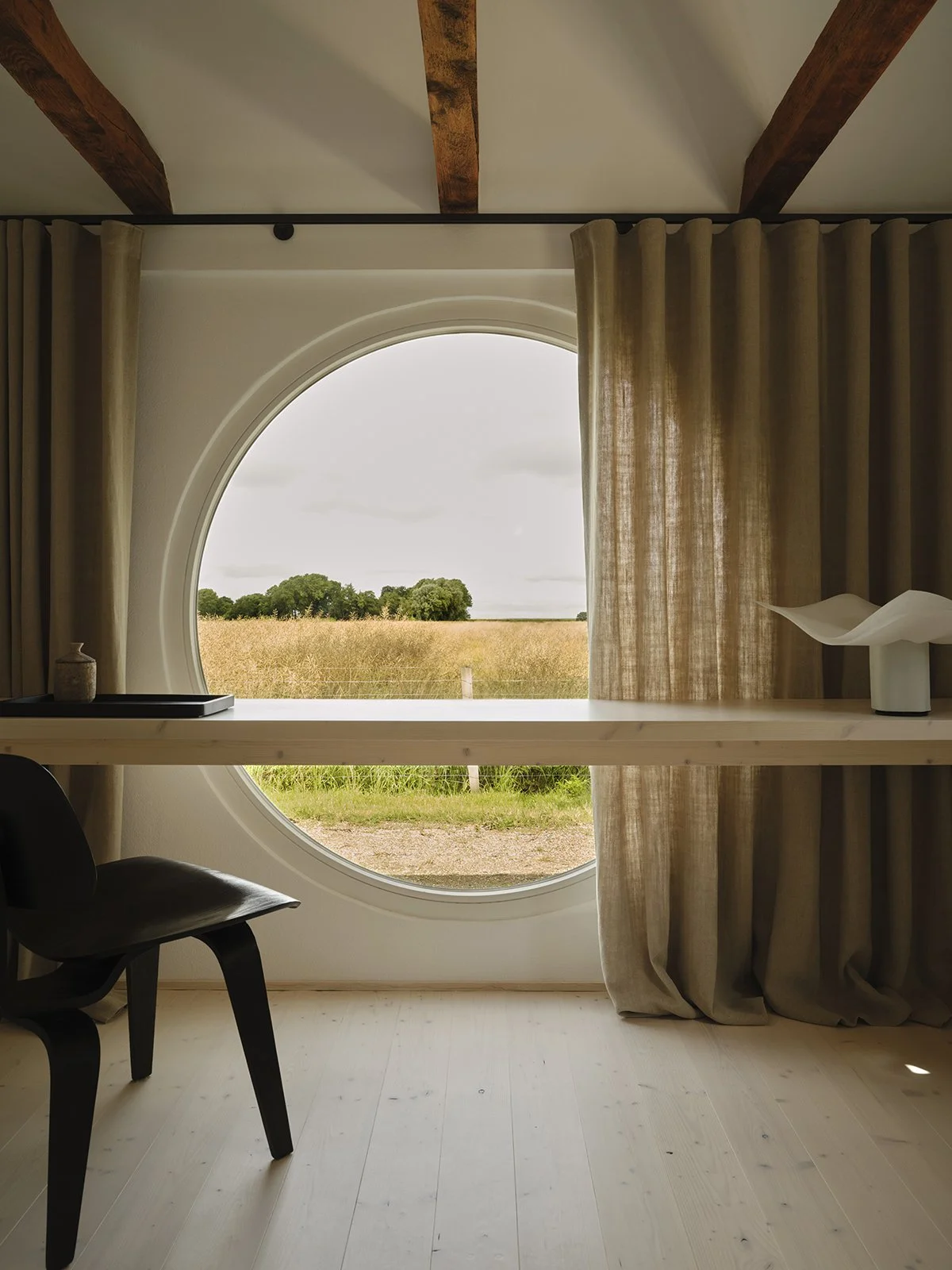
Farmworkers House. Photography by Volker Conradus.
Looking back at it all, what have been the biggest challenges? How did you both manage through perceived disappointments or setbacks?
Ana: One of the biggest challenges early on was access — especially to financing. As young women without established references, we were often met with skepticism, particularly by banks. Those moments were sobering, but they also forced us to become precise: about our arguments, our structures, and our own confidence.
Annelen: Learning to stay true to our values while continuously redefining goals has been an ongoing process. Setbacks made it clear that resilience doesn’t mean holding on rigidly, but knowing what is essential and what can evolve.
“Stay active. Experiment, move, put yourself into situations that feel slightly uncertain. Simply doing something — even without a clear goal — often creates momentum. New ideas emerge from action, not from waiting for clarity.”
Who are you admiring now and why?
We are both inspired by people who have managed to create their own coherent worlds and to share it generously with others. Figures like Donald Judd, or Jil Sander in a very different discipline, fascinate us.
What is the impact you’d like to have on the world? What is your core mission? And, what does success in that look like to you?
Ana: Buildings function like time machines. They carry stories of how people lived, thought, and organized space, allowing us to learn across generations. The fact that spatial arrangements have remained remarkably consistent throughout history points to a deeper, collective logic worth paying attention to. Exploring this further — reading architecture, so to speak — and working with its language is deeply satisfying.
Annelen: For me, impact is about passing on the things that can be used, touched and lived with. Buildings, furniture, sometimes texts — things that remain present in everyday life and slowly reveal what they are about. We would like our work to carry its attitude within itself, so that someone can enter a space, sit on a chair, notice a proportion or material, and sense a way of thinking behind it, even when we are no longer there to explain it.
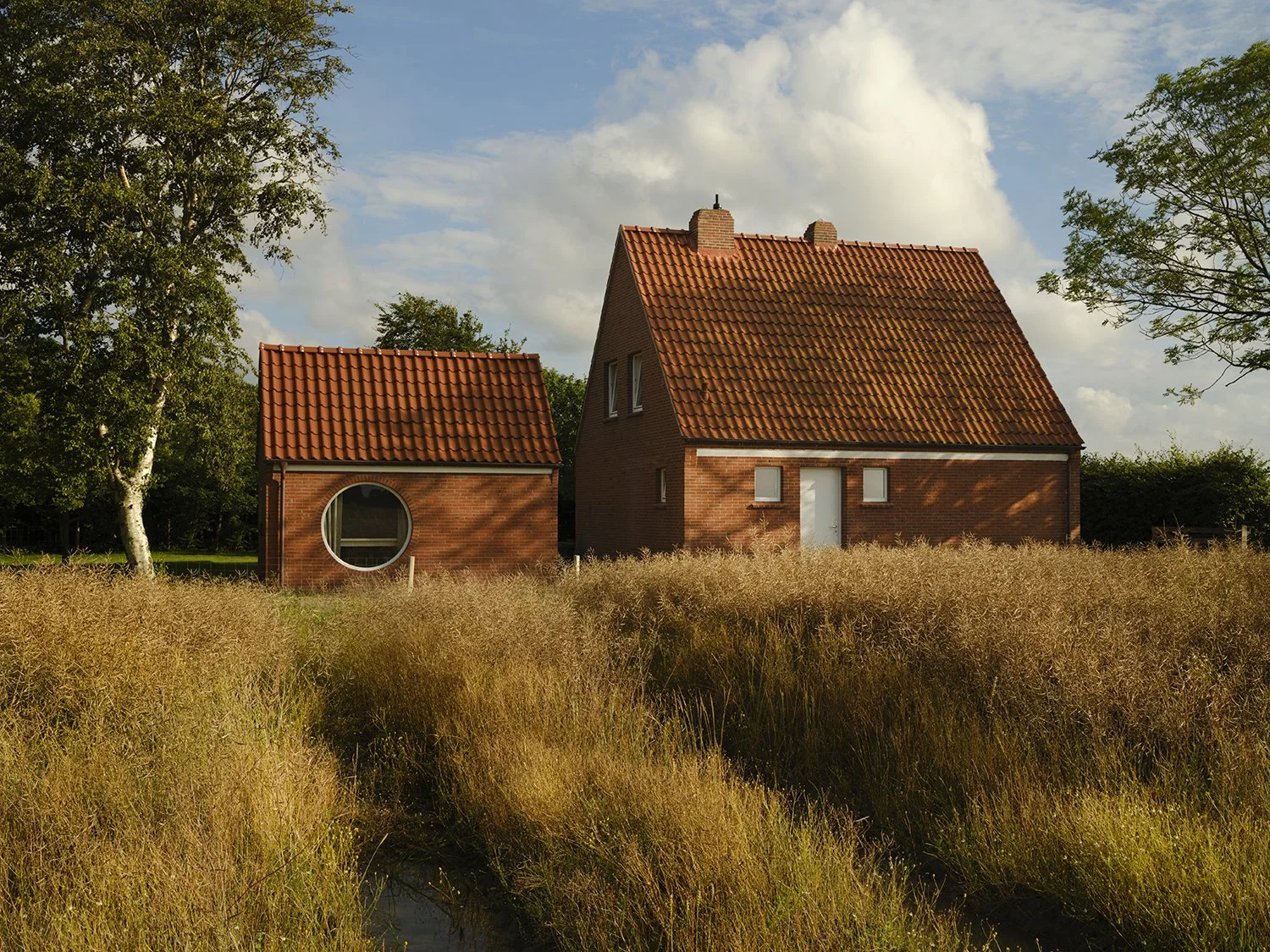
Farmworkers House 1. Photography by Volker Conradus.
Finally, what advice do you have for those starting their career? Would your advice be any different for women?
Ana: For women in particular, it helps to develop a slightly thicker skin. There will be moments of doubt, external and internal, but they shouldn’t distract from what you want to build. And one thing I’ve learned very clearly: working with other women is one of the greatest joys — supportive, direct, and incredibly energizing.
Annelen: For us, the greatest joy comes from the combination of thinking and doing. One without the other quickly becomes empty — either abstract or passive. Our advice would be to take seriously the things that occupy your brain and to try them out in practice. And if nothing specific is driving you yet: stay active. Experiment, move, put yourself into situations that feel slightly uncertain. Simply doing something — even without a clear goal — often creates momentum. New ideas emerge from action, not from waiting for clarity.
This interview has been edited and condensed for clarity.