Love and Resistance: Pratt Institute's Monica T. Davis on Memory, Design, and Possibility
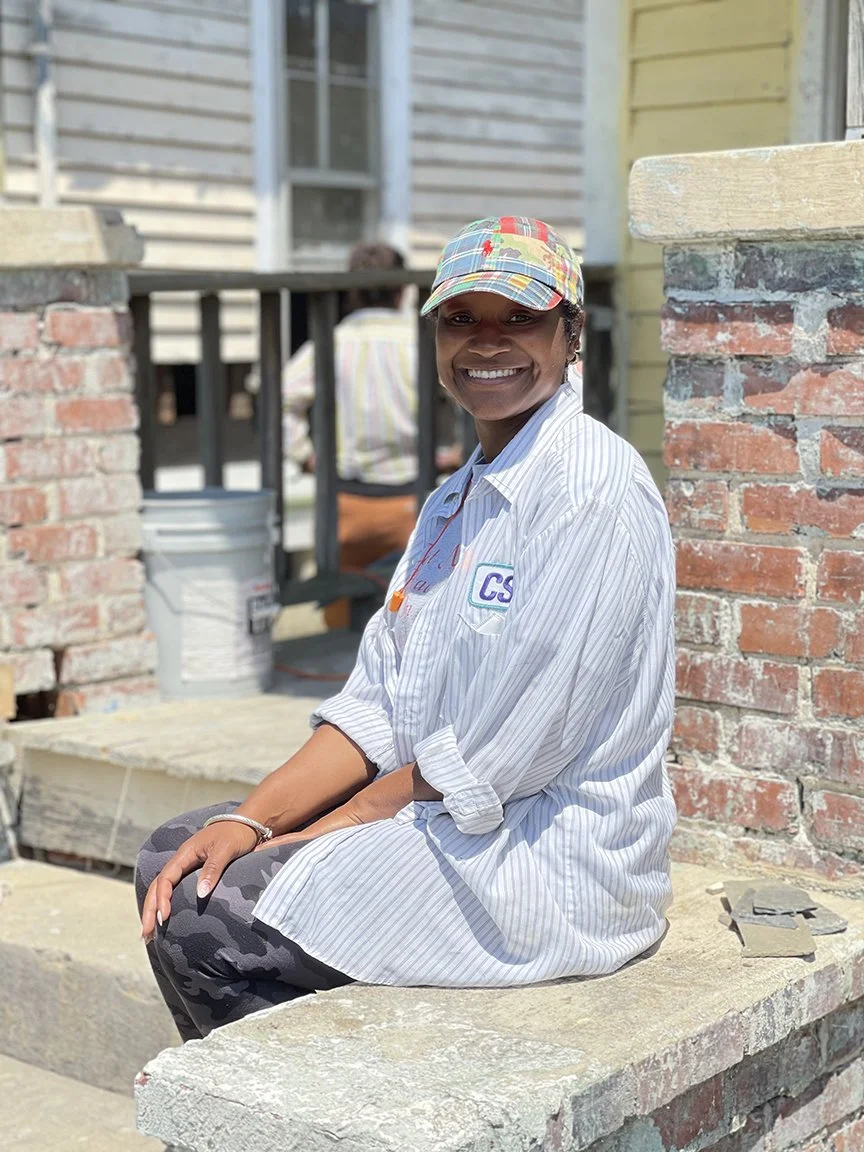
Monica T. Davis photographed by Anne Sauerborn, Brannd Marketing Co.
By Julia Gamolina
Monica T. Davis is an architectural designer, preservationist, founder of Rebirthing Our Cultural Kingdom, and Academic Director at Pratt Institute whose unconventional path—from forensic pathology to historic preservation—shapes a rigorously interdisciplinary practice. Her work centers African American vernacular architecture and community-driven cultural landscapes, challenging traditional preservation frameworks. Through teaching, research, and advocacy, Davis repositions preservation as a living discipline rooted in empathy, material knowledge, and social responsibility.
JG: I really admire your foundation, "Rebirthing Our Cultural Kingdom," and your dedicated focus to historic preservation. Can you tell me about how both came about? And, with their intersection, what’s top of mind for you as we begin this year?
MD: I am a proud Wilsonian with deep ties to East Wilson, a historically Black community shaped by endurance and care. My mother was raised in a shotgun house on Woodard Avenue—a three-room home she shared with her parents and siblings. As I eventually started to research East Wilson, I discovered a painful truth: what once numbered in the hundreds had dwindled to fewer than one hundred shotgun houses in just a few decades. The question why became my call to action. The shotgun house is the only housing typology in the United States directly tied to African building traditions, carried to the New World through the Atlantic Slave Trade. Its disappearance is not accidental—it mirrors the erasure of Black presence, labor, and genius from the built environment.
As a graduate student pursuing an M.F.A. in Interior Architecture, alongside a Historic Preservation baccalaureate certificate, I founded Rebirthing Our Cultural Kingdom (R.O.C.K.) to answer that erasure with care and conviction. R.O.C.K. is about rebirth—of buildings, yes, but more importantly of community memory and self-determination. At this time, I also purchased seven historic shotgun houses in my hometown of Wilson, North Carolina. That decision was both personal and political. It taught me that preservation can be a tool for affordable housing, cultural continuity, and generational wealth—not just nostalgia.
This year, I’m bringing fourteen Pratt Institute students to North Carolina to work hands-on with shotgun houses—uncovering layers of material history and engaging directly with community stewards. When women claim space in preservation, we don’t just save buildings—we restore dignity, authorship, and future possibility. That is the work ahead, and it is deeply worth doing.
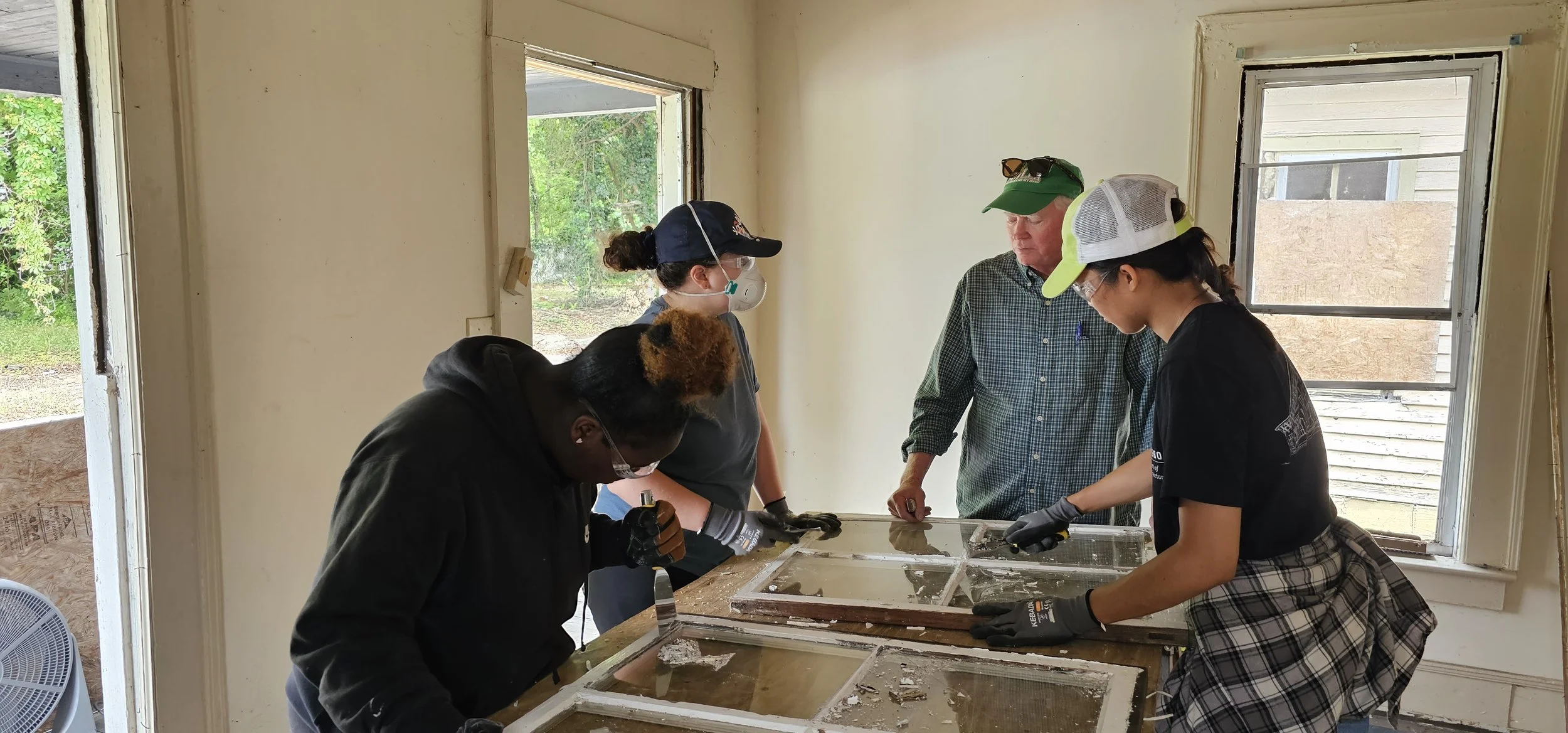
Hands-on Preservation Field School photographed by Anne Sauerborn, Brannd Marketing Co.
How does engagement with the academy, and highlighting preservation in pedagogy, contribute to your overall mission?
Teaching is an ethical act for me, and at Pratt, pedagogy becomes a site of repair. It is where we decide whose stories are worthy of care, whose labor is remembered, and whose futures are made possible. I often tell my students that historic preservation is a forensic act of love. We read buildings the way we read bodies and archives—looking for what survived, what was erased, and what still insists on being seen. When we teach preservation this way, we give students permission to trust their intuition, their lived experience, and their sense of justice as valid forms of expertise.
At Pratt, I teach students to ask one essential question in every project, “Who does this work serve?” When preservation education centers that question, we don’t just save buildings—we cultivate leaders who are brave enough to reshape the built environment with integrity, imagination, and purpose.
Now let's go back a little bit — you first studied forensic science! What were you hoping to do in the world?
Long before architecture or historic preservation entered my vocabulary, I was captivated by evidence, truth-telling, and the quiet power of observation. As a high-school student serving as a sports-medicine trainer, I had a formative experience while visiting the University of North Carolina at Chapel Hill Sports Medicine Institute. I encountered a cadaver body for the first time—and something shifted.
“That body spoke to me,” I often say. Not in fear, but in reverence. It revealed the human form as a record-keeper, holding stories of trauma, care, and circumstance. In that moment, I understood that I wanted a life devoted to inquiry—to listening closely to what remains when voices are gone. Crime-scene investigation felt like the clearest path forward.
I pursued biology and forensic science as an undergraduate, guided by curiosity, research, and an investigative instinct that has never left me. For five years, I served as a Forensic Pathologist Assistant with the D.C. Office of the Chief Medical Examiner. My days were filled with microscopes, case files, and hard questions: What happened here? What evidence still speaks? How do we honor truth with care and precision?
How did you ultimately go from this field to then studying interior architecture and historic preservation?
When I transitioned, people often described the shift as unexpected. I never saw it that way. “I didn’t abandon my calling—I expanded it,” I would say. I changed the canvas, not the inquiry. Forensic training taught me how to read between the lines, how to interpret subtle signs, how to reconstruct narratives from fragments left behind.
While touring interior architecture and historic preservation programs, I arrived at the University of North Carolina at Greensboro unsure of where I belonged. A graduate assistant, Chris Scott Van, studied my portfolio quietly, then looked up and said, “Preservation needs you.” That sentence cracked something open. In that moment, I understood that the field was not simply about buildings—it was about power, memory, and absence. I realized that preservation needed Black practitioners willing to ask uncomfortable questions: Whose histories have been protected? Whose have been erased? And who is allowed to be the steward of place? That recognition became a calling. “You are not entering this field by accident,” I told myself. “You are entering because there is work here that only you can do.” Today, I approach buildings, neighborhoods, and communities with the same sensibility—as sites of memory, trauma, resilience, and evidence.
“The greatest lesson I’ve learned is that to preserve buildings well, we must first learn how to listen to people.”
What was some of the best advice you got early on that has informed your approach to your work and career?
My thesis advisor offered advice that would shape the trajectory of my life. She encouraged me—while still in graduate school—to purchase historic shotgun houses. She understood my ancestral and emotional connection to that typology and to the community it represented. We cried together, fully aware of the risk. Preservation, she reminded me, is not safe work when done honestly. “If it doesn’t cost you something,” she said, “it isn’t transformational.”
She challenged me to imagine preservation not as reverence for the past, but as a framework for justice—to use tools like Historic Tax Credits to change mindsets, expand affordable housing, and return dignity to places long dismissed.
The best advice I received was this: Let your work be brave enough to hold both memory and possibility. That belief continues to guide me. I practice preservation as an act of conviction—one that insists our built environment can tell fuller truths, and that women, especially Black women, belong at the center of shaping what survives.
Tell me about your professional experiences before your started your current initiatives. What were the biggest lessons learned?
My professional life unfolded across disciplines that demanded rigor, care, and emotional endurance. I began in forensic science, a field that taught me resilience in its rawest form. I was responsible for removing decedents from crime scenes and hospital morgues—work that required both physical strength and profound psychological control. As a young, petite woman navigating spaces defined by trauma and urgency, I learned quickly that the mind is the body’s first muscle. Grit, focus, and self-trust were not optional; they were survival tools. Those experiences reshaped how I understand labor, dignity, and presence. “Every body told a story,” I learned—and listening is an ethical responsibility.
My transition into preservation carried that lesson forward. Serving as a Museum Director, Architectural Historian, and Interior Design Assistant, I came to understand preservation as a deeply people-facing profession. Across museums, archives, and design studios, empathy emerged as the most essential skill. Preservation is not neutral—it is relational. It asks us to engage communities across social, cultural, and economic differences with humility and care. The greatest lesson I’ve learned is that to preserve buildings well, we must first learn how to listen to people.
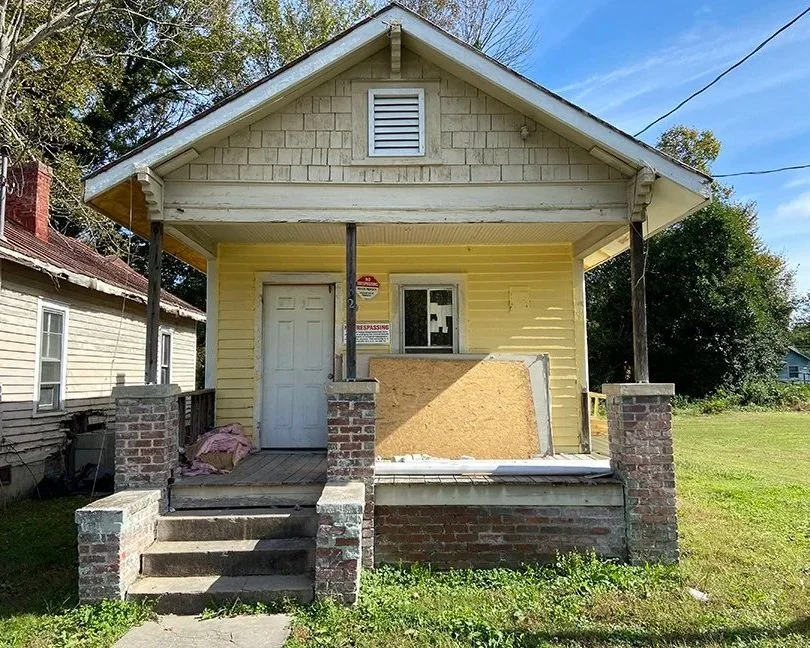
132 Ash Street Before photographed by Anne Sauerborn, Brannd Marketing Co.
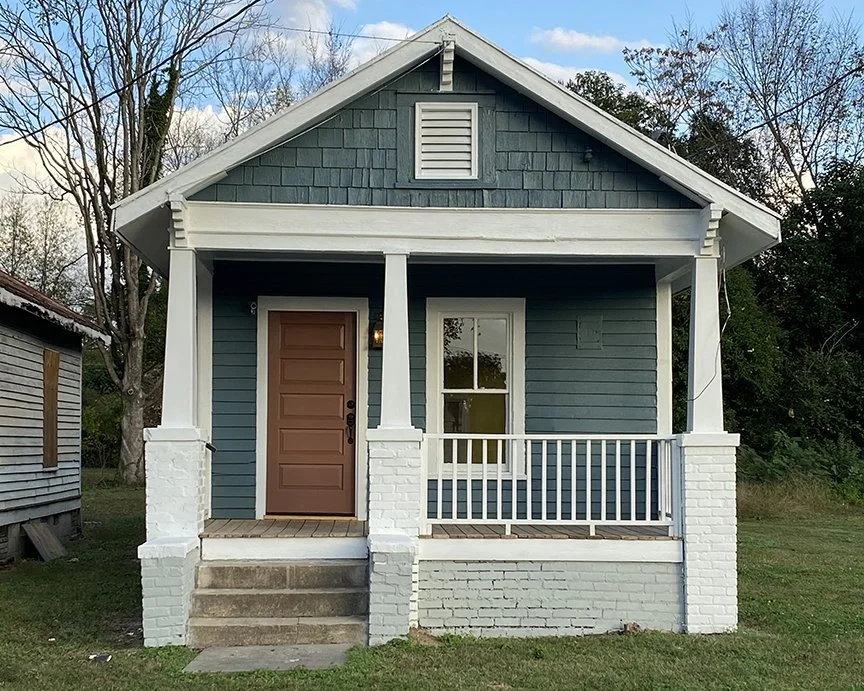
132 Ash Street After photographed by Anne Sauerborn, Brannd Marketing Co.
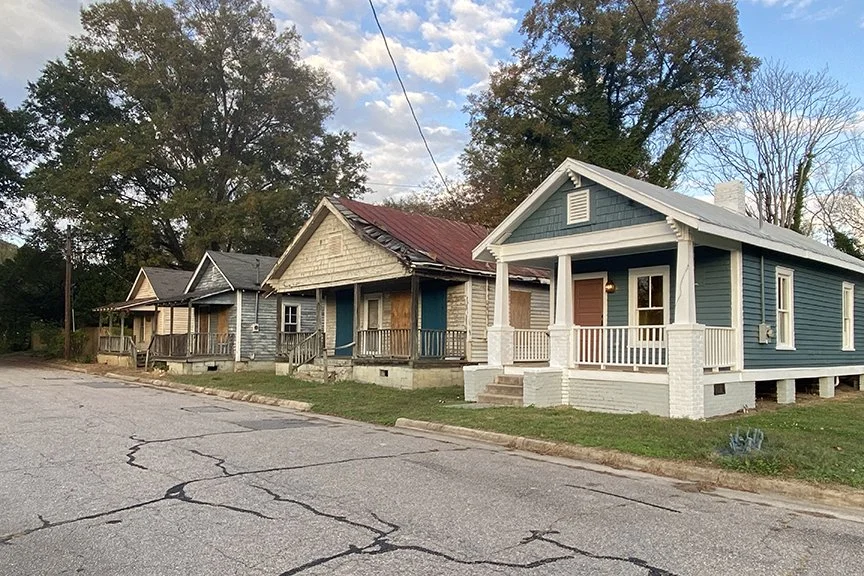
Ash Street Shotgun Houses photographed by Anne Sauerborn, Brannd Marketing Co.
Looking back at it all, what have been the biggest challenges? How did you both manage through perceived disappointments or setbacks?
The greatest challenge has been the work of repairing belief. Rehabilitation is often framed as a technical act, but in East Wilson it demanded a paradigm shift: asking a community long denied investment to imagine itself as worthy of permanence. The shotgun house became both a symbol and a battleground. For generations, families lived as renters for forty years or more, conditioned to see homeownership as taboo and deferred maintenance as inevitable. Disinvestment hardens into expectation, and expectation can quietly turn into anger.
Transforming the past to build an equitable, sustainable future is especially difficult when that past has been marked by neglect and broken promises. Trust was not inherited; it had to be earned—slowly, painfully, and without guarantees. Theft, vandalism, and intrusion were not just security issues; they were symptoms of deeper wounds. There were nights of exhaustion and tears, moments when confusion felt heavier than resolve.
The most profound setbacks were internal, the temptation to interpret struggle as failure. I learned that disappointment is not a signal to retreat—it is evidence that the work matters. But, defeat was never an option, because the mission was never just about restoring houses. It was about restoring dignity, shifting mindsets, and proving that communities written out of the future still have the power to author it.
“Pay attention to what unsettles you. The buildings, communities, and histories that make you pause are often pointing you toward your life’s work.”
Who are you admiring now and why?
I am deeply admiring Shane V. Charles, founder of Mild Sauce Studio, because her work insists that interiors are not neutral containers, but cultural declarations. Through Interior Identity: African Diaspora, she names and legitimizes design languages rooted in Black global experience, reminding us that African diasporic aesthetics are complete systems of knowledge, memory, and authorship. That philosophy has profoundly shaped how I approach both preservation and pedagogy. As I rehabilitate historic shotgun houses, I look to her framework as a way to move beyond restoration toward cultural continuity—treating these homes not as relics, but as living expressions of Black life, resilience, and creativity.
What is the impact you’d like to have on the world? What is your core mission? And, what does success in that look like to you?
I often return to a single question: What does it mean to build without erasing what came before us? My answer is simple and unwavering—to make a mark that can’t be erased. This mark is realized through the rebirth, restoration, and re-centering of African American historic districts—places that hold cultural memory, architectural ingenuity, and generational resilience, yet have long been excluded from sustained investment and equitable planning conversations.
My core mission is to identify a problem and mobilize the skills, networks, and resources necessary to solve it—while serving as a committed community advocate. I work at the intersection of preservation, design, and equity, ensuring communities are not treated as artifacts, but as living systems.
Success looks like neighborhoods where resources are no longer scarce, where organic gardens are embedded into planning, and where East Wilson stands as a replicable model for Black historic districts nationwide—thriving without displacement and preserved without compromise.
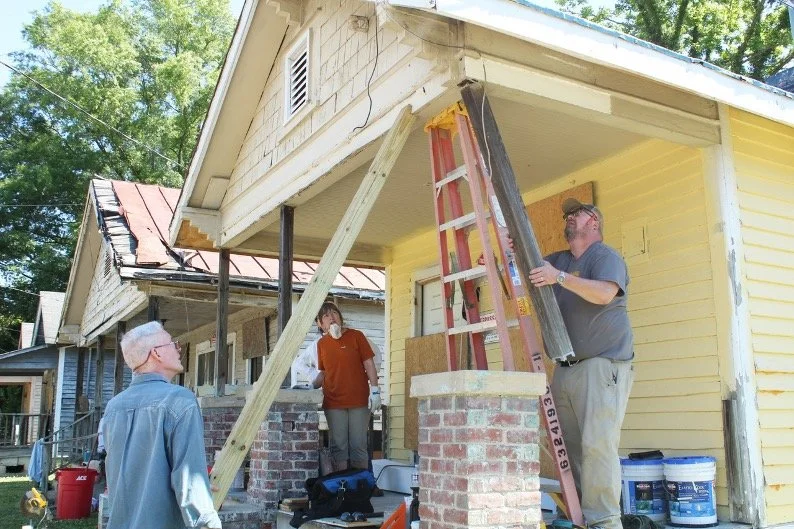
Hands-on Preservation Field School photographed by Anne Sauerborn, Brannd Marketing Co.
Finally, what advice do you have for those starting their career? Would your advice be any different for women?
For those just beginning their careers, I often say, do not wait for permission to matter. The fields of architecture, design, and preservation are not neutral landscapes—they are shaped by who is present, who is absent, and whose knowledge is considered legitimate. Pay attention to what unsettles you. The buildings, communities, and histories that make you pause are often pointing you toward your life’s work.
I encourage emerging practitioners to build careers rooted not only in skill, but in conviction. “If you can explain why the work must exist,” I was once told, “you will always find a way to do it.” Learn the tools, master the systems, and then push them—because preservation, at its most powerful, is not about freezing the past, but about repairing the future.
For women, my advice is both intimate and unapologetic. Do not separate your identity from your authority. You will be told—sometimes gently, sometimes not—to soften your voice, to make your work more palatable, to wait until you are “ready.” Resist that narrowing. Your lived experience is not a footnote to your expertise; it is the lens that sharpens it. For Black women especially, your presence in this field is an intervention. You are not entering rooms—you are changing their architecture.
This interview has been edited and condensed for clarity.