Accompanying Landscapes: Tejido Paisaje Founder Alejandra de la Cerda on Belonging, Continuity, and Possibility
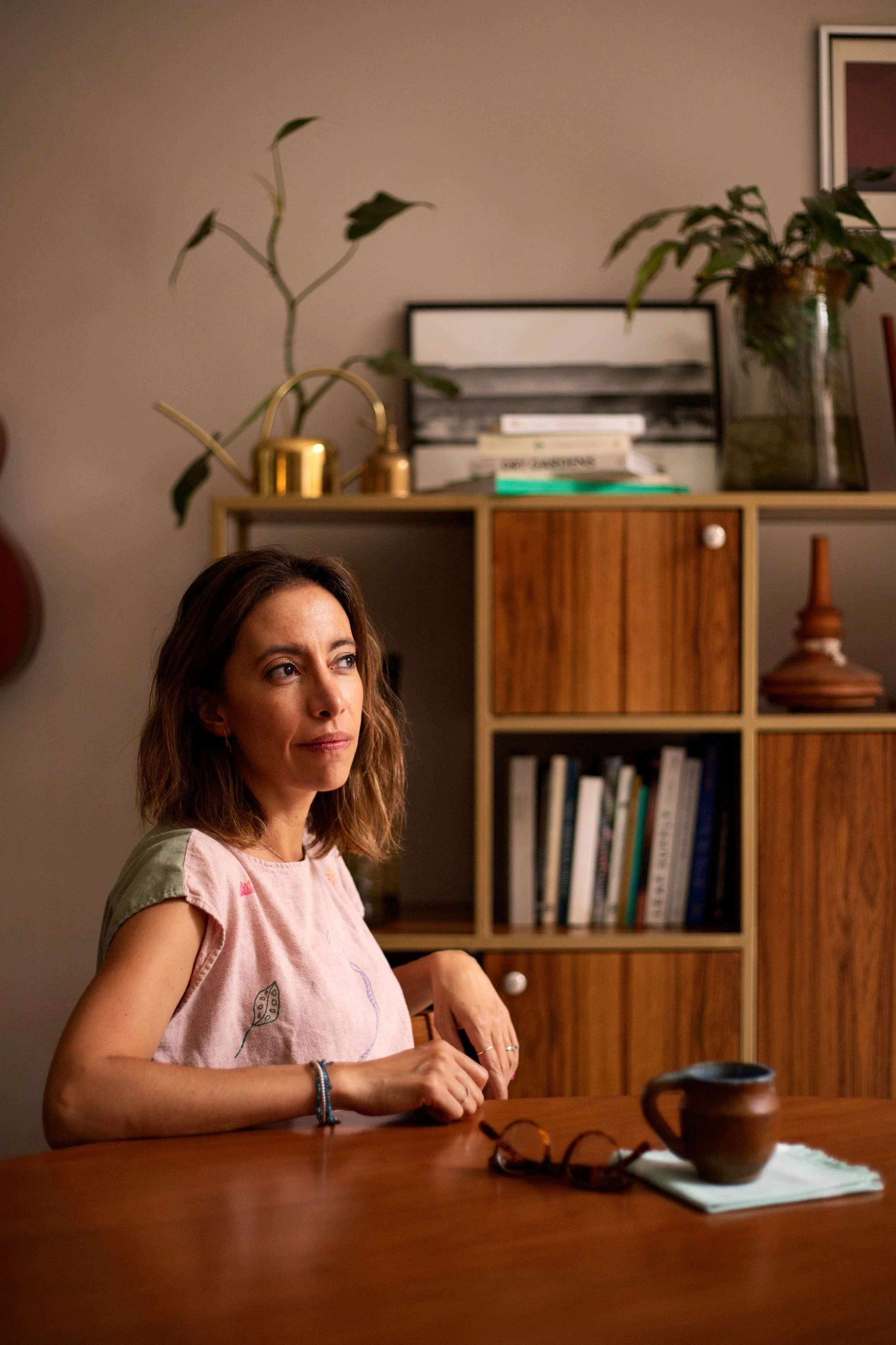
Alejandra de la Cerda by Rafa Amezcua.
By Julia Gamolina
Alejandra de la Cerda is a landscape architect and founder of Tejido Paisaje. She has developed projects in Mexico and abroad, integrating ecology, architecture, art, and community. A graduate of Universidad Iberoamericana, she holds a master’s degree in Urban Landscape Design, executive studies from IPADE, and specializations in agroforestry, water management, and ecological regeneration.
She was co-founder of Polen Paisaje (2010–2025) and currently serves on the Board of Directors of the Mexican Society of Landscape Architects (SAPmx). In 2025, she was included in Architectural Digest’s AD100 list, and her projects have been recognized by the Mexico City Architecture Biennale and the Íconos del Diseño 2024 awards.
JG: Congratulations on your new studio, Tejido Paisaje. Why now and why this studio? What are you looking to create in the world and in this space that doesn't already exist?
ADLC: Tejido Paisaje emerged from a personal and professional need to return to the territory with a quieter, more attentive gaze. After fifteen years of practice, I wanted a space where design could breathe differently—where questions were as important as solutions, and where the work could unfold at the rhythm of the landscape itself.
I’m not trying to create something entirely new; rather, I’m trying to remember something we often forget: that landscapes are living organisms, and our role is to accompany them, not define them. This studio is a place to weave connections between science, art, and territory; to read traces, rhythms, and memories before drawing a single line. It’s a practice grounded in observation, humility, and regeneration—a place where the landscape is not a backdrop, but an active voice in the regeneration.

Exhibition “Cartas del paisaje” by Tejido Paisaje x Perla Krauze. Photography by Rafa Amezcua.
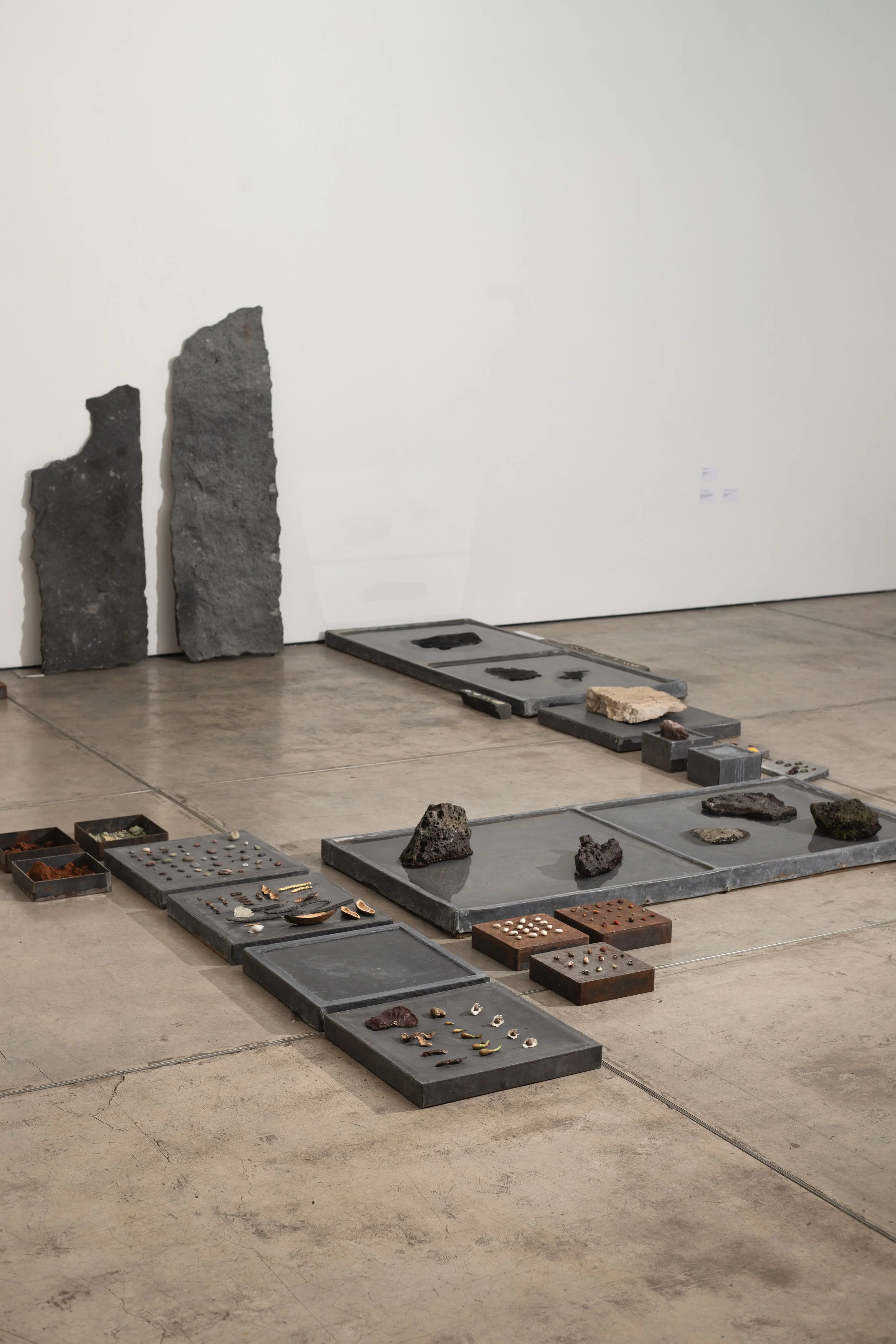
Exhibition “Cartas del paisaje” by Tejido Paisaje x Perla Krauze. Photography by Rafa Amezcua.

Exhibition “Cartas del paisaje” by Tejido Paisaje x Perla Krauze. Photography by Rafa Amezcua.
Now let's go back a little bit — you studied architecture, business, and landscape architecture. What did you learn from studying each field?
Architecture taught me to think in structure, proportion, and in the ways space shapes daily life, but also that not everything needs to be built. Landscape architecture opened a wider dimension: time, soil, water, vegetation, and the slow processes that sustain life. It taught me to observe what is not immediately visible and to understand how every element, like in nature, plays a role, carries meaning, and fulfills a function within a larger system.
From business, I learned how to sustain a practice: how to make responsible decisions, lead teams, and understand the broader ecosystem behind each project. It taught me that design, creativity, and a love for the craft are not at odds with healthy financial models or a clear and liberating business structure. In fact, these tools have allowed me to keep my practice sustainable, to experiment, and to nurture a studio that can grow with intention.
What was some of the best advice you got early on that has informed your approach to your work and career?
The best advice I received was simple: walk slowly and observe. Early in my career, I wanted to resolve everything quickly, to reach conclusions before the place had even spoken. With time, I learned that the landscape has its own rhythm, its own silences, and that our task is to listen before we act.
Someone once told me to work with humility and that nature doesn’t need to be saved, only understood. Those words have grounded me ever since. They taught me that design is not about protagonism, but about accompaniment. That every project is a quiet conversation with the land, and that the answers are already there—in a stone, in a shadow, in the persistence of water beneath the surface. Our work is simply to pay attention.
“Landscapes are living organisms, and our role is to accompany them, not define them.”
You were also the co-founder of Polen Arquitectura de Paisaje. What did you learn during your almost sixteen years with the studio?
Polen was a profound school. It was the chapter that opened my professional life, beautiful, formative, and essential. My time there taught me the power of collaboration, the strength of shared intuition, and the way landscape design can transform how we inhabit places. I also learned to build a collective vision, to listen deeply, to sustain long processes, and to understand projects not as objects, but as living ecosystems that continue evolving long after we leave.
Looking back at it all, what have been the biggest challenges? How did you both manage through perceived disappointments or setbacks?
One of the biggest challenges has been learning to let go — of projects that didn’t happen, ideas that needed more time, or professional paths that shifted unexpectedly. Another challenge has been balancing the creative side of practice with the administrative, financial, and emotional demands of leading a studio.
What helped me through difficult moments was returning to the territory: walking, observing, going back to the soil. Landscapes taught me that nothing alive is linear; there are droughts, storms, long pauses, and sudden renewals. That understanding helped me make peace with my own cycles. Every setback became a reminder to stay flexible, to trust the process, and to recognize that transformation is part of any living practice.
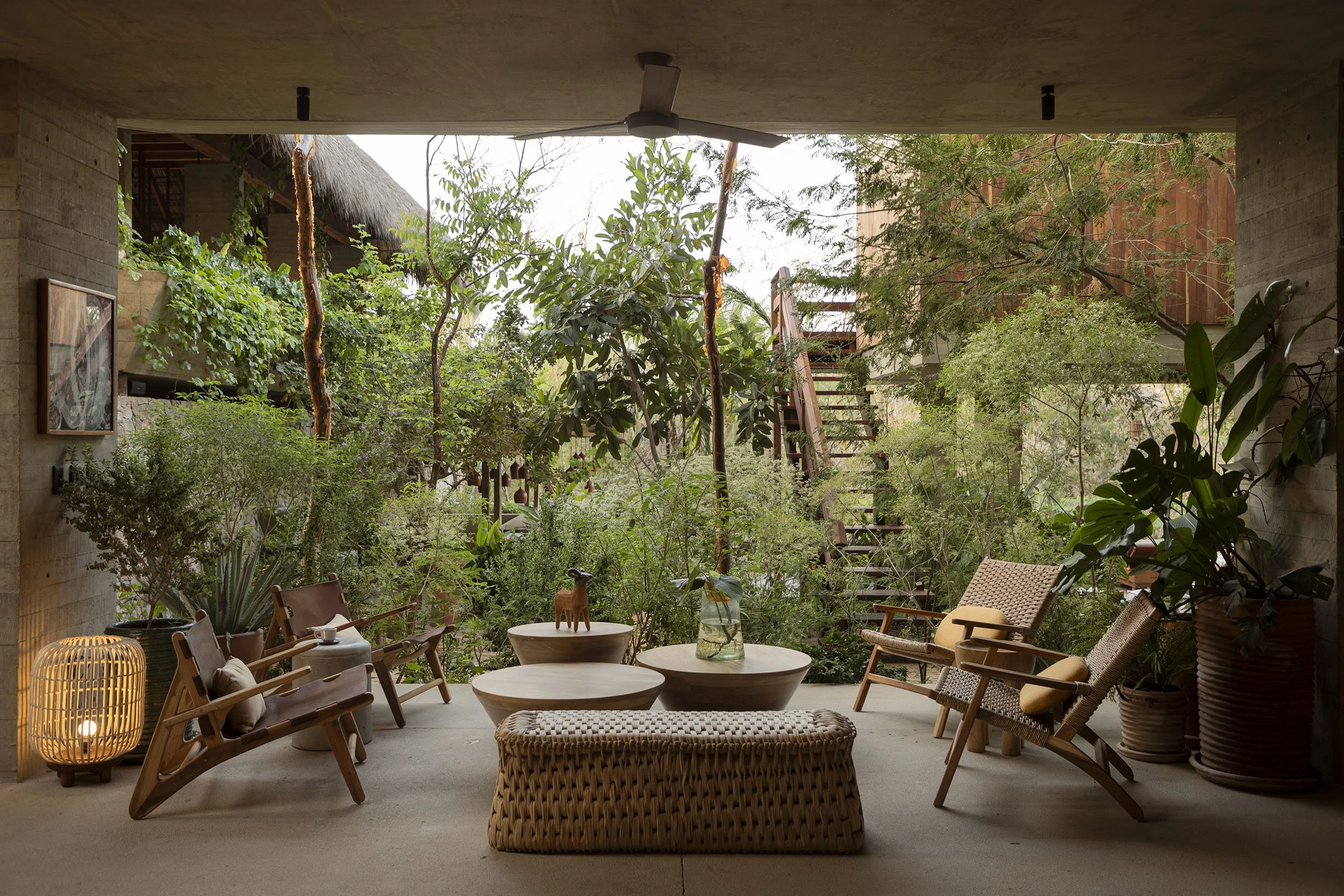
Ennea Hotel by Polen Paisaje. Photography by César Belio.
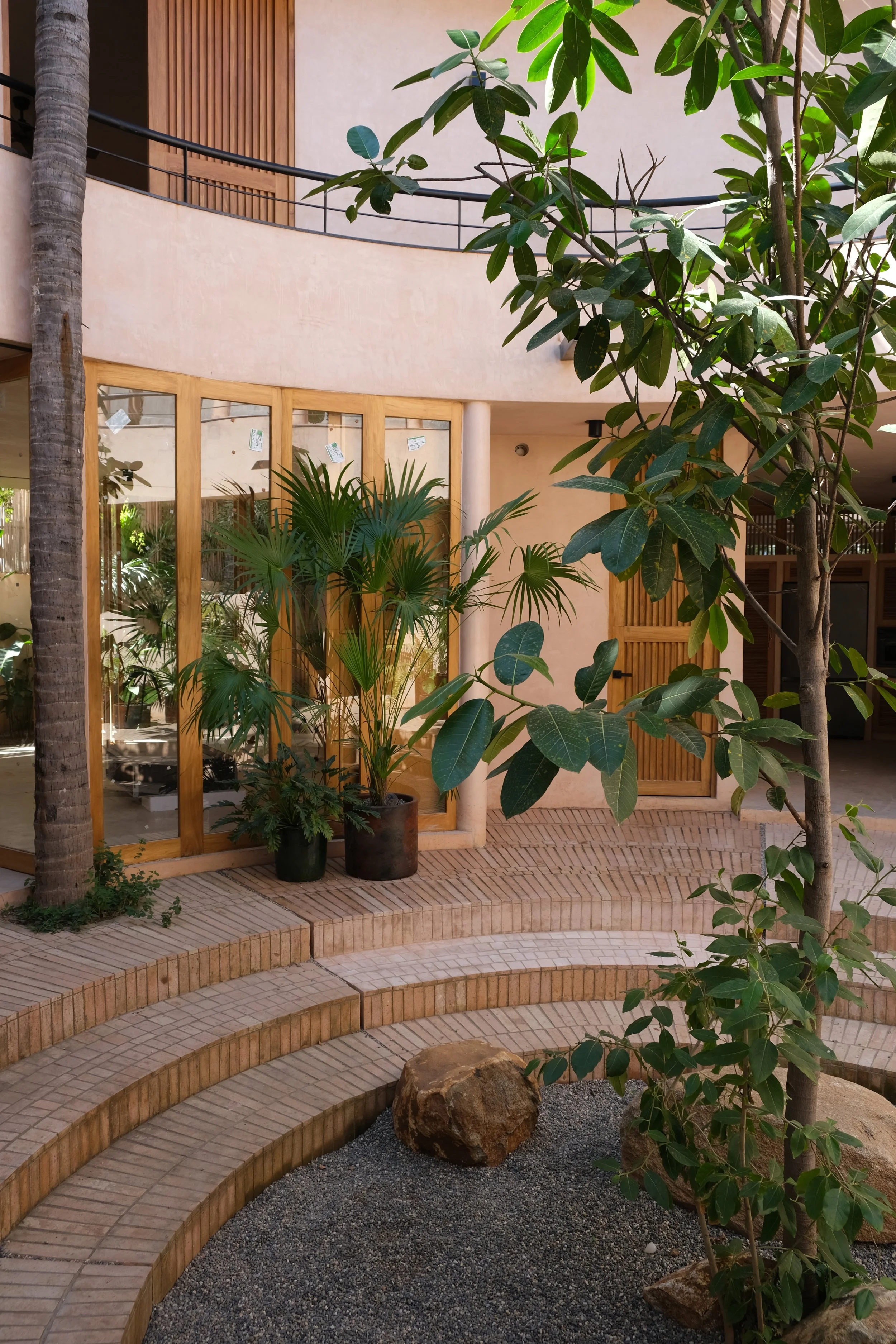
Casa Maryna by Tejido Paisaje. Courtesy of Tejido Paisaje.
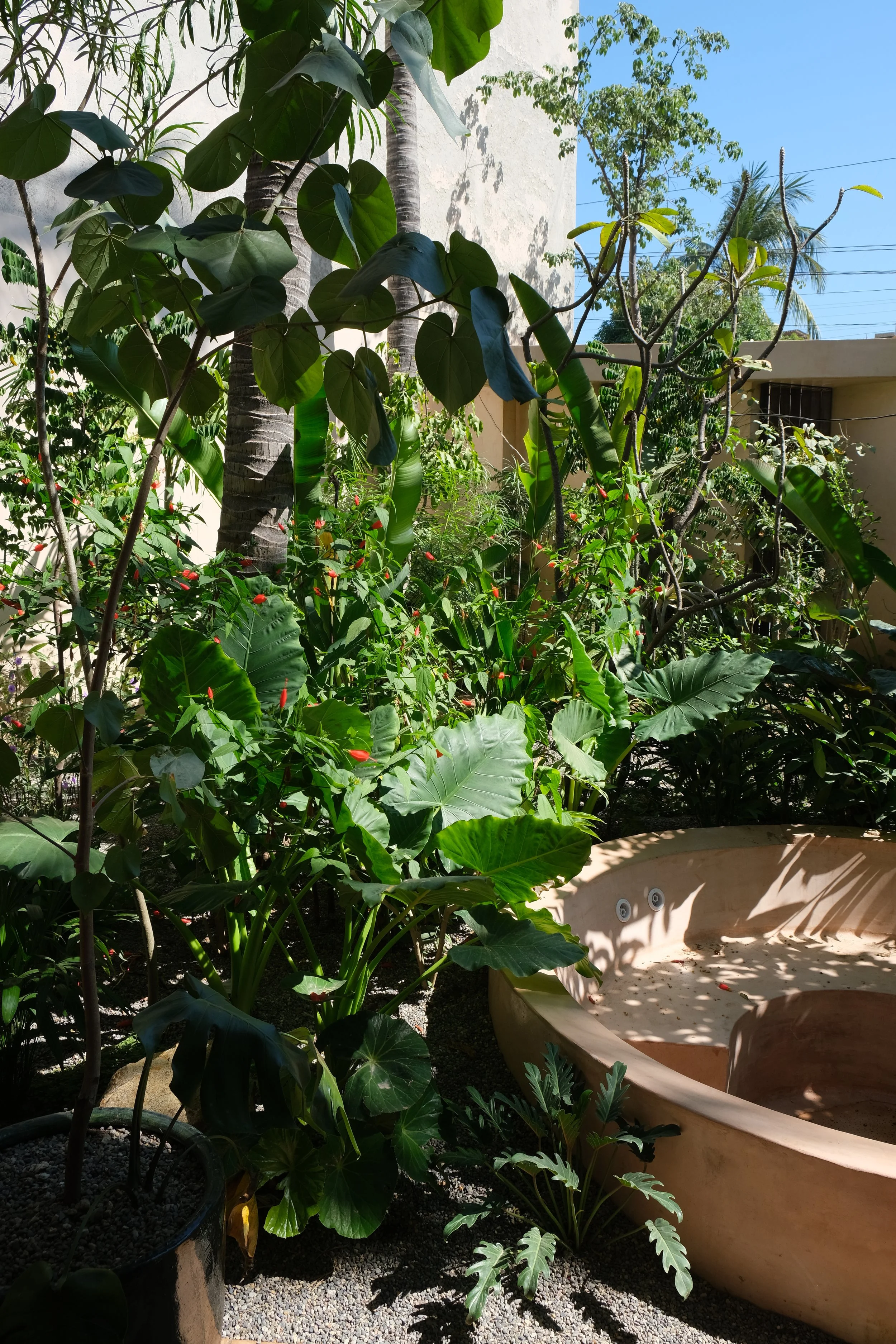
Casa Maryna by Tejido Paisaje. Courtesy of Tejido Paisaje.
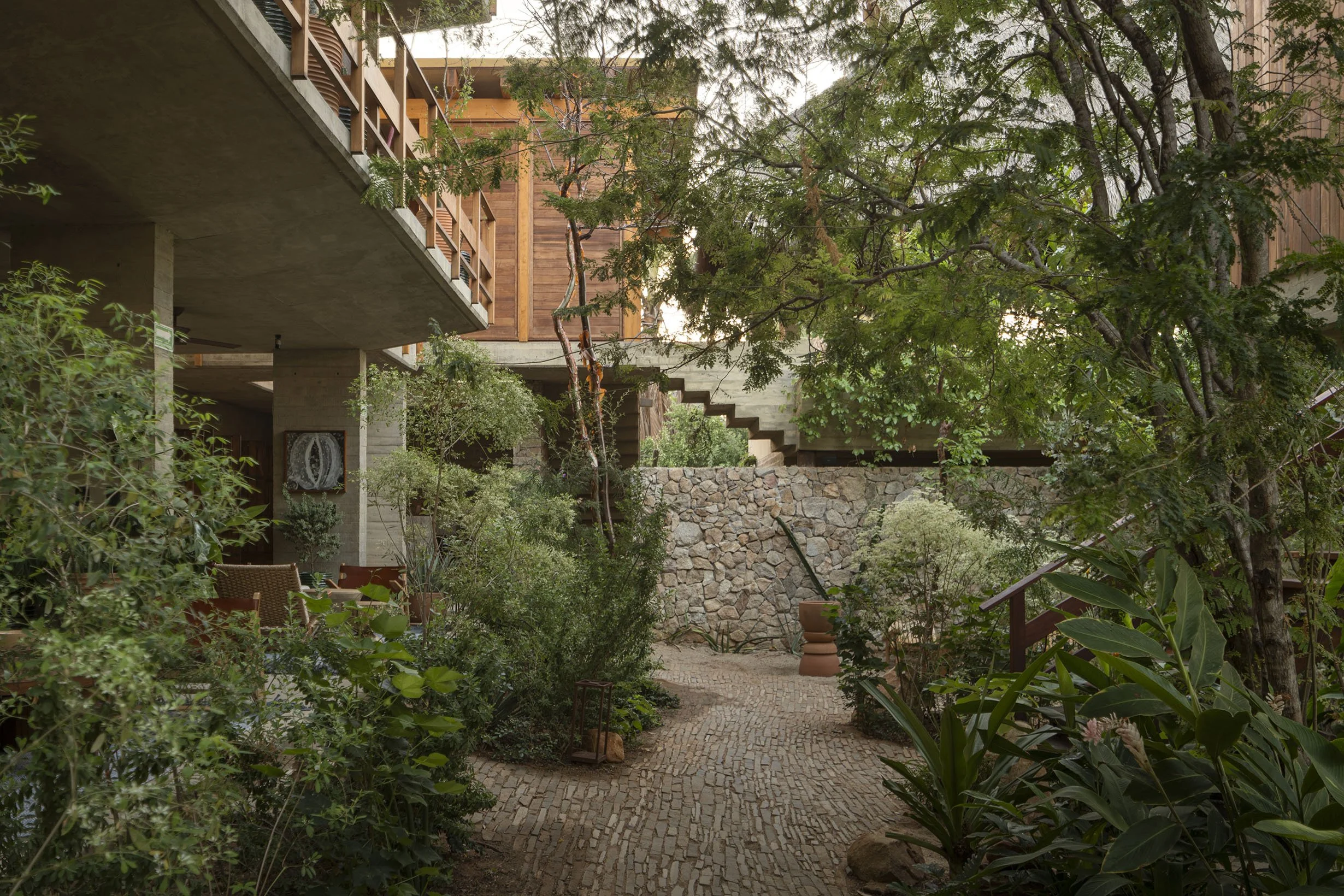
Ennea Hotel by Polen Paisaje. Photography by César Belio.
Who were your mentors through it all?
I’ve also been shaped by the women of landscape, especially Teresa Moller, whose clarity and humility continue to remind me that design begins with listening, not imposing. And by Namaste Messerschmidt, who opened a completely new world for me through agroforestry. A few days in southern Brazil changed the way I understand ecosystems, challenging the idea of “untouched wilderness” and revealing forests as places deeply tended and cultivated by Indigenous communities for generations. As Ailton Krenak writes: “The Amazon is not a forest, it is a garden that has been planted.”
For our exhibition Letters from Landscape, we had the honor of collaborating with Perla Krauze. Since then, I’ve been deeply moved by her work, which has taught me to see stones, cracks, and fragments with an entirely new sensitivity, finding landscapes in other places, at other scales. Her way of reading the landscape, through what is minimal, overlooked, or almost silent, has expanded my own ways of seeing, bringing a new lens shaped by art and by the attentive gaze of a remarkable artist.
Who are you admiring now and why?
I’m especially inspired by Miriam García from LandLab, whose work across Latin America shows how science, community, and territory can come together to restore ecological processes and cultural continuity. I’ve also been reflecting on the recent loss of Kongjian Yu, a visionary in ecological urbanism and creator of the “sponge city” concept. His call to “make friends with water” transformed how the world imagines resilient cities and reminded us that design must align with natural intelligence.
And in these days, I keep thinking about Francis Hallé. His devotion to primary forests, those irreplaceable archives of life, has long been a compass for me. He reminded us that when we lose such forests, recovery is measured not in decades but in centuries. His drawings and his advocacy revealed both the complexity of forests and the ethical responsibility we hold as landscape architects.
Beyond the profession, I return often to writers like Stefano Mancuso, who uncovers the intelligence of plants, and Umberto Pasti, whose poetic defense of threatened landscapes reminds us that beauty can also be a form of resistance.
“Landscapes taught me that nothing alive is linear; there are droughts, storms, long pauses, and sudden renewals...Every setback became a reminder to stay flexible, to trust the process, and to recognize that transformation is part of any living practice.”
What is the impact you’d like to have on the world? What is your core mission? And, what does success in that look like to you?
I hope my work helps broaden how we see and relate to the land: to recognize its fragility, its beauty, and its complex layers of memory. My mission is to accompany processes of regeneration and to design spaces that honor what already exists—places where life, in all its forms, can continue.
The impact I seek is not monumental; it is subtle and everyday: that a project reveals an invisible layer, sparks a question, or inspires care. Success, to me, is when a landscape transforms in a healthy way, and when the people and non-human beings who inhabit it feel a sense of belonging, continuity, and possibility.
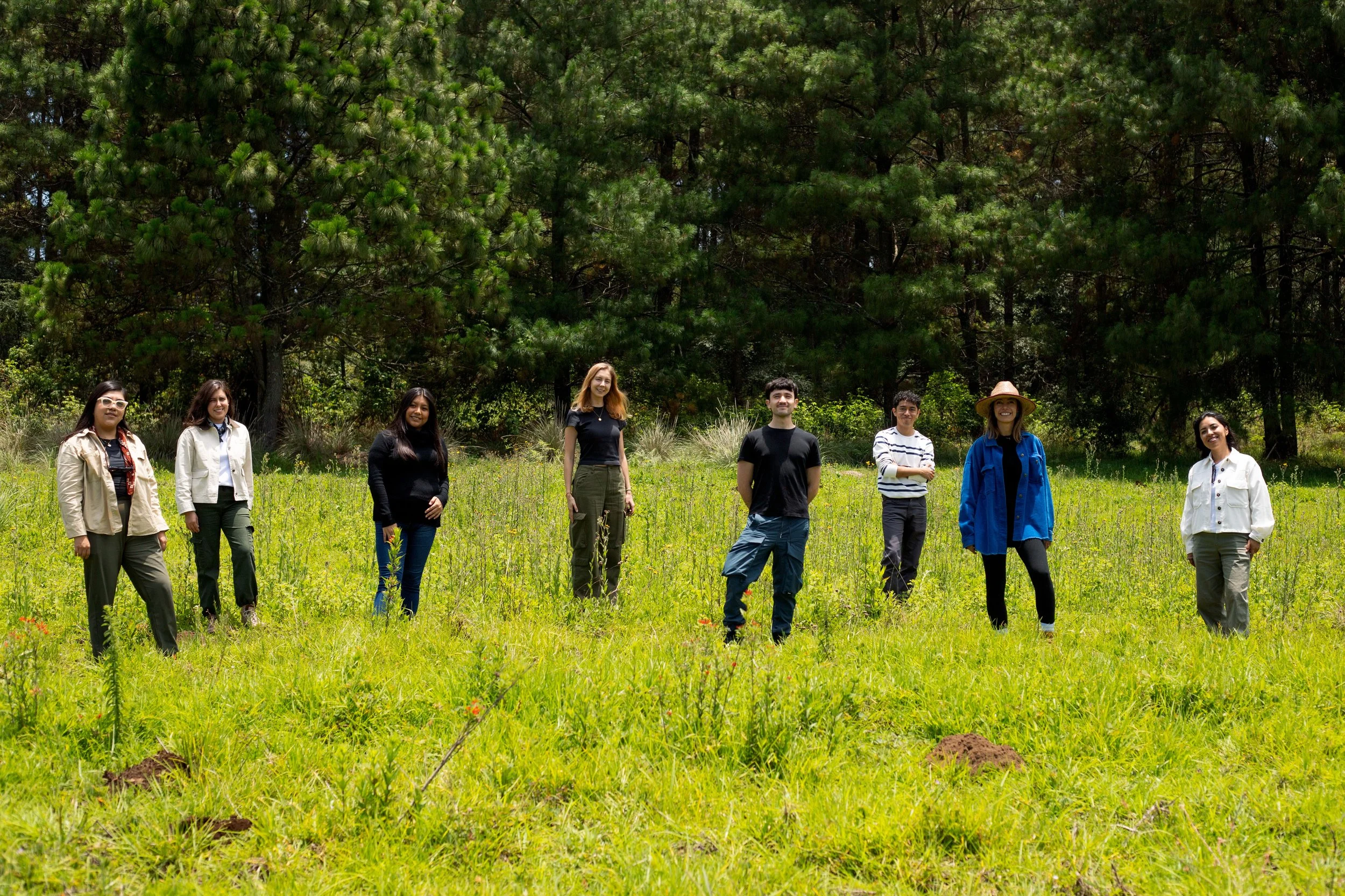
Team Tejido Paisaje. Photography by Rafa Amezcua.
Finally, what advice do you have for those starting their career? Would your advice be any different for women?
I would tell them to walk more and to really observe before designing. Don’t rush to define a “signature style”; those things come slowly, shaped by experience, by life, and by the territories you move through. Seek clarity rather than perfection, and stay curious, always. Learn from other disciplines. Speak with scientists, artists, communities, and elders, there is so much wisdom beyond the formal boundaries of our field.
For women, I would add: trust your voice, especially when the environment makes you question it. Our perspective is powerful, rooted in sensitivity, intelligence, and collaboration. The landscape needs that way of seeing: one that cares, nurtures, and builds community. Women have carried those roles for generations, and we need more women leading from that place, nurturing the land, the people around us, and ourselves.
This interview has been edited and condensed for clarity.