Discovery and Delight: DesignConnects' Susan Chin on Realizing Potential, Getting Involved, and Creating a Better Public Realm
By Iva Kravitz
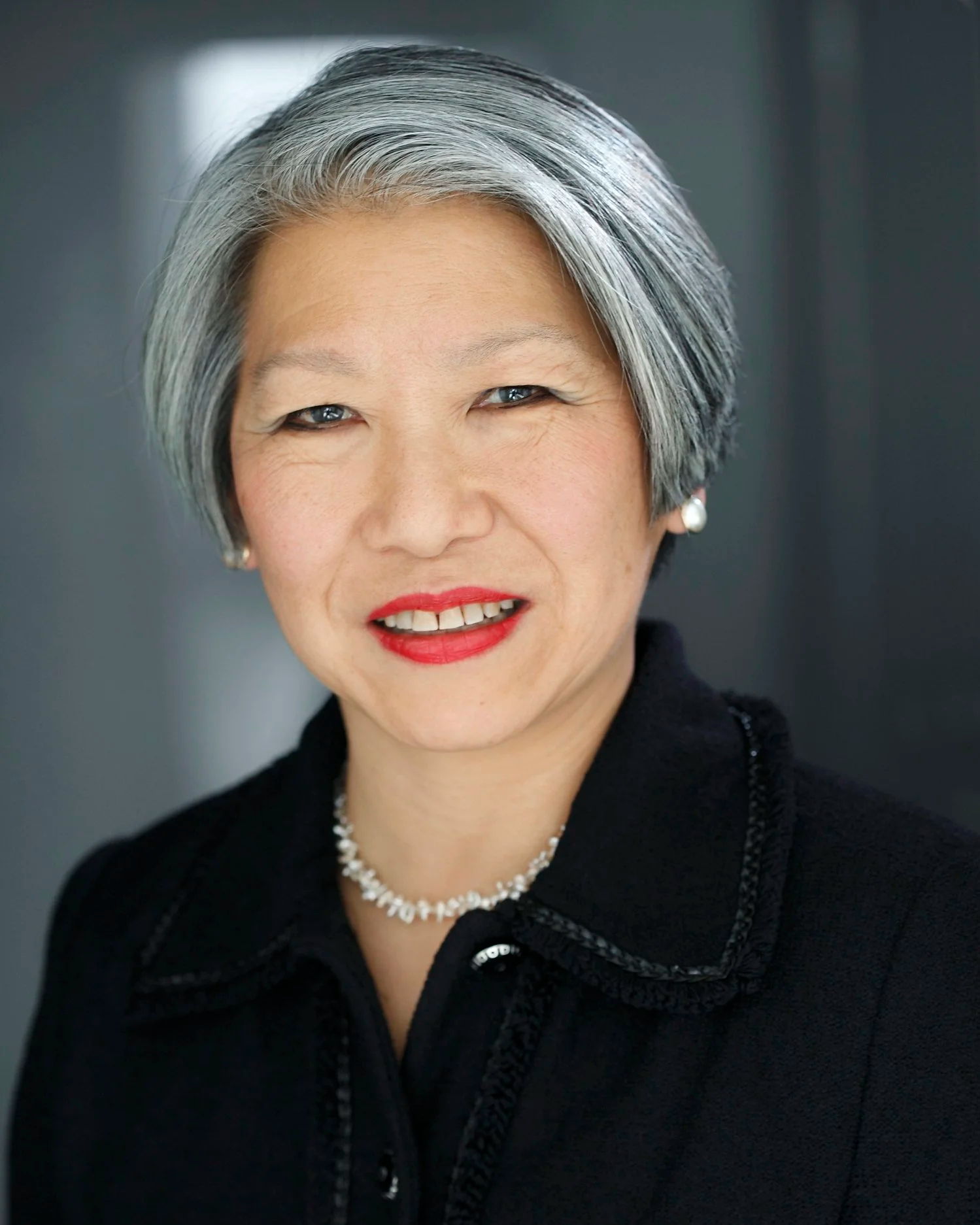
Susan Chin, FAIA, Hon. ASLA is an accomplished urbanist and civic leader, and leads the independent consultancy DesignConnects. She led the Design Trust for Public Space, a nationally recognized NYC nonprofit organization at the forefront of shaping the public realm for over eight years. Prior to Design Trust, she was assistant commissioner for Capital Projects at NYC Department of Cultural Affairs, commissioning innovative and high-performance architecture and public art citywide for over twenty years.
Susan recently served as co-commissioner of the U.S. Pavilion at the 19th International Architecture Exhibition at La Biennale di Venezia with University of Arkansas Fay Jones School of Architecture and Design, and Crystal Bridges Museum of American Art. She chaired the AIA national Committee on Design in 2024; served as vice president on AIA national board, and as chapter president of AIA New York. She also served on the East Midtown Governing Group and the NYC & Company Board of Directors. Her awards include the 2025 William A. Bernoudy Resident in Architecture at the American Academy in Rome; American Society of Landscape Architects Honorary Membership; AIA NY State's Kideney Gold Medal, and Del Gaudio, The Ohio State University's Distinguished Alumna Award and Loeb Fellowship at Harvard Graduate School of Design.
IK: Tell us about the Biennale. What were your goals for the American Pavilion? Were they achieved? What was the highlight for you?
SC: My goals have been to bring the best of American architecture, design and culture to a global stage…and to amplify talent and diverse voices writ large, often in overlooked places, in this case, Northwest Arkansas and the Midwest. I think we’ve done it. It’s been rewarding to partner with Peter MacKeith, dean of the Fay Jones School of Architecture and Design, and Rod Bigelow at Crystal Bridges, and their creative teams on this timely project.
We created a big porch with a ‘haint’ blue canopy and conversation pit, as a welcoming gathering place with a multi-faceted exhibition inside the American Pavilion. Our exhibition demonstrates how civic porches create community, and the value of providing a place to rest and relax, experience music and dance, read, tell stories or reflect ‘on the porch’. The highlight for me has been observing visitors from across the globe on the PORCH, lingering as they shared shade and conversation. Now over 150,000, have shared pure joy and many have told us, after touring the Giardini and the Biennale, that they kept returning to our Pavilion! We just held the Closing Finissage weekend in November.
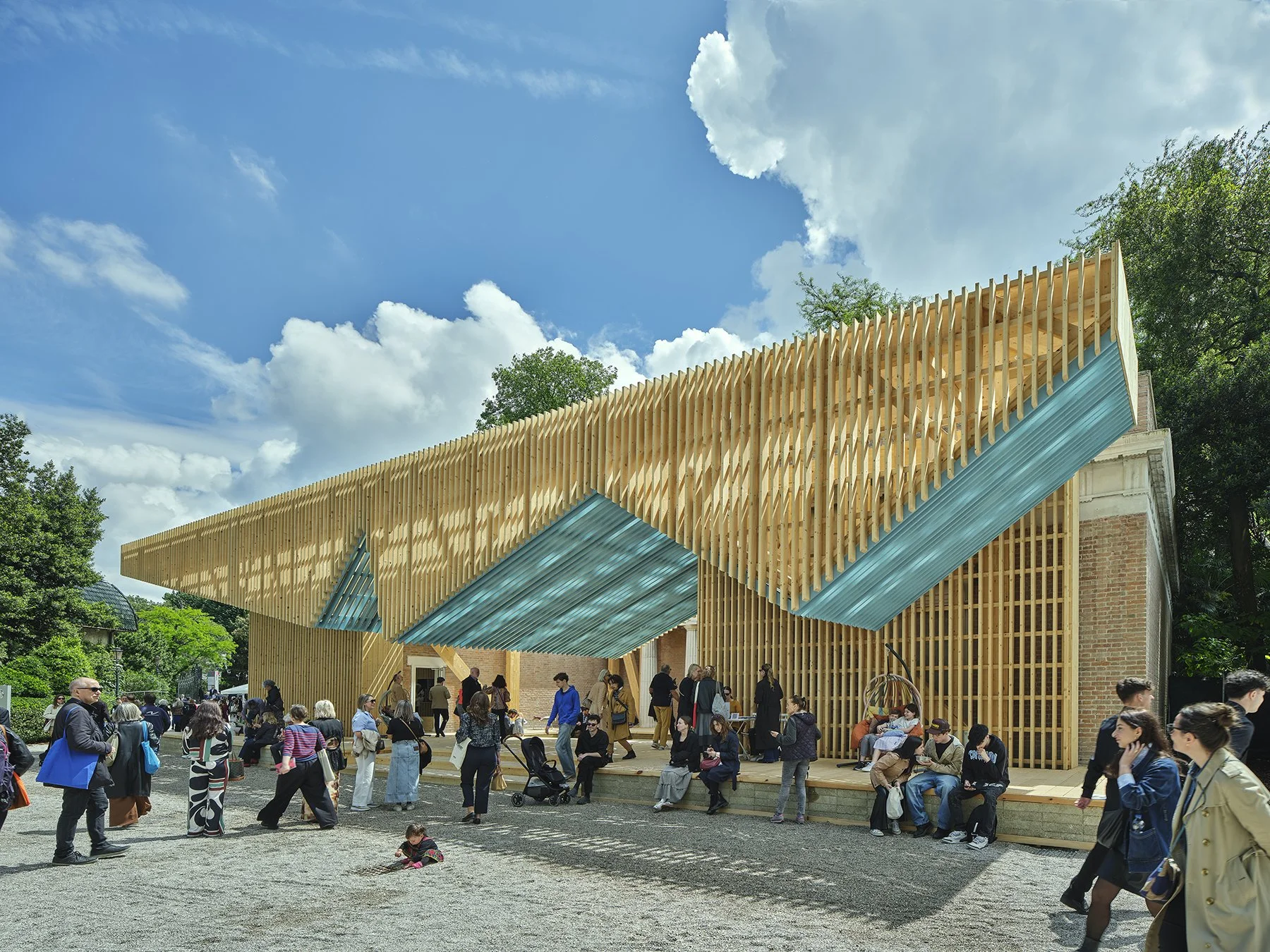
“Porch,” the US Pavillion at the Venice Biennale. Photography by Tim Hursley.
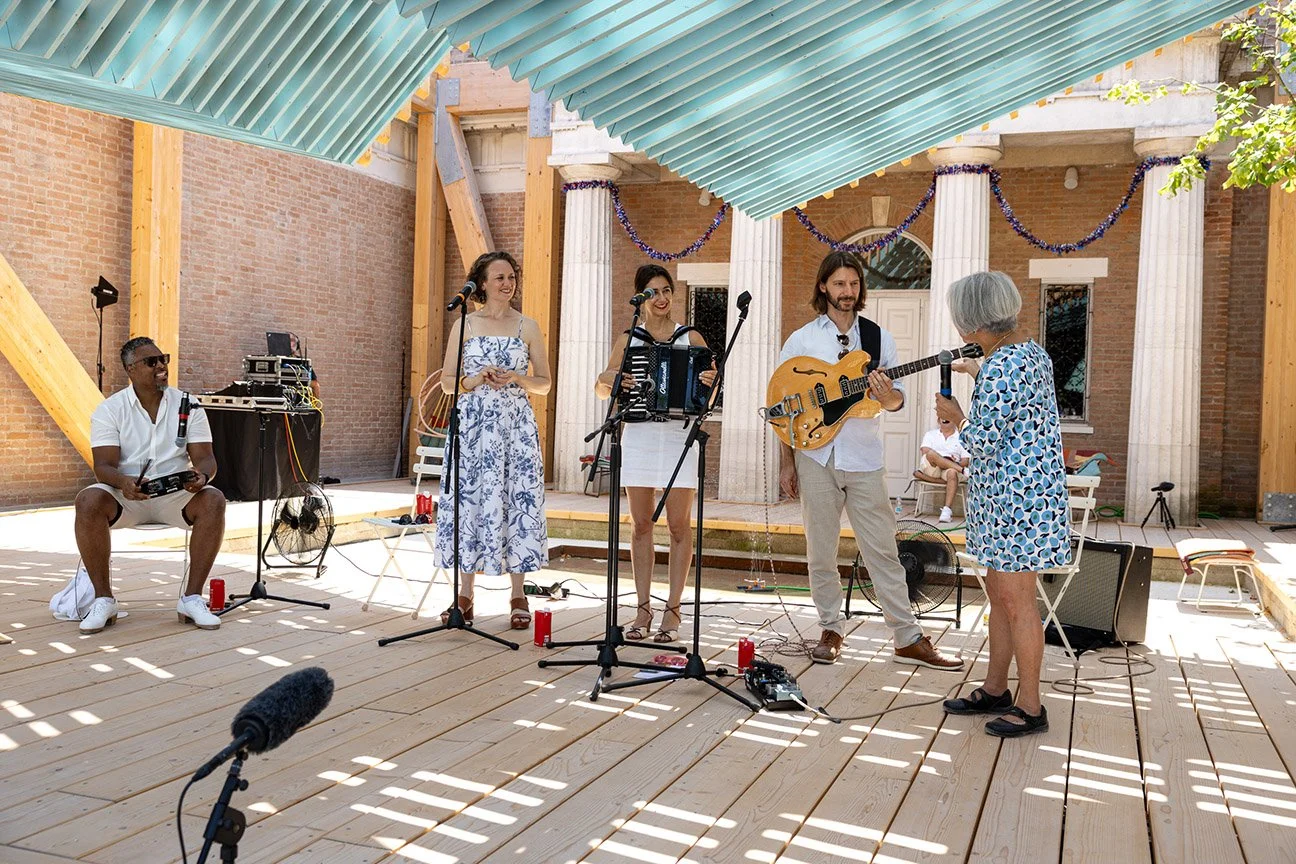
Courtesy of Susan Chin.
Going way back, you studied architecture and then historic preservation. Architectural preservation was a tight focus early in your career but at a certain point you became an administrator, manager and leader in much broader arenas; can you speak to this enormous professional arc?
That’s what’s exceptional about the field of architecture, there are so many ways to apply design thinking, teamwork and expertise in our service profession. When I began my career, I imagined a much more linear path from gaining experience, passing the A.R.E., to starting my own architecture firm. Then I diverted; I had an opportunity to work on the restoration of the Statue of Liberty and Ellis Island foundation. My master’s thesis was on adaptive reuse of Ellis.
One opportunity truly changed my trajectory, which was when I became a public official in NYC government at the Department of Cultural Affairs. I had the insight to match the goals of the capital program to fit with the mayor’s agendas. With Mayor Koch, we expanded city investment from solely city-owned property to include non-city property such as the New-York Historical Society or MoMA; or with Mayor Bloomberg, it was aligning major projects and cultural districts with PLANYC to accommodate one million new New Yorkers. Under Bloomberg and working with BKSK Architects, for example, we helped to achieve LEED Platinum certification for the Queens Botanical Garden Visitor Center and Administration Building. Through four administrations over twenty years, I expanded NYC Department of Cultural Affairs’ portfolio to work with more than 200 cultural organizations and tackled many new policy matters, becoming a better administrator and manager, planning and making capital investments of over $3 billion in city funding. During my tenure in city government, I acquired new leadership skills and tools through the Harvard GSD Loeb Fellowship, CORO Leadership NY, and the AIA, which also built a global network of friends and colleagues.
“My core mission has been to connect people with each other, to be collaborative and to share opportunities. Maybe it’s because I am an only child and never had brothers or sisters. I’d like to help people realize their potential, spark innovation and create a better public realm.”
Who were your mentors? What was your support system?
I’ve been blessed with insightful mentors: my Dad, an aerospace, and plastics engineer; Professor Jan Hird Pokorny; architect Margaret Helfand; and my husband Charles McKinney. All of them understood my strengths and deltas and helped me see throughout my career how to combine and apply my experience and expertise in historic preservation, energy conservation and resilience, design thinking and large-scale construction and budgeting, to be an effective leader in venues other than traditional practice.
During my Ohio State days, I started my public service, then at the local AIA chapter. Years later, one of my mentors nominated me and I was elected as the first Asian American chapter president of AIANY, where I had chaired and served on committees for design awards, Women in Architecture and more. I led the first strategic plan for the Center for Architecture that increased the membership from 2,000 to over 5,000.
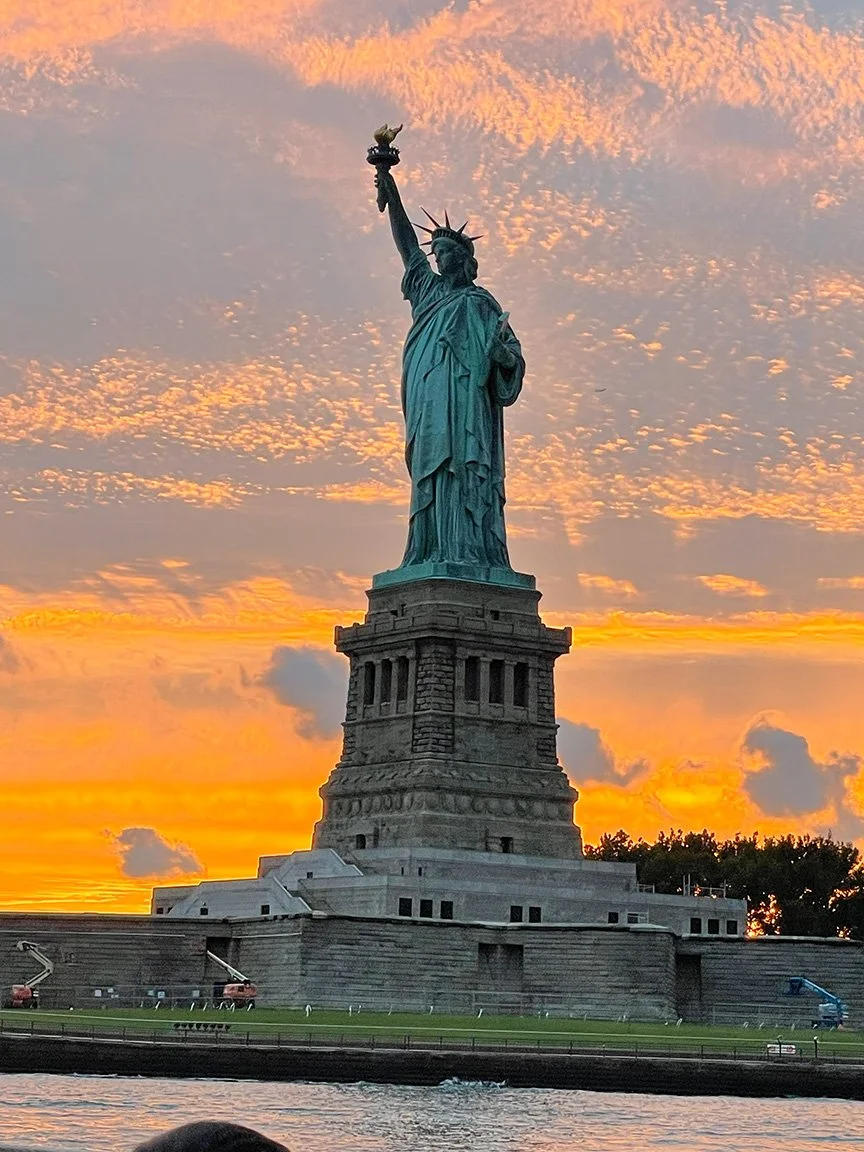
The Statue of Liberty, courtesy of Susan Chin.
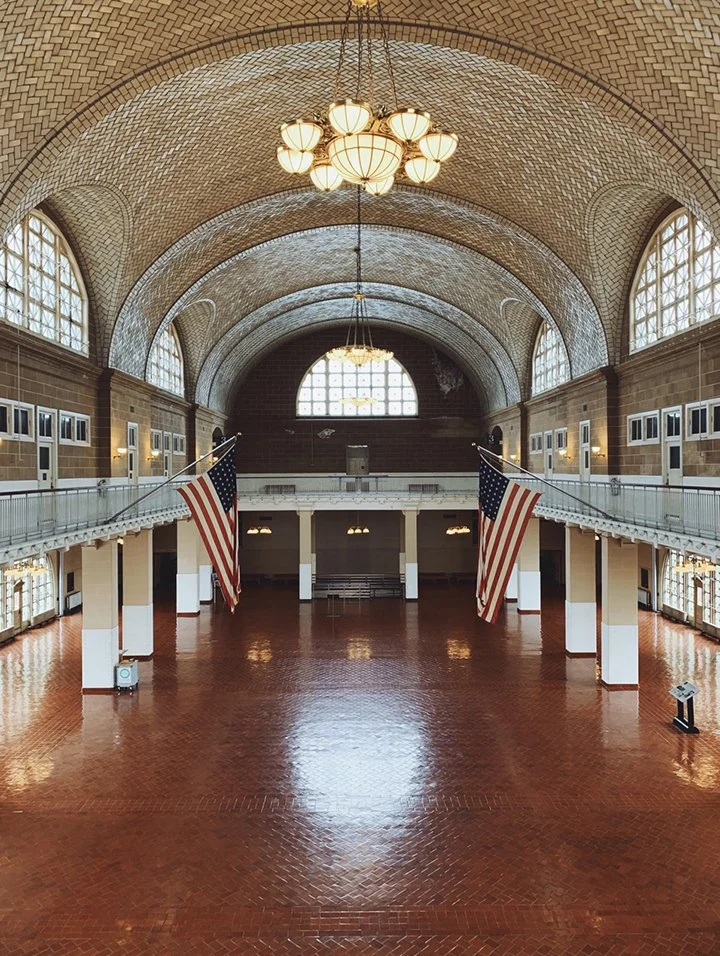
Ellis Island, courtesy of Susan Chin.
Your resume is fascinating. You’ve worked in architectural offices, non-profits and public agencies, mostly in the public realm in New York. You have been part of the development of hundreds of projects and set policy and public guidelines for many others. How has that informed your sense of civic responsibility, your sense of your role in public life and your attitude about the future of the city?
I believe my sense of civic responsibility comes from my mother, a homemaker and educator, and my religious upbringing. Those influences led me to seek roles in public service and stewardship. I’ve gravitated to positions that would give me the greatest power to be a creative steward of the planet and this world.
In city government, I believed we were investing in cultural infrastructure that served the city’s world-renowned museums, zoos, botanical gardens, and performing centers, but more importantly, the public. While I was working for the city, these institutions expanded their research, preserved and secured their collections, enhanced visitors’ experience, accessibility and knowledge, improved workers’ conditions, as well as built new, upgraded or reconstructed facilities and exhibitions that contributed to New York City as a global cultural capital.
At Design Trust for Public Space, I developed the first strategic plan that moved them from founder-led to an independent nonprofit organization to give the organization longevity. The Trust partnered with city agencies and nonprofits and engaged private sector experts to catalyze – or “unlock the potential of public space” – ranging from the High Line to securing safer taxis to urban agriculture and to spaces under elevated transportation infrastructure. Most of these projects were initiated by those partners. Collaboration and coalition building using the Design Trust’s unique approach, where the Trust eventually withdrew, gave these open-ended projects a life of their own. It was a joy to start the Equitable Public Space Fellowship to support the next generation of design professionals. It made me optimistic about our city’s future to work with these dedicated organizations and talented, bright individuals from a wide range of backgrounds who taught me so much, a kind of cross-mentoring.
“...get involved in your community, however you define it— your planning board, community garden, school or library board, tenant association, nonprofit board…serving in public leadership gets you out of yourself, expands your universe and network, teaches you new perspectives through collaboration, and increases your impact.”
Looking back at it all, what have been the biggest challenges? How did you both manage through perceived disappointments or setbacks?
First, as a woman in a male dominated profession, putting career first, not having children, and especially as an Asian woman, not being taken seriously as the leader or authority, hence never sharing any vulnerabilities or wanting to look weak. Second, in city government, when the mayoral administration changed – I served four different mayors from Koch to Bloomberg – it was a challenge to understand each of their agendas to serve the arts and cultural community, at the same time, to meet their goals for the city.
Third, I’d say, the shift as I left city government as a public official and policy maker was hard. It’s about power. Moving from where I allocated city funds for major cultural projects and made policy, to becoming a nonprofit executive and now independent consultant, has been a big shift. Now I find myself asking for financial support, seeking to partner or taking on my own projects.
Regarding managing through disappointments or setbacks, at first I’d question myself, wallow for a while, then power through, try to learn from it, and then pivot to moving onto the next opportunity, “dreams in my drawer” as a I like to call them. My incredible network of family, friends and colleagues in many fields —my kitchen cabinet– has been very supportive in all those situations.
Who do you admire right now and why?
I truly admire former First Lady Michelle Obama. She’s found her authentic self and feels free to pursue her own passions. My life has been all about service--at church, at work and with family and friends. It’s been totally fulfilling, however taking time for myself has been a real struggle.
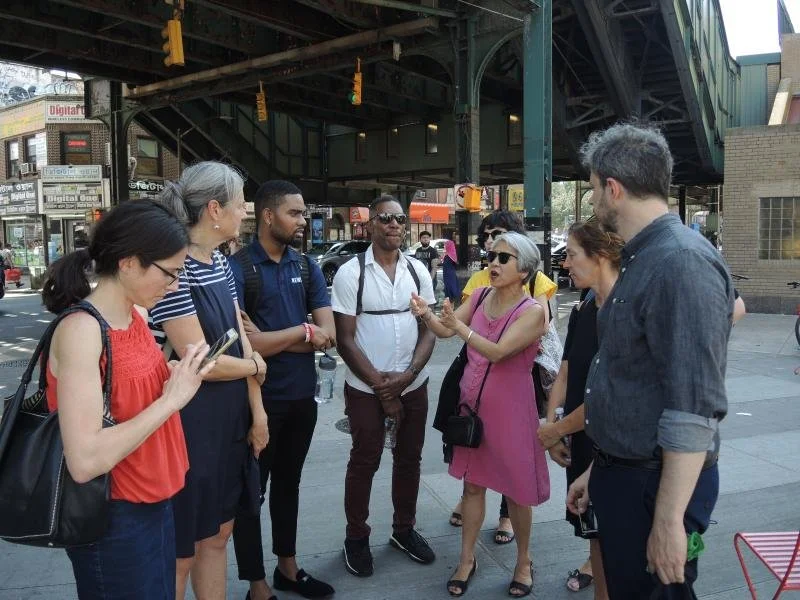
Courtesy of Susan Chin.
What is the impact you’d like to have on the world? What is your core mission? And what does success in that look like to you?
The impact I’d like to have on the world, as a steward of the earth, is to leave the world a better place to live and thrive. My core mission has been to connect people with each other, to be collaborative and to share opportunities. Maybe it’s because I am an only child and never had brothers or sisters. I’d like to help people realize their potential, spark innovation and create a better public realm.
What does success look like? When I, or we, have enhanced lives with discovery and delight, that is success, as with the porch at the Biennale. People immediately started sitting on our porch, enjoying our spaces and exhibition and each other, or even swing dancing in the front of the pavilion in the Giardini. Or when I was at the Design Trust, at Industry City we tested creating a gateway under the Gowanus Expressway—local residents loved that it was well lit and repainted a lighter color; there were planters; and the public space felt safer. It showed respect for the community as well as the Industry City workers.
Finally, what advice do you have for those starting their career? Would your advice be any different for women?
My advice, as many of my protégés know, is “claim your power, don’t wait for power to be bestowed on you.” In line with that, first I would say, get your architecture license—a license, especially for women, is a credential that sets you apart. It also gives you independence to start your own practice and determine your own path. And get involved in your community, however you define it— your planning board, community garden, school or library board, tenant association, nonprofit board…serving in public leadership gets you out of yourself, expands your universe and network, teaches you new perspectives through collaboration, and increases your impact. But most of all, it’s rewarding.
Then, do what “sets you on fire” — or in other words, pursue your own passion! Say “yes” when an opportunity for a project or engagement presents itself or volunteer — it might be magical. Finally, ask your friends and colleagues for advice or a favor, when you need it or even when you don’t; you love being asked, and so do they.
This interview has been edited and condensed for clarity.