Catalysts for Change: AIANY and Center for Architecture's Jesse Lazar on Different Perspectives, Trusted Relationships and Creative Pathways
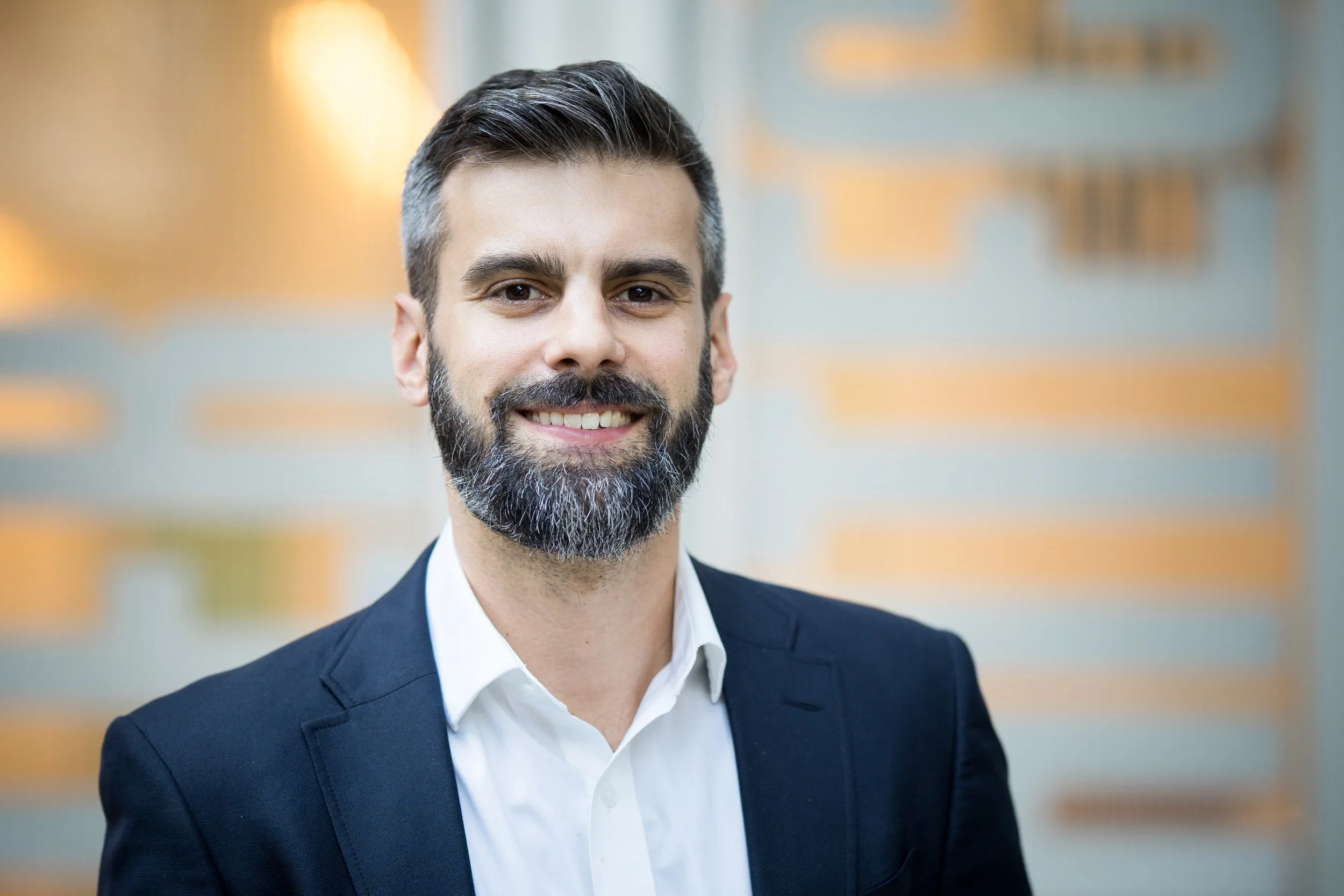
Jesse Lazar by Samuel Lahoz.
By Julia Gamolina
Jesse Lazar, Assoc. AIA, is the Executive Director of the American Institute of Architects New York Chapter (AIANY) and the Center for Architecture. Prior to his appointment as Executive Director, Lazar managed all fundraising and development activities for both AIA New York and the Center for Architecture, along with the organizations’ communications and marketing team and the Center for Architecture programs and exhibitions team. Lazar has a long history at AIA New York, having launched his career in 2008 managing programs for the Chapter. Lazar holds an MBA from the University of Michigan.
JG: You've been with AIANY and the Center for Architecture for over twelve years now, and have seen the organization evolve. What are your priorities this year and what are you thinking about the most?
JL: Both organizations are thinking more intentionally about how we connect with communities outside of our usual field of vision. We recognize that we have something valuable to offer beyond our immediate professional community, but we also know, as practitioners, that it's important to connect our members with the insights and perspectives of the people who actually experience architecture. That might be clients, or it might be children playing on a playground. How do we build those bridges? That's something we've been very focused on over the last couple of years.
One example is our partnership with the Queens Public Library. We run programs for teenagers at library branches throughout Queens, including the beautiful library in the Rockaways designed by Snøhetta. Through these programs, students design community assets for vacant lots in their own neighborhoods. It's an example of an existing program that we've adapted to be more embedded in the communities it serves.
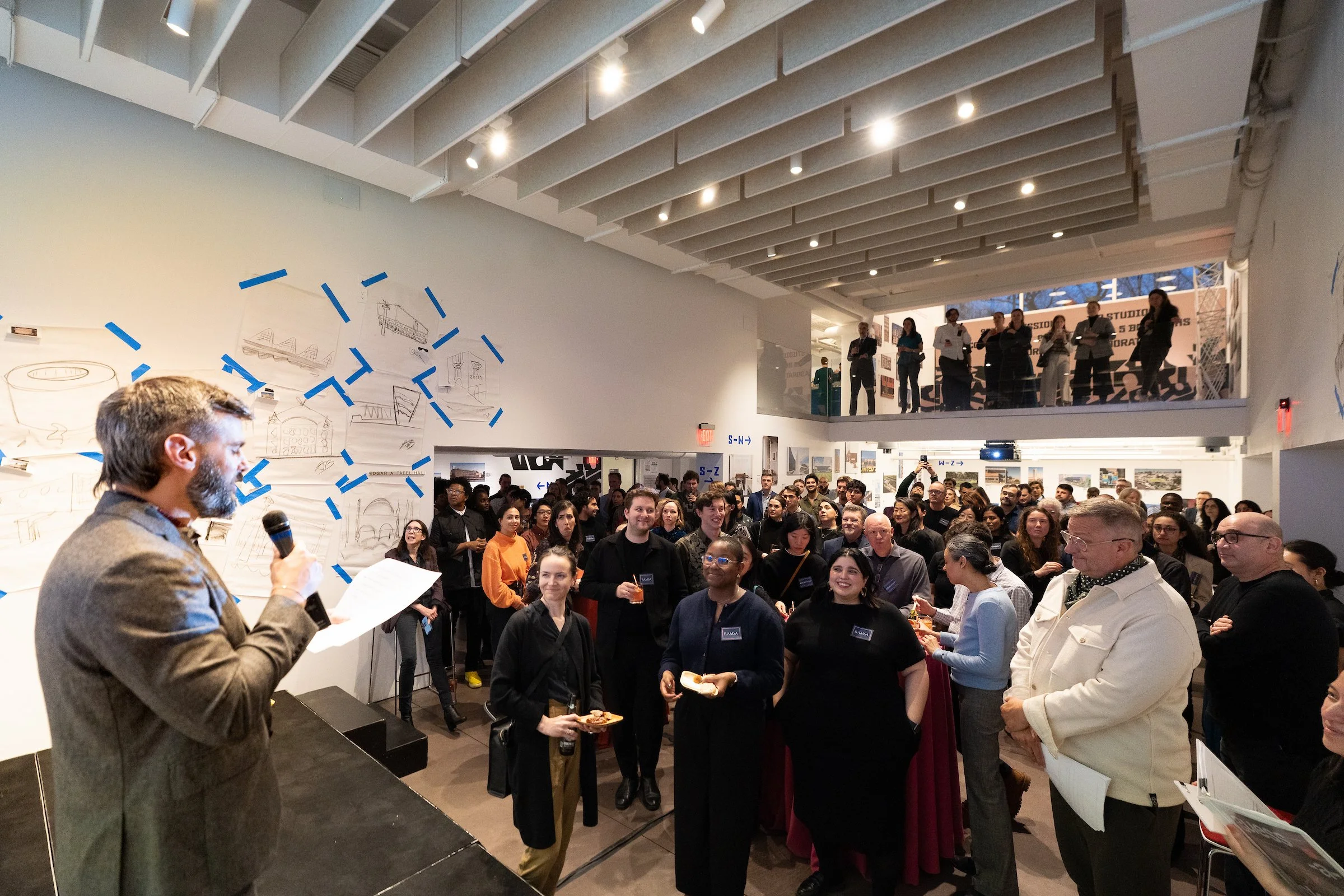
Guess-A-Sketch 2025 at the Center for Architecture. Photography by Samuel Lahoz.
How did you end up at the Center for Architecture?
My undergraduate degree is actually in urban history. At the time, I thought I might go to planning school or architecture school afterwards because I was interested in urbanism and the built environment. After graduation, I moved to New York and took a job simply to pay the rent. Around that time, I attended a lecture at the Center for Architecture, which is how I first discovered the organization. I applied for a job here and got it.
One of my more provocative ways of describing what happened next is that I worked around architects for a couple of years, and it talked me out of going to architecture school or planning school. Instead, I realized that what fascinated me most was that we were building and sustaining a cultural institution. The question that interested me wasn't how to design buildings, but how to run an organization like this.
I thought, “This sounds like an MBA problem,” so I went to business school. When I graduated, I returned to New York and joined the New York City Economic Development Corporation. I worked on a team that supported the fashion industry as well as arts and culture initiatives. The common thread was that I was interested in both economic development and New York's creative economy, and much of that interest grew out of my experience here at the Center. Eventually, the organization reached out because they needed someone to help build a new board and lead fundraising efforts. That's how I found my way back.
“To me, that’s the ideal sequence: first, create the mechanisms for change; then, have leaders who can put them to work toward a broader set of goals.”
You worked under a number of mayoral administrations during your time at the EDC. Watching the Mamdani administration evolve has been so interesting – what were the lessons you learned working for organizations under different Mayors?
I joined the EDC toward the end of the Bloomberg administration. The EDC was really considered a crown jewel of the Bloomberg years, so I had a front-row seat to a period of transition. One of the biggest lessons I took away was about the lifecycle of initiatives and institutions. It's something I think about a lot in my work now. We often have great ideas for new programs, but then the question becomes: how do they evolve over time? At what point do you continue investing in them, and at what point do you transform them into something new or wind them down altogether?
That challenge was particularly visible as the city transitioned from the Bloomberg administration to the de Blasio administration. There were many successful programs – especially in areas like the fashion industry – that felt very much aligned with Bloomberg's priorities. Then the conversation shifted to themes like the "Tale of Two Cities," which at first seemed less connected to supporting industries such as fashion.
But in reality, many of those programs were deeply connected to broader equity goals. They were focused on supporting young entrepreneurs, helping people establish careers in New York, and creating pathways into creative industries. One of the most interesting lessons was learning how to reframe work that you already know is valuable so that it aligns with a new set of priorities and a new political context.
Is there anything specific that you're excited for for the Mamdani administration, especially as it relates to your work and what you do at the center?
I'm excited because I think people often underestimate how much reform has already happened over the last several years. What feels particularly exciting now is having leadership with a clear vision for how to use those tools and reforms. To me, that's the ideal sequence: first, create the mechanisms for change; then, have leaders who can put them to work toward a broader set of goals.
I'm especially encouraged by the growing coalition around the need to build more housing and to allow New York to continue growing. This momentum is now being championed by people who are not coming from the traditional real estate world or from the more market-oriented politics often associated with the Bloomberg era. Instead, we're seeing leaders who are equally focused on questions of equity, affordability, and dignity.
The thing is, we need both perspectives. We need a commitment to growth and a commitment to equity. That's why I'm excited to see political leaders embracing the idea that building more housing is essential, while also asking important questions about what affordability should mean, what dignified housing should look like, and how growth can benefit more New Yorkers.
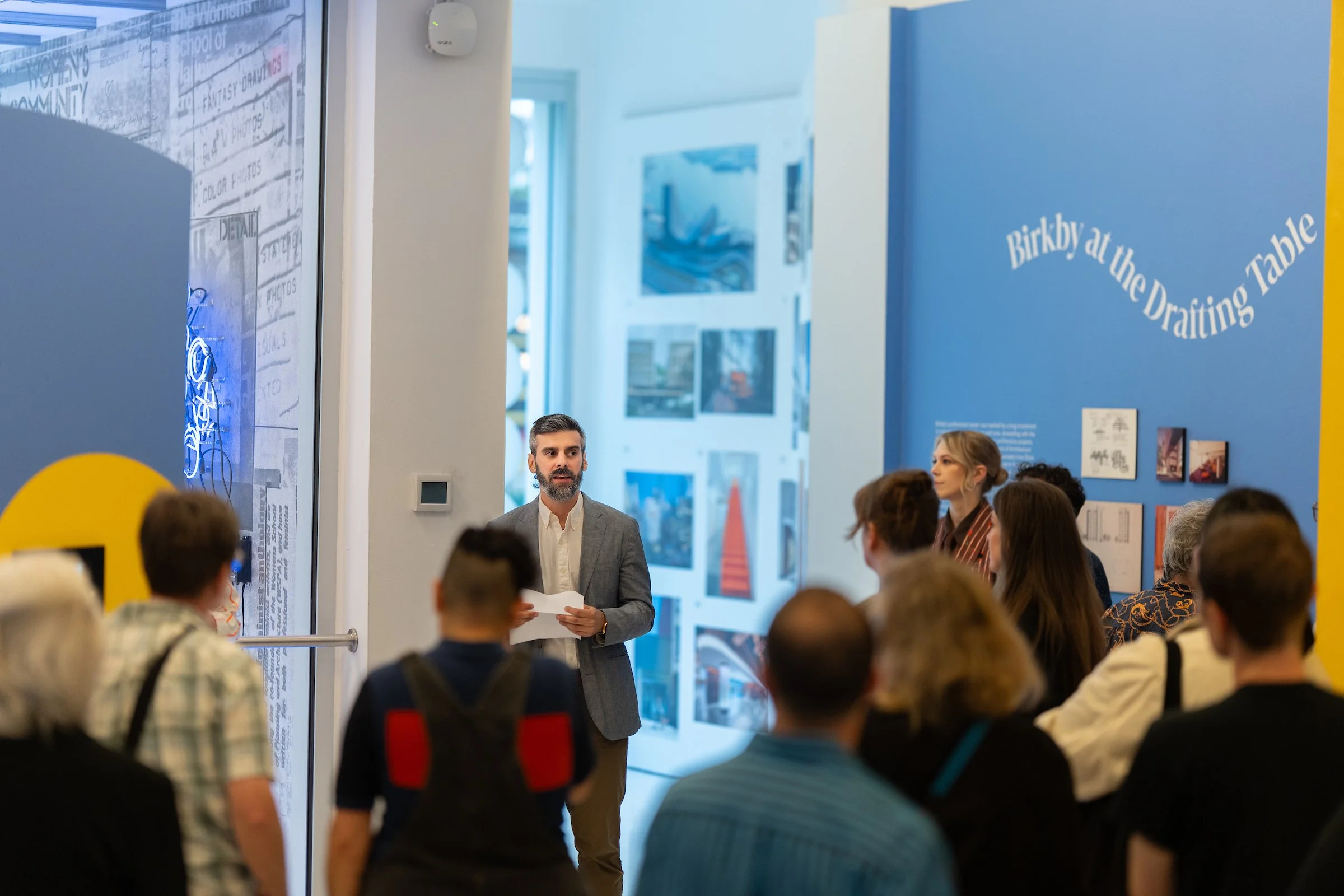
Summer 2025 Exhibition Opening for Fantasizing Design: Phyllis Birkby Builds Lesbian Feminist Architecture. Photography by Samuel Lahoz.
What was the best advice that you've ever gotten in your career?
At the EDC, we ran a program for people who were just getting started in the fashion industry. During one event, the CEO of Macy's was speaking to a group of emerging leaders, and I was sitting there taking notes myself. His advice was simple: Bloom where you're planted.
I've always thought that's such great advice. When you're ambitious and have a sense of what you're capable of, it's easy to focus on what's next. But there's real value in fully investing in where you are right now and making the most of the opportunity in front of you.
In many ways, that's how I ended up where I am today. I never set out with a specific ambition to become the Executive Director of the Center for Architecture or the CEO of AIA New York. I focused on the work I was doing, tried to do it well, and those efforts created opportunities over time.
Who were your mentors?
I have a funny situation – I'm not an architect, but many of my mentors have been architects. One of my earliest mentors was Cynthia Kracauer, who hired me at the Center for Architecture. She served as Managing Director here for many years before going on to lead Beverly Willis Architecture Foundation. Cynthia gave me my first real opportunity in this world and helped me understand what the profession of architecture, in all of its complexity, is all about. I learned a tremendous amount from her direct, matter-of-fact approach and from watching her build and shape a cultural institution.
We also have the benefit of working with a new AIA New York president every year. One President who stands out is Kim Yao. She served as president in 2020, which, of course, presented extraordinary challenges. Watching her navigate that moment – pivoting quickly to entirely new ways of working while maintaining such a positive and inclusive energy – was remarkable. She had a way of bringing people along through uncertainty, and I consider her a mentor for that reason.
Finally, I consider Barry Bergdoll, who served on the Center's board for many years and was one of its earliest board chairs as the institution established itself, as a mentor. His leadership and guidance have had a lasting impact on me.
“What I’ve come to trust most are relationships. For me, the strongest indicator that I’m doing the right work is whether I feel energized and supported by the people I’m doing it with.”
What have been some of the biggest challenges for you personally, as you've navigated your career in this city and industry?
My biggest challenge connects to that "bloom where you're planted" advice. As New Yorkers, we're optimizers. We're always looking for the next best thing, trying to make the most of our time and energy. That mindset can easily extend to your career. You start asking yourself, “Am I in the right place? Is this the right time? Am I working on the right things?”
When I returned to the Center in 2014 to lead fundraising, for example, I never intended to stay here for as long as I have. Around that time, Benjamin Prosky became Executive Director, and we immediately clicked. We genuinely loved working together, and that matters a lot. The people you work with make an enormous difference. Ben is a mentor as well. We worked so closely together for so many years that it often felt less like a traditional mentor relationship and more like a partnership. Sometimes we joked that we were more like a married couple. Because of that relationship and the work we were doing together, I stayed much longer than I originally expected.
I think that's a challenge many people face. We can become attached to a vision of how our careers are supposed to unfold, and then feel uneasy when reality looks different. But I've learned to trust that very few people follow their original plan exactly. In my case, I didn't really have a master plan to begin with. What I've come to trust most are relationships. For me, the strongest indicator that I'm doing the right work is whether I feel energized and supported by the people I'm doing it with. As long as those relationships continue to feel meaningful and aligned, that's usually a sign that I'm where I need to be.
Whose work are you admiring right now?
Many of my colleagues at design and cultural organizations across New York are a tremendous source of inspiration. What Kristin LaBuz is doing at Open House New York is incredible. The work that Dan McPhee is leading at Urban Design Forum is remarkable. What Jacob Moore is doing at the Architectural League is equally exciting. While our organizations all have different missions, we're wrestling with many of the same questions. How do we expand the relevance of what we do? How do we connect our work to broader audiences and broader public conversations? I think we're all pushing in that direction, and that's incredibly energizing. A group of us recently started something called the Public Design Alliance to work more closely together. If nothing else, it's given me much greater visibility into what everyone is working on and how they're approaching similar challenges.
Beyond our immediate field, I'm also paying close attention to leaders who are thinking about participation, access, and public engagement in new ways. That's one reason I'm interested in Mayor Mamdani as a leadership model. What I find compelling are the questions underlying his approach. What would it look like to serve more people? What would it look like to bring more people into the conversation? That's an idea I find very exciting.
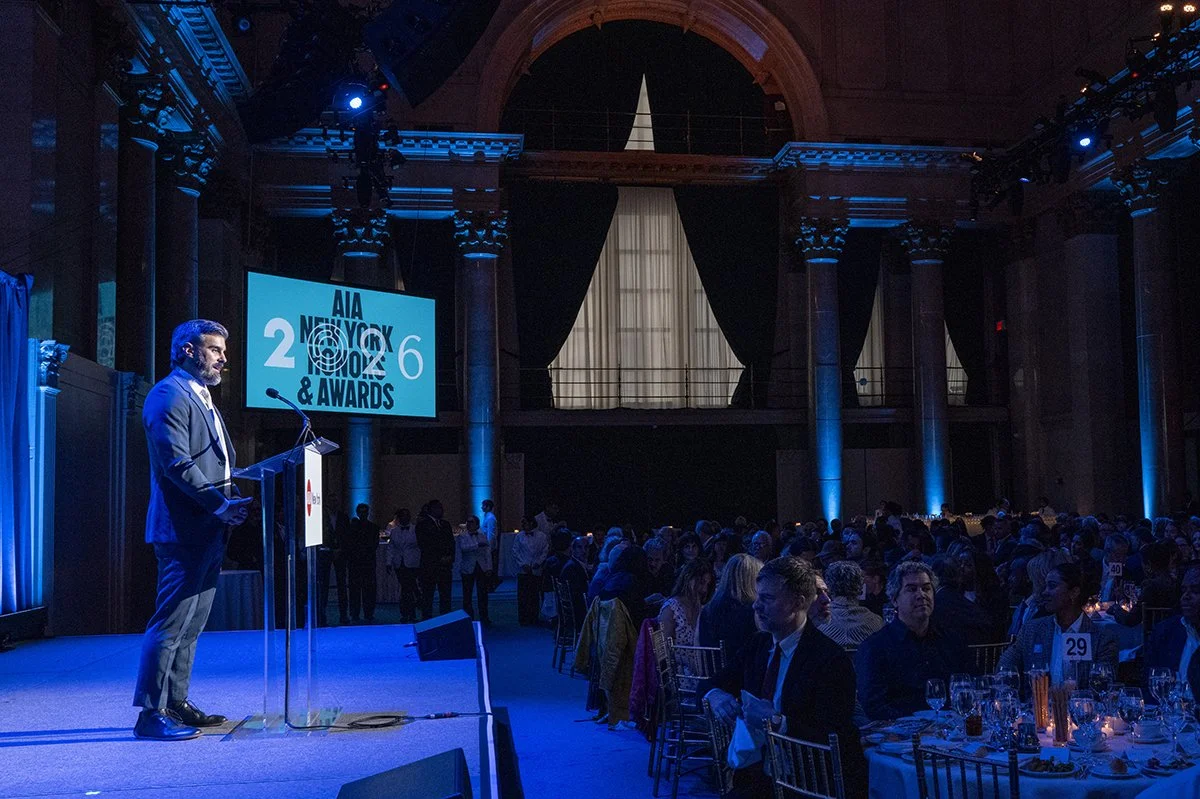
AIANY Honors and Awards Luncheon 2026 at Cipriani Wall Street. Photography by Matthew Carasella.
And finally, based on all that you’ve seen and learned, what would be your advice for those working in our profession?
What I've learned is that there are infinitely more possibilities than any school, degree program, or career guide could ever teach you. There are jobs and roles that you couldn't even conceive of until you meet someone doing them. That's why talking to people about their work is so valuable. It creates opportunities for connection, but it also expands your own understanding of what's possible.
You've just summarized my mission with Madame Architect! That of sharing the wide range of fascinating things people are doing and helping others see new possibilities for themselves.
Before we started recording, we were also talking about something I think about often. One of the things that makes architecture such a strong profession is that architects spend a lot of time talking to one another. They learn from each other, share experiences, and build communities of practice. That exchange is a big part of what helps people grow and succeed.
At the same time, it's equally important to talk to people outside the profession. It's valuable not only because it gives you an opportunity to explain why your work matters, but because it helps you understand how other people experience the world. For architects, that isn't just a nice thing to do – it's essential. You can't really do the work well, or continue growing in the profession, without understanding the perspectives of the people you're designing for. We don't always foreground that aspect of the profession, but it's incredibly important.
This interview has been edited and condensed for clarity.