The Power in Books: Executive Editor Olivia Peluso on Connection, Creativity, and Community
By Julia Gamolina
Olivia Peluso is an executive editor at DK (Penguin Random House), where she acquires and edits cookbooks and prescriptive nonfiction. Her bestselling titles include Old Time Hawkey’s Recipes from the Cedar Swamp, Hailee Catalano’s By Heart (also a James Beard Award winner), Simple Kitchen Magic by Rebekah Moyer, and Feeding Tiny Bellies: School Lunches by Lily Payen. Olivia loves dogs, theater, dance, teaching yoga, cooking, spending time outside in the woods, and, of course, books.
JG: Publishing is such an interesting intersection of creativity, culture, and commerce. What initially attracted you to that world, and what has kept you engaged with it?
OP: I came out of the womb obsessed with books. I’ve always loved to read, l loved words, and I even loved obscure grammar rules. When I was thinking about what my career might look like, I kept coming back to editing. I hadn’t had an opportunity to edit books at that point, but I found so much enjoyment in writing and editing my own work, which at the time was mostly research papers and literary analysis for my English classes. I was editing everything I could get my hands on—even my friends’ cover letters.
When I graduated from college, I wanted to work in publishing, but there was not a single editorial job available at the time. I ended up getting a job as a sales assistant at DK Publishing, a division of Penguin Random House. Though I didn’t stay in sales, I’m grateful for that experience—it helped me to understand how books are sold, which has been vital in my career as an editor.
What keeps me engaged is that each and every book is an opportunity to learn something. There is so much power in books, and I’m grateful that I get to help create books that are not only works of art but also have the potential to change people’s lives for the better.
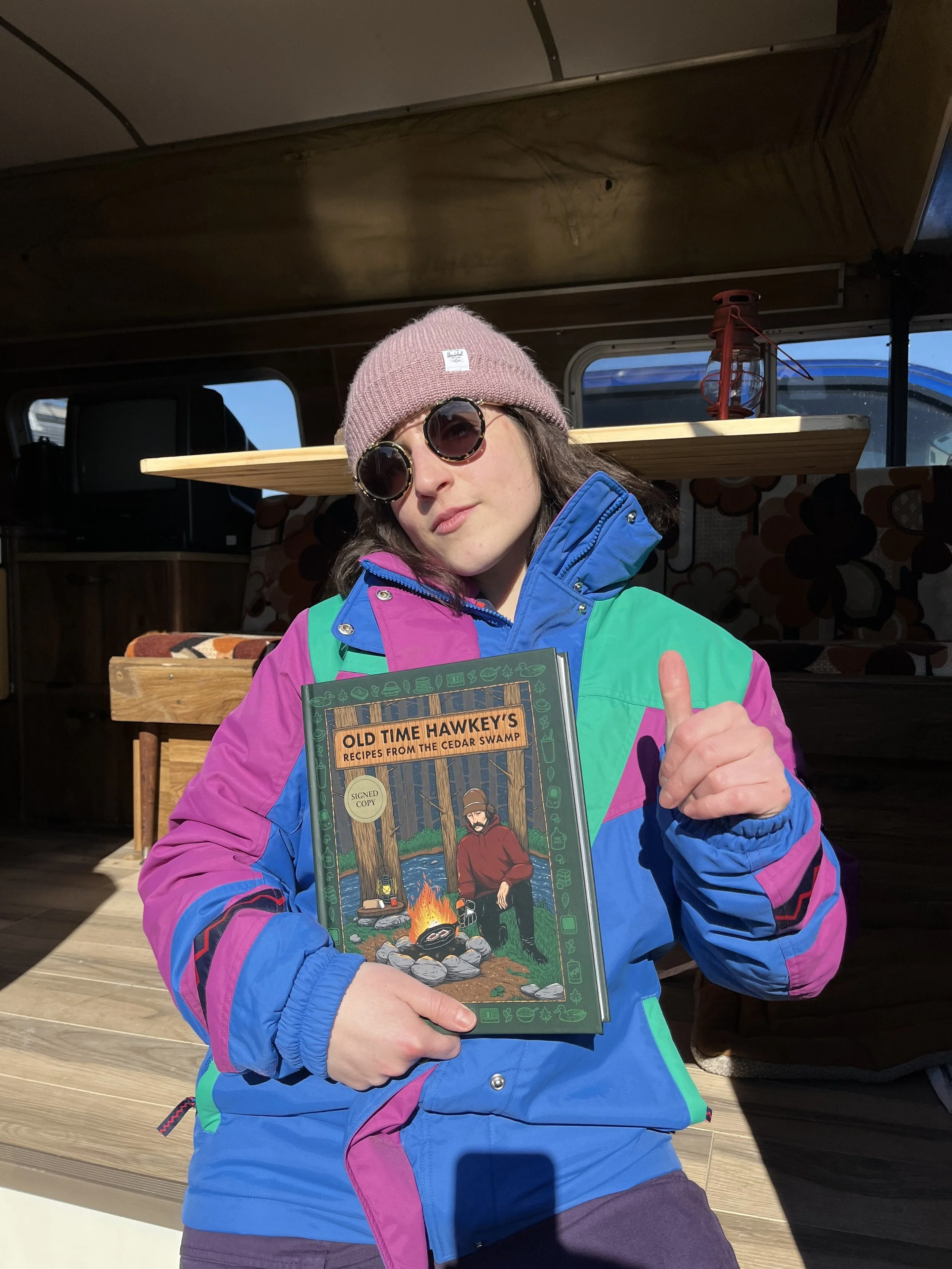
Hanging out in Old Time Hawkey's vintage camper van with his New York Times–bestselling book. Photography by Robert Byron Jones.
When you think back to your education at Barnard, what did you learn the most? Is there a lesson, person, or experience from that time that you still find yourself returning to?
Barnard allowed me to step into my confidence in a way I had never been able to before. I was living in New York City for the first time as an adult, not only navigating life on campus but also exploring the city in a new way. In class, I learned to hone my analytical skills in an environment that was simultaneously safe and challenging. Being around so many likeminded smart women allowed me, an introverted overthinker, to take risks, be brave, and start to peel off the layers of my imposter syndrome that had already begun to form.
Early in your career, was there something someone told you, or showed you through their example, that changed the way you approached your work or your career?
All my life I have been afraid of making mistakes, but making mistakes is an inevitable part of being human. In my first job, I realized one morning that I had forgotten to send out a shipment of hundreds of books to booksellers. I panicked, of course and, fearing for the worst, immediately told my manager. She was calm, and instead of reprimanding me, she thanked me for letting her know instead of covering it up. This was a revelation in that every problem has a solution. I was able to get an extension on that book shipment, and whenever I find myself in a stressful situation, I am reminded to take a breath and slow down.
“There is so much power in books, and I’m grateful that I get to help create books that are not only works of art but also have the potential to change people’s lives for the better.”
Looking back, what are a few moments in your career that changed you? Not necessarily the biggest projects or accomplishments, but experiences after which you thought differently about the work, yourself, or the kind of career you wanted to have?
In my first editorial role, I worked primarily on business books that were movement starters, with big ideas that really helped people. I worked with a lot of impressive authors, and I loved working especially with influential women in the business and self-help spaces. I had two bookshelves at my desk, and I filled them with the business books I was reading and working on.
Over time, I started to notice that the real estate I had devoted to business books was shrinking, and the shelves were filling up with cookbooks I had collected from the take-shelves around the office. I remember thinking, “Do I want to be a cookbook editor?” The answer was yes, and when that job opportunity presented itself, I became a cookbook editor and changed the trajectory of my career.
Can you take me into a period when things weren't going the way you hoped? What was difficult about it at the time, and how did you actually move through it?
After two years in my first job in sales, I knew for sure that I wanted to be an editor. Unfortunately, I didn’t anticipate how difficult it would be for me to get a job as an editorial assistant. For two more years, I applied to about thirty entry-level editorial positions, interviewed for many of them, and got zero job offers. After making it to the final round of what I thought was my perfect dream job and losing out to another candidate, I broke down. If I couldn’t get this job that I seemed so qualified for, how could I ever become an editor? I was ready to give up and switch career paths entirely.
But a few weeks later, another job posting came up. I decided to try one more time, and this time, I got the job. After four years, I finally felt like I was on the right track. This was the first time, but not the last, that I realized that my career journey might not be “perfect” or “linear.” I realized that everything is temporary and that for better or worse, where I am and how I feel now will certainly not be where I am in ten years.
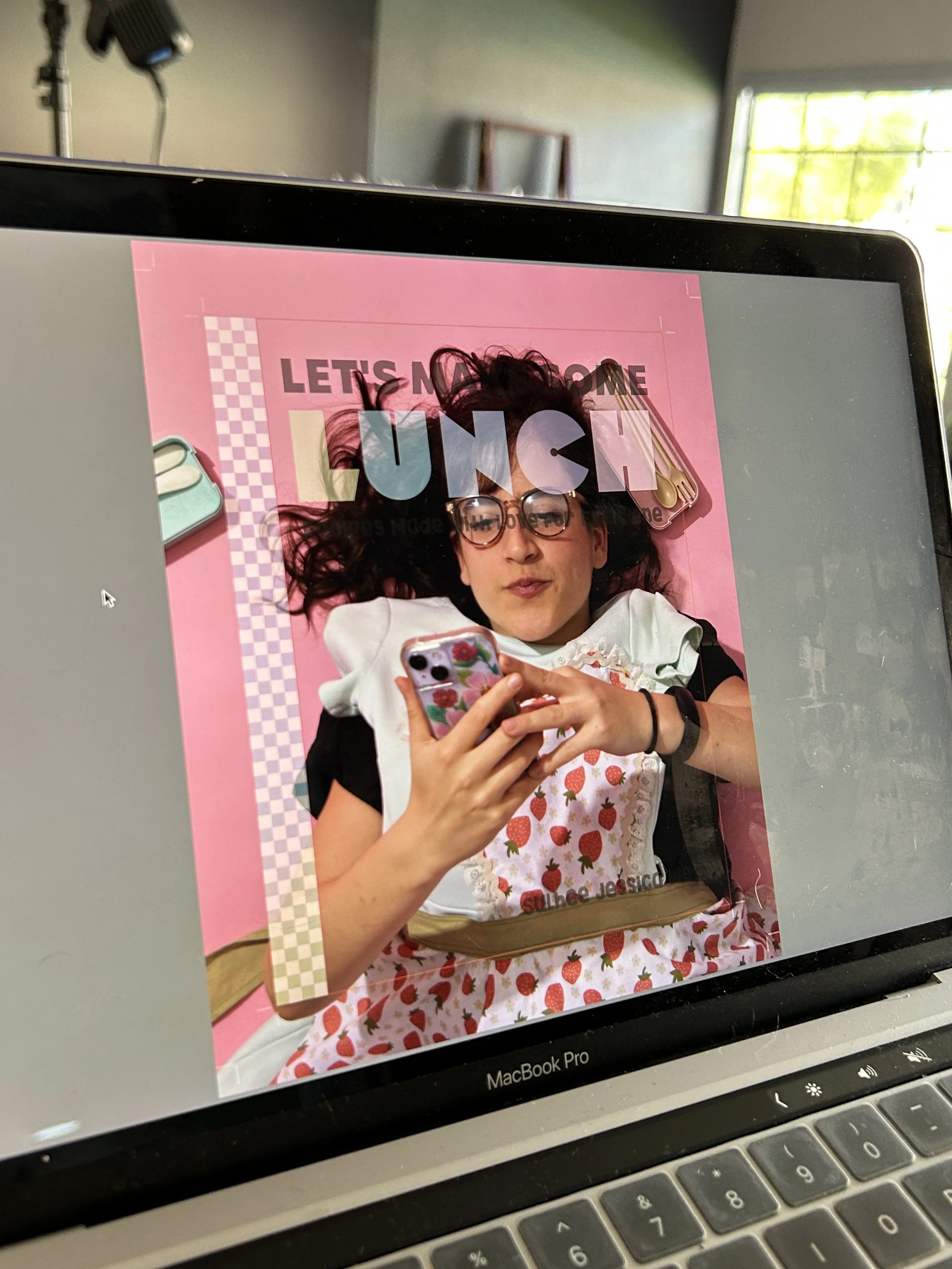
Acting as a body double for a cookbook cover shoot. Courtesy of Olivia Peluso.
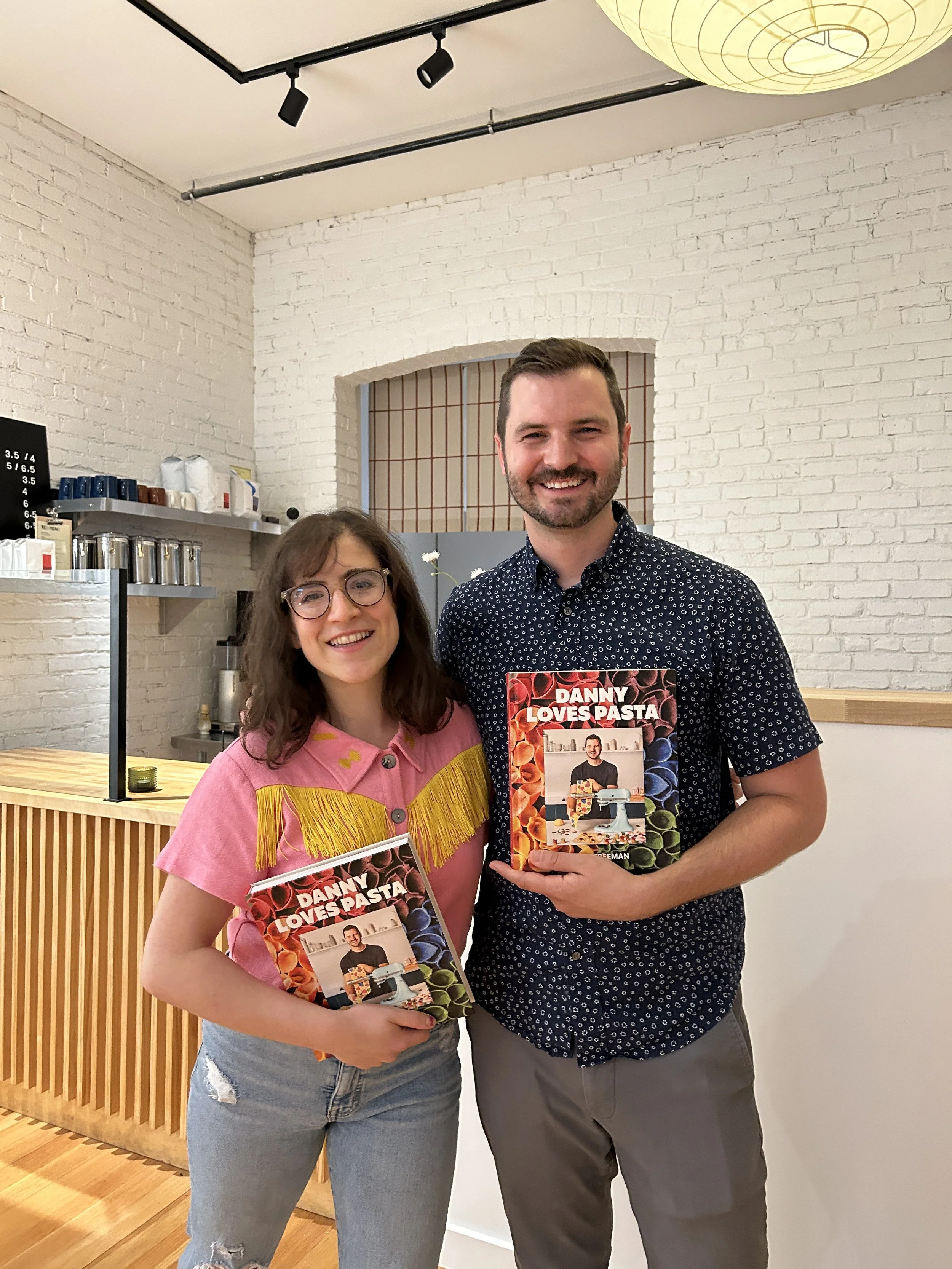
Celebrating the release of Danny Freeman's pasta cookbook, Danny Loves Pasta. Photography by Robert Byron Jones.
Tell me a story about one of your most important mentors, a moment with them that has stayed with you. What did they give you that you now try to give to other people?
A few months into my job as an editorial assistant, my manager gave me a manuscript to edit. The manuscript seemed to be in great shape, so my comments were limited. But I got the feedback that I hadn’t gone deep enough and hadn’t questioned nearly as much as I should have.
My manager gave me advice that has stuck with me: “Edit angry.” Don’t just accept an author’s words as gospel. Dig deeper; push further. Be skeptical. The “angrier” you get, the more questions you’ll ask, the more likely you are to find holes in an argument. I come back to this advice when I feel stuck in an edit now, and it’s advice I share with junior editors who are just starting out in their careers.
Who are you paying attention to right now? Who is doing work in a way that you find exciting or instructive, and what specifically are you learning from them?
I gravitate mostly toward female authors who have cultivated strong communities—both in real life and online. These authors—and their books—encourage us to nourish ourselves, to learn, and to interact with the people that matter most to us.
“Each part of my journey was a crucial step. I’ve taken something valuable from each of my jobs, and even when it was hard, or I realized I was in the wrong place, I’m grateful. All of my experience has allowed me to build a body of work I’m incredibly proud of.”
Is there a space or place that profoundly shaped you? And if you could commission an architect to design any space for you, what would it be?
My parents’ house in Rhinebeck, New York is so special to me. The house itself is a weird mélange of rooms and styles—there’s a lot of pine wood trim, mysterious green tile on only part of the floor downstairs, and an ancient stained-glass window that attracts bugs—but it is surrounded by nature, with acres of trees any way you look. It’s very peaceful. But since my life keeps me anchored to New York City, I’d love to commission an architect to design a nature-inspired space within my tiny Manhattan apartment instead!
At this point in your career, what still feels unresolved for you? What keeps pulling you forward and what do you still feel compelled to figure out, make, or change?
Nearly fourteen years in, I feel like I’m just getting started. For years, I wanted to reach the level of “executive editor.” Now that I’m there, I want to keep going, to publish more influential books. At a time when people are reading less but simultaneously craving offline connection more, books can help us learn new things or reconnect with parts of ourselves that lay dormant. I want to keep creating beautiful books, bringing new and unique voices to the forefront, encouraging people to connect to their creativity.
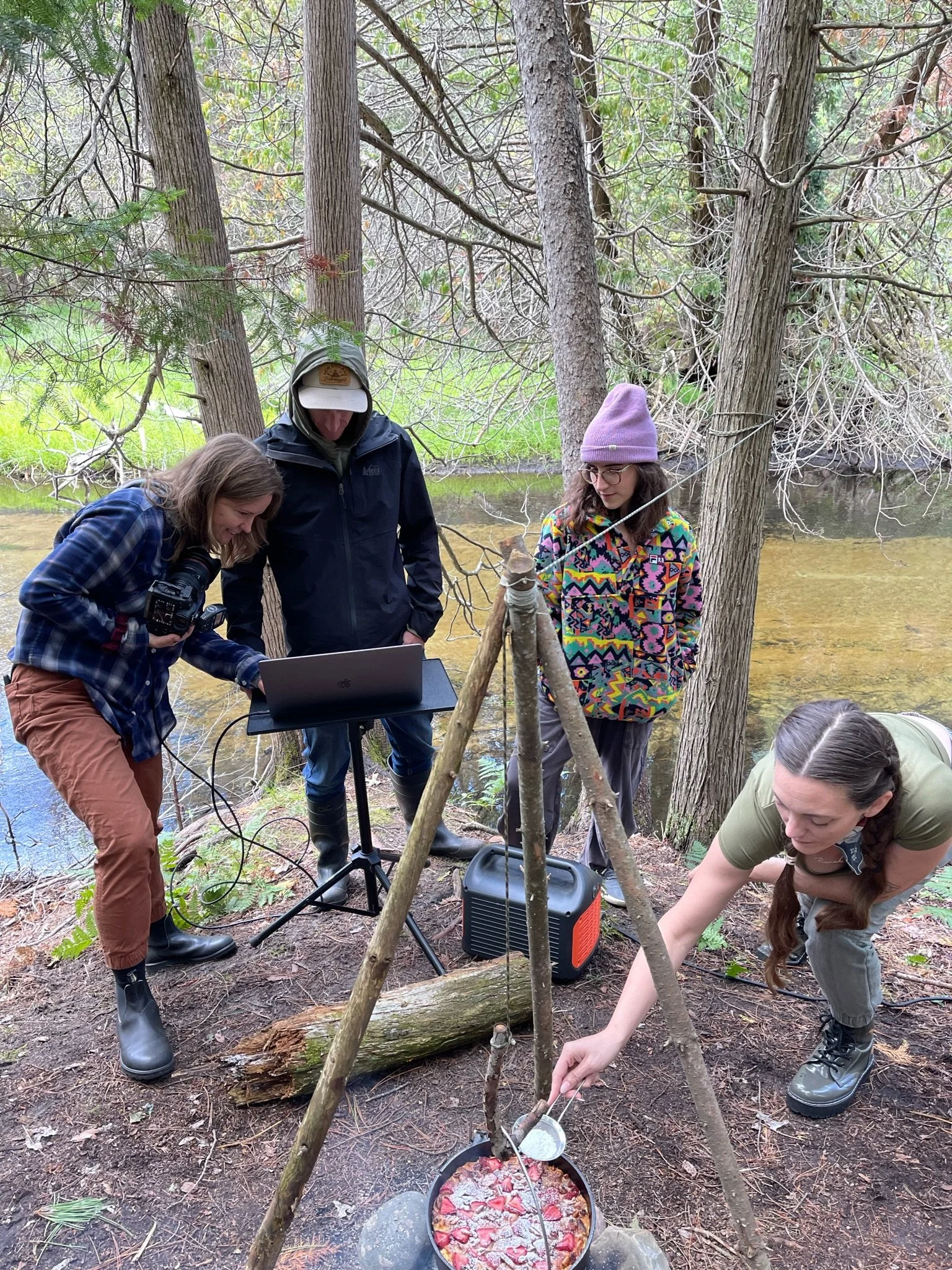
Reviewing shots at a photoshoot in the Michigan woods. Courtesy of Olivia Peluso.
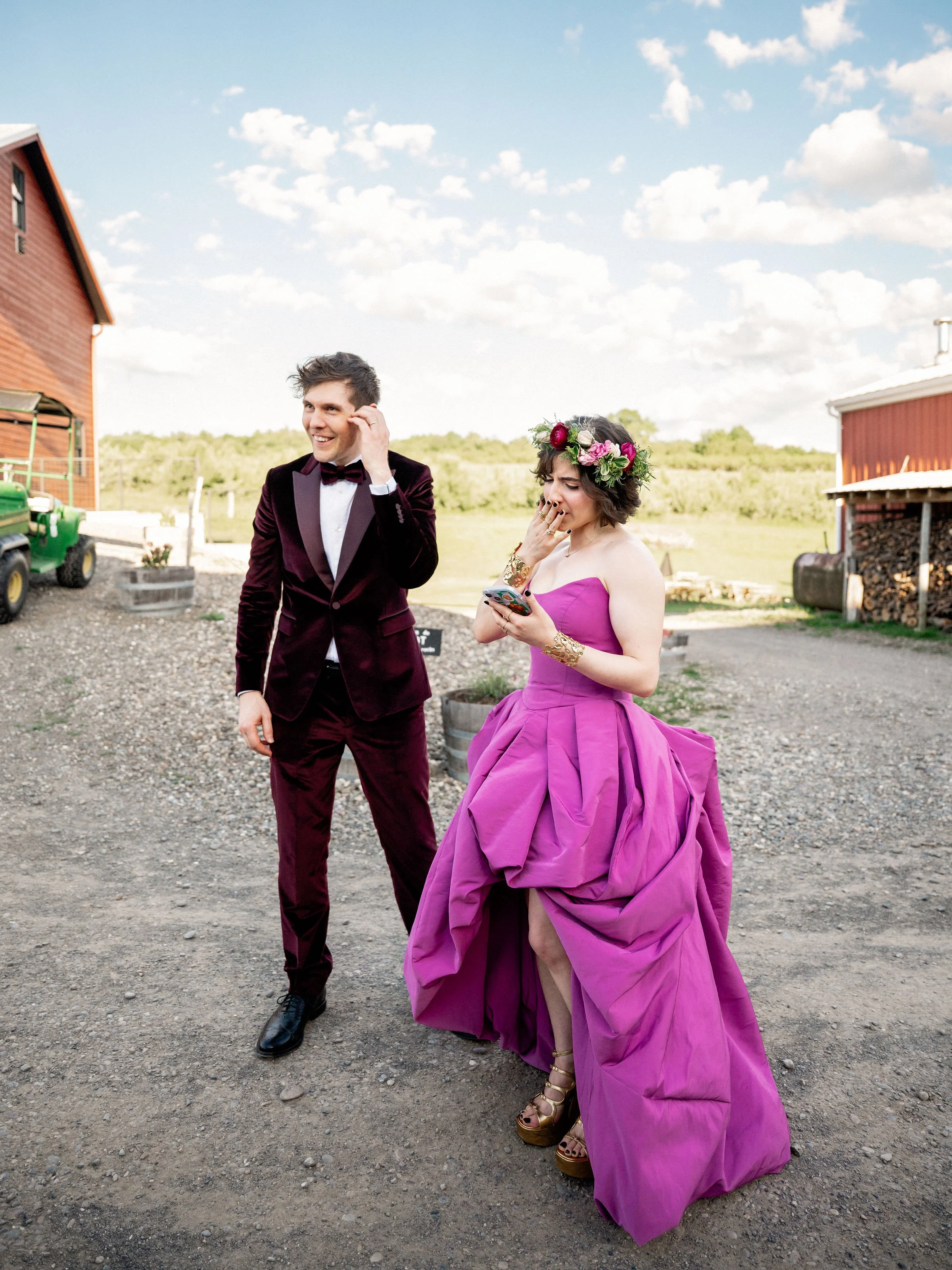
Olivia finding out that Hailee Catalano's cookbook By Heart had just won the James Beard Award, on her wedding day. Photography by Liesl Henrichsen.
What do you understand about building a career, or a body of work, now that you wish someone had helped you understand when you were starting out?
Be patient. Building a career takes time! For years, I worried I had started my editorial career too late and that it would adversely affect my potential. Now, I can see that each part of my journey was a crucial step. I’ve taken something valuable from each of my jobs, and even when it was hard, or I realized I was in the wrong place, I’m grateful. All of my experience has allowed me to build a body of work I’m incredibly proud of. And I know there’s so much more to come.
This interview has been edited and condensed for clarity.