The Public Theater's Alexa Smith on Connections Across Art Forms and the Human Right to Experience Great Art
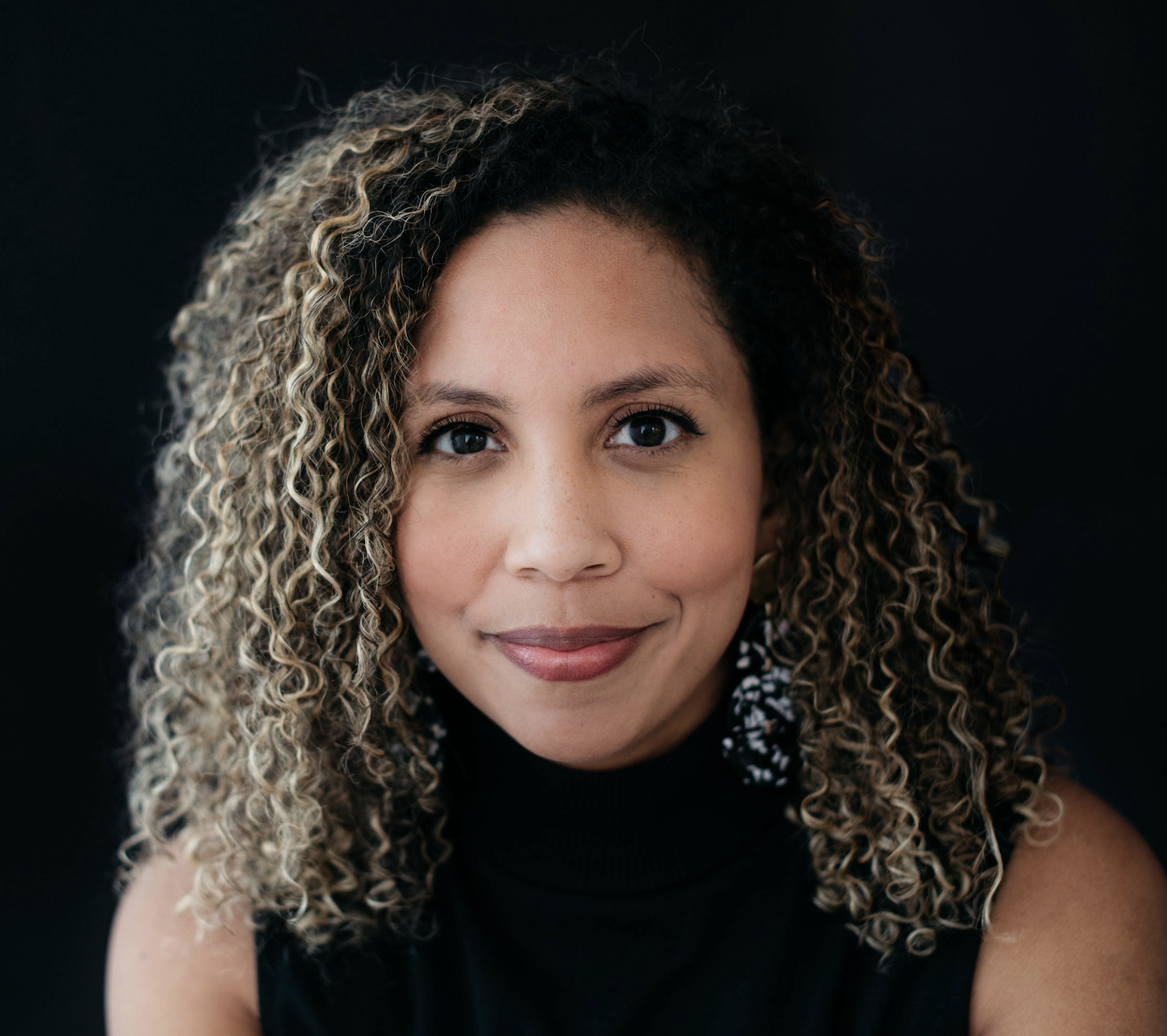
Alexa Smith by Leslie Rodriguez.
By Julia Gamolina
Alexa Smith is Associate Artistic Director and Director of Cultural Transformation at The Public Theater. Her Broadway credits include HELL’S KITCHEN and PROOF, and she hosts WQXR’s "Young Artist Showcase." Her Public Forum programming brings leading artists and thinkers into conversation, including Gustavo Dudamel, Lin-Manuel Miranda, N.K. Jemisin, Michael Sandel, and Ava DuVernay. She is a frequent guest speaker at institutions including the Metropolitan Opera, the League of American Orchestras, and Manhattan School of Music.
JG: What are you thinking the most about right now in your role with the Public Theater?
AS: I’ve been thinking a lot about how we the Public can bring more art forms together for collaboration. We just had this incredible evening with Gustavo Dudamel and Lin-Manuel Miranda, and we talked about everything from Maurice Ravel to Joni Mitchell, and El Gran Combe de Puerto Rico. Theater is how I make sense of the world, even when my days were spent working in classical music or higher education, and it’s helped me find connections across the arts that go beyond the boundaries we sometimes draw around the art form.
I’ve been thinking a lot about my fellow millennials stepping into major leadership roles. We value the magic of being in the room together and understand how to carry that energy into digital spaces. I love what Chloe Malle is bringing to Vogue: a deep understanding of digital media, a reverence for craft, and a real gift for conversation on podcasts. Astead Herndon at Vox is rethinking political coverage for a digital audience while staying grounded in Americans’ everyday lives. And Bowen Yang, already thriving on screen and behind the podcast mic, is now bringing that talent to Broadway, performing eight shows a week in Oh, Mary! We really do it all.
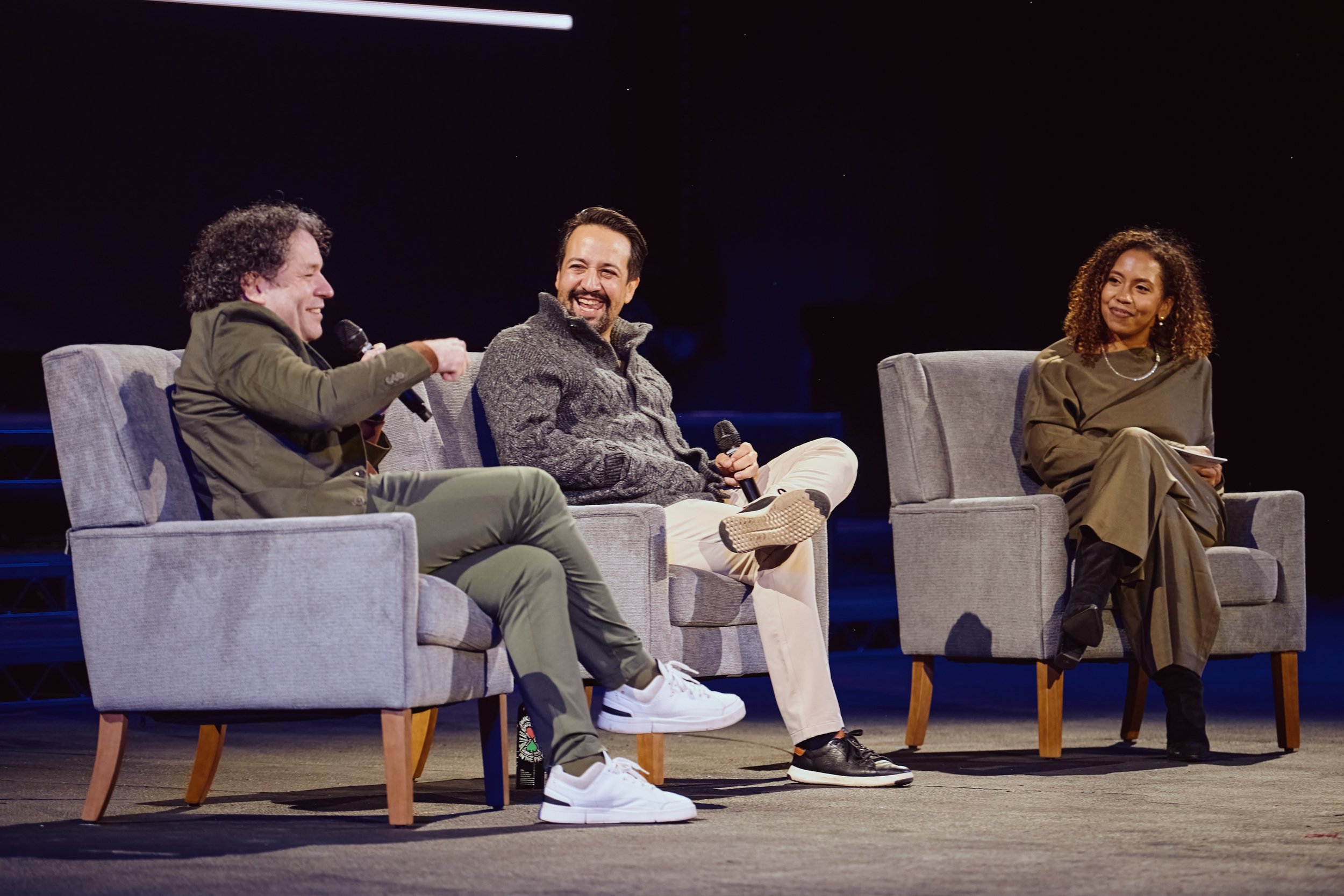
In conversation with Gustavo Dudamel and Lin-Manuel Miranda. Photography by Valerie Terranova.
You studied Classical Voice at the Manhattan School of Music and then got your MBA from Boston University. What were the most significant takeaways from your time at both places that inform your approach to this day?
I can’t say loudly enough how my classical musical background taught me how to practice. It’s made me fearless to learn new things. When I got an assignment in my conservatory days, it could be in English, French, Italian, German, Czech, Spanish, or Russian and could be a very complex musical piece or simple. Tough stuff! But I remember when I started studying for the GMAT for Business School, I hadn’t taken math since high school, but I made myself a practice schedule and wasn’t intimidated by the rigor it took to get my scores up to apply to a great school.
I loved business school too though it was totally different. I was the only artist in my class, but I never allowed myself to feel othered because I worked so hard to be there. I had a two-year-old at the time so that 7:00pm bedtime for her was sacred so I could get a good four hours of work done. I learned to read fast which comes in handy now when I have to read three scripts in a week.
“Theater is how I make sense of the world...it’s helped me find connections across the arts that go beyond the boundaries we sometimes draw around the art form.”
What was some of the best advice you got early on that has informed your approach to your work and career?
Martina Arroyo has been my surrogate grandmother since I moved to New York. One night, over Chinese takeout in her living room, I was melting down, telling her, “My career isn’t happening, and I don’t know what to do.” She said, “Whose career? Oh, you want the career they told you to want, not the one you’re going to have. Is that it?”
Boy, that snapped me out of it. I realized my career was happening. It just didn’t look like the path we’d been taught to follow in school, which, as it turns out, wasn’t really anyone’s path.
Tell me about your most significant professional experiences. What were the biggest lessons for you?
My time at The Public has been so incredibly special. I spent so many years going there as an audience member and hours of my life waiting in line for free Shakespeare in the Park tickets, so I don’t have a single day that doesn’t feel sweet. In the summer, I run from my place in Harlem south on the loop on the park just to see how many folks are in the line. I try to be very present for every curtain speech, opening night, meet-and-greet, and staff get together because I know that these years will prove to be some of the most special of my life. And the biggest lesson? Anything is possible in New York City.
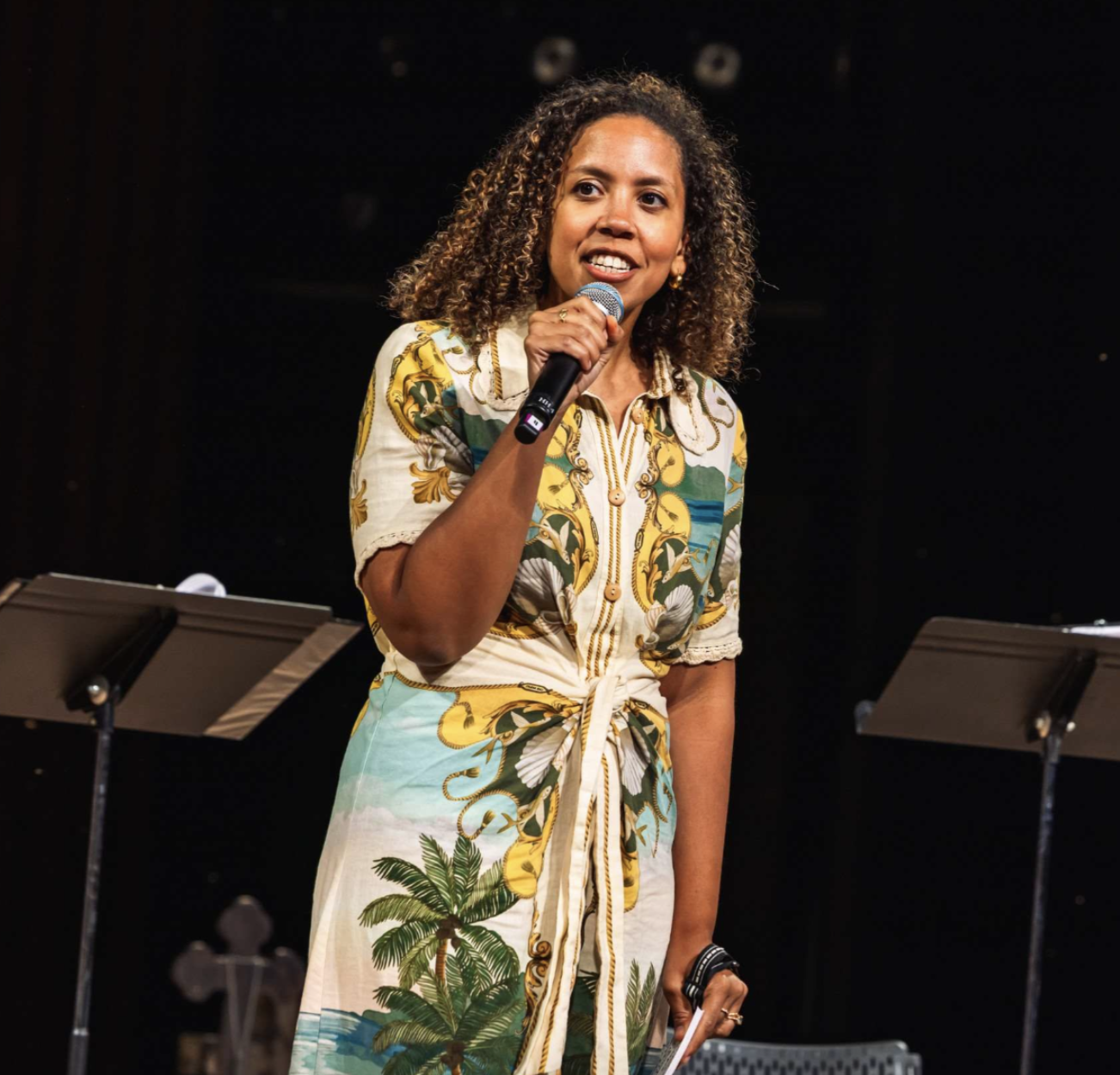
Hosting Public Forum at The Delacorte in Central Park. Photography by Valerie Terranova.
Looking back at it all, what have been the biggest challenges? How do you manage through perceived disappointments or setbacks?
The toughest moments have been around having a family and keeping my ambitious career trajectory. When I was pregnant with my daughter, I took a new job so I could pivot my marketing skills back into the arts space. But it came without maternity leave, and I was back at work much quicker than felt reasonable. And I also know, had I not taken that job, I might not have the career I now have.
I don’t beat myself up over that decision because ultimately, I should be in a society where having time off to recover from childbirth should be non-negotiable. But I try not to miss things for my daughter and inevitably it happens. On the other side, occasionally I miss work things to be there for my family, and that sometimes aches too. I was a finalist for lots of positions before I came to The Public. Not getting a job can feel awful, not least because it’s a lot of work to be in a search process. I often felt that I was being asked to apply for jobs to “diversify the talent pool” which can feel terrible. But the right job finds you and I’m grateful I didn’t get the other jobs.
“Invest in yourself beyond work hours...Create your own curriculum so you never forget how to learn. ”
Who were your mentors through it all?
I grew up nurtured by some amazing teachers but the most impactful was Billy Bradford in Louisville, Kentucky. He expected nothing but our best – for us to be prepared in every way, and showing up as pros. If you showed up for rehearsal unprepared, Lord help you. He unlocked some of my favorite Shakespeare plays for me and never asked me to choose between being a musician and being an actor. He saw me simply as an artist and as I connect the dots backward, I see how important that was.
The president of Manhattan School of Music was also guiding light during my time there. He helped me imagine a future in senior leadership and always talked about mentorship as a mutual exchange, something we both learned from. He also helped me see my strengths and areas for growth more clearly, which didn’t always line up with how I saw myself.
Who are you admiring now and why?
The playwright I find myself talking about most is Else Went. We programmed her epic play Initiative last year at The Public, and it was easily my favorite piece of the season.
On a completely different note, my daughter is obsessed with the Pinna podcast Grimm, Grimmer, Grimmest which features Grimm fairy tales told by the incredible Adam Gidwitz. He’s one of the most gifted storytellers I’ve ever encountered and hearing the kids react and weigh in is part of what makes it so special.
Lastly, I’ll listen to just about any podcast featuring Kara Swisher. She’s endlessly curious and willing to ask tough questions of anyone, whatever their point of view.
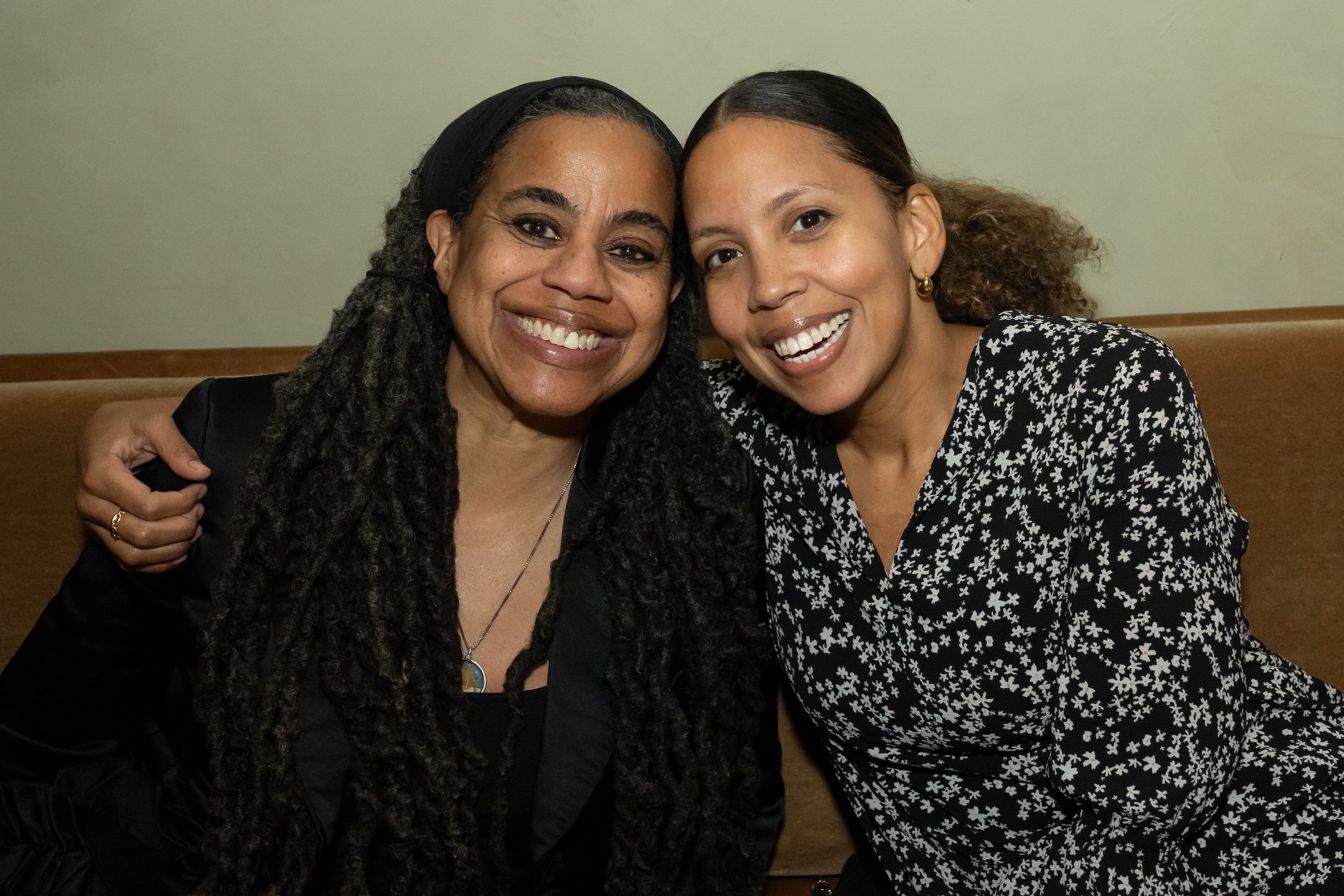
Alexa Smith with Suzan-Lori Parks. Photography by Simon Luethi.
What's the thing that drives you? And what impact would you like to have on the world?
I feel so lucky to have grown up in a town that valued the arts and gave my community so many ways to participate for free. When I think about all those free tickets, free music lessons, and opportunities I had growing up, I honestly don’t know who I’d be or what I’d be doing without them.
In business school, I had friends who never went to plays or concerts before I was in their working group who now subscribe in their town. That’s the type of impact I imagine. We often talk about getting more young people into the theater but for me it’s a lot broader than that. There are people at every part of their life who are waiting for us to invite them in and show them why it is their human right to experience great art.
Finally, what advice do you have for those starting their career?
Make friends with people who are older than you. Ask them questions, write things down, and call them on an actual phone. I have so many wonderful friends who are in their seventies, eighties and even nineties and I’m always asking for their insight. If they recommend a movie, I watch it. If they recommend a book, I read it. Sometimes I think, “Wow, there was a time when I didn’t know who Joe Papp was.” An elder introduced me to his story, and it changed my life.
And, maybe a bit controversial, but invest in yourself beyond work hours. If you don’t know how Excel works, take an hour after work and watch some videos or do a tutorial. Create your own curriculum so you never forget how to learn. Read books that have nothing to do with your work life. I got this great book about paleontology from a friend and somehow even that book gave me some great ideas about my current work.
This interview has been edited and condensed for clarity.