Exploring Architecture: Mariam Issoufou Architects' Mariam Issoufou on a Global Presence, Authentic Modernity, and Meaningful Work
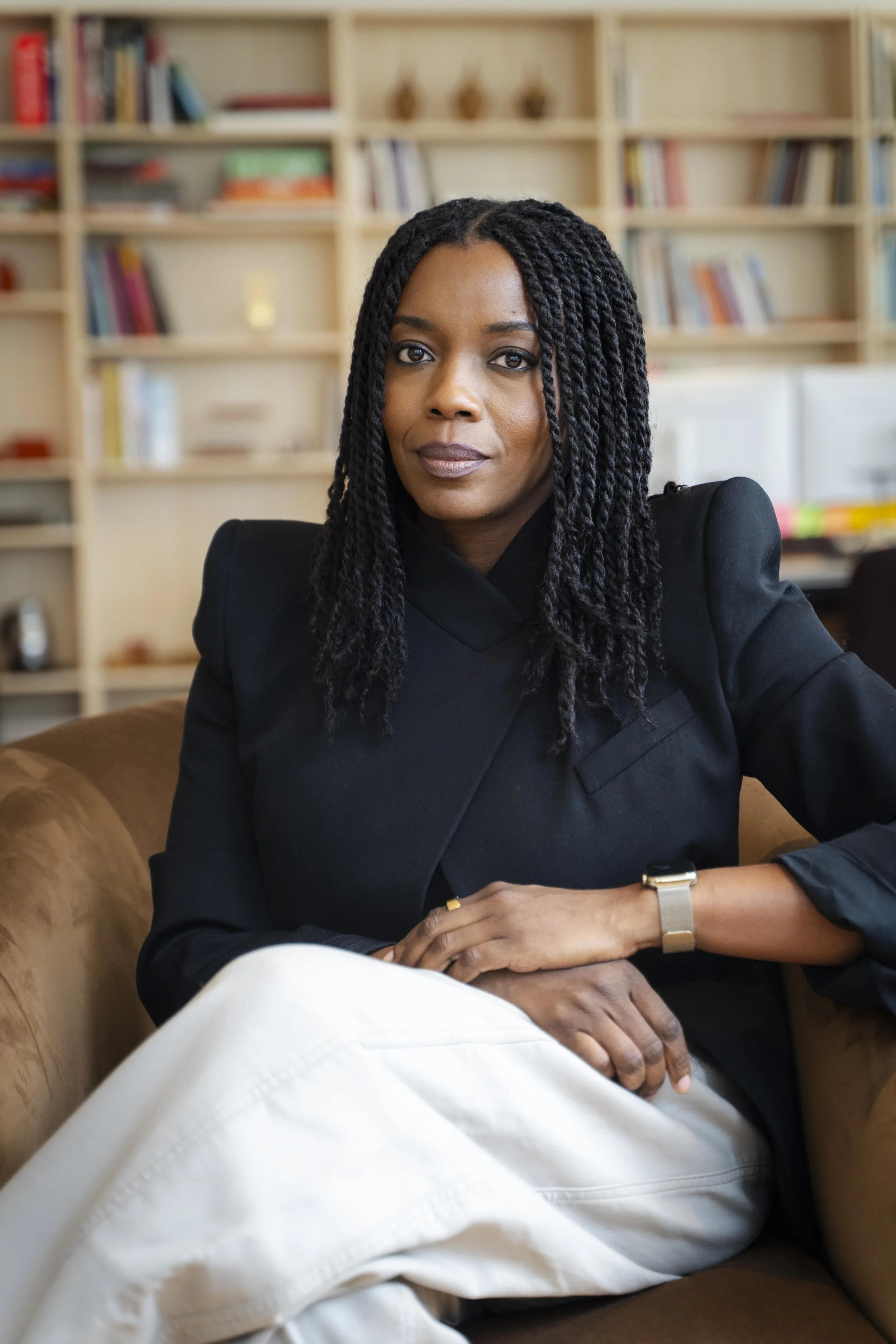
Mariam Issoufou in the New York studio after being named 2025 UN Champion of the Earth for Entrepreneurial Vision. Photography by Duncan Moore/UNEP.
By Julia Gamolina
Mariam Issoufou is an architect from Niger. She obtained her Masters degree in architecture from the University of Washington. Prior to architecture, she was a software developer and entrepreneur for close to a decade after obtaining a Masters degree in computer science from New York University. In 2014, she founded Mariam Issoufou Architects, a research-based practice whose designs are creative responses to identity, place, and history and whose offices are based in Niamey, New York and Zurich.
Along with running her practice, Issoufou is a full professor of Architecture Heritage and Sustainability at ETH Zurich. She previously occupied academic roles as an adjunct associate professor of Urban Studies at Brown University and as the 2021 Aga Khan critic at Harvard Graduate School of Design. Issoufou sits on the Board of Directors of the World Around, the Advisory Board for Diversity in Architecture and on the Board of Trustees for the African Future Institute.
JG: Here you are in New York City! You have an office here now and your first project here, the restaurant Gourmega. Tell me about coming to New York, as a practice.
MK: The business environment in New York is very different from anything I’ve encountered before, and the way projects happen is entirely different as well. Business in New York is much more about relationships which I really enjoy, because I love meeting people [laughs]. The exercise is really about building trust, which I find incredibly reassuring because it creates an environment where you get into business with people that you already want to work with.
In other parts of the world, you get a project because you win a competition for example, and you don’t really know exactly who it is that you’ll be working with. This has its advantages too, because there can be more opportunity that way – it’s not about access or who you already know, but at the same time, it’s a bit impersonal.
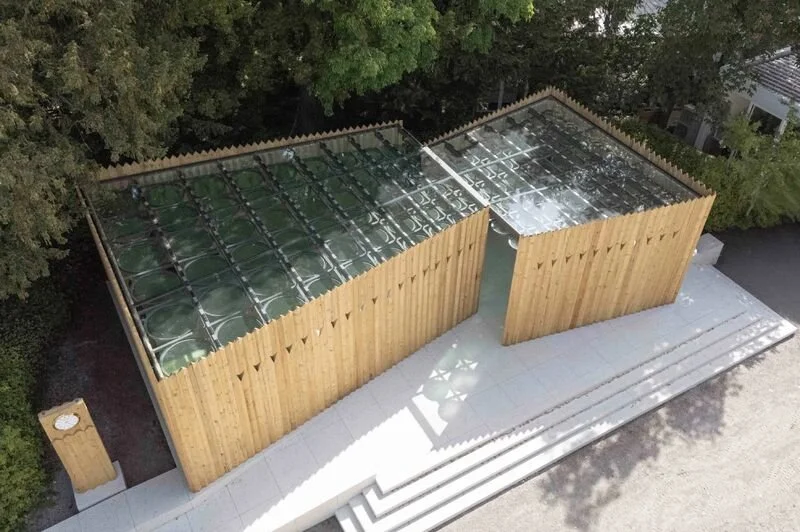
Designed by Mariam Issoufou, the Rolex Pavilion paid homage to the city of Venice, sustainability and craftmanship. It was commissioned by Rolex, for the 2025 Venice Architecture Biennale. The glass roof was made by Venetian glassmasters, Vistosi. Photography courtesy of Rolex/Matthieu Gafsou.
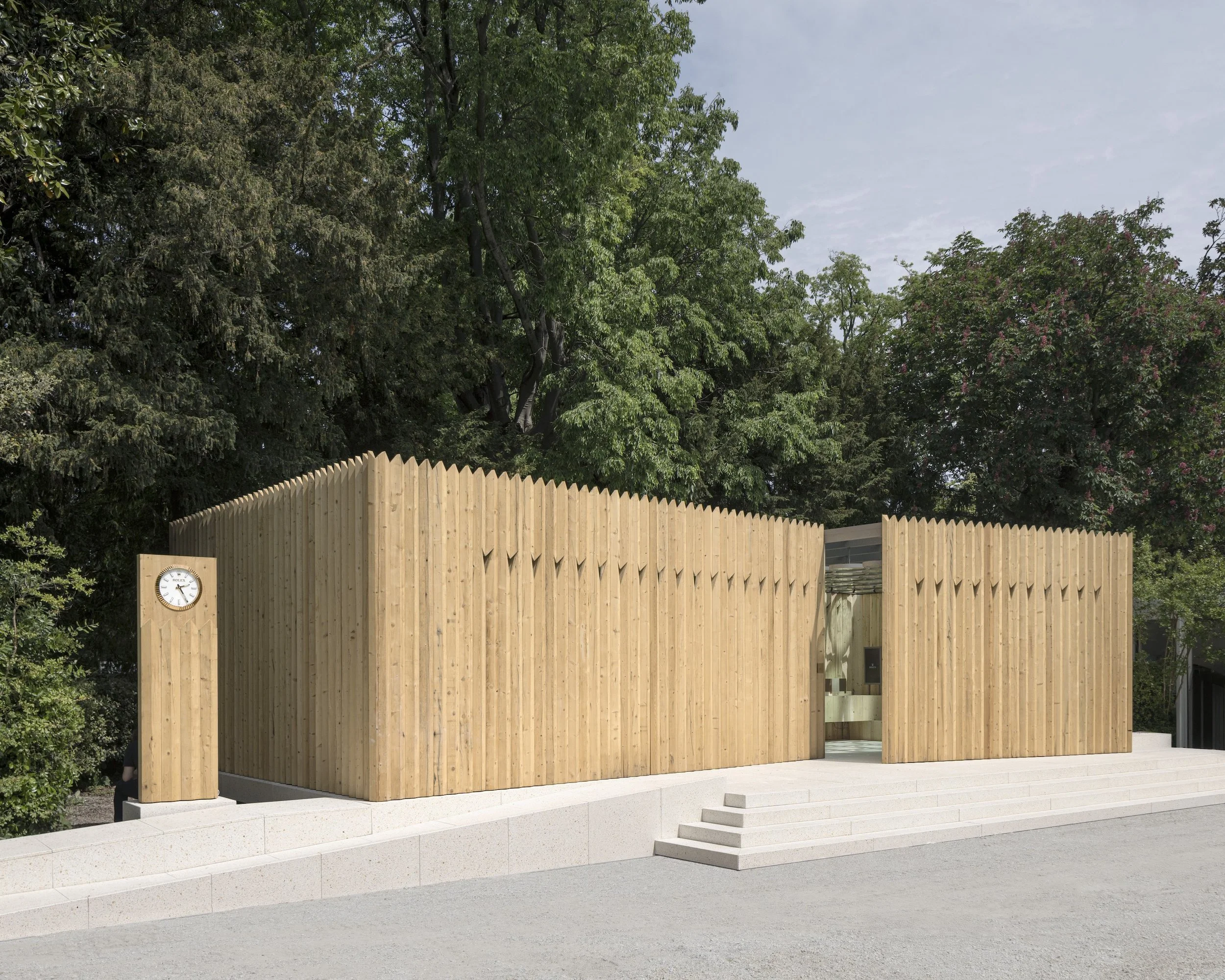
The wooden facade of the Rolex Pavilion is made from 200-year-old Venetian Palazzi wood beams that were repurposed and transformed into walls for the pavilion, maintaining a connection to the city’s deep architectural history. Photography courtesy of Rolex/Matthieu Gafsou.
What about the process of design and construction, and how is that different here?
In those terms, I got super lucky here in New York. For Gourmega, a restaurant and supper club for fourteen people, I was hired by a client who invited me to do whatever I wanted — the dream! He had a vision that I could build the language for, and he trusted me to deliver. We just did a joint interview yesterday actually, and the point he made was that he felt the ethos of my firm felt perfectly aligned with his and so he wanted to be surprised!
When I met him, my studio was just finishing the construction of the Rolex pavilion in Venice last year, and I walked him through our approach and process for this project, which really describes our approach and process at large. We worked with local makers, we focused on recycled and recyclable materials, and most importantly we focused on telling the stories of the constellation of people that we brought into the project. And that’s what spoke to him, a project that gives back to its context before it’s done, as well as our ability to keep the project within budget, a muscle that I flexed a lot working in Africa.
You truly have a global perspective, not because you work on projects all over the world, but because you yourself have been based in Africa, in Switzerland, and now here in New York. What have you learned from each place?
In America, I learned immediately that being on a construction site is all about seeing where the potential for litigation may come from. The muscle that I’ve learned to flex in New York is about protecting my work. The construction process is also very particular, as there are so many experts that are involved.
If I compare this to working in Switzerland for instance, there I would say things are very straightforward but also inflexible. In a way, in New York, even though there is a lot to navigate, you can massage things. You can’t do that in Switzerland – things are set, and the process is very much about demonstrating that you understand every requirement. When I work in Switzerland, before I even start designing, I make sure that everything that is being asked for is taken care of. This means though, that there are no surprises, and the RFPs in Switzerland are highly thought through.
And then in the African continent, there are very few rules. The building code may be half a page, or one page maximum. This means you have a lot of freedom but at the same time, a huge amount of responsibility. The checks and balances are not as strong, so you have to be very self-disciplined in what you design and how you go about it.
“I felt that culture and identity were being erased for the sake of so-called ‘modernity,’ and I was very interested in modernity, but exploring it in an authentic manner.”
Because of all the “muscles” you’ve built up working in such different spaces, I feel like this makes you a very well-rounded architect. I also think it’s wonderful that you changed the name of your practice to be your name. Can you talk about this?
I picked the firm name atelier masōmī at first because this means something in Niger, and at the beginning of my career, I was only interested in working in Niger. After ten years, I surprisingly found myself working in other places, which was not an ambition of mine — the firm just started to receive invitations to opportunities all over the world. And then I noticed also from talking to journalists, that the original name became confusing — people thought it was my last name, there were so many typos, and I found myself spending a lot of time explaining and correcting the name.
Then I started teaching and running a research lab at the ETH, and all of the sudden I was working with two or three identities that somehow had to come together into one. So on the ten-year anniversary of the studio, I decided to make the switch and keep a coherent message and assemble everything that I’m doing under one umbrella.
I actually think its really wonderful because while we know there are no “sole geniuses” in architecture, that architecture is such a collaborative process, there have still been so many firms named after men, and I think it's important that we rebalance that and have women lead firms under their name.
I really thought hard about what I wanted to name of my practice to be, and I decided to also use my maiden name for my practice. I was also very deliberate about adding my first name as well. My first name marks me as a woman, and I also have a Muslim name, and for me those two things are important.
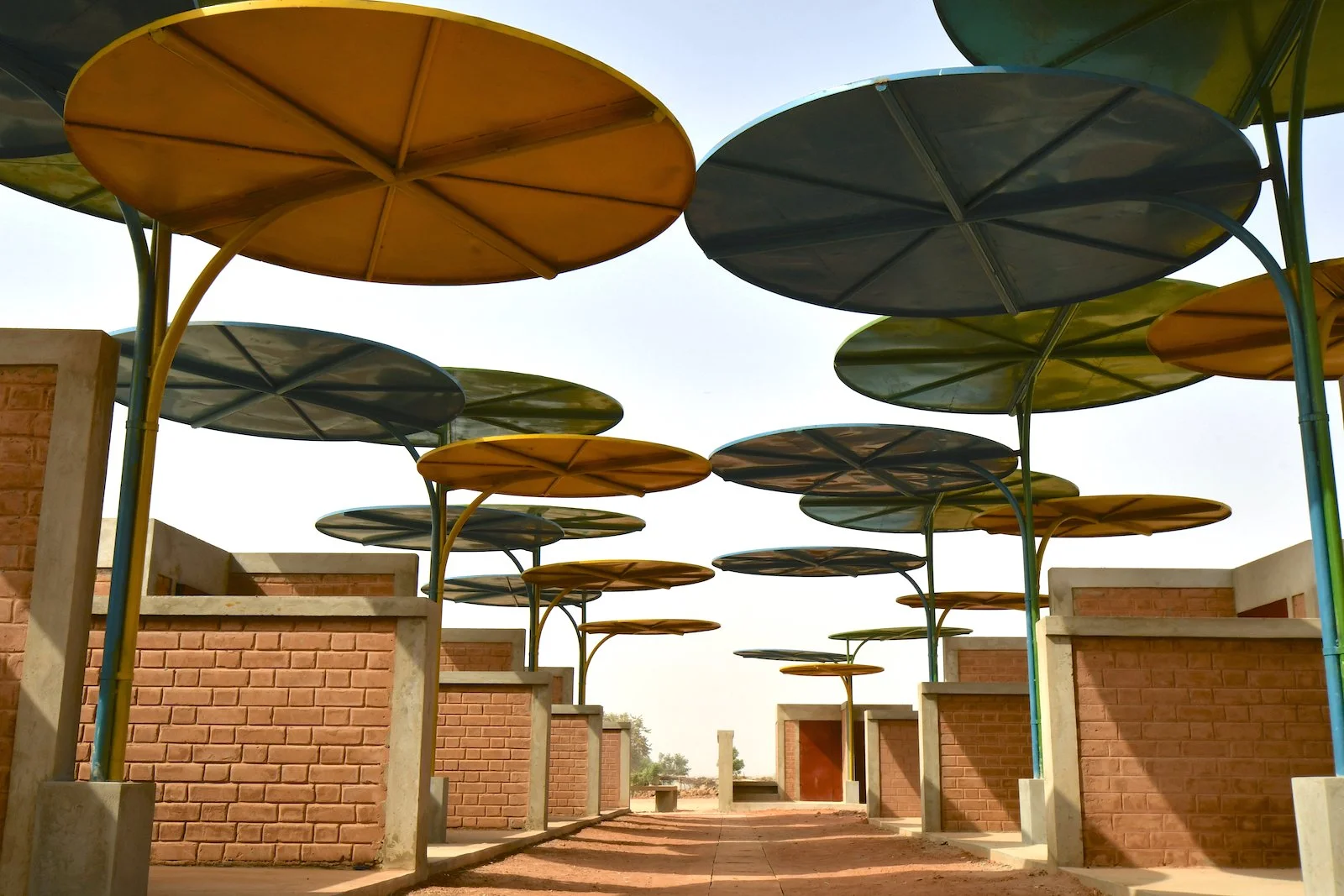
Dandaji Market in Niger was completed in 2018 and it references the area's traditional market architecture while pushing the typology forward with compressed earth bricks and colourful metal canopies to provide shade from the desert heat. Photography by Maurice Ascani.

Dandaji Market. Photography by Maurice Ascani.

Dandaji Market. Photography by Maurice Ascani.
Let’s go back a little bit — do you remember the moment when things clicked for you that architecture is what you are meant to do and focus on?
Very clearly. I suspected that architecture was for me and went to school for it also for very socio-political reasons; I saw the impact of the built environment and I wanted to participate and contribute to that. But then, I remember being in studio in my very first year of architecture school — I was halfway through the semester, and was in the studio at 3am. I was building a model, I was listening to music, I was exhausted, and I also had a fifteen-month old at home with my husband.
All of the sudden, I was overwhelmed by this rush of emotion because I felt in such harmony with myself. I was making this model by hand, and I never felt more at home within myself than at that particular moment. And I started crying because I was feeling incredibly grateful. I had had a whole other career for ten years, so I could tell the difference between not feeling fulfilled by my work, and what I was feeling now. I used to work just to work! And at that moment, despite the exhaustion and having my child at home, I felt joy. That’s how I knew.
That’s so powerful. This reminds me of a scene in a Soviet film, Moscow Does Not Believe in Tears, where the main protagonist has a newborn, she’s a single mother, and she’s studying for her engineering exams, and she’s setting an alarm for when she will need to wake up and realizes that she’ll only sleep a couple of hours, and she also starts crying — not out of joy in this instance — but ultimately she does achieve her dreams and that scene is a really powerful preface to where she ultimately gets.
That’s beautiful because that’s exactly what my reality was. You can imagine that with a baby and the first year of architecture school, after the semester was over, I would just be bedridden for a few days. But again, because I had those constraints — and I did have a husband and partner, so I wasn’t alone in this — I had an incredibly focused mindset. I became incredibly efficient. And I knew that I wanted to be extra good, and to gain all the skills that I needed, and I had all of the pressures of life that you have when you have a family and a child, so when it came to my work, I was incredibly focused.
“Architecture and the creation of architecture has deep implications and we can’t ignore our responsibility. I would encourage young architects to make sure to embrace that responsibility, but also see it as an opportunity for meaningful work.”
What was your first career?
I was a software developer! I was in the tech industry for ten years before I became an architect.
I feel like we often hear of people going into tech after they work in architecture, not the other way around [laughs]. What do you bring from that time to your work in architecture?
I did not enjoy being a software developer, and I did everything I could earlier to shed that part of my life off [laughs]. But now I’m realizing that my experiences in tech made me really handy in any type of software. In architecture school, I picked up software programs very quickly because I literally used to build them. Now I’m also realizing that even in my practice, I do think about all the nitty gritty elements. I don’t just think about designing; I also think about building, how things come together. I always make my own schematic structural drawings because I want to make sure I understand it and that my ideas take into account the structural realities that I’ll be dealing with.
All of those different things come from having to make software from scratch, because I would be in situations where I would get a brief for what the program needed to do, and I’d basically need to make it out of thin air. I’d start writing lines of code that are essentially the skeleton, or the structural framework if you will, and then I would add “flesh” to it — functionality and such. I was a back-end coder so I did work on the nitty gritty things. I like to think that I design as a builder now.
From all of these experiences, what would you say your mission is?
In the beginning, my mission was thinking through architecture more rationally — particularly because of where I come from where there was an incoherence, in my view, of the architecture we were building and the realities on the ground. I felt that culture and identity were being erased for the sake of so-called “modernity,” and I was very interested in modernity, but exploring it in an authentic manner. I feel grateful that I was able to achieve this right away as my approach really resonated with my early clients; there was a hunger for an authentic representation of themselves in their environments and in their spaces.
Now that I've started working in other parts of the world, I realize that architecture can be so incredibly artless, harmful, brutal and violent — in the way we make it, in the processes we put into place, in the way we harm the planet. My mission now has become exploring architecture by being incredibly skeptical of the status quo, and wondering how we can do this differently and in a way that brings more equity, justice, economy, and repair.
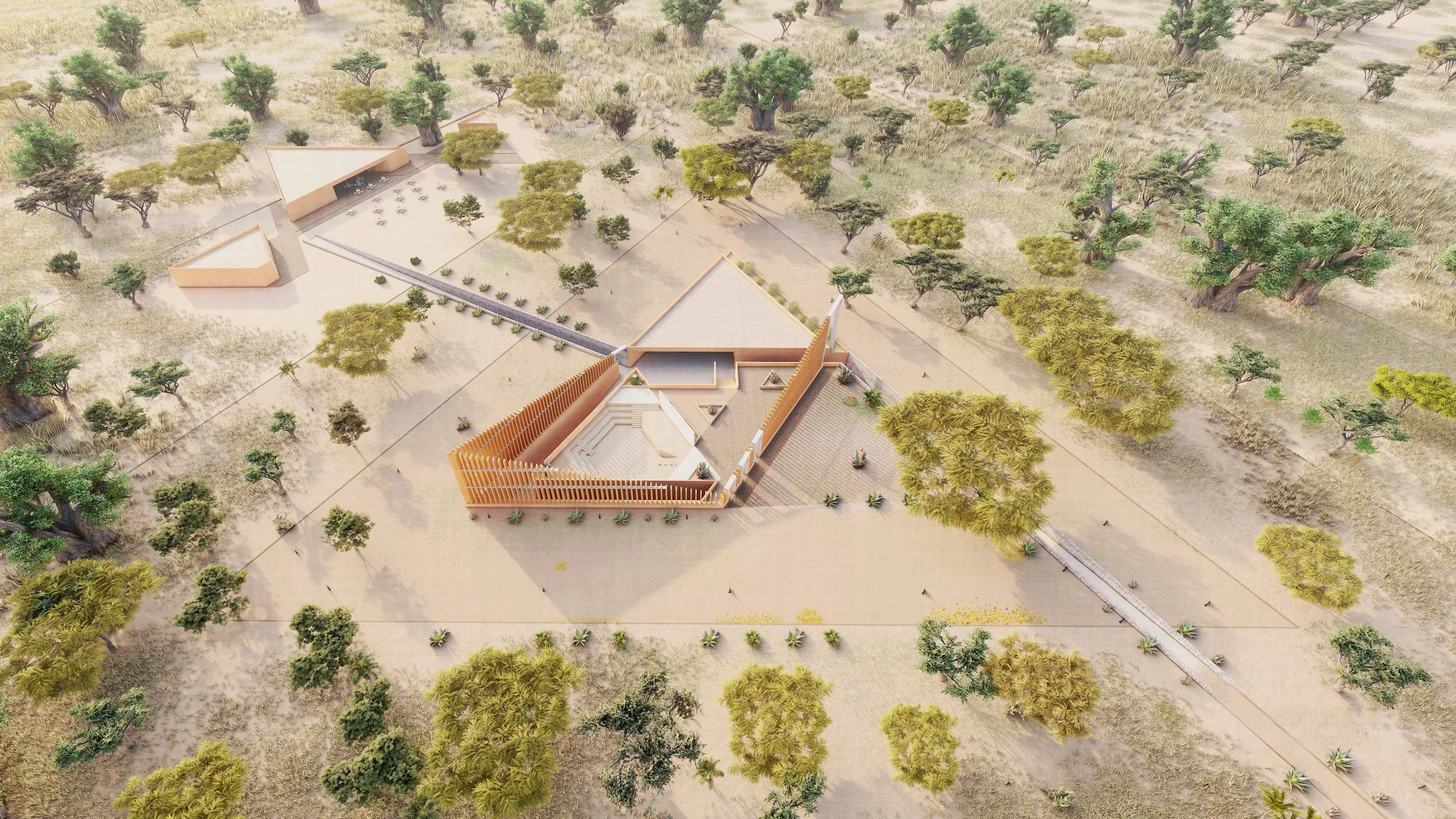
Bët-bi Museum, which is about to go under construction in Senegal, is designed as a public space first while galleries are sunk below ground to pay homage to the sacrality of the land. Image courtesy Mariam Issoufou Architects.
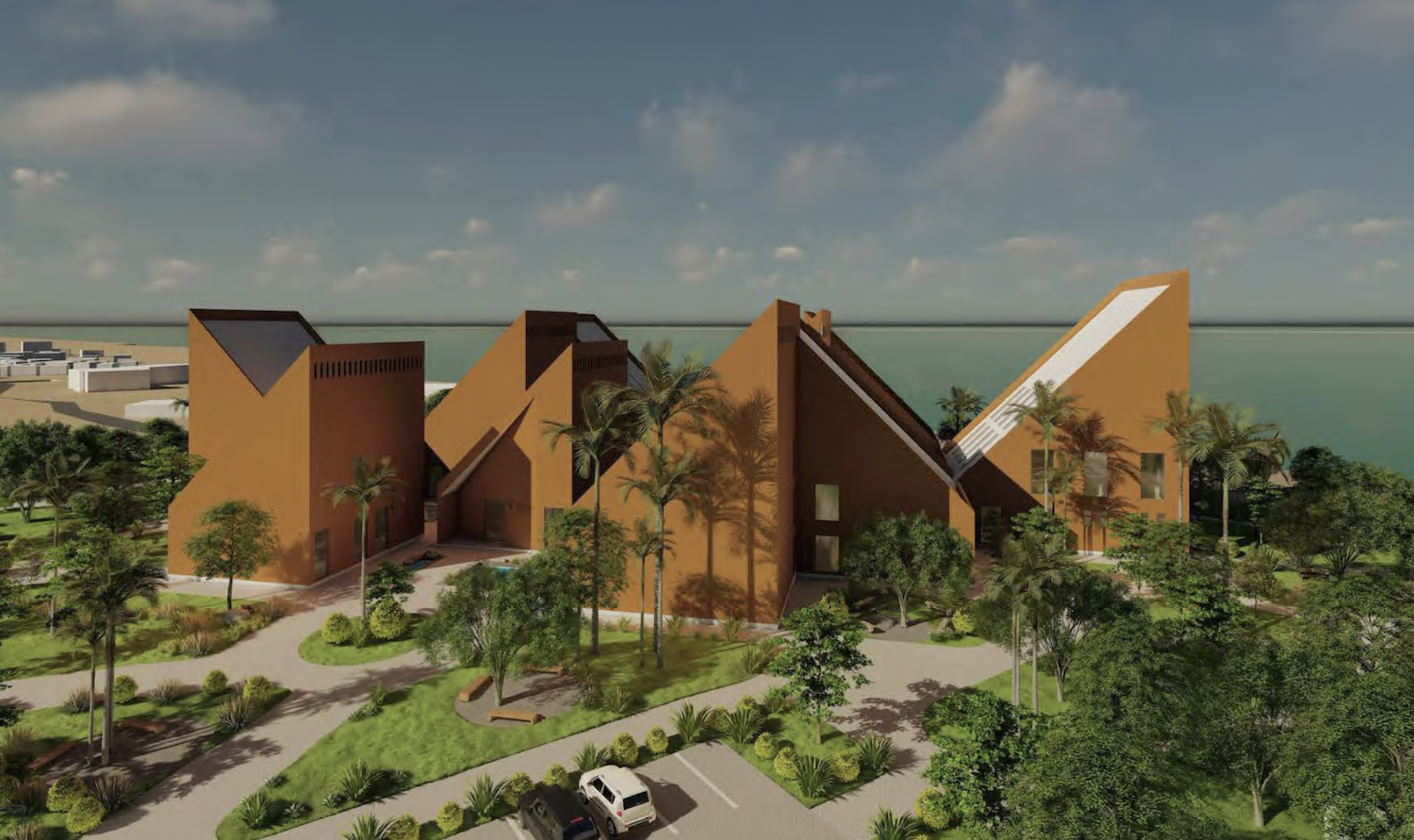
The Ellen Johnson Sirleaf Presidential Center for Women and Development in Liberia is currently under construction. Image courtesy of Mariam Issoufou Architects.
Finally, what advice do you have for those making their way in their careers?
I would encourage young people not to think of architecture not just as a creative undertaking, but as something that really shapes the environment around us, and to take responsibility for that. An architect is not a sculptor with an artistic vision — maybe that was the case for the last century — but now we’re pivoting towards something that concerns itself with deeper issues, as it should. Architecture and the creation of architecture has deep implications and we can’t ignore our responsibility. I would encourage young architects to make sure to embrace that responsibility, but also see it as an opportunity for meaningful work.
This interview has been edited and condensed for clarity.