Architecture That Learns: Angelica T. Baccon on Generosity, Shared Ambitions, and Connecting Knowledge
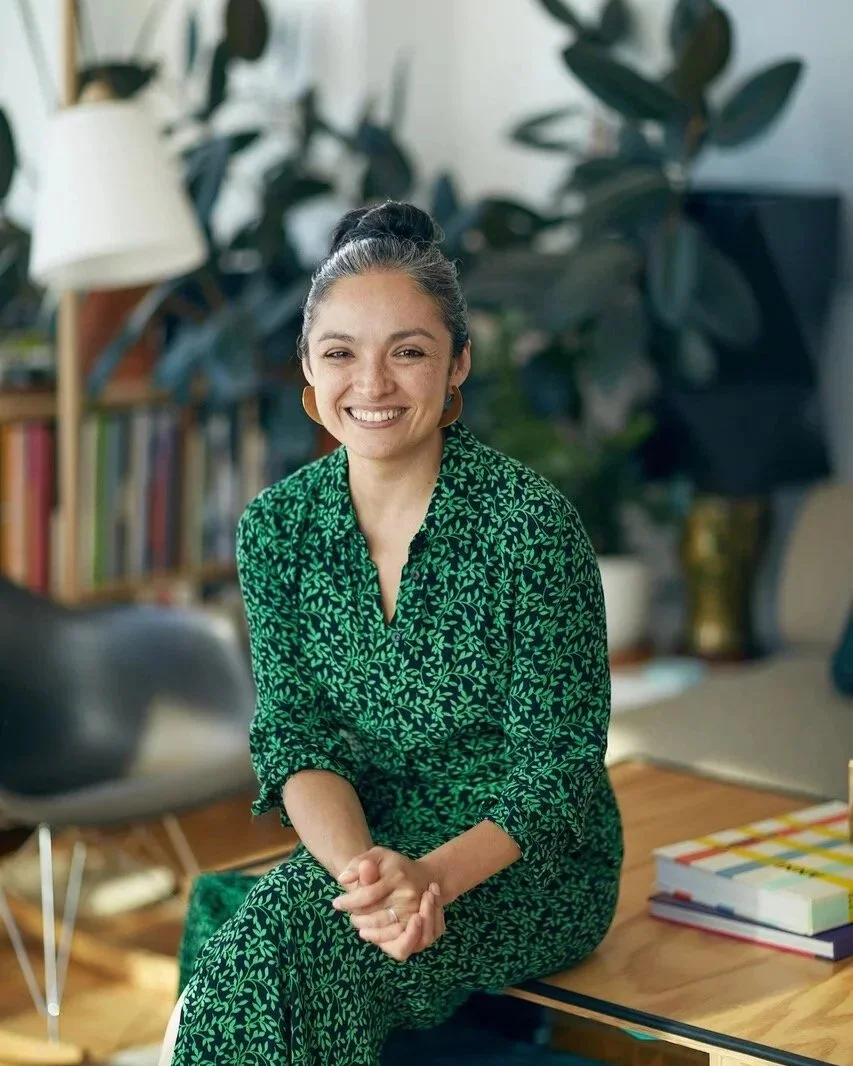
Angelica Baccon by Ty Cole.
By Julia Gamolina
Angelica Treviño Baccon is a New York-based architect and founder of Special Projects Architecture. Previously a Principal at SHoP Architects, where she spent nineteen years, she now also leads Design & Innovation at UAG, exploring new relationships between architecture, technology, and construction. She serves on the board of the Beverly Willis Architecture Foundation and holds degrees in architecture from Tecnológico de Monterrey and Harvard Graduate School of Design.
JG: You were at SHoP for nearly twenty years. Was there a particular moment when you began to realize that the next chapter of your career might need to look fundamentally different?
ATB: I formed so much of how I think at SHoP. I learned to be ambitious, to experiment, and to believe that architecture could operate differently. That experience has enormous value, but I kept wondering whether staying in one lane could also prevent me from seeing new solutions to problems we encounter again and again. I would catch myself thinking, “I’ve seen this before. I know how to solve this.” And then I’d wonder, “If I know how to solve it, why does the same problem keep coming up?”
I founded Special Projects Architecture to work with owners and builders early on, when we’re still asking what we should build and why. I’m interested in how we turn design intelligence into value we can measure and invest in. Also in October, I joined UAG to lead its Design & Innovation practice. One of the things I’ve loved about working on the builder’s side is being able to sit down with the team, look at the same drawing, and ask, “What do you see that I’m missing?”
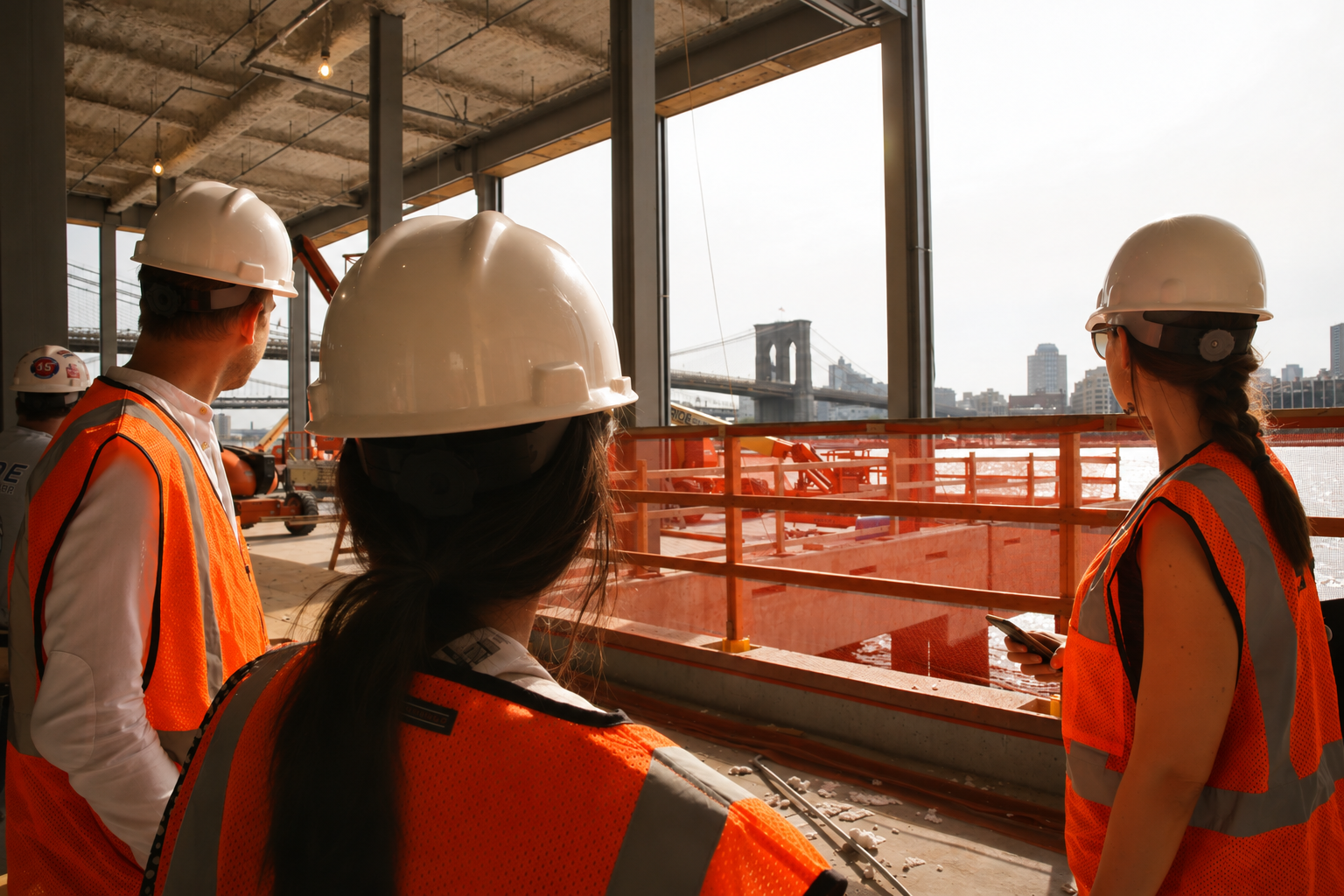
Angelica at Pier 17 with her colleagues. Courtesy of Angelica Baccon.
What did Tecnológico de Monterrey and Harvard GSD teach you about architecture and how you wanted to think and work?
At Tec, I learned how to build. I was exposed to making processed like pouring concrete, with Monterrey as a backdrop, a city that was growing and building itself right in front of us. At the GSD, the emphasis was much more on dreaming, testing, and experimenting. I don't think I could have explored so freely at Harvard without that foundation from Tec.
One of the most important lessons from both institutions was the importance of seeing the world. I was lucky enough to spend time in Milan, Mexico City, New York, and Buenos Aires while studying in Monterrey and Boston. Learning about different cities, different cultures, and different ways of living and building was a remarkable backdrop for an architectural education.
Early in your career, was there something someone told you or showed you that changed the way you approached your work?
During my first year of architecture school, I was nervous about finding a summer internship. My father suggested I pick my favorite building in Monterrey, find out who designed it, and go knock on the architect's door to ask for a job. I tried very hard to explain that things didn't work that way in architecture! But he reminded me that, no matter the profession, we are all just people. Showing up in person, picking up the phone, reaching out to someone you admire, and being human matters. I did exactly what he suggested — I knocked on that door and got my first summer internship.
“Sometimes the boundaries we work within are simply the ones we’ve become accustomed to.”
What moments in your career changed how you thought about the work, yourself, or the kind of career you wanted?
The most seismic change in my career has been the birth of my children. I started moving through the city differently, visiting different places, noticing different things. I found an entirely new map of New York, with the best place for a picnic, the restaurant with enough room for a stroller, the cleanest public bathrooms that had access to baby-changing tables, the free concerts at Lincoln Center complete with an instrument petting zoo. I never noticed these things until I was lucky enough to accompany a young human through the city.
And then I saw the invisible infrastructure of community, like the neighbors I didn't know I had who were kind enough to watch my children while I go to a doctor's appointment. There is so much generosity and coordination required to make everyday life possible, and there is also so much art and magic in raising a family in New York City. I genuinely believe all of this has made me a better architect.
Can you describe a difficult period in your career and how it changed the way you work or make decisions?
2020 and 2021 were very challenging years. At SHoP, we had built tremendous momentum working on the West Coast, particularly on workplace projects. Almost overnight, those projects began to be put on hold, and shortly afterward many simply disappeared.
But something unexpected happened at the same time — being completely remote opened doors we might never have considered otherwise. SHoP had always been such a New York-rooted firm, and suddenly we were saying yes to international opportunities like never before, and collaborating with teams in Australia, India, Italy, and Brazil. We had time-zone schedules pinned to our desktops, and projects could move forward almost around the clock.
We had always pushed the boundaries of where and how we worked but this felt different. I was incredibly liberated to realize that we could bring together the best people, wherever they happened to be. That experience made me much more willing to question the limitations we take for granted. Sometimes the boundaries we work within are simply the ones we've become accustomed to.

Angelica on a Zoom call with Australian partners while taking care of her two-year-old. Courtesy of Angelica Baccon.
Tell me about an important mentor and a lesson that has stayed with you.
Agustín Landa was an extraordinary Mexican architect who gave me that first internship and later became my studio professor at Tec. His most important lesson to me was to always look for the beauty that comes with the exception to the rule. Agustín encouraged us to study patterns, understand the rules, and then look for the exceptions. What initially seemed like a constraint became the very foundation from which we could experiment.
That lesson has stayed with me. Understanding a system doesn't mean accepting all its limitations. Sometimes it is precisely that understanding that gives you the freedom to challenge it.
Who are you paying attention to right now, and what are you learning from them?
I recently discovered an essay from 1993 called The Age of Imagination, by writer Charlie Magee. The essay was commissioned for a symposium on national security and open-source intelligence. He was already anticipating a world where machines would handle more of our information-processing work and human imagination would become increasingly valuable. More than thirty years later, it's remarkable to see how much of what he imagined has become familiar.
I get very excited about this space between science and imagination. Science keeps revealing things that once seemed impossible, and science fiction keeps asking us to imagine what might be next. Movies like Blade Runner and Ex Machina allow us to inhabit futures that don't exist yet, to test them, question them, and sometimes be inspired by them. Reading about quantum physics has had a similar effect; I've been reading David Deutsch's The Fabric of Reality, where he explores how four seemingly independent fields — quantum physics, computation, evolution, and the theory of knowledge — come together to shape our understanding of reality.
“The design process can be scaled up or down, but the relationships and trust we build along the way are as much a part of my body of work as the buildings themselves.”
At this point in your career, what still feels unresolved? What keeps pulling you forward?
AI is already beginning to change how we design, coordinate, and build. But the faster our tools evolve, the more important it becomes to remember what and who architecture is for. The question isn't simply, “What can we build,” but, “What kind of future do we want to create?”
As we embrace technology, we also need to invest just as much in our relationships and communities. Through organizations like the Beverly Willis Architecture Foundation (BWAF), I've seen how powerful it can be to connect people at different stages of their careers, share stories, and support one another. We can't underestimate the power of role models, and platforms like BWAF and Madame Architect are making our world smaller, more connected, and more human.
What pulls me forward is the excitement of finding that balance. The possibility of connecting knowledge, people, and technology to give us more room to imagine, experiment, and make better decisions. Not architecture made faster, but architecture that learns.
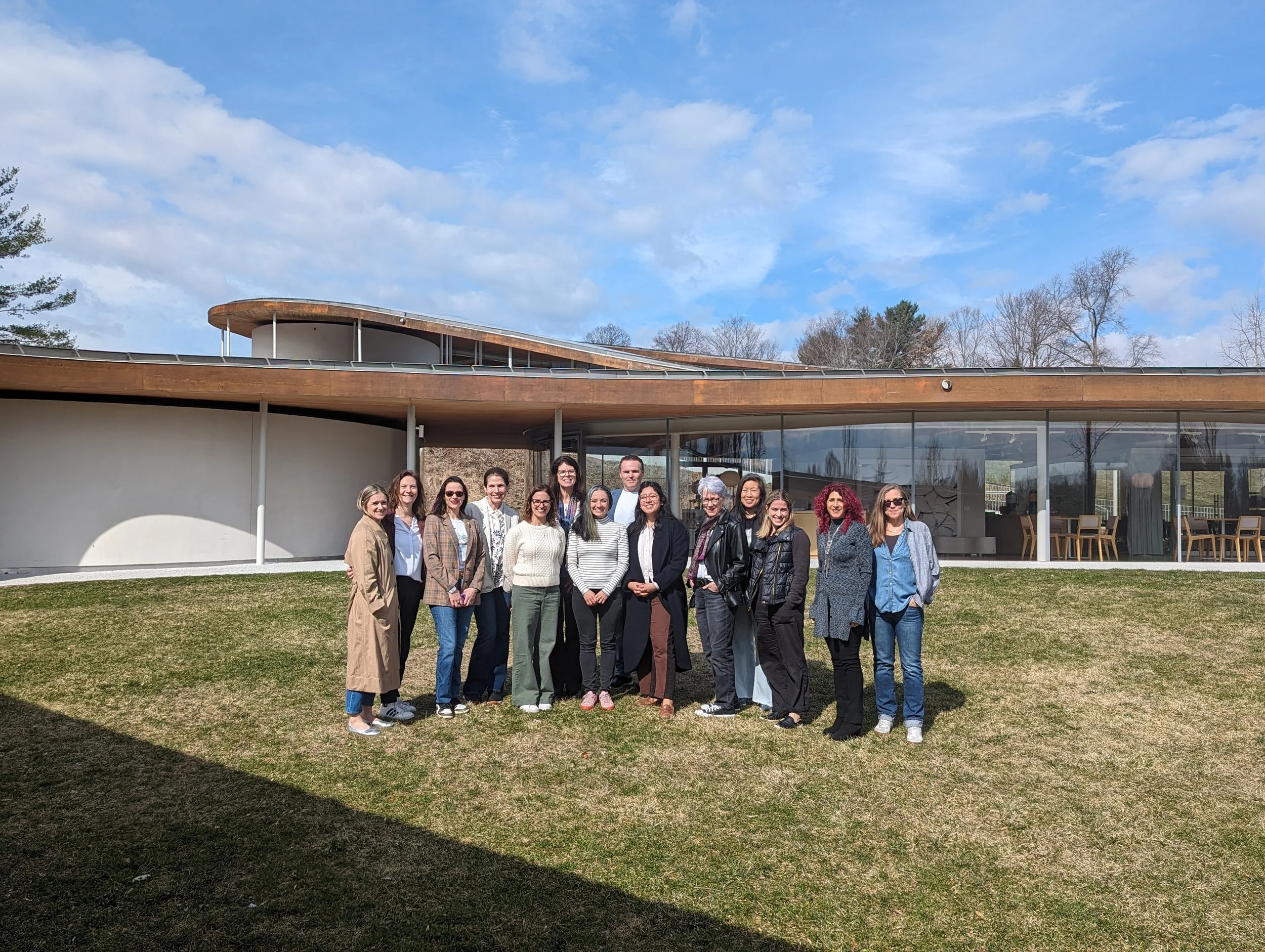
Beverly Willis Architecture Foundation (BWAF) retreat at Grace Farms. Courtesy of BWAF.
What do you understand about building a career or a body of work now that you wish you'd understood earlier?
A career, especially one within the built environment, is not only about the physical outcome. A career is also very much about the people you encounter, the example you set, and the trust that you build. No matter the typology or scale of a project, so much of what we do comes down to the same things: listening, researching, connecting ideas, coordinating people, and preserving a shared ambition through a complicated process.
I recently worked with UAG to bring their workplace to life. The team had worked together before, and there was already a foundation of trust. It made me think about what happens when we blur the traditional boundaries between owners, architects, and builders, align incentives around shared goals, and find ways to scale our best collaborations. The ambition shouldn't simply be better cost and schedule outcomes, but a better experience throughout construction and ultimately better architecture.
I have come to believe that architecture is, in many ways, scaleless. The design process can be scaled up or down, but the relationships and trust we build along the way are as much a part of my body of work as the buildings themselves.
This interview has been edited and condensed.