Unlimited Possibilities: Golden Wolf Wagons' Violet Onderwater on Self-Sufficiency, New Skillsets, and Working Smarter
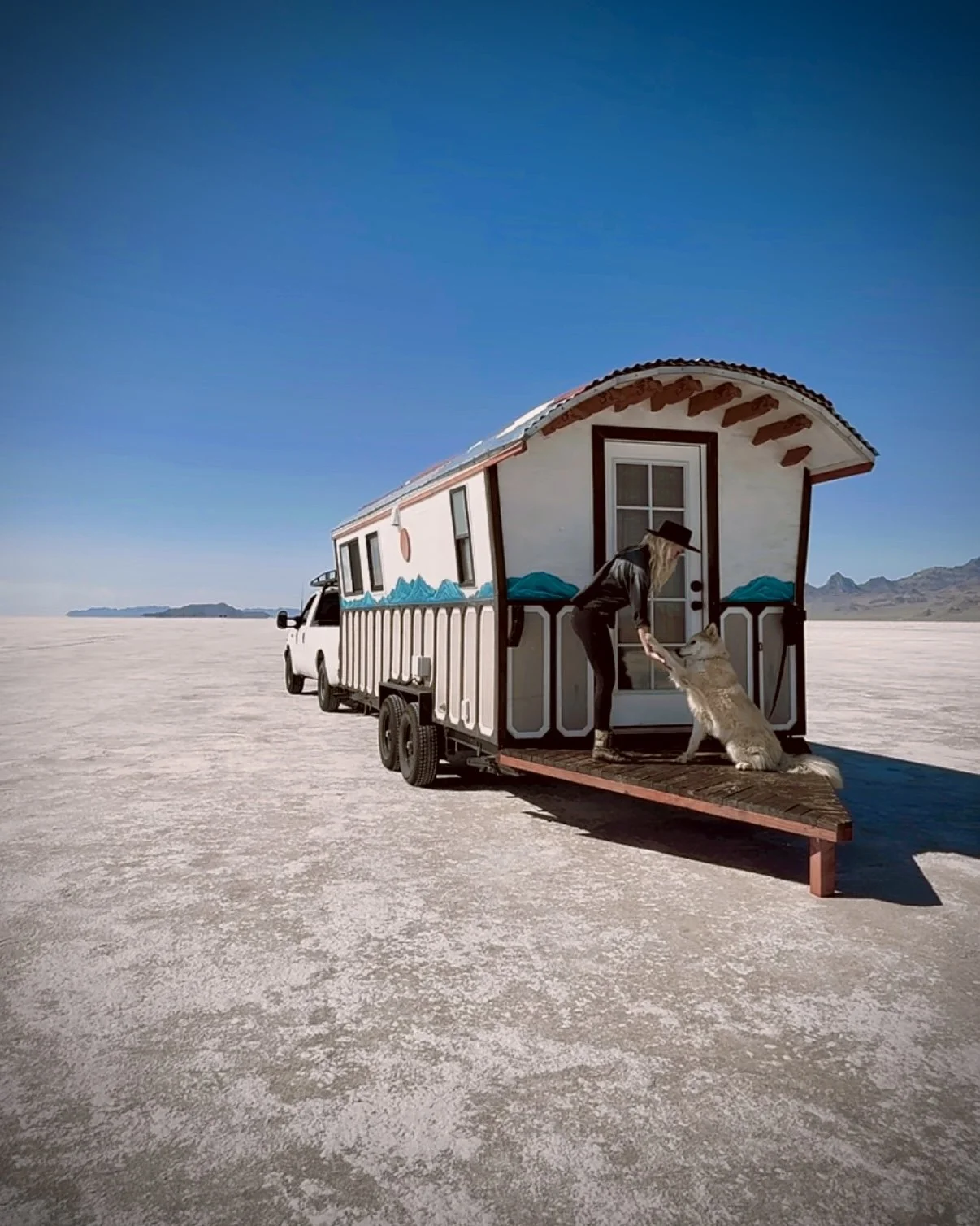
Violet with Wolf and her first tiny home. Courtesy of Violet Onderwater.
By Julia Gamolina
Violet Onderwater is a tiny house builder, and founder of the company Golden Wolf Wagons. She builds her mobile houses in the style of western wagons, with a focus on self-sustainability, small footprints, and unique character.
JG: You recently announced your new tiny house-building business, which grew out of you building your very own tiny house that you travel with. Tell me how you came to build yours, and how building more for others is your next step.
VO: I’ve always been so fascinated and interested in small efficient spaces, homes on wheels and self-sustainability. I had a dream to build my own home one day and when I finally went for it, the process was so rewarding! I took four years to build my first house — designing, researching and learning every step along the way and making it a point to do it completely solo just so I knew I could.
After I finally completed it I took it on the road traveling across America and up into Banff, Canada, and it was the most magical adventure! I had the idea to start my own tiny house building business but after that trip I was even more inspired to create vessels that could give others the joy that I experienced in that house. I decided to call my company Golden Wolf Wagons in an affectionate nod to my wolf dog turning a little golden during some of our first adventures in the house when traveling through the red sands of southwestern Utah.
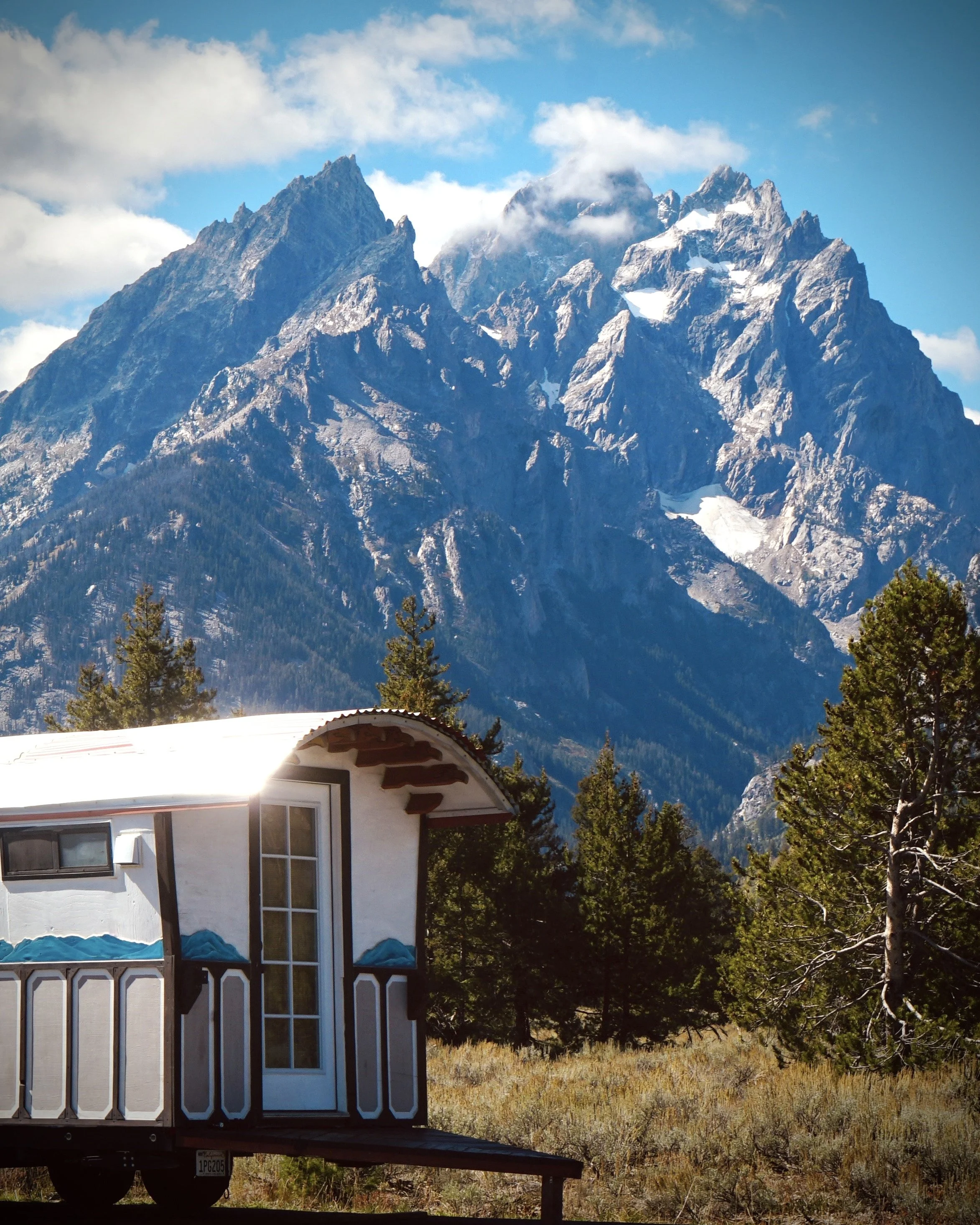
Violet’s first tiny house on her grand adventures. Courtesy of Violet Onderwater.
We first met through our camp at Burning Man, Waffles & House, for which you are one of our build leads. How did you learn to build infrastructure like this from the ground up and what was your training for it?
I learned from many years of going to Burning Man and being a part of different theme camps, and then many years with the wonderful Waffles & House. I also worked the last few years with my friend’s company Majestix, building stages and art installations for festivals across the country. I’ve really expanded my skillset working for him, from carpentry to metal work and then to project management and leading build teams.
You were born in London and grew up between England and the Netherlands. What did you learn from both places that still informs your approach to your life today?
From bouncing between England and the Netherlands throughout my upbringing I learned to be flexible. I also grew accustomed to moving around a lot, and that’s where my love for homes on wheels began. I traveled a lot and started to romanticize being able to take my home with me anywhere I went, something to serve as an anchor and safe cozy spot during constant movement. I was raised by an artist mother too so my childhood consisted of frequent trips to museums and galleries and that also sparked my interest in the arts.
“I traveled a lot and started to romanticize being able to take my home with me anywhere I went, something to serve as an anchor and safe cozy spot during constant movement.”
When did you eventually come to the US and what about your time here made you want to stay as long as you did?
I first came to the US when I was eighteen, and a trip to the Burning Man event everything changed for me. I was so impressed by the freedom of expression and what seemed like unlimited possibility for what you could build. It left a lasting impression on me, as did the county in general. It felt like there was so much more freedom to create a life that’s perhaps more unexpected. It felt like anything could be possible if you put your mind to it, and meeting so many people doing that here really inspired me too.
Looking back at it all, what have been the biggest challenges? Can you illustrate how you both manage through perceived disappointments or setbacks?
Some of the biggest challenges within my building projects have been physical setbacks. I’m not built as strong as the majority of men my age, and in this male-dominated field of work, sometimes that can be a bit frustrating or cause me to overexert myself. I learned to work smarter, creating jigs where my muscles can’t lift something in one go, or creating pulley systems. There’s always a way, even if it seems at first to be outside of my physical capability, and that makes me feel pretty empowered. I’ve become a much stronger person within. I don’t just build the tiny homes, they build me too! There’s definitely been times that something was so heavy or so difficult that I wanted to give up, but it’s taught me to take a step back and breath and approach it again with a smarter game plan.
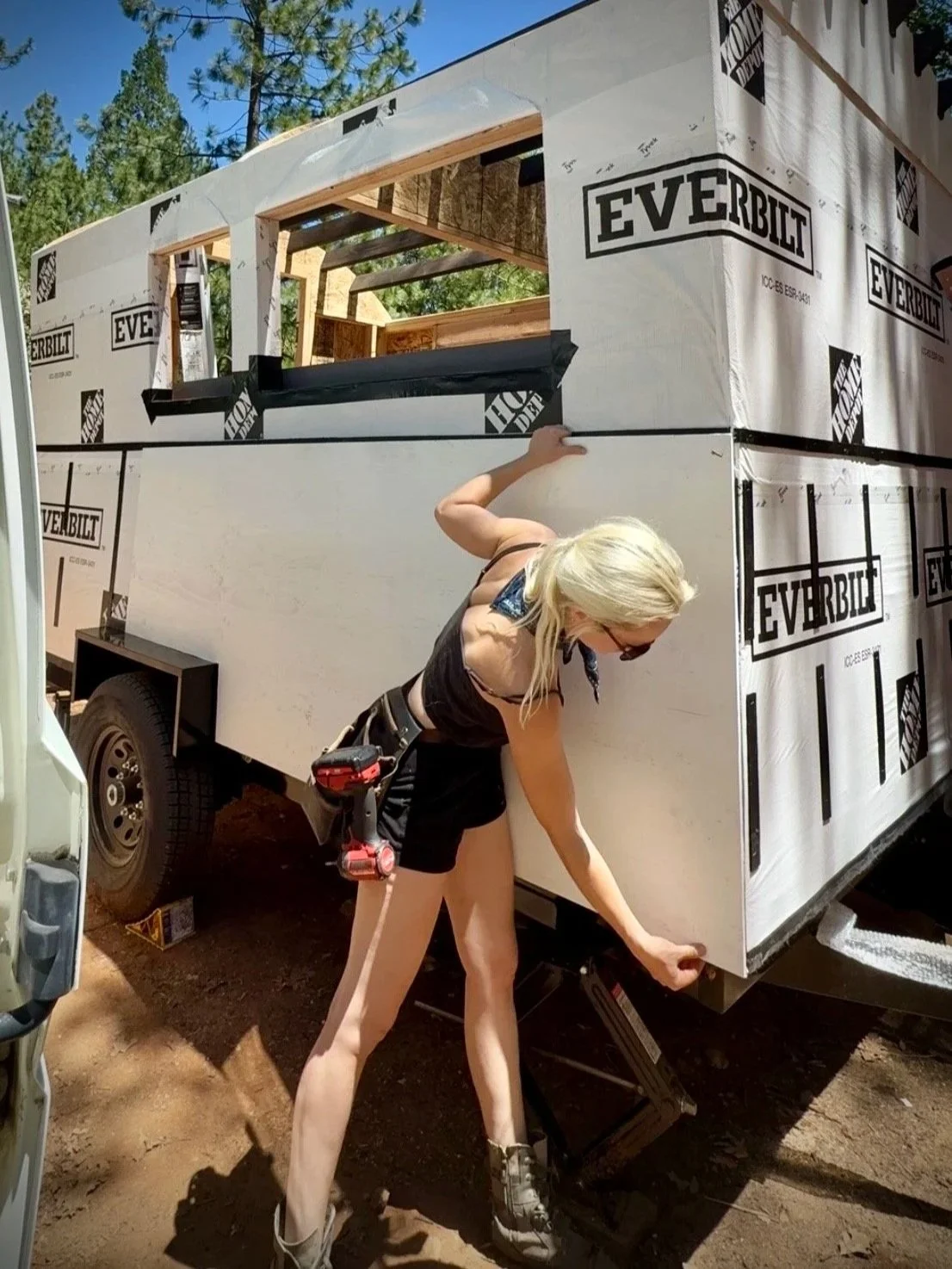
Violet working on the exterior of the tiny house. Courtesy of Violet Onderwater.
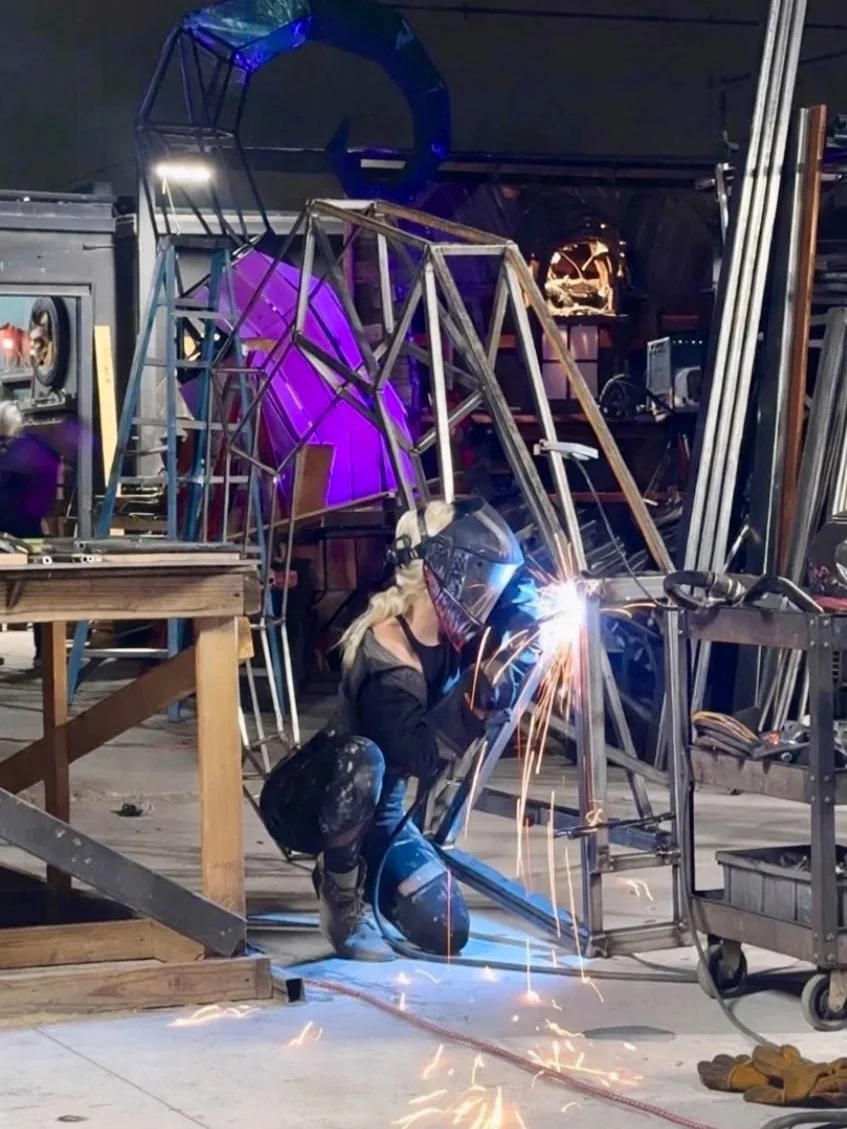
Violet working with Majestix on sculptures for Insomniac events. Courtesy of Violet Onderwater.
Tell me a story about one of your most important mentors.
My most important mentors are my friends at Synergia Ranch. In the ‘80s they built and developed the project Biosphere 2 that researched and experimented self-sustainability for space exploration, and how biospheres function. They also built a research ship called the Heraclitus that sailed all over the world collecting research for marine conservation, coral reefs, climate change and more, and had some incredible people working and living aboard too like Wade Davis and Terrance McKenna while it sailed 2000 miles up the Amazon River.
They also started a theatre group called the Theatre of All Possibilities. Overall, the synergists are a collective that pioneers in art, ecology and architecture. They even designed lungs into the biosphere 2 which are massive chambers that regulate internal air pressure since it’s a completely sealed glass building in the hot Arizona desert. I am hugely impressed and inspired by them and they taught me that anything is possible. When I lived with them on and off fifteen years ago, when I first started living full time in the States, they were influential in teaching me to think outside the box, to broaden my horizon and to reach for the stars.
“Have courage. The overwhelming times are the moments you grow the most. ”
Who are you admiring now and why?
Other than the Synergists, I also admire my friend Hoodie Salinas who started the company Majestix who I’ve been working with for the last few years. He’s one of those incredible artistic masterminds that has a vision and then figures out how to make it come to life. From massive dragons shaped out of wood to a forest of towering metal fiddleheads, the possibilities are endless with him. It’s been an honor working with him and he taught me a whole new world of metal work that was something I always wanted to dive into as well.
What's the thing that drives you? And what impact would you like to have on the world?
The thing that drives me is discovering that anything is possible. It’s such an amazing feeling to build something that ten years ago I would never have thought I could. And I really aspire to pass that along. It feels great to unlock new skillsets that aren’t typically common for women to do, from construction to electricity to plumbing and everything in between, and I want to inspire other women that they can too. It wasn’t easy, but the challenge and the reward is what drives me. I would love to inspire and facilitate other women to build and I dream of one day creating and hosting a women’s building workshop program.
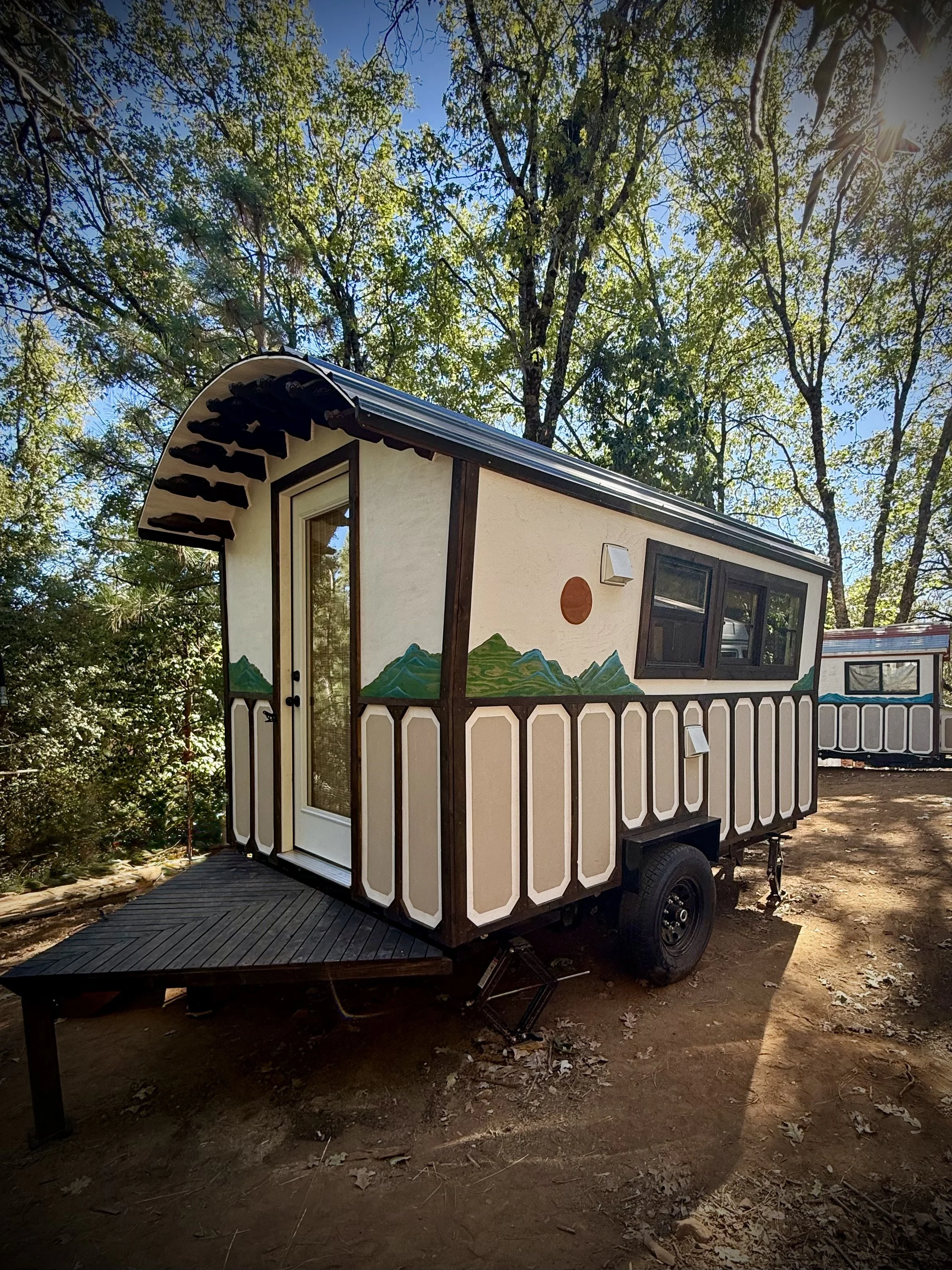
Violet’s most recent tiny house build, called the Dragon Wagon. Courtesy of Violet Onderwater.
Finally, what advice do you have for those starting their career?
Have courage. The overwhelming times are the moments you grow the most. Remember why you love the work you do and hold onto that, and that will be a strong foundation for your career.
This interview has been edited and condensed for clarity.