Unique Responsibility: The Architectural League of New York's Executive Director Jacob Moore on Active Support and Trusting Your Instincts
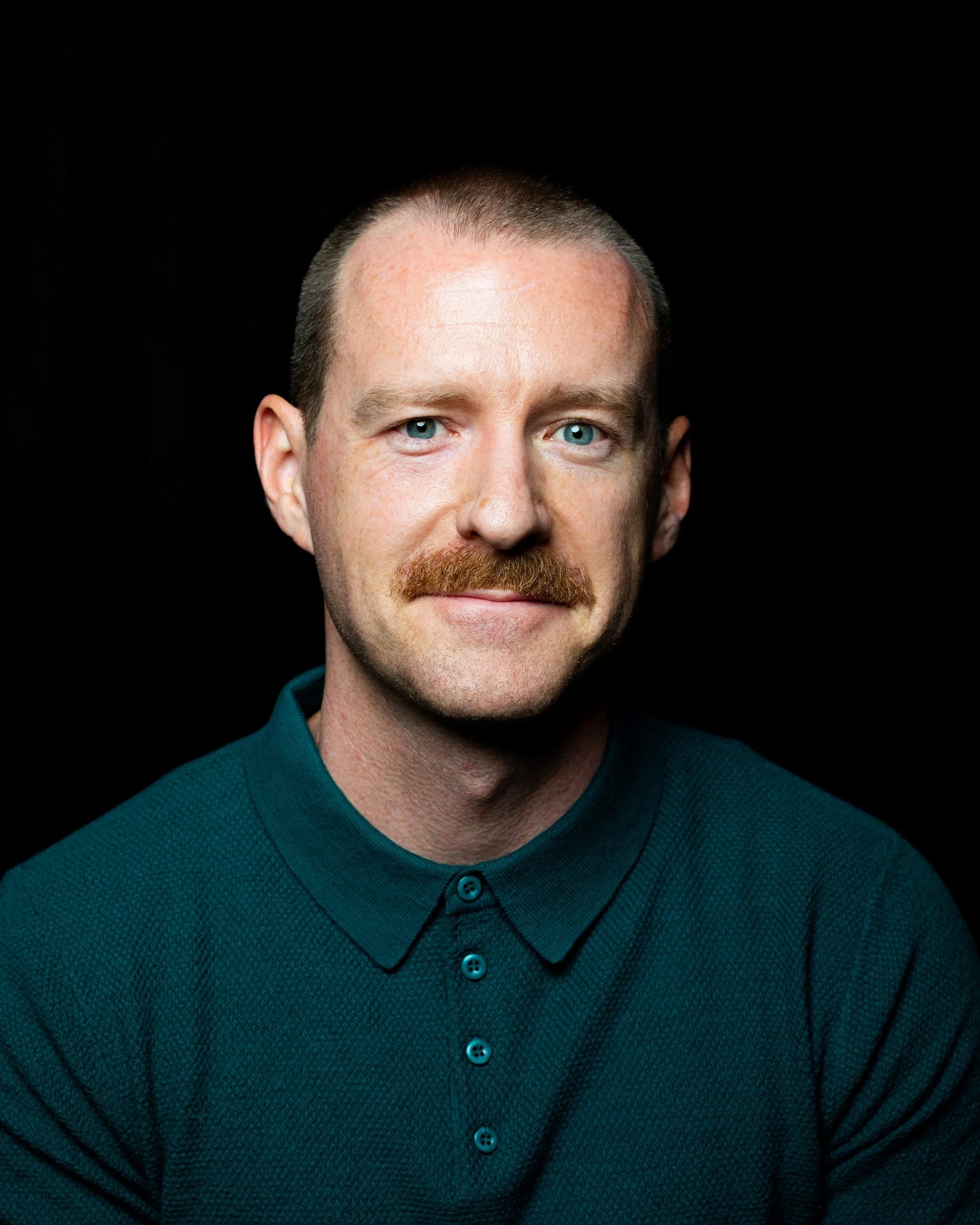
Jacob Moore by Victor Jeffreys.
By Julia Gamolina
Jacob R. Moore is the executive director of The Architectural League of New York, where he oversees all programmatic, financial, and administrative functions of the 145-year-old organization. Prior to his time at the League, Moore spent more than a decade in multiple roles at Columbia University’s Temple Hoyne Buell Center for the Study of American Architecture. He has been an independent critic and curator, helping to found The Avery Review and editing at Princeton Architectural Press. He grew up in Franklin, Tennessee before moving to New York to study architecture.
JG: You first studied architecture and then architectural criticism, both at Columbia. What were your biggest takeaways from both of your times there that still inform your approach today?
JM: Architecture was all I ever wanted to study. I also always knew that I wanted to leave where I grew up in Tennessee to study it in “a big city.” I was so lucky Columbia provided that opportunity, twice. New York though has always been my biggest teacher. The best things about Columbia are drawn from the city itself; the density of thinking and action provide unparalleled, often overwhelming, inspiration and encouragement. And one consistent takeaway has been not to hesitate to ask for advice or support. New Yorkers are busy, but they’re happy to give you directions if you stop and ask them. Just be sure to do it efficiently!
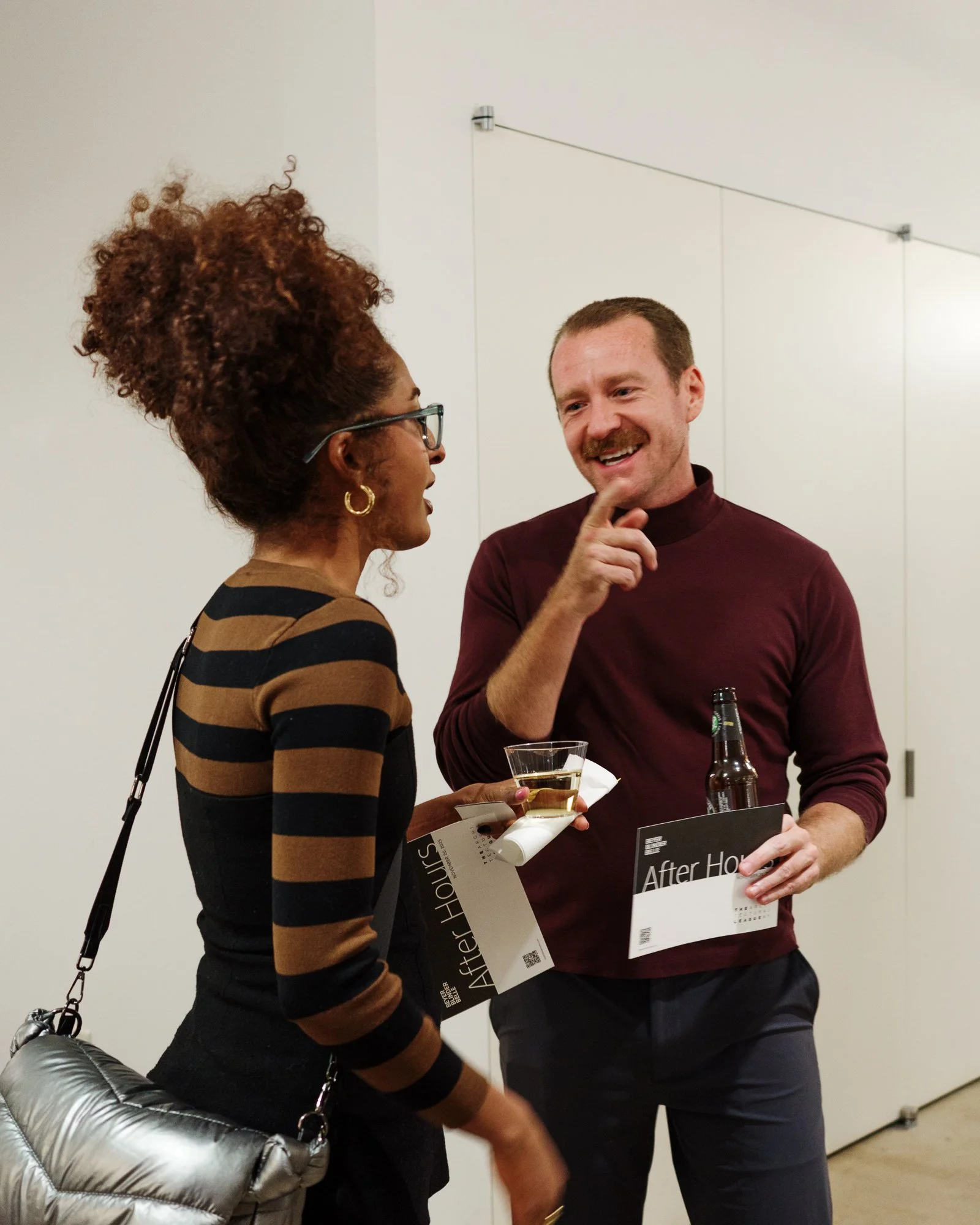
Jacob R. Moore speaking to an attendee at the After Hours event hosted by Beyer Blinder Belle Architects & Planners in November 2025. Image courtesy of The Architectural League of New York.
What was some of the best advice you got early on that has informed your approach to your work and career?
When I first started as Program Coordinator at Columbia’s Buell Center, my boss Reinhold Martin encouraged us to begin every project by asking “What’s the version of this that only we can do?” Pursuing that version was our obligation. Seeing each unique opportunity as a unique responsibility has been a mantra ever since.
If another person or organization is better resourced or positioned to take something on well, why not help them do that and figure out something else that only you can do that still works toward the goal at hand? This way of thinking not only helps articulate strengths in a focused and actionable way, but it also encourages a collaborative rather than competitive disposition wherever possible.
Tell me about your most significant professional experiences. What were the biggest takeaways for you?
Where my mind goes first is to the many, many service-industry jobs that I’ve worked over the years, going back to my first at a BBQ restaurant when I was fifteen. There and at the many places — mostly restaurants — since, I’ve found joy in helping people get what they need. I’ve learned to get over the fact that a big part of work is cleaning up messes you didn’t make, and I’ve witnessed the many ways in which good leadership is more about active support than it is distant inspiration. All of that feels directly applicable to the kind of work I’ve been doing since, where I try to lead with sensitivity and generosity before anything else.
“...good leadership is more about active support than it is distant inspiration.”
Looking back at it all, what have been the biggest challenges? How did you both manage through perceived disappointments or setbacks?
After college I wasn’t sure what I wanted to do. I loved architecture but was unclear that being a designer was my calling. As a way of getting some perspective, learning about the world and about myself, I volunteered for the Peace Corps in Guatemala. Bracketing all the challenges that brought with it — which were many — the return from Guatemala to NYC was at once invigorating and baffling.
Undergirded by restaurant work, I had a career misfire or two before making my way to grad school, and back to architecture, with a renewed critical and institutional sense of purpose. I didn’t have a roadmap for managing the uncertainty of those years. But, it was a crucial period of learning to listen to everyone and everything around me; to summon lessons and next steps out of the ether without burdening myself with new, grand plans; and to trust my instincts.
Who were your mentors through it all?
In my first architecture studio and through her work since, Madeline Schwartzman made me realize how creativity and rigor are threaded throughout the built environment and throughout each of us, and that there was magic at that intersection. Ever since my first class on architectural criticism, Suzanne Stephens has never ceased to impress with not only her deep knowledge of the field, but also her sharp curiosity and wit.
Starting with her then-new “Critical, Curatorial, and Conceptual Practices in Architecture” masters program, Felicity Scott gave shape to my career perhaps more than anyone else, making space for all kinds of thinking and acting in architecture that I simply didn’t know was possible before.
At Princeton Architectural Press, Sara Bader, Nicola Bednarek Brower, Megan Carey, and Linda Lee all taught me that attention to detail is fun, gratifying, and important. At the Buell Center, Reinhold Martin showed me what it could look like to lead with ambition and integrity. At the Architectural League, Rosalie Genevro and Anne Rieselbach each modeled ways in which institution-building requires so many things, but perhaps care above all else.
And finally, I’ve asked a lot of New Yorkers for directions, and I’ve been so lucky that they’ve stopped to answer.
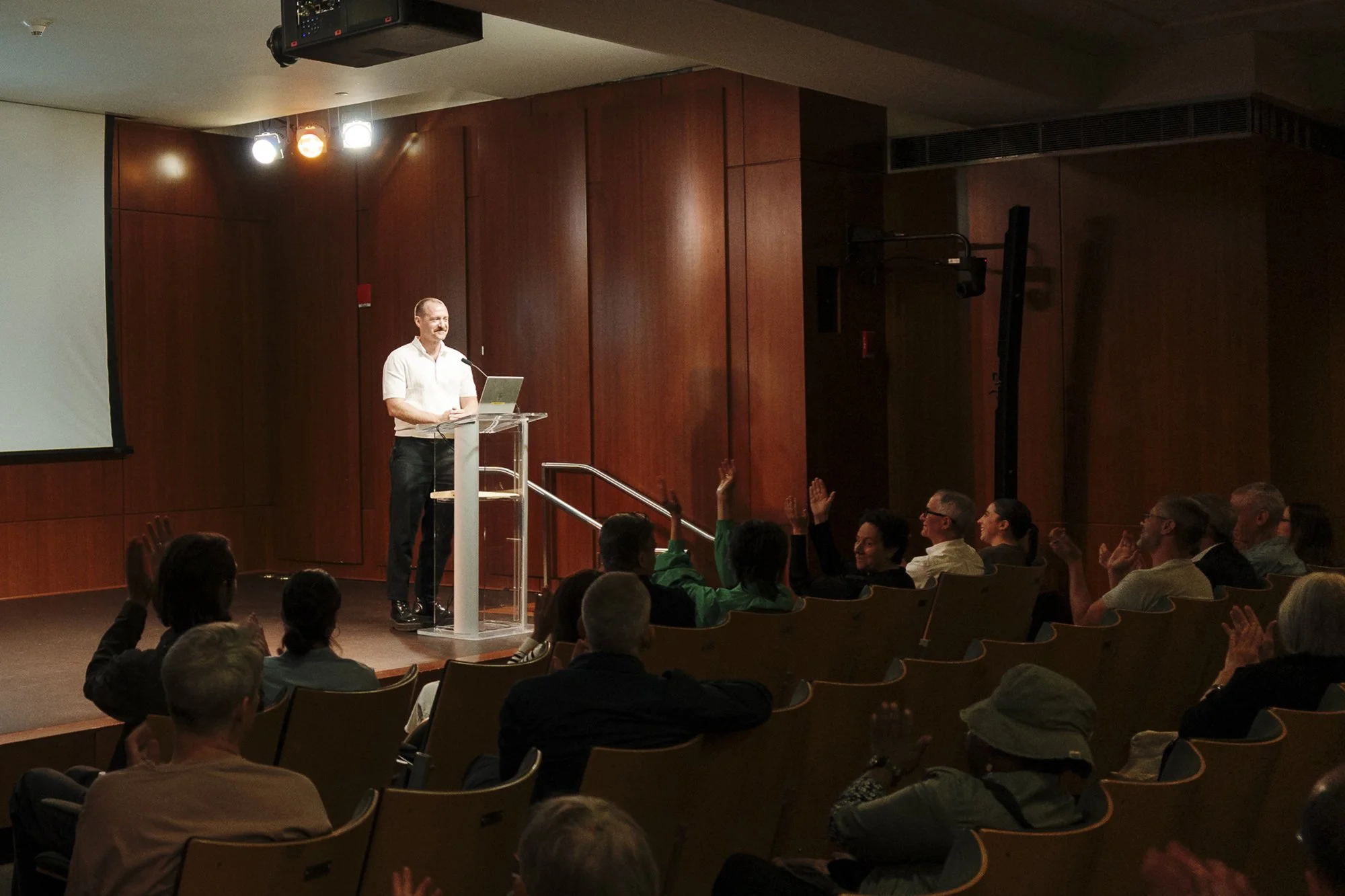
Jacob R. Moore speaking at the League’s 145th Annual Meeting in June 2026 at the Brooklyn Central Library. Image courtesy of The Architectural League of New York.
Who are you admiring now and why?
Our Board of Directors is overflowing with inspiration for me, as is the incredibly dynamic, always growing list of participants in our public programs. Architecture is really hard, and at the risk of further romanticizing what is already an overly romanticized profession, I’m always inspired by those in practice who take it as their duty to generate quality environments with whatever’s at hand. And at the League we’re certainly not alone in working to lift up and support that work. All of my colleagues in the Public Design Alliance, along with many other allied cultural orgs here in the city and beyond, are doing fantastic things.
Then at the risk of overly personalizing things, I also take lots of inspiration from my non-architecture friends doing creative, cultural work out in public. Kevin Gotkin runs a not-to-be-missed substack, Crip News, that everyone should sign up for. If you ever see a downtown performance headlined by Candystore or Dusty Childers, snag that ticket. Keep an eye out for a new docu-series from Frederic Tcheng; and check out his previous films while waiting. Dancefloors guided by friends in the Flower Factory DJ collective are ones I always want to be on. And my sister the shepherd is doing cultural work of another sort upstate on Kinderhook Farm.
“Try things! Though sustained commitment can be one of the greatest joys, nothing is forever. Meet people, ask questions, put yourself out there.”
What drives you? And what impact would you like to have on the world?
Good architecture drives me! It’s messy and challenging, but when it succeeds, it can have so many unforeseeable and inspiring knock-on effects. The fact that everyone involved knows how great its potential is, and pushes through the difficulty to fight for an ever improving, quality built environment accessible to all, keeps me going every day. If I can do my small part to push that fight forward — and maybe to make it just a little bit less of a fight in the first place — then I’ll call that success.
Finally, what advice do you have for those starting their career?
Try things! Though sustained commitment can be one of the greatest joys, nothing is forever. Meet people, ask questions, put yourself out there. My colleague from Urban Omnibus, Mariana Mogilevich, gave some great advice in her fantastic interview with you as well. Work isn’t everything.
This interview has been edited and condensed for clarity.