A Day in New York City with MoMA’s Paula Vilaplana de Miguel
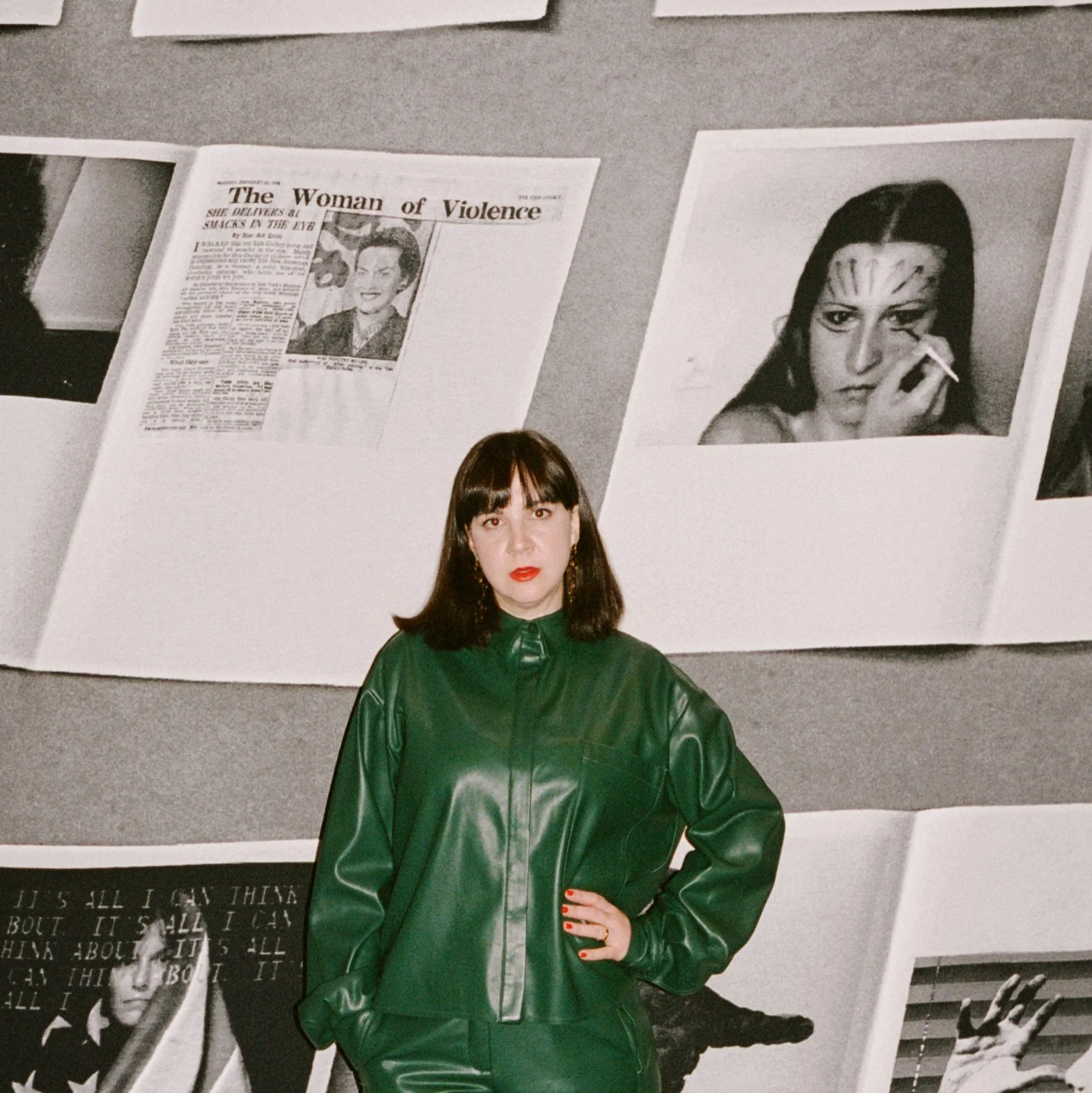
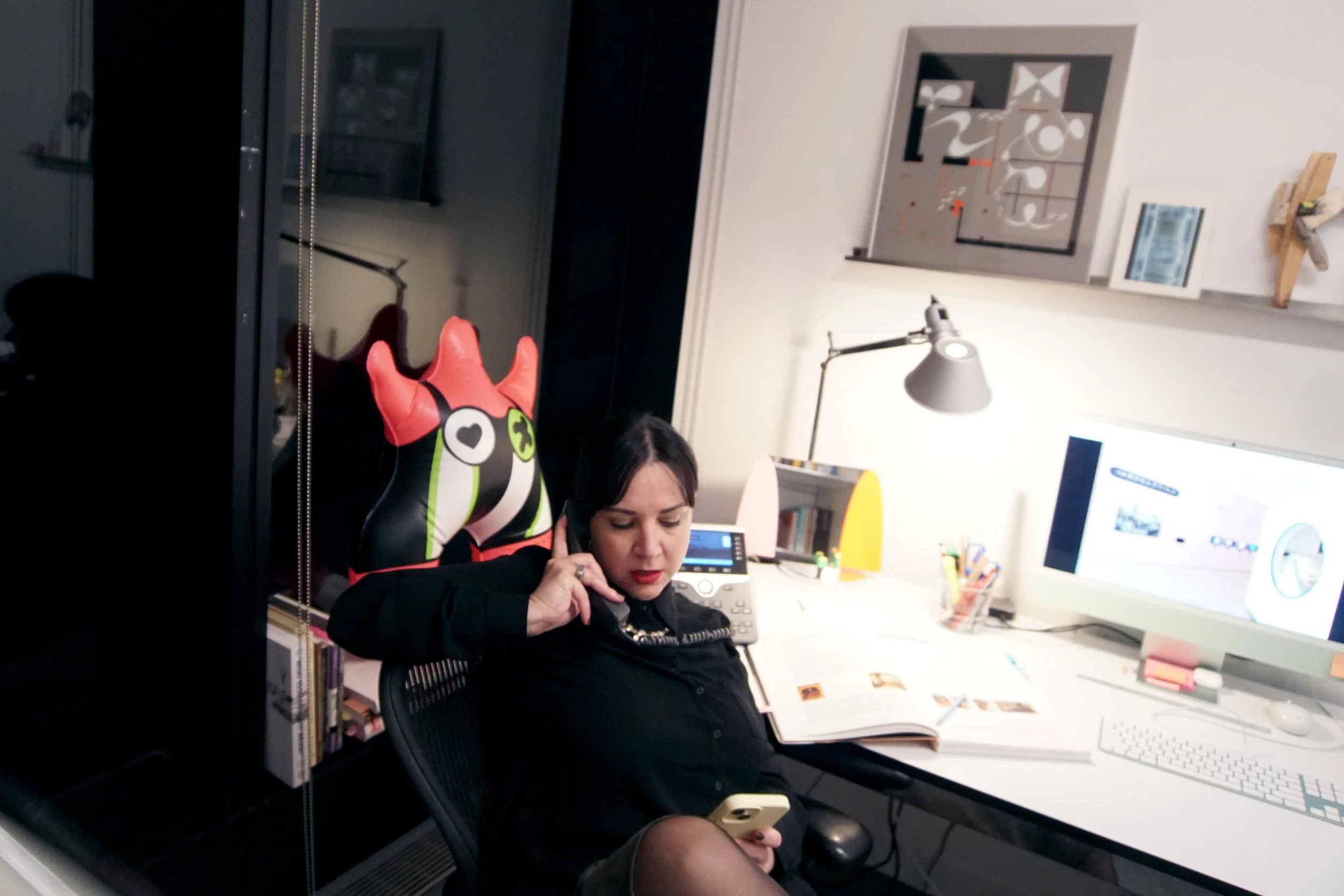
Paula Vilaplana by Helena Goñi. In the background is Goshka Macuga's "Exhibition M" (2019) at the Museum of Modern Art in New York. Commissioned on the occasion of The Museum of Modern Art’s 2019 reopening, courtesy the artist and Andrew Kreps Gallery, New York.
Paula Vilaplana de Miguel is a curator, cultural strategist, and creative director working across architecture and design, and technology. She currently serves as Assistant Curator in Architecture and Design at The Museum of Modern Art in New York (MoMA) and teaches at Syracuse University’s School of Architecture. Paula Vilaplana de Miguel has developed projects for institutions such as the Shanghai Art Biennial, The Victoria and Albert Museum, The Venice Architecture Biennial, Spore Initiative, Princeton University, Triennale Milano, and Ca2M, among others. Her work has been published in MoMA Magazine, The New York Review of Architecture, the Invisible Culture Magazine at Rochester University, Arquine, and the Het Nieuwe Instituut, and her projects have been featured in the press internationally.
6:15am: I snooze the alarm for a second time, which has been beeping intermittently since 6:00am. My husband is already awake and preparing a coffee he will gently set on my nightstand, a red cylindrical storage unit on top of which sits an equally red lampshade. Our giant cat Johnny—a Maine Coon mix—jumps onto my side of the bed. I start the day early but slowly; I read both the Spanish and US press, play Wordle and Connections, water the plants, and take care of minor house chores before leaving.
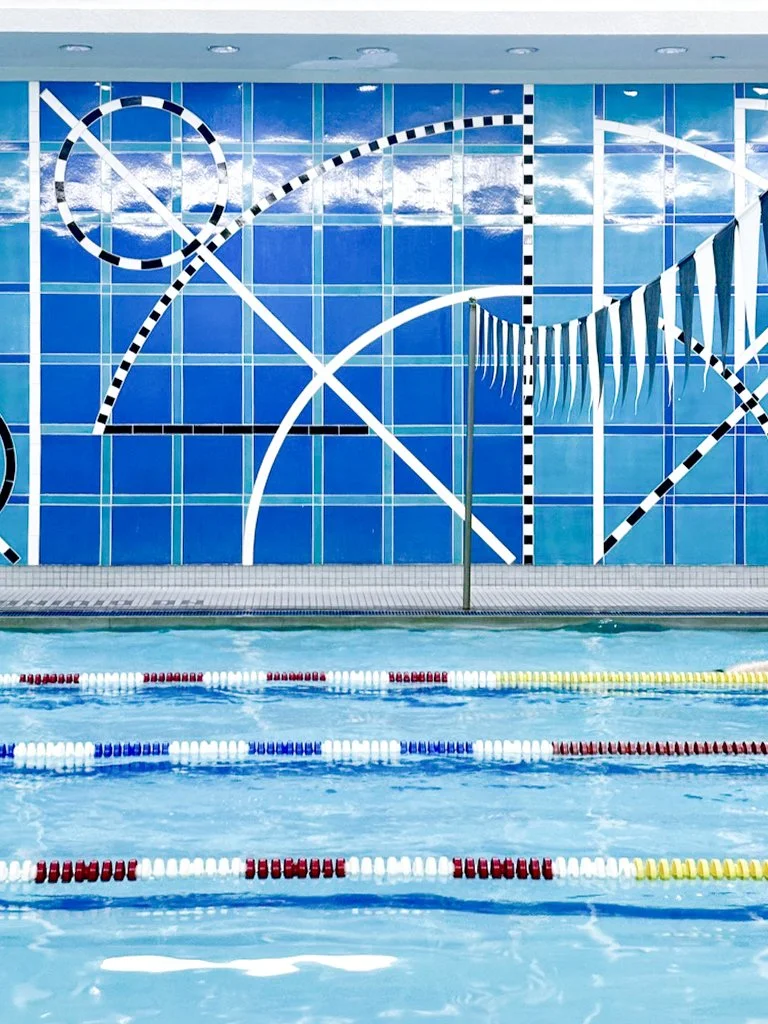
The pool at the Athletic and Swim Club. Photo by Paula Vilaplana.
7:15am: I call my parents on my way to the subway, who are based in Spain. They always pick up, whether they are at home, with friends, or at the grocery store—and always on speakerphone. I am at my loudest when speaking with them, which sometimes surprises colleagues and friends who are used to my softer tone in English.
8:15am: This morning, I have a lane reservation at the pool. I swim several times a week at a gym in the basement of the Equitable Building. Flanking the pool is a stunning blue, white, and black tile mural by Valerie Jaudon, commissioned in 1989 as part of the Edward Larrabee Barnes project.
I love how this gym is frozen in time, with its marble, wood, and golden fixtures signaling a bygone era. I also love its quietness and the sense of belonging that comes from joining a community that has frequented the place for decades. The staff is fantastic, too. Mostly Spanish speakers, we chitchat and commiserate on the little joys or misfortunes the day has thrown at us so far.
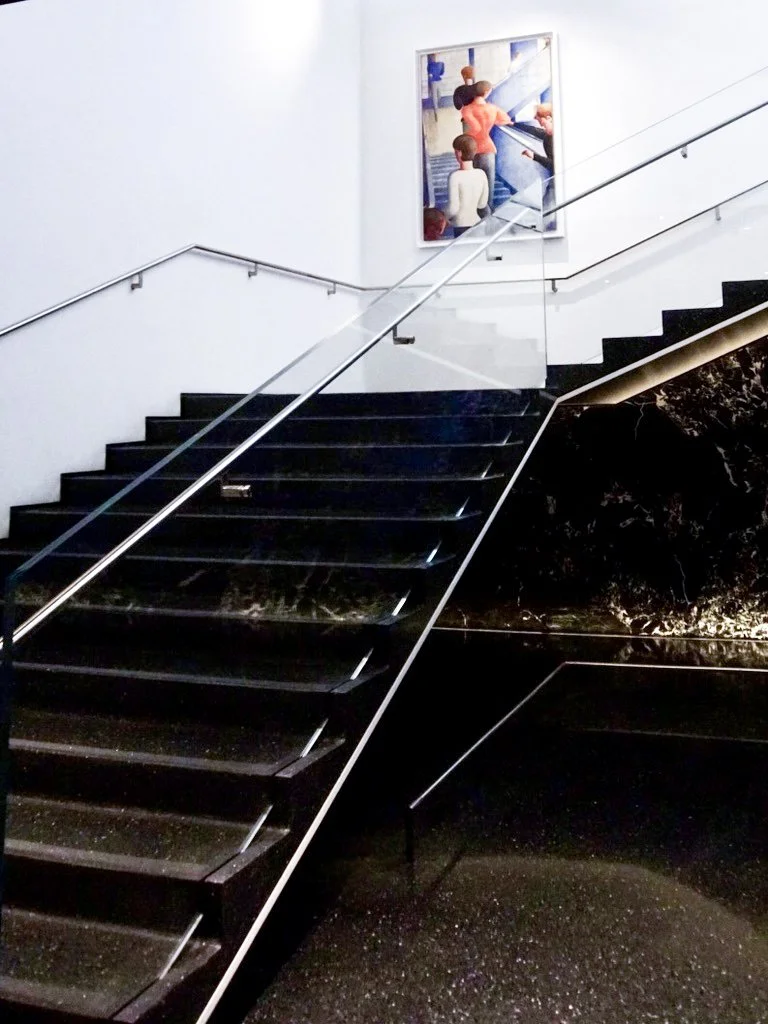
The Bauhaus Staircase at MoMA. Photo by Paula Vilaplana.
9:15am: I head to work, ready for the day ahead. I still get excited when I see the MoMA sign down the street and enter the building, heading up the Bauhaus staircase towards the museum’s offices.
9:20am: I grab a coffee from the staff cafeteria and head to my office. I spend the first few minutes replying to emails — I am the type to keep my work inbox at zero — before reviewing my running task list for the day and week. Few things are as satisfying as crossing off a completed task, big or small.
10:00am: I have an hour before my first meeting, so I dedicate it to exploring a book I just borrowed from the library ahead of an upcoming exhibition. Days fill easily with meetings, calls, and administrative tasks, so I try to reserve quiet moments, especially early on, for research.
11:00am: A group of architecture students is visiting the museum, and a few colleagues and I have organized an itinerary to walk them through the architecture and design projects currently on view. I am tasked with Body Constructs on the fourth floor and Down to Earth on the second, two collection galleries I co-curated with Evangelos Kotsioris.
I love working with the museum's collection. Even if these projects do not have the visibility of a special exhibition, to me they carry a different weight. Installing works that curators before me brought into the museum and placing them in conversation with new additions feels like engaging in a cross-generational dialogue.
12:00pm: The weather is still mild enough to eat lunch outdoors, which means taking one of the tables reserved for staff at the Sculpture Garden. I am lucky to have worked here long enough to have many colleagues I consider good friends, and we grab lunch together when schedules align.
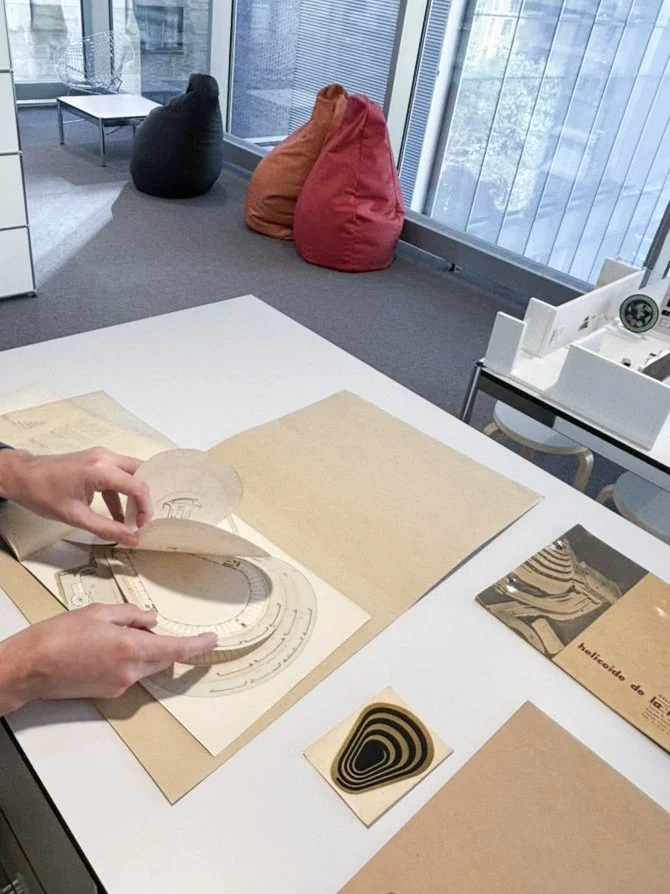
Paul Galloway showing archival materials for Caracas’ Helicoide de la Roca Tarpeya Project (Unidentified Designer, 1958) in the A&D Collection. Photo by Paula Vilaplana.
12:45pm: On my way back to the office, I run into Paul Galloway, Senior Collection Specialist in Architecture and Design, who is looking at some intriguing advertising materials from our archive. They turn out to be early brochures for El Helicoide, a futuristic shopping mall conceived in 1950s Caracas that was later transformed into an infamous prison and intelligence center. A wild piece of Venezuela's architectural and political history!
2:30:pm: I have a meeting with conservation colleagues to plan upcoming swaps in Down to Earth—light-sensitive materials must go off view every six months. They then enter a “resting period” —isn’t that fascinating?—until they can be showcased again.
To plan for these changes, we often build rudimentary models with miniaturized images of the works—called chips—to test their scale and relative positions in the gallery. The museum has a dedicated space called “The Model Room” with models of each floor and its galleries. They resemble foam-board dollhouses. Every so often, we gather around these models to map out major rotations floor by floor, using the chips to visualize changes. Nearby drawers hold dozens of chips representing works that were previously on view or are being considered for future displays.
3:00pm: I have a scheduled call with artist Peggy Weil, whose work was recently de-installed from the museum’s Gund Lobby Screen. One of the most enjoyable aspects of my job is connecting with living artists, architects, and designers, walking alongside them to help showcase their work.
5:00pm: Before being appointed to my current role, I impulsively purchased an electric blue bench that could not fit in my one-bedroom apartment, causing months of domestic contention. I temporarily stored it in an empty office—the very office I occupy today. The bench now sits near the door, and I love seeing how anyone who visits instantly sits on it, turning quick check-ins into informal conversations. Never underestimate the power of good design.
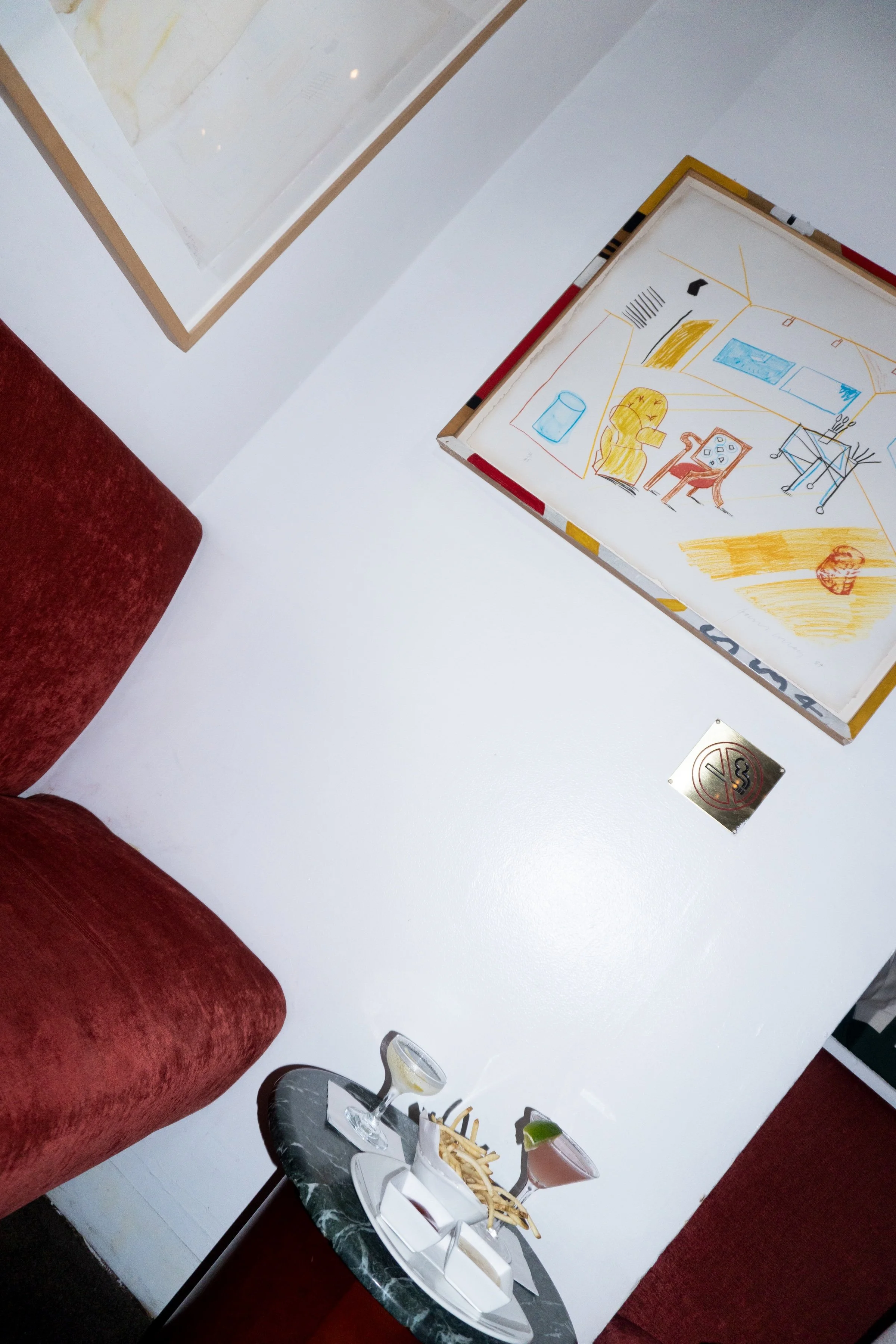
Martinis under the Hockney at Michael’s Restaurant. Photo by Paula Vilaplana.
5:30pm: I race to wrap up a writing deadline for an extended label before the end of the day.
6:00pm: It's opening night for a new exhibition at MoMA, but doors won’t open until 7:00 pm. A good friend is visiting the city, so a few of us rally to meet her at Michael’s, a New York institution devilishly close to the museum. It was a power breakfast spot in the 1990s for politicians and entertainment executives, and enjoys a much quieter presence today.
The owners—an artist and an art collector—display their outstanding collection on the walls, allowing you to sip a martini under a Hockney or a Frank Stella. I never fancied myself a Midtown girl, but I find myself truly enjoying these storied spaces that survive despite constant shifts in the city.
7:00pm: Back to MoMA for the opening of Brancusi: The Artist and His Studio. One of the galleries highlights the parties he threw in his studio, featuring delightful paper hats he crafted for his guests. Shoutout to the curators, Anne Umland and Mia Matthias from the Department of Painting and Sculpture.
8:30pm: Back home in Brooklyn. Johnny greets me at the door. My husband just got home from work too. We will negotiate who cooks and who washes the dishes,rewatch an episode of Parks and Recreation, and head to bed early.
10:30pm: I optimistically bring my Kindle to bed, and will most likely fall asleep after a few pages. I either read fiction or critical theory—no in-between. Now reading: How to See Like a Machine: Images After AI, by Trevor Paglen. Good night!
This piece has been edited and condensed for clarity.