A Day in Utrecht with Studio Sway's Shaakira Jassat
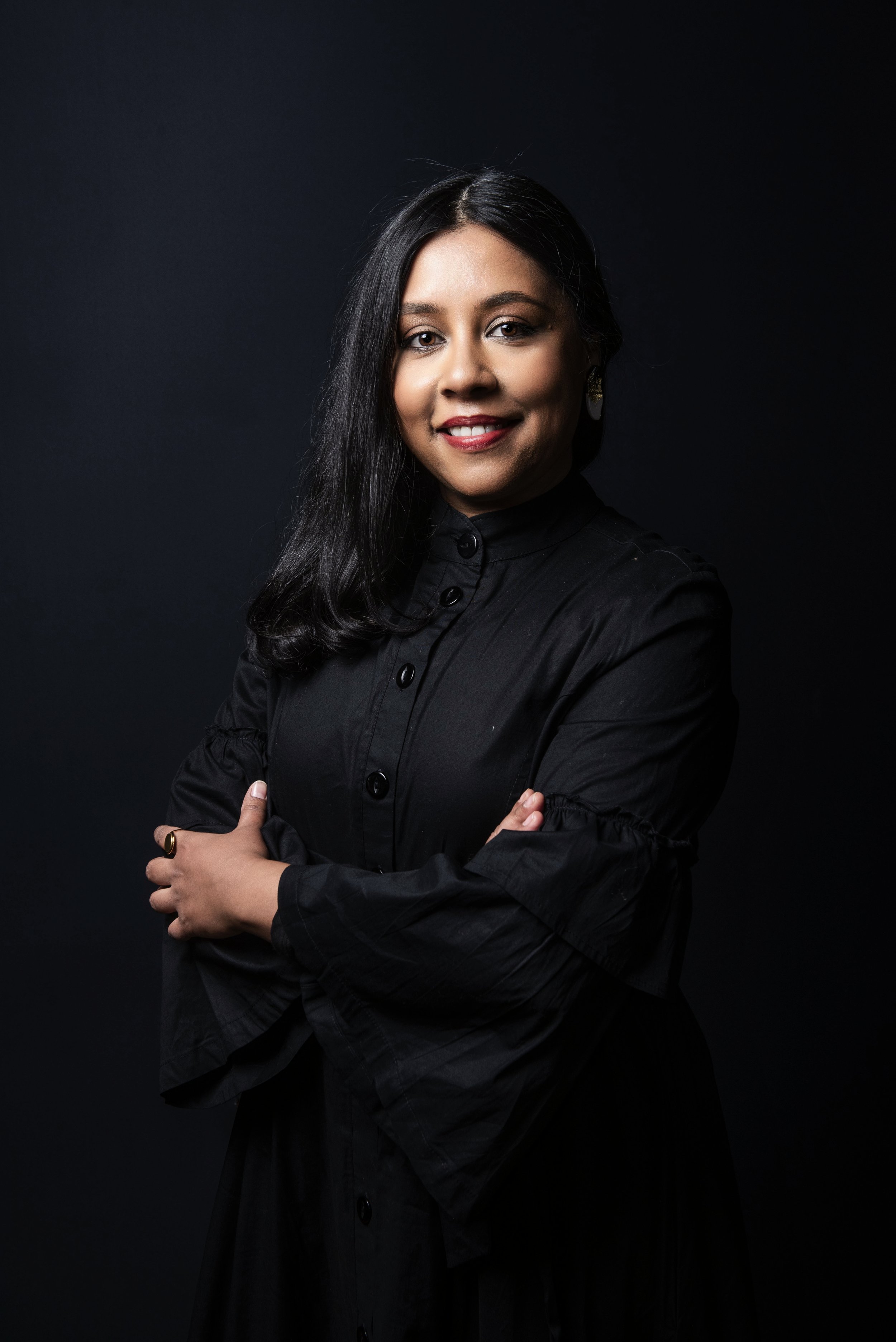
Shaakira Jassat by Alet Pretorius.
Shaakira Jassat is a South African designer, educator, interior architect, and founder of Studio Sway. Her interdisciplinary practice merges craft, design, and science to explore memory, ritual and regenerative futures. Drawing strength from the productive tensions between her South African roots and European design context, she reimagines our relationship with the environment. Her projects range from materials co-created with bacteria to pioneering a water harvesting facade system. She teaches at Design Academy Eindhoven, championing for design education grounded in real world contexts.
7:00am: The first thing I prefer doing on most mornings is a ritual like praying or choosing what I will wear for the day. Before leaving for the day, I also make sure to prepare both breakfast and lunch at home. I’ve learned that planning ahead makes a big difference when the day involves several hours of commuting. I live outside the inner city, so my journey begins with a twenty minute walk to the metro before continuing to Amsterdam Zuid station.
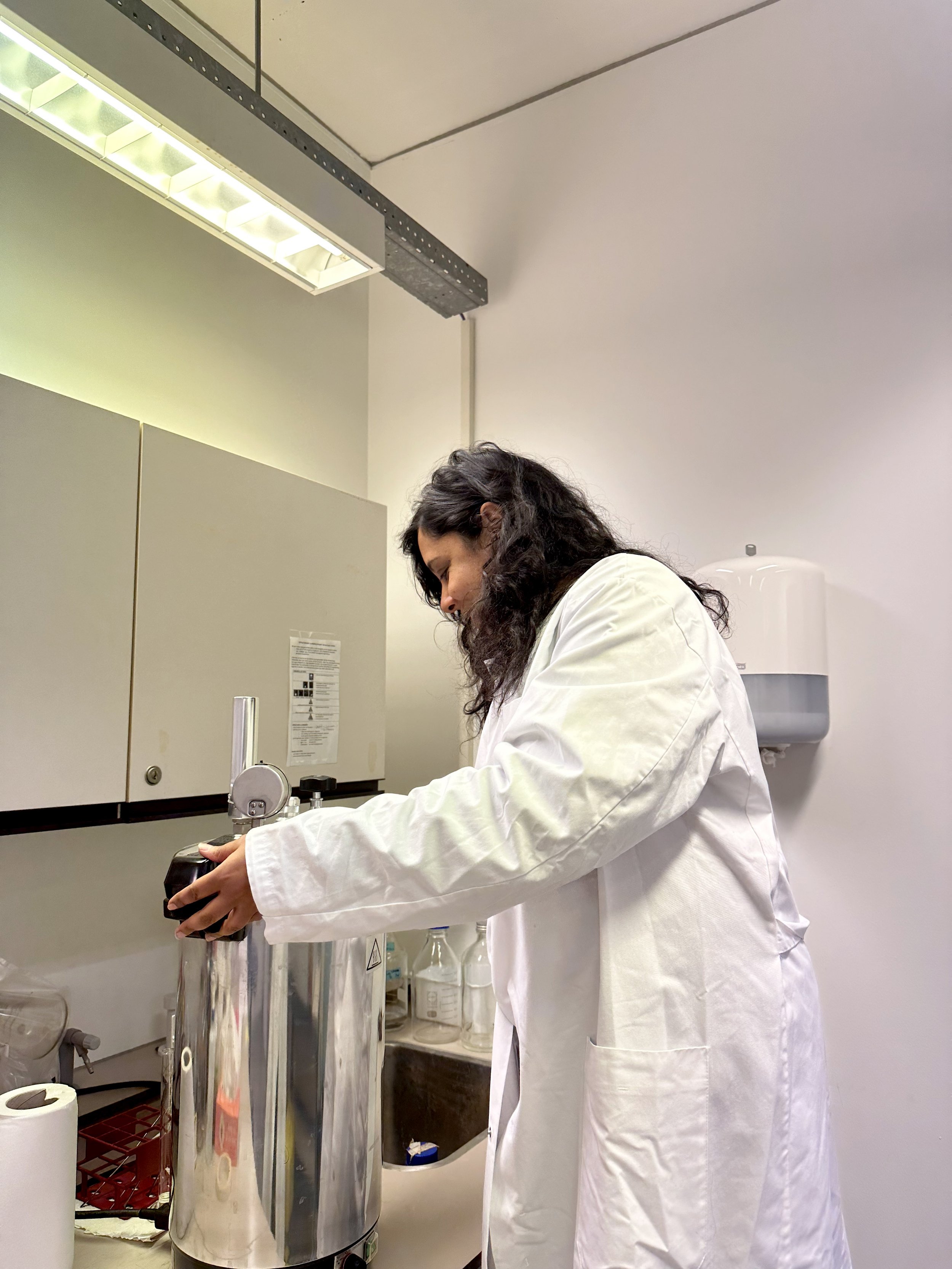
Shaakira at the lab, courtesy of Studio Sway.
9:30am: Today, I’m heading to Utrecht Science Park to continue my research with bacteria at the Department of Animal Welfare Laboratory. I prefer traveling just after 9am to avoid the morning rush of university students. This time also means off-peak fares, a welcome bonus!
10:30am: I arrive at the laboratory and prepare for the day’s work — putting on my white lab coat and sterilizing my hands and work surfaces. The lab technician Judith Hendriks has kindly offered to assist with the scientific side of my research. Having never worked with bacteria before, being able to work alongside someone with scientific expertise opens up possibilities that I would struggle to explore on my own.
My research investigates how bacteria can be used to create durable biomaterials from food ingredients and food waste. As a creative, I have a passion to alter the status quo by working between disciplines. My approach is fueled by formative years in South Africa. I was still a child when the first 1994 democratic election took place and we witnessed Nelson Mandela come in as the country’s first native president. Growing up in a changing environment forms the basis of my work.
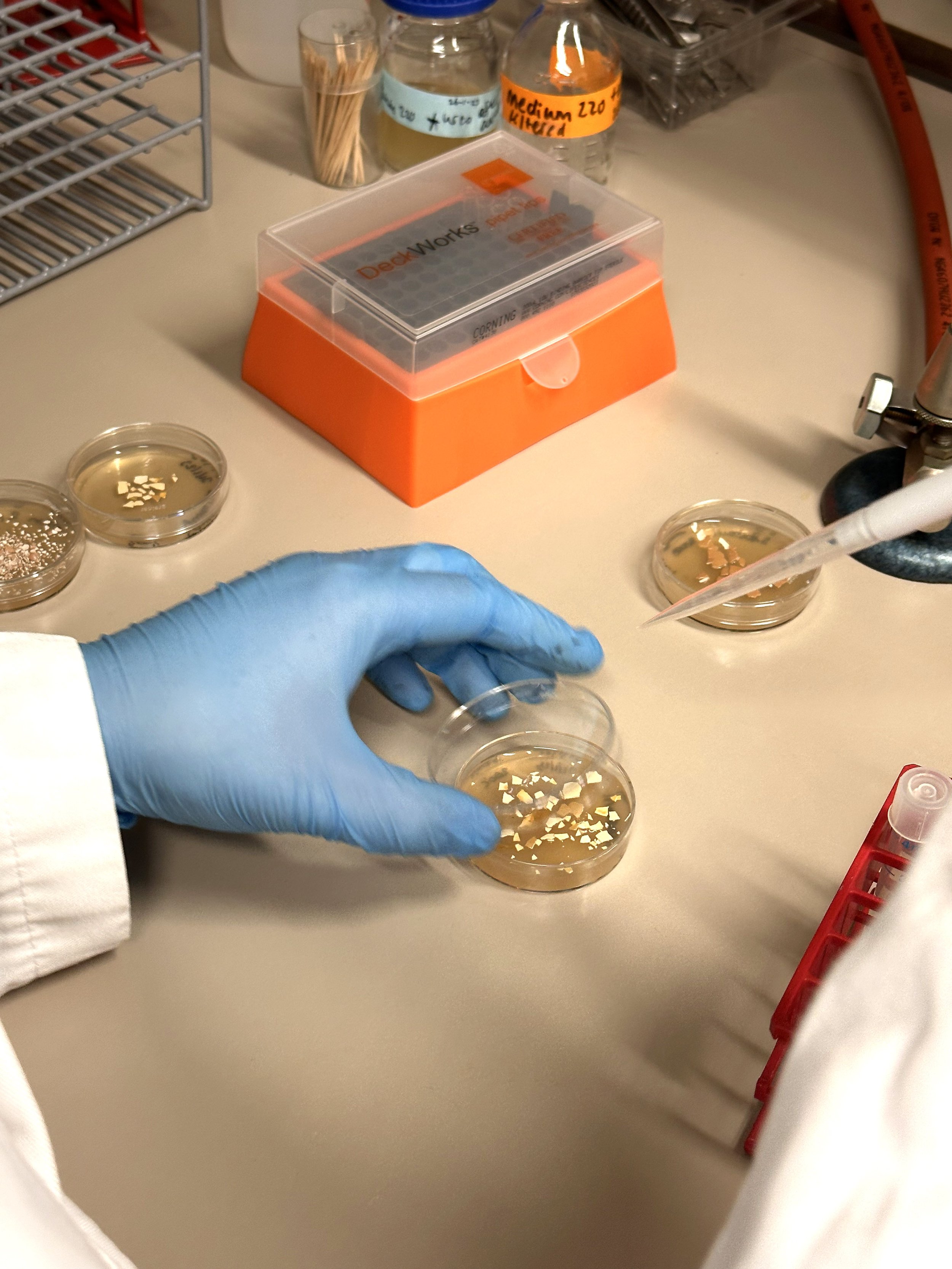
Working with the bacteria in the lab, courtesy of Studio Sway.
11:30am: I asses the samples from the previous round of experiments. Judith helps me culture the bacteria called Sporosarcina pasteurii, a bacteria that plays an important role in hardening materials at room temperature. I’m fascinated to see how biological processes can become collaborators in the making of new materials, offering alternatives to more conventional approaches for design and fabrication. This bacteria is known for hardening sand and my goal with the experiments we are doing is to see if there is any other matter that it can harden, in particular more renewable material sources and even waste, like eggshells.
12:30pm: It’s time for lunch, so I make my way to the staff canteen. Dutch is the main language spoken over lunch here at the lab. Having gone to school in South Africa, I learned Afrikaans at school, which means I can understand quite a lot of Dutch words. Speaking is still a little trickier, especially as most of my professional conversations takes place in English. I enjoy these everyday exchanges, which remind me that learning a language is as much about participation, as it is about understanding.
1:30pm: After lunch, Judith and I return to the laboratory to prepare the next round of experiments. I work on the material substrates, including eggshells and spinach powder, meticulously measuring and recording different quantities and placing them into moulds. Judith focuses on preparing the correct concentration of bacteria to give the experiments the best chance of success.
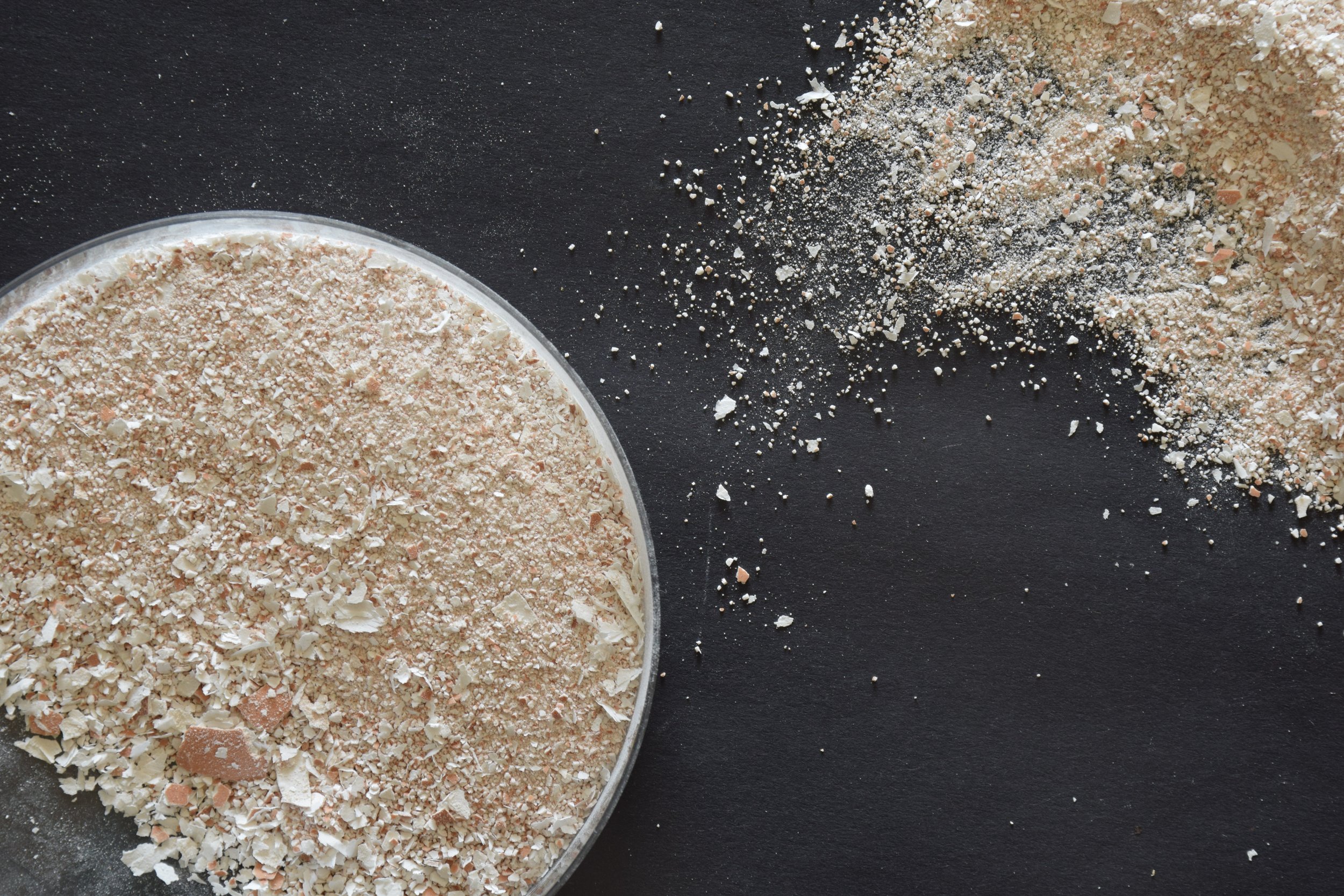
Eggshell powder, courtesy of Studio Sway.
4:00pm: The process of setting up the experiment takes a lot longer than anticipated. The process can be unpredictable; sometimes the materials act differently when mixed with bacteria, other times the moulds might not hold the mixture well enough. Judith also needs time to make sure the bacteria reaches the correct concentration. The thoroughness of these steps influences the outcome of the experiments, so recording all the data as well as following the protocol is important.
Being meticulous in the experimentation process is important and something I learned while working at the lab. I prefer a free flow way of working in my creative practice. Even though I have a technical background in interior architecture, I still took a while to get used to the scientific approach. I am very lucky to collaborate with Judith, because she also deeply appreciates art and even practices painting and photography.
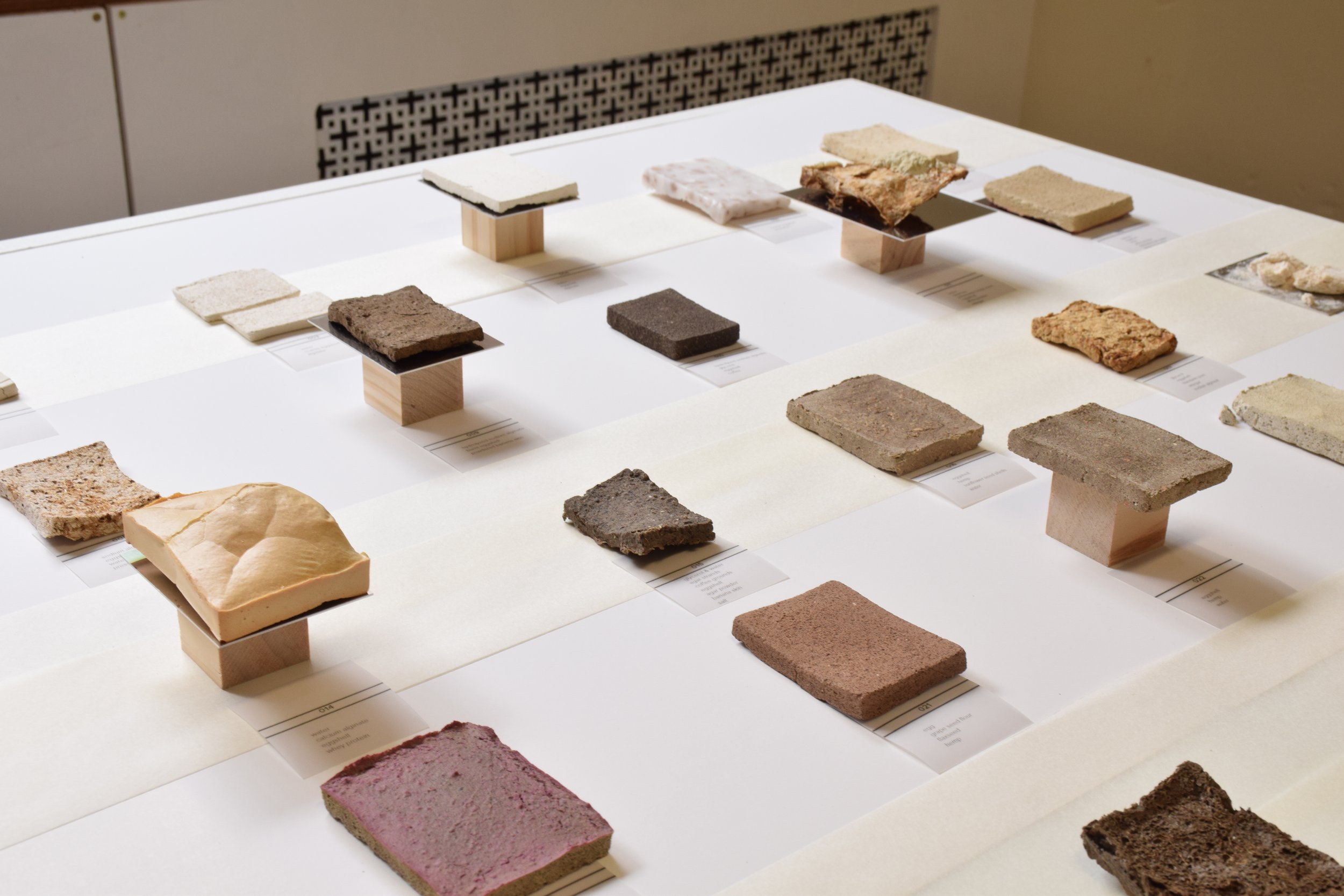
Eggshell Samples Exhibition, courtesy of Studio Sway.
5:30pm: Judith just left for home and I stay for a bit longer to complete the set up for ten experiment baths with the special urea solution. I immerse the molds in the baths and switch on the air pumps. Each cementation bath has small air pumps inside to ensure a good flow of oxygen over seven days. Once everything is set up, the samples are left suspended. Now comes the waiting game to see how the materials develop over the coming week.
6:30pm: I head home and hope to make it back in time for my group gym class. After a day spent between material samples, laboratory equipment, and scientific conversations, a change of pace feels well deserved. Maintaining a healthy lifestyle alongside a busy creative schedule can be challenging, but finding a good integration of exercise, diet, and work is becoming increasingly important to me.
10:00pm: The last bit of the day is about catching up with Levent, my husband. He has been incredibly supportive of my creative journey, while also reminding me of the importance of keeping healthy and strong along the way. I’m learning that taking care of myself is not separate from my practice, but is a part of what allows me to sustain it.
This piece has been edited and condensed for clarity.