UC Berkeley's Tessa Sunshine Reimer on Broadening the Field and Pushing What's Possible
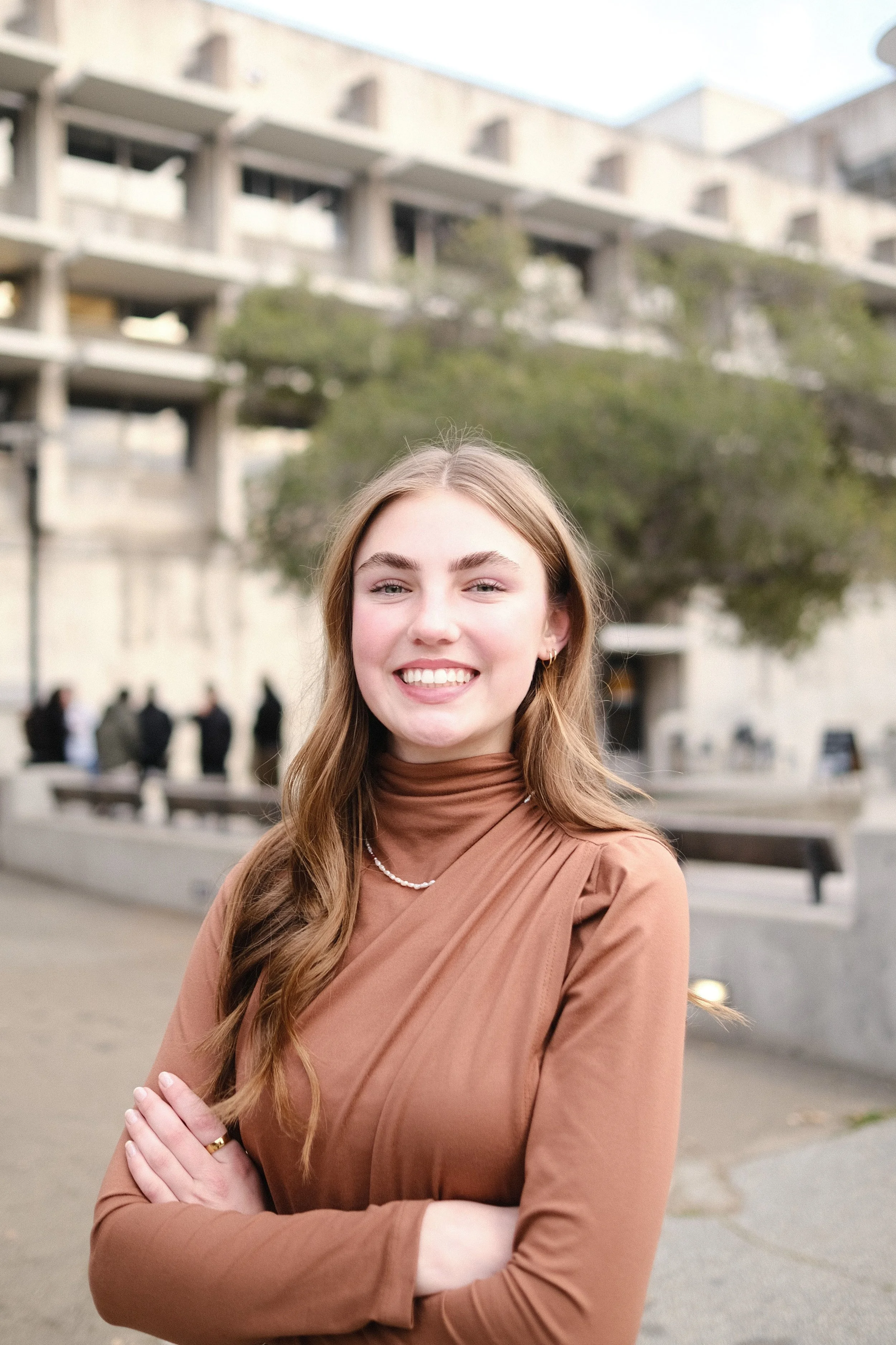
Courtesy of Tessa Sunshine Reimer.
By Julia Gamolina
Tessa Sunshine Reimer is an architecture student at UC Berkeley, minoring in Geospatial Information Science (GIS). She is a Founding Member of the Soaring Dreams Foundation, a nonprofit supporting children, youth, and women in Nepal through education, food security, and livelihood programs. Her work blends design, research, and social impact, with a focus on transparency, care, and long‑term partnership. Her hope is simple: architecture should make life brighter, kinder, and a little more possible.
JG: How did you choose where you'd study architecture?
TS: I grew up in Colorado's Grand Valley at a high school with no architecture or design classes, and I knew nothing about the difference between a B.A. and an M.Arch. I applied to a handful of programs without really understanding the field and I didn’t get into many. Berkeley felt like a long shot — almost a lottery. I only applied because my best friend dared me to! He didn’t think I’d get in and I wasn’t sure either. I applied anyway — somehow they picked me and I went. Getting that acceptance taught me a lesson I needed at eighteen: don’t let anyone shrink your sense of possibility.
What do you think you're gaining the most from your architecture education, and specifically from your time at Berkeley?
The biggest gift has been the people. Berkeley’s students are ambitious, curious, and hungry to learn. Studio is intense, but it’s filled with peers who dream about building practices together someday. I’ve also built meaningful relationships with UCB professors who shaped my education, like Maria Paz de Moura Castro King — my toughest critic. I have never produced more drawings than in her studio! She taught me that when you do not reach your design expectation, don’t give up. Produce. Produce. Produce. Your work will be as good as your ambitions.
Professor Aaron Forrest taught me how to back my design instincts with confidence. Do not ask whether designs are good enough. Sit with your instinct. Back your choice. Train your vocabulary. Let your audience form their own thoughts. A good design will spark its own discussion.
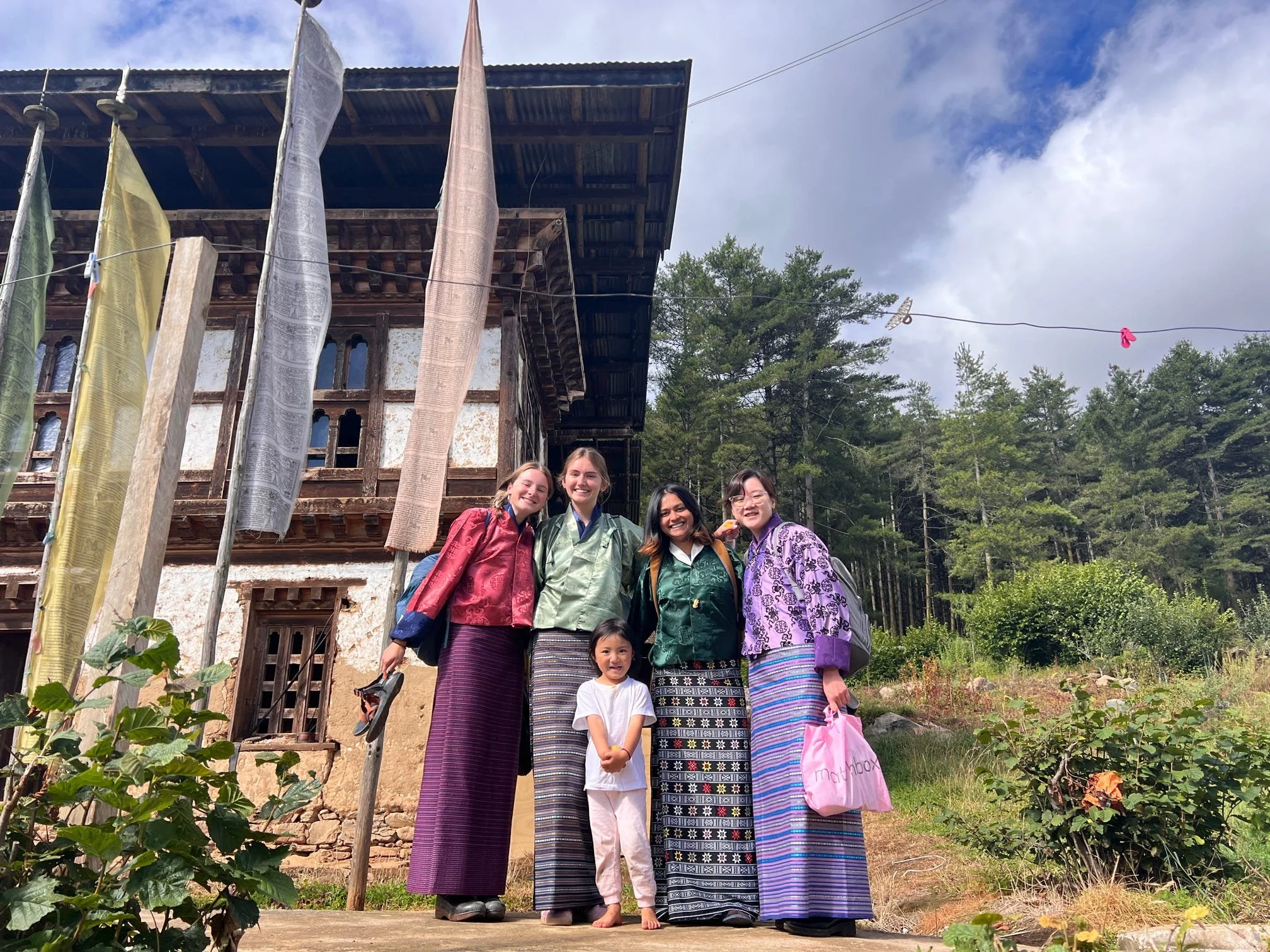
And finally, Karen Beardsley, UC Davis Director of Global Professional Affairs, led the Bhutan Summer Abroad Program where I learned GIS in one of the world’s happiest and most protected countries. Being immersed in its pristine, spiritual landscapes and listening to locals reshaped how I understand community, environment, and design.
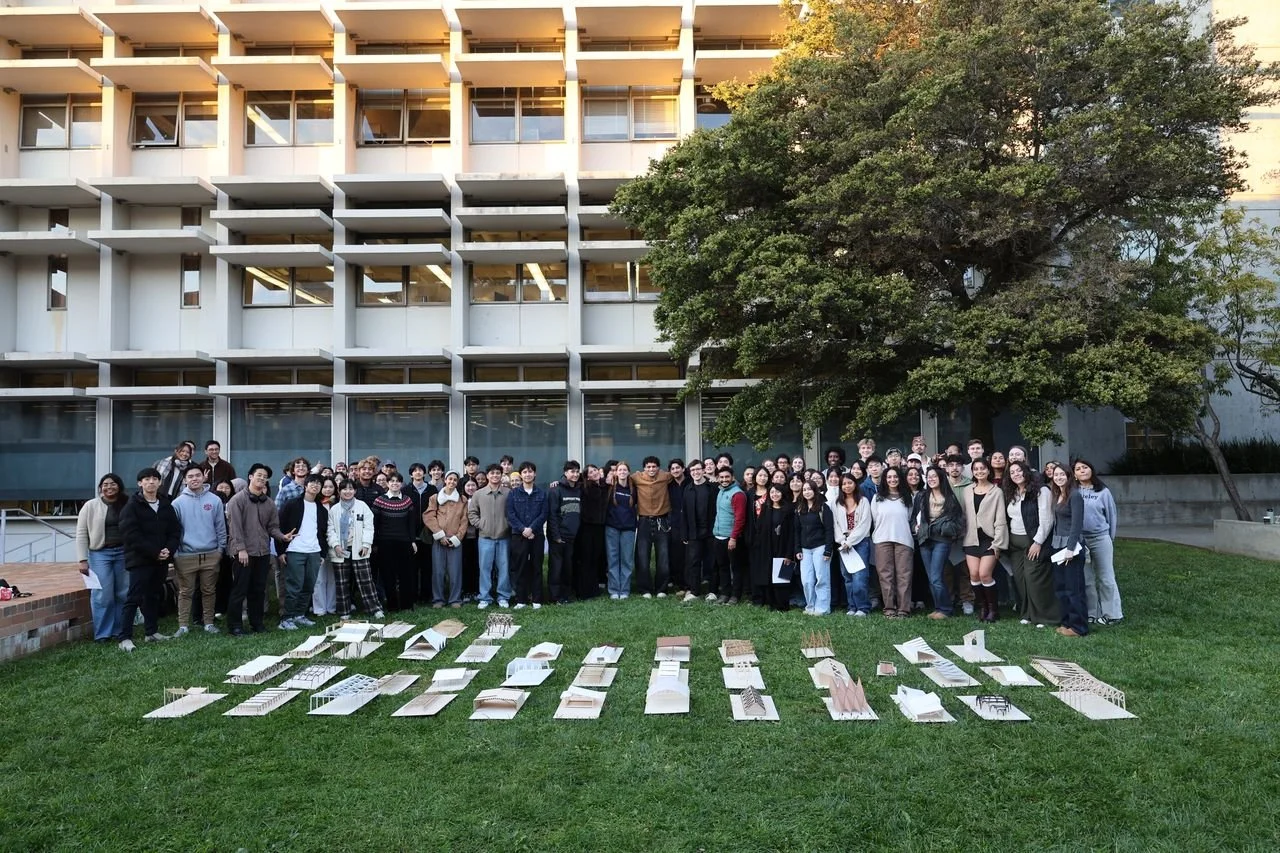
UC Berkeley Architecture — Class of 2026 students in Intro to Structural Design with Ramon Weber, photographed with their pavilion models. Photo credit: Ramon Weber.
What surprised you most about architecture school?
How hard it truly is. Architecture school is demanding, time‑consuming, and emotionally intense in ways I didn’t fully understand until I was in it. One of the first shocks was the sheer volume of waste the discipline produces. Model‑making, printing, foam, chipboard, acrylic — it all adds up. I’ve started rethinking how we use materials in studio. The waste we produce isn’t just an environmental issue. It exposes gaps in our design logic, our systems, and the values we choose to uphold.
I was also surprised by the architecture bubble. You can stay inside the studio track and never leave or you can step into other fields and let them reshape how you see design. GIS became that turning point for me. It showed me that design isn’t just about form; it’s about surveying needs in the community, from the land and people alike, and also questioning the invisible systems that shape how we live.
Finally, I was surprised by the cost — not just tuition, but supplies, workshops, printing, and the constant need for materials. With that cost comes pressure: to succeed, to justify the investment, to produce work professors feel proud to show. Studio can be intense and isolating, but stepping into other disciplines, other communities, other ways of thinking has shown me that architecture doesn’t have to operate within such narrow expectations. Broadening the field is how we make the program and the profession accessible to more students.
What does success look like to you at this stage?
Success is a tricky word. It means different things in different cultures and I don’t define my life by it right now. I define my life by perspective. A reminder I tell myself each day, from Inky Johnson, is that “perspective drives performance every day of the week — how an individual views what they do affects how they do what they do.” At this stage, perspective means showing up fully for my architectural work — learning how to think critically, design responsibly, and build the discipline that good design requires. I’m early in my career and my job right now is to grow my skills, sharpen my taste, and learn from the people around me.
Perspective also shapes how I balance my commitments. I’m building my architectural foundation while co‑leading a nonprofit that is an equal priority in my life. Holding both with intention and showing up with humility for the work in front of me is what success looks like right now.
“...when you do not reach your design expectation, don’t give up. Produce. Produce. Produce. Your work will be as good as your ambitions.”
What kind of firm would you like to work for?
After graduation, I plan to move to the UK because my architectural interests are rooted in its built environment. I care about historical preservation, adaptive reuse, and the ways GIS and digital reconstruction can help us understand and rebuild damaged or lost sites. The UK has a long tradition of treating heritage as a living, evolving responsibility, and I want to learn from that. I’m especially drawn to firms like Purcell, Feilden Clegg Bradley Studios, and Donald Insall Associates, whose research‑driven preservation work reflects the direction I hope to grow in. Many of them are based in cities like Bath, Bristol, Manchester, Cambridge, and Edinburgh — walkable, young, human‑scaled places where I can build a connected life.
I’m looking for a firm that understands that a full life makes you a better designer. For me, that comes from the communities and rituals that shape me — late‑night tennis, community volleyball, live jazz, hosting dinners, nonprofit work, and calling my family on long walks. These practices keep me steady and remind me that good design comes from being a whole person.
What do you read and how do you stay up-to-date on what's happening in the field?
I stay current by staying connected to people and their practice. At Berkeley, I attend the weekly lecture series at the College of Environmental Design. I also held a position as a student director for AIA East Bay where I sat in on board meetings, hearing directly from practitioners about emerging issues in the profession. I take on small freelance design and GIS projects for family and friends, which keeps me experimenting with new tools and workflows.
Whenever I can, I jump at the chance to attend conferences — recently Greenbuild and the AIAS West Quadrant Conference — which expose me to new materials, ideas, and approaches across the profession. For me, staying up‑to‑date isn’t just about reading; it’s about staying in conversation with the people doing the work.
How do you manage stress in school?
I manage stress by staying connected and staying honest. I ask for help from peers, professors, and campus resources and I’m open with friends and family about the reality of these four years. Sharing has helped the people in my life understand the intensity and purpose behind the way I’m working right now.
This year, I’ve also been taking a UC‑wide course called Personal and Community Resilience in the Era of Changing Climate. It’s been a grounding force for me. Being in the College of Environmental Design — and in architecture more broadly — means carrying a lot of climate anxiety and this class has taught me mindfulness tools that help interrupt doom‑thinking about our future world. I practice meditation weekly, both in group and on my own, and it’s become one of the most important ways I stay steady. I urge every architecture program to adopt a course like this; the model is adaptable, accessible, and something I believe should be taught anywhere, to anyone preparing to design for a changing climate.
What kind of impact do you hope to have?
Even though my academic and professional path is in architecture, the deepest impact I hope to have is through my volunteer nonprofit work. This year, Vicky Wong, Mei Vong, and I co-founded the Soaring Dreams Foundation, a U.S. nonprofit supporting children, youth, and women in Nepal through education, food security, and livelihood programs. Hearing about children working in unsafe street conditions instead of attending school grounds my purpose and reminds me why youth‑centered, community‑led work matters. Our nonprofit’s name is inspired by the kites flown during Dashain — symbols of hope that remind us dreams can rise, soar, and come true no matter how far away they may seem.
Our long‑term vision is to help build a youth learning center: a space where kids can feel safe, learn, and imagine futures shaped by dignity and possibility. To do this responsibly, I plan to spend time in Nepal after graduation, listening directly to families, educators, and youth so the work reflects what the community actually needs. The impact I hope to have is simple: to help youth imagine a future that truly soars.
“Life can change quickly. Aim high, see yourself at the apex of what is possible, and then push a little further.”
Who do you look up to, and why?
I look up to His Majesty Jigme Singye Wangchuck, the Fourth King of Bhutan, whose creation of Gross National Happiness redefined what national progress could mean. At a time when most countries — including the United States — measured success almost entirely through GDP and economic output, he proposed a framework rooted in well‑being, cultural continuity, environmental stewardship, and community vitality.
My own research on GNH has deepened that admiration. Through mapping rural happiness in Bumthang, Bhutan, studying community forests and protected areas, and analyzing the proposed Gelephu Mindfulness City, I’ve seen how his philosophy translates into real landscapes and real policy decisions. His leadership taught me that development can be both ambitious and humane, and that communities thrive when their values, histories, and environments are treated as foundations rather than obstacles.
Favorite building? Favorite architect?
I’m inspired by architects who are reshaping the field with honesty, courage, and a deep understanding of our climate responsibilities — from Julia King’s community‑embedded work, to Anna Heringer’s earth‑based construction, to the circular‑material research of Catherine De Wolf and the climate‑justice leadership of Yasmeen Lari. Their practices remind me that architecture can be low‑carbon, community‑rooted, and deeply connected to the outdoors.
On a personal level, Abby Happel has been the junior architect who made the profession feel relatable and human for me; her mentorship at Berkeley shaped how I see myself in this field.
If I had to choose one favorite building, it would be the Dodeydra Buddhist Institute in Thimphu, Bhutan — the experience of reaching it reshaped how I understand place. The long trek through forested mountains, the wildlife along the path, the quiet separation from the city, and the expectation that once you arrive, you stay — all of it makes the architecture inseparable from wilderness, ritual, and time.
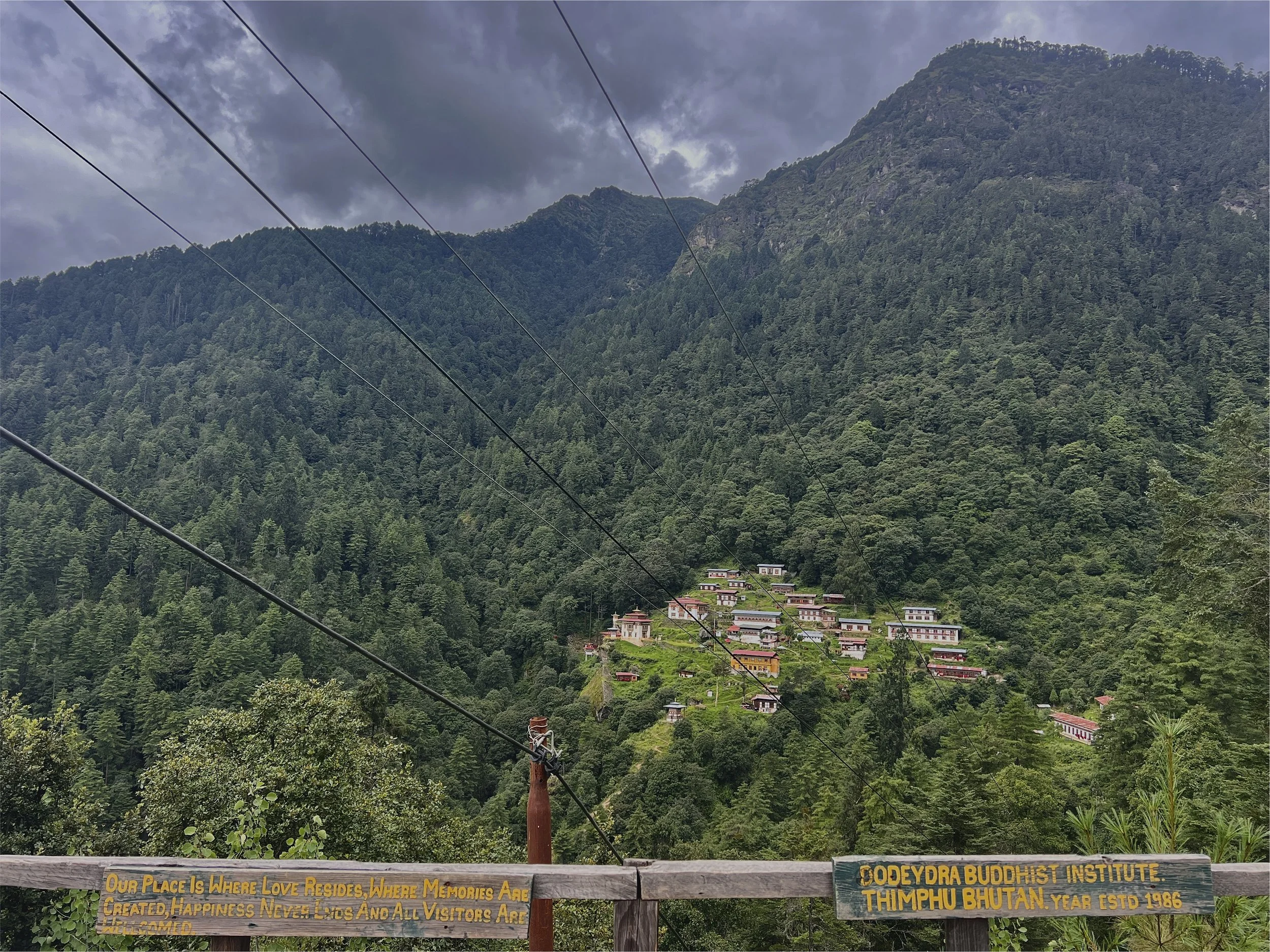
Dodeydra Buddhist Institute in Bhutan — an ideal built environment. Photo taken by Tessa.
When you look ahead to six months, two years, five years, and ten years from now — what do you see for yourself? For the built environment?
In six months, I see myself in Nepal with the Soaring Dreams Foundation, listening, learning, and working alongside families, educators, and youth to shape a learning space that reflects their needs and dreams. By the end of the year, I hope to help bring the first phase of that space into reality — something built with care, humility, and community at the center.
In two years, I see myself in the UK, working in a practice that values balance, community, and thoughtful design. I want to build GIS work that is rigorous enough to earn major research funding, bold enough to support field travel, and impactful enough to be recognized by institutions like UNESCO or published by outlets such as National Geographic, The New York Times Climate Desk, or The Washington Post’s Visual Forensics team.
In five to ten years, I hope to reconnect with my Berkeley peers and build a practice rooted in circular principles — one that treats materials, sites, and communities as part of an ongoing continuum. I also hope to be doing more on‑site work in Nepal, speaking enough Nepali to support language classes, and returning to Royal Thimphu College to teach or collaborate. And somewhere in that same window, I would love to contribute work to the Architecture Biennale or even become a National Geographic Explorer!
For the built environment, I hope to see architects move away from authorship and toward participatory processes where communities shape the spaces they inhabit. Locals carry the memory of a place — its climate, its histories, its rhythms — and architecture is at its best when it honors that continuity. And if we get this right, the built environment a decade from now will feel a little lighter and a little kinder. Life can change quickly. Aim high, see yourself at the apex of what is possible, and then push a little further.
This interview has been edited and condensed for clarity.