Meet Our Partners: Payette's Ching-Hua Ho and Susan Blomquist on the Future of Healthcare, Developing Your Point of View, and Leaning Into Your Strengths
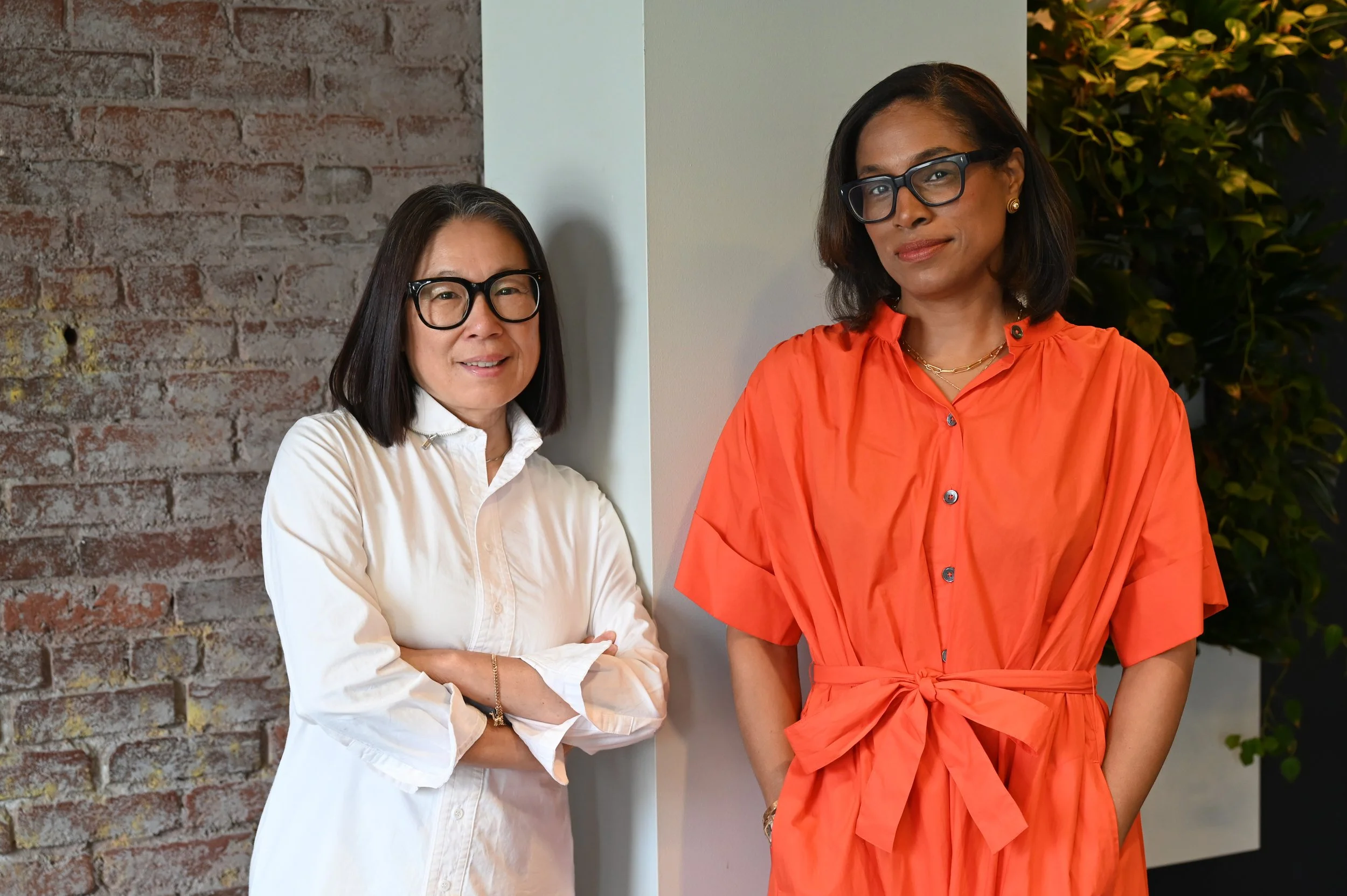
Ching-Hua Ho and Susan Blomquist. Photography by Mia Cantacesso.
By Julia Gamolina
Ching-Hua Ho and Susan Blomquist (AIA, ACHA, NOMA, LEED AP) are Principals at PAYETTE with decades of healthcare design experience. Ho, educated at Yale and in Taiwan, has worked on hospital and medical campus projects internationally and domestically. Blomquist has designed for numerous healthcare institutions with a focus on academic medical centers. Together they bring complementary perspectives and leadership to this complex building typology, treating design as an act of human dignity.
As architects most focused on healthcare, what’s most top of mind for you both? What should all of us be paying attention to in healthcare at large?
CHH: Healthcare facilities are a highly functional, machine-like building typology. Achieving effective operation and optimizing complex clinical organizations takes not only problem-solving skills but an art of forming. Creating a joyful healing environment with an effortless look can be a process that healthcare designers truly enjoy. To me these are foundational design exercises. Turning challenges into new opportunities allows transformation to happen, and well-being should be our focus across all building typologies.
SB: Everyone has become hyperaware of the rapid growth of A.I. However, I don’t think people appreciate its impact on how healthcare delivery will be impacted in a very short time. The future of healthcare will be much more automated and less centered around direct human intervention. Hospital leadership and administrators are trying to design buildings with a minimum 50-year lifespan without fully knowing how A.I. and other rapidly emerging technology will impact care delivery in as little as one to two years. Diagnostic and procedure tools are becoming increasingly complex and powerful for a future that will include less human involvement.

Dana-Farber Cancer Institute / Beth Israel Deaconess Medical Center, Lavine Bekenstein Cancer Hospital at Dana-Farber. Currently under construction. Image courtesy of PAYETTE.
Susan, you studied at UVA and Ching-Hua, you studied at Yale and two universities in Taiwan before coming here. Which takeaways from your education still informs your approach today?
CHH: Women in design were very rare when I started my architecture education in Taiwan — only seven out of sixty in my class were female. The encouragement from my professors was overwhelming. It taught me to stand up for my point of view and the values I believed in, even in the male-dominated society at the time. My education at Yale freed my mind and taught me to experiment with design through making, not bound by what I already knew or had learned. This still greatly influences my design approach today in that every project is unique and deserves its own fresh exploration.
SB: My education at UVA in the late ‘90s and early 2000’s, came at the time when architecture education amplified regionally responsive and vernacular-inspired design invention. Additionally, UVA’s Architecture School education has always deeply intersected landscape architecture and building design. This background likely influences my championing authenticity and clarity of concept in our project work, and makes me prioritize PAYETTE’s mission to embed nature in our healthcare design whenever possible.
“Accumulated experience matures a designer’s work over time and establishes their individual point of view and values. And passion is the force behind the success and longevity of a career.”
What was some of the best advice you got early on that has informed your approach to your work and career?
CHH: Eric Owen Moss was my first design critic at Yale. He told me, "You know what you do well and you need to liberate yourself to try something you’ve never done before. Otherwise, you will fail." I struggled to make that change after receiving his advice, but by the end of the semester I experienced the happiness and sense of liberation that comes through the exploration of making in architecture. That advice is what I remind myself of at the beginning of every project.
Sho-Ping Chin was the principal I worked with for more than eighteen years at PAYETTE. She taught me compassion in architecture and how the practice should be expanded to serve underserved communities. Architecture communities can do more to improve quality of life beyond the clients we work with.
SB: Most of what I learned early on that informed my work and career came from what people were not doing well. A lot of what I’ve done and continue to do is to try to find the unfulfilled need or areas requiring attention, whether on a project or with a client, and try to improve and focus more energy on that gap. I’ve always been a very independent-minded person so I’ve tried to channel that into carving out space on projects where I can accomplish something that truly drives me while also contributing towards the greater team and project effort. I learned that you are better served, and can serve better, when you lean fully into your strengths.
Tell me about your professional experiences before joining Payatte. What did you learn with each step?
CHH: I worked six years in Taiwan before applying to Yale School of Architecture, and during that time I participated in design for various building typologies, including airports, residential complexes, high-rise office towers and hospitals. Once designers understand the essential needs and limitations of different typologies, there is no need for boundaries in the process or the design exploration. When people say I specialize in healthcare design, I would agree that I have a specialized knowledge of clinical planning, but the biggest enjoyment I get out of my career comes from the broader design process.
SB: Before I joined in 2004, I spend three years splitting my time between teaching undergraduate architecture studio at UVA and working at a firm in Charlottesville called Daggett & Grigg. Daggett & Grigg were extremely generous in allowing me to balance work and teaching in a way that was a privilege. Teaching allowed me to maintain a foot in academia while also starting my professional journey. The college-town bubble, however, wasn’t contributing to my overall growth and experience as an architect and ultimately, I made the decision to move on a full-time firm setting in Boston.

Hengqin Hospitals & Medical Campus. Project currently under construction. Image courtesy of PAYETTE.
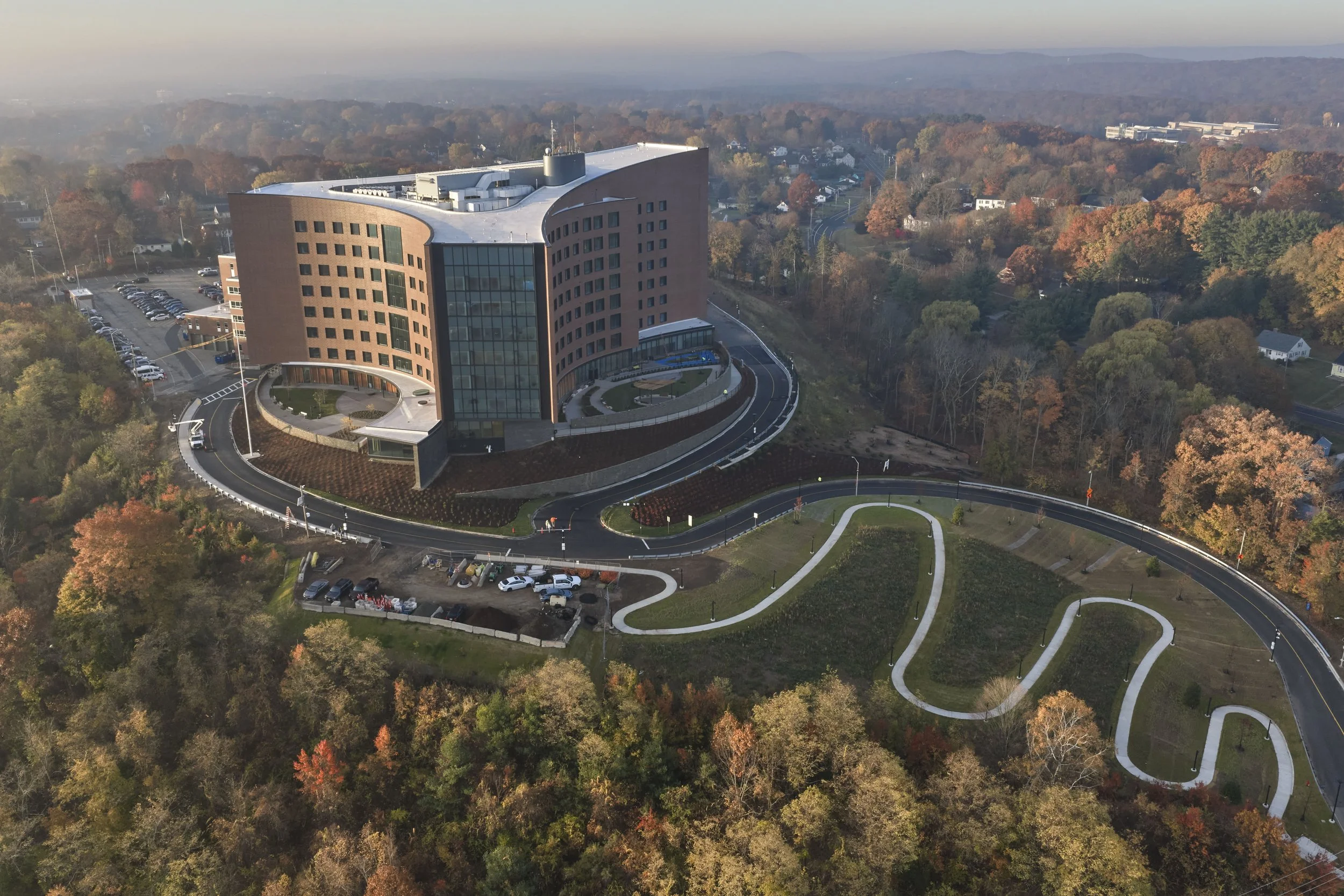
Holyoke Veterans Home. Project currently under construction. Image courtesy of PAYETTE.
Looking back at it all, what have been the biggest challenges? How did you both manage through perceived disappointments or setbacks?
CHH: When a value or vision for a project shifts toward something higher, we can all work together to make that positive transformation happen. When it shifts in the opposite direction, it becomes challenging to maintain the teamwork and consensus that projects need.
Early on in my career, there was a pivotal and challenging meeting where I needed to make a decision to stand up for the firm’s design values. I asked to lead the design effort and generate cohesive design solutions for the project. It took quite some time to find my voice as a leader, and I was happy I did.
SB: The biggest challenge was learning and adapting to the high level of detail and technical knowledge required to plan healthcare spaces. At first, that learning curve felt intimidating and insurmountable, but I eventually found areas of interest in the typology that really inspired and motivated me. Also, when I first started at PAYETTE, I found it difficult to find my footing within the big project team environment. It took successfully executing smaller, one or two person team projects in my own way to gain both self-confidence and the skillsets to more meaningfully contribute larger projects and teams.
I’ve treated most of the major disappointments I’ve experienced as motivation. I immediately try to formulate how I would treat similar situations in the future and grow from there. The biggest motivation anyone can give me is to tell me I am incapable of something. It’s my secret internal drive, I am quietly relentless when it comes to being underestimated.
Who were your mentors through it all?
CHH: Sho-Ping was my life-long mentor and a very close friend. She taught me compassion in architecture, and her curious and adventurous mind inspired me and pushed me to go beyond the ordinary. We supported each other through eighteen years of architectural practice; the relationship between us went beyond the typical professional mentorship; it was a life-long design companionship. Her style of mentorship also taught me the importance of giving young designers learning opportunities and the space to grow and explore, while remaining available every step of the way to provide my support.
SB: Sho-Ping Chin also convinced me that healthcare design can have such a meaningful and direct impact on people’s lives. Ching and I share Sho-Ping as a person that continues to influence our commitment to compelling healthcare design and advocacy within the profession. Kenneth Schwartz, a former professor and colleague at UVA that was more recently the former Dean of the Architecture School at Tulane, has also been an extremely encouraging champion outside of the office over the years.
“I learned that you are better served, and can serve better, when you lean fully into your strengths.”
Who are you admiring now and why? (Here, I am looking for specific shoutouts to people doing wonderful work in the world that you think our readers should know about)
CHH: The immersive experience of Yo-Yo Ma's music always touches my heart, and is my go-to to ease my busy mind. I admire how Yo-Yo Ma connects people through his powerful performances and invites global collaboration across cultures, bringing awareness to a fragmented society and uniting human minds for a better future. Architecture is also a universal language, one that connects people and brings inspiration to their daily lives. Perhaps because Yo-Yo Ma is also from an immigrant family, he uses music across cultural barriers as a universal language that builds harmony for the world. I moved to the US and built my own career path and family, alone.
SB: My friend Azadeh Rashidi co-leads a newly formed practice called Schulhof Rashidi Architects. Azadeh spent most of her career executing many of Tod Williams Billie Tsien’s most influential projects before taking the leap to co-found a firm with Paul Schulhof. I am so excited to see projects like their recent Dubuque Museum of Art come to realization.
What is the impact you’d like to have on the world? What is your core mission? And, what does success in that look like to you?
CHH: I hope to inspire the young designers around me to find endless beautiful possibilities in the exploration of architecture. Building a harmonious connection between inhabitants and their surrounding nature will always be my core mission. Success for me is seeing joy in the people around me.
SB: My mission is to create healthcare spaces that uplift and elevate the healthcare experience for all. Beyond my project work, I try to serve as a champion for increasing diversity in underrepresented ethnicities in architecture. There are still far too few licensed Black women architects in this country and even fewer are partners or principals at AIA Firm Award-winning firms. I understand that I bear the responsibility of representation in that respect. I am extremely proud of organizing and supporting efforts within PAYETTE to increase the number of underrepresented persons in our office. These efforts have yielded an enriched office culture and broadened design dialogue within the firm. PAYETTE’s goal is to not only diversify but to ensure that we are building towards increased equity in our firm leadership.

Mass General Brigham, Imaging at Assembly Row. Photography by Warren Jagger Photography.
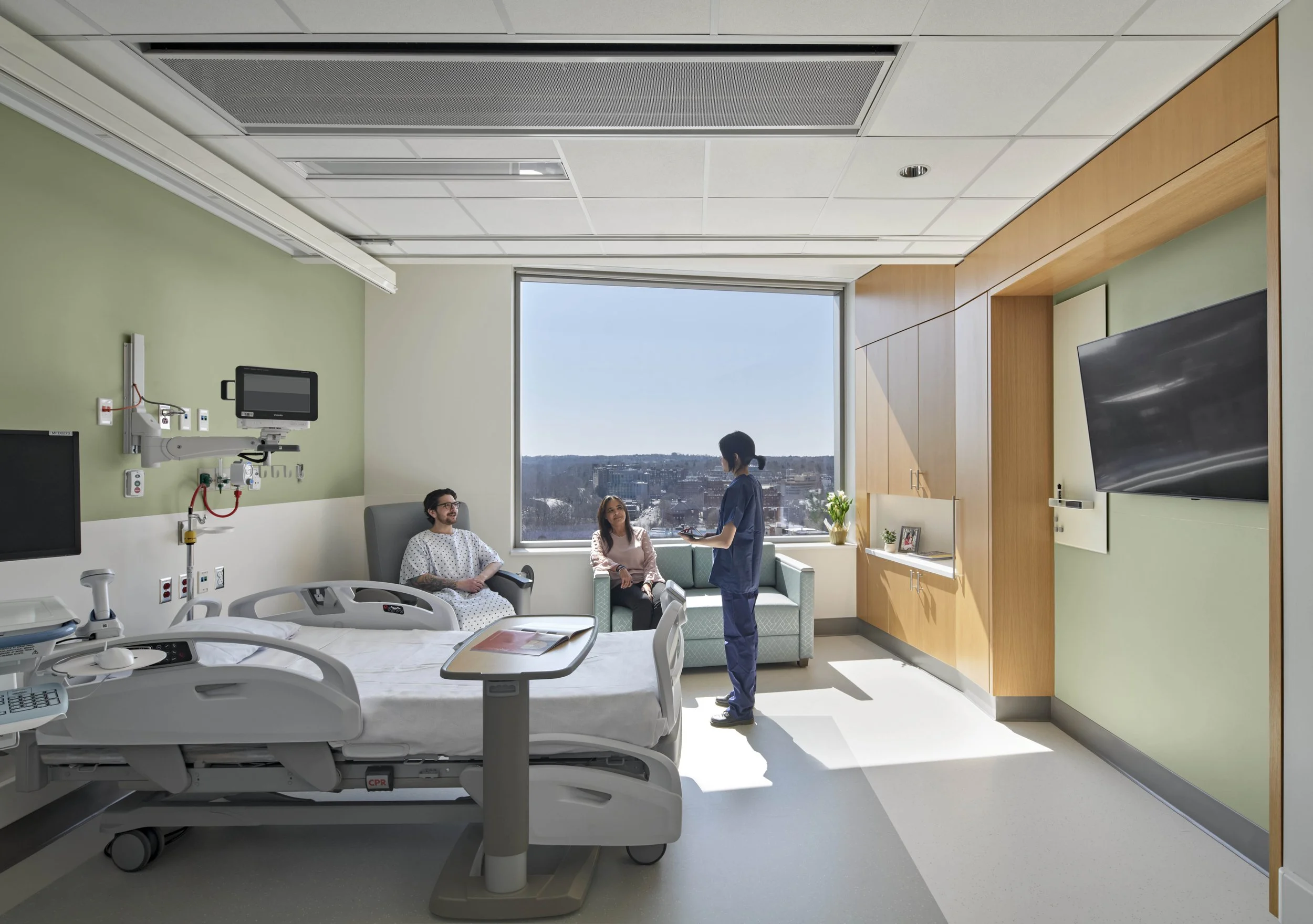
Beth Israel Deaconess Medical Center, Klarman Building. Photography by Robert Benson Photography.
Finally, what advice do you have for those starting their career? Would your advice be any different for women?
CHH: I started my architectural education and practice before the digital age. A critical thought process is essential to guiding the development of design. I think learning the meticulous process of making, a process that leads to beautiful outcomes, is even more important now, in an age without time to digest overloaded information. Accumulated experience matures a designer's work over time and establishes their individual point of view and values. And passion is the force behind the success and longevity of a career.
The architecture profession is more embracing of racial diversity and promoting gender equality than in the past. It is promising to see opportunities for female leadership roles in architecture growing and expanding. Building confidence, gaining trust and proactive participation are the consistent advice I give to young women designers around me.
SB: My advice would be to keep an open mind about what type of contribution to the profession you will ultimately make. I think we all leave architecture school expecting a certain type of individualist design authorship career, but it takes many roles to ensure the design excellence of a project. I would also encourage absorbing many experiences early on to understand where you best fit in the spectrum of the profession. At PAYETTE we use a phrase called ‘DESIGN ALWAYS’ – the idea that we all have the opportunity to contribute to the excellence of a project, from management to conceptual design. It takes the collective intelligence of our firm to produce thoughtfully designed, high-performance buildings.
I would add, however, that women are more susceptible to compartmentalization within certain roles in architecture like management, planning and interiors. It’s important that women maintain a sense of agency and advocate for the roles and career they feel they can best thrive in.
This interview has been edited and condensed for clarity. “Meet Our Partners” is a sponsored editorial series featuring organizations that support Madame Architect’s mission.