Expanding Definitions: Scratching the Surface's Jarrett Fuller on Graphic Design, the Art of the Interview, and a New Design Culture
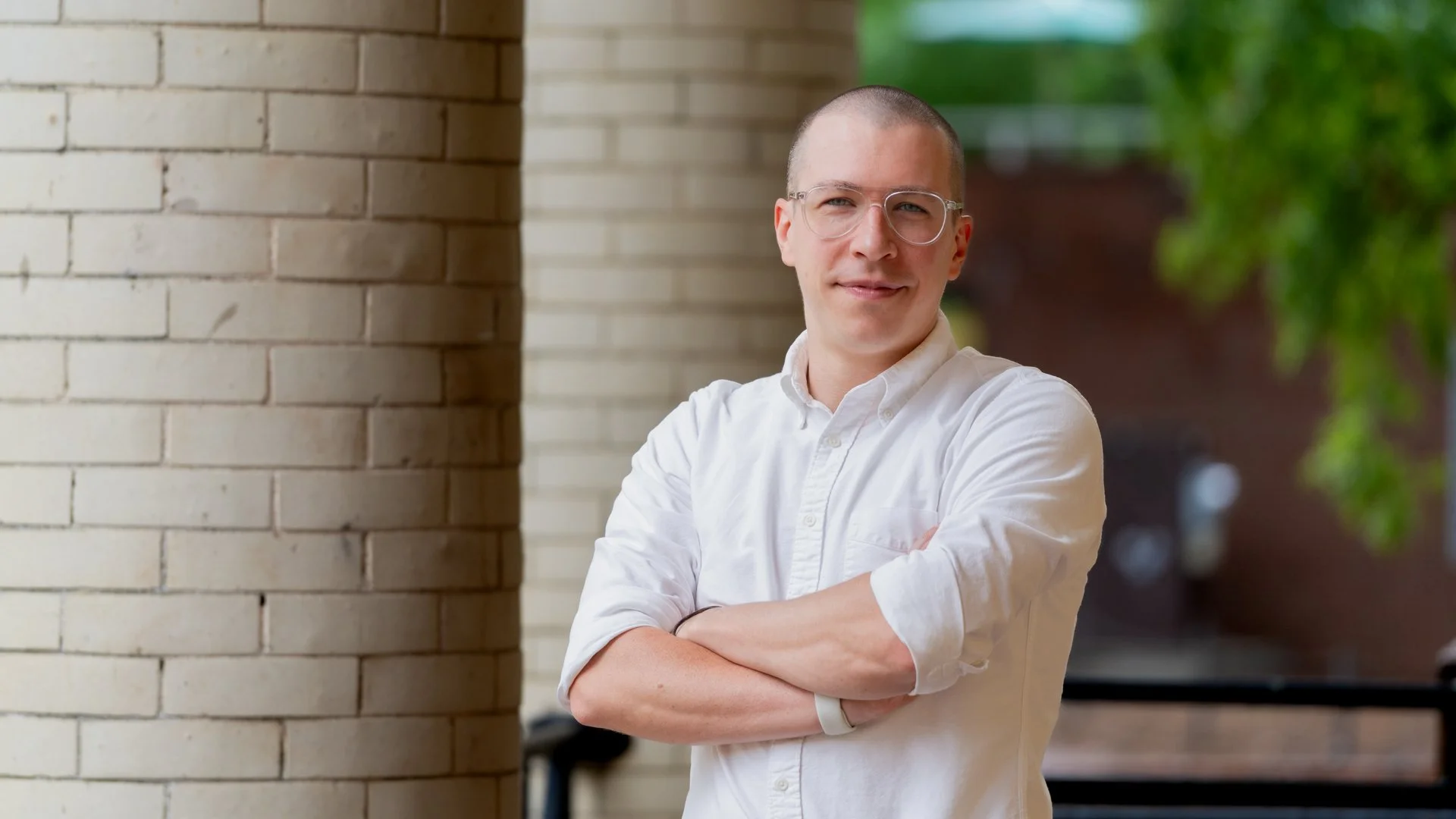
Jarrett Fuller by Max Cohen.
By Julia Gamolina
Jarrett Fuller is a designer, writer, educator, editor and podcaster. He is an assistant professor and director of the undergraduate program in graphic & experience design at North Carolina State University, director of the design and editorial studio twenty-six, and host of the podcast Scratching the Surface. He's the editor or co-editor of four books and his writing has appeared in Fast Company, Eye Magazine, Design Observer, Design & Culture, and elsewhere. His design work has won awards from Communication Arts and The Type Directors Club. He was previously an editor at Eye On Design and a designer at Facebook, Warby Parker, and The Whitney Museum of American Art.
JG: How does it feel to be the interviewee, and not the interviewer?
JF: [Laughs] I like being in control of the conversation…it’s a comfort thing. If I’m in a conversation and I don’t know where it’s going, I feel awkward and unsure and start to get social anxiety. In an interview though, I’m confident because I’ve done all the prep. I feel equipped. And yes, the conversation can go in many different ways, but I do have the sense of being able to pull the strings a little bit. But I have to surrender to you now [laughs].
You sure do. Since we’re both interviewers, I’m curious – how have you refined your interview approach? As you prepare for your 2026 interviews, are you doing anything differently?
Before I started the podcast, I’ve never really interviewed anyone before. So I didn’t think about the art of the interview or how to structure the conversation. Because of this, lot of my first interviews I think are bad [laughs]. I don’t recommend people listening to the first fifty episodes or so, because my research and my prep has changed quite a bit.
I’ve gotten better at researching a guest. I really try to read everything the person has published, and listen to other interviews they’ve given, and watch every YouTube video of theirs that I can find. I want to know everything that they’ve talked about before so that they can say things they’ve never said before when they talk to me.
Design by Jarrett Fuller.
You’re reminding me of Sean Evans, who asks extremely specific questions, and so many of the guests on his show compliment him on being very well-researched and asking very good, thoughtful questions.
That’s a nice comparison, I will accept that. The best compliments I can think of that I get on the show are when, at the end, the guest says, “I’ve never thought about my work that way before,” or “I never talked about that specific thing before.” If I get that at the end, I feel like I’ve done a good job. Or, if someone emails me after listening to an episode and says, “I’ve known this person forever but I’ve never heard them say that,” I feel good about the interview.
I get that a lot with Madame Architect interviews.
The other thing that has changed that I think is subtle, is that in the early years I think Scratching the Surface was a profile show — talking about the guests’ lives and work and background – and I really moved away from that, and it's become a show about ideas. I’m less interested in how they got from point A to point B and more how they think about how their work goes out into the world.
Who are some of your favorite interviewers?
Ezra Klein has such a simple way and I’ve taken a lot from him. I’m also really into this podcast right now, Talk Easy by Sam Frogoso. I’m very intrigued by how he asks very personal questions. He’s like a grave digger – he finds stuff in people’s pasts that’s really rare, and I try to do that in my research as well. And of course Terry Gross is always great.
“Interviewing is a way to create a new design culture, a way to find new ways to talk about all of this work and what we do and what matters to us...I want more dialogue and less monologue.”
How did interviewing find you?
I was a very shy, introverted kid. I’m still very shy and introverted, and I don’t like to go to parties — I’d rather be by myself, and I don’t think I’m always a good team player. I like doing work alone.
No one believes me, but I’m the same in terms of being shy and introverted.
Yea, I believe you! I get it. I think interviewing is a way for me to get out of that, on a personal level. And then on a more professional level, the older I’ve gotten — and I get this sense from you also so maybe you’ll relate to this — I’m much more interested in the culture and the ideas of design then the design itself. Interviewing is a way to create a new design culture, a way to find new ways to talk about all of this work and what we do and what matters to us.
I also say all the time that I want more dialogue and less monologue. We’ve had such a long history of smart people standing on stages telling us what they think, and I think the interview is much more humble and I like hearing people think out loud.
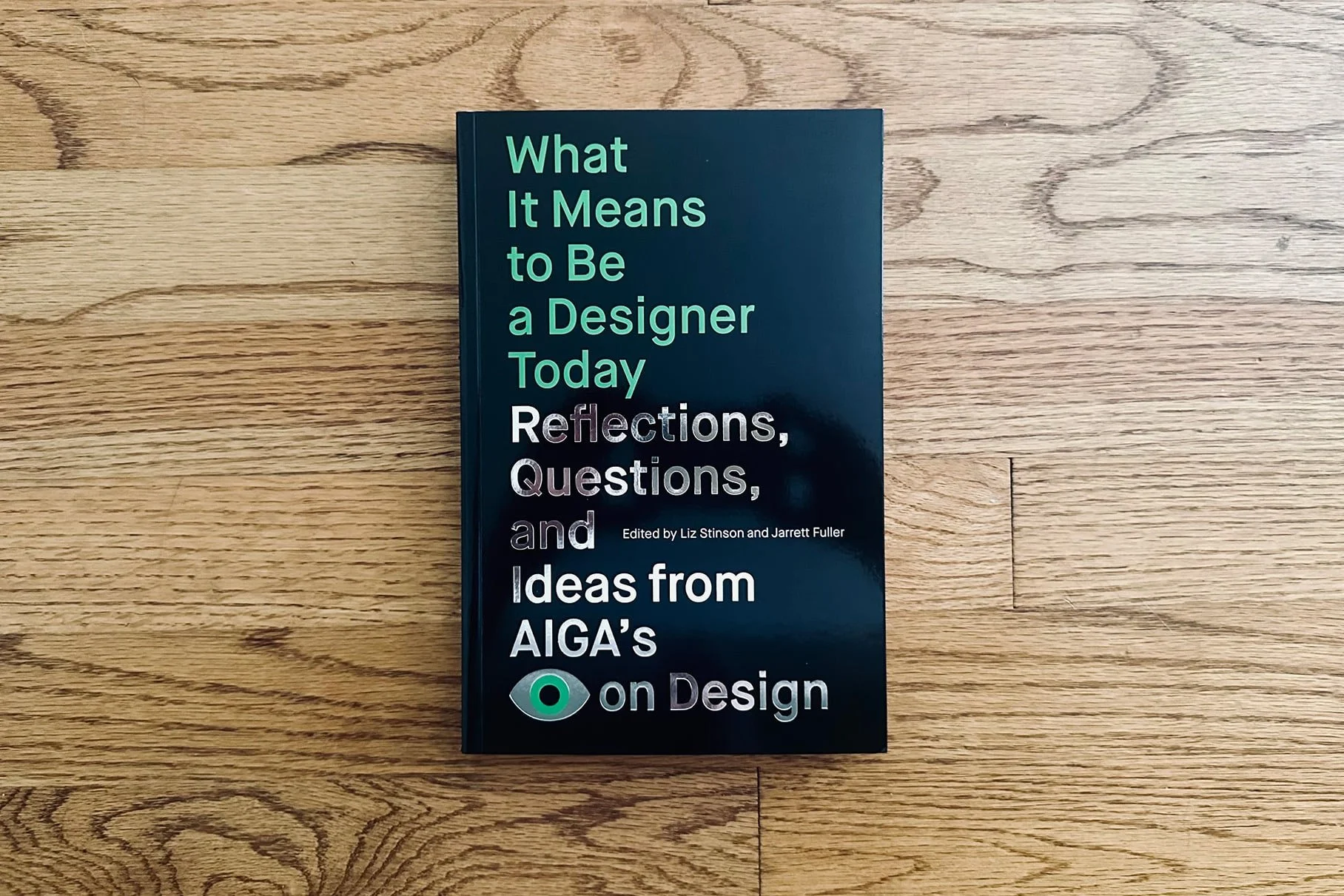
What It Means to be a Designer Today, co-edited by Jarrett Fuller and Liz Stinson. Published by Princeton Architectural Press. Photo by Jarret Fuller.
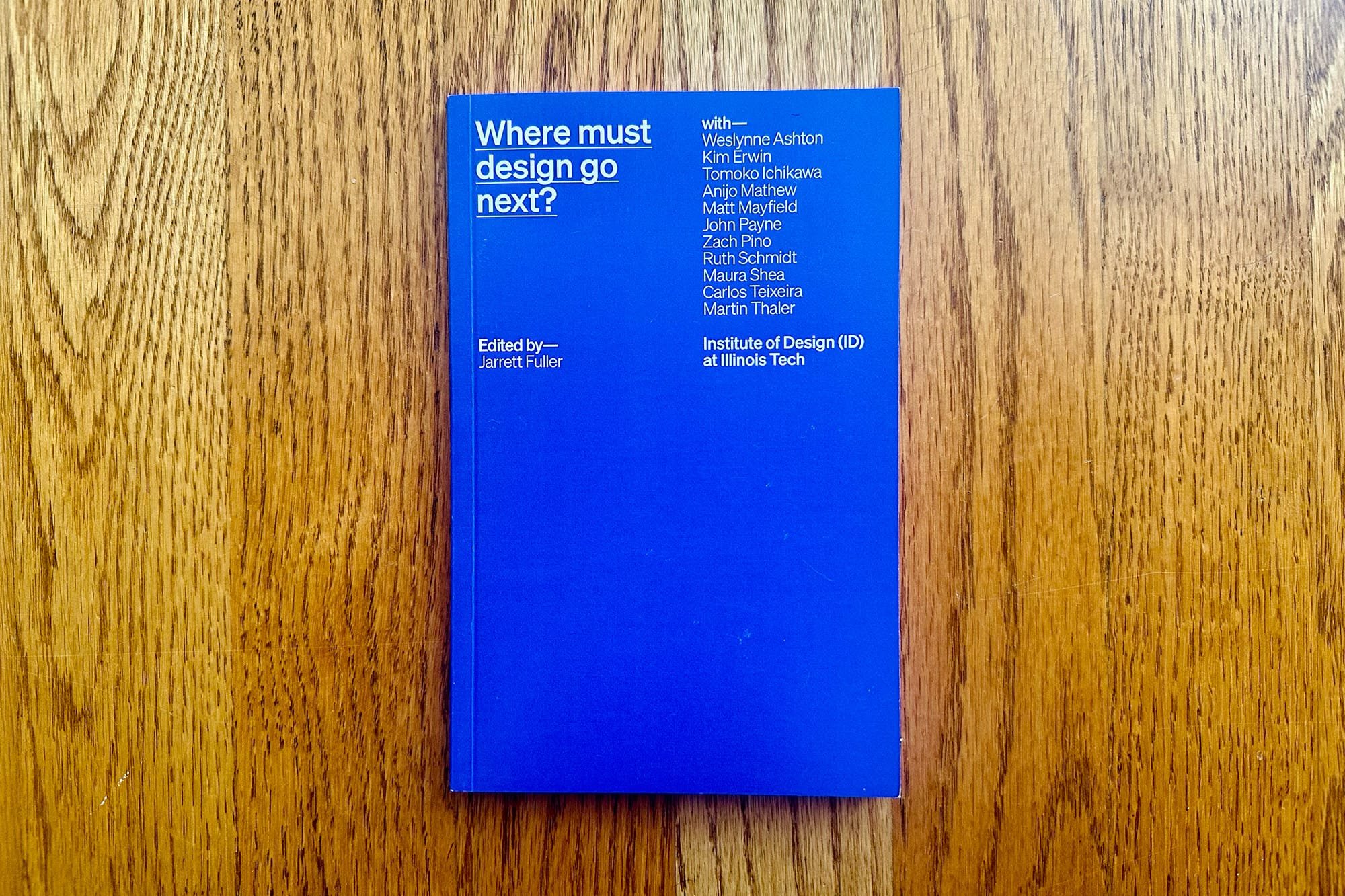
Where Must Design Go Next? Book edited and designed by Jarrett Fuller. Published by Oro Editions in 2023. Photo by Jarrett Fuller.
I completely agree. You also teach and write – tell me about your career and the steps and the learnings.
I remember being three or four years old and noticing that letters were different on different signs. I’ve always been interested in visual communication, and in high school I realized that graphic design was something you could do as a job through things like album covers and posters and all of that kind of stuff. This was the early 2000s, and blogs also became a thing. I grew up in very suburban Pennsylvania and hadn’t met a real graphic designer before, but found all of these designers who had blogs and that was my introduction into the industry — through people talking about their design work, which goes back to your earlier question about how interviewing found me.
I went to design school and had a really great time. Then I came to New York and got a job as a designer and…didn’t like it. It wasn’t what I thought it was going to be and I wasn’t interested in the work. I kept trying to figure out what drew me to design, and realized that I always liked reading about and hearing people talk about it. So I went to grad school to figure out if I could find a way to do that too and not just be a designer who was doing design work. I got an MFA in graphic design and critical theory, so half of my classes were studio-based design classes and the other half were philosophy and writing classes.
The podcast started there — it was my thesis! The first twenty episodes were what I submitted and it was all about this intersection of design and writing. When I graduated, I cobbled projects together to make a career — I did a bit of design work but also started writing and publishing. And then I was always interested in teaching, so I taught a class and realized that I really liked it and started teaching more and more. Five years ago I left New York for a fulltime teaching job in North Carolina so that I could have that as a base and all these other projects could live on top of. Now there’s an equilibrium of teaching, writing, and podcasting.
What was some advice that you got early in your career that stuck with you?
The first one is somebody — a very famous designer who I won’t name because I don’t know if this is advice they’d want everyone to follow [laughs] — who told me, “When you get a project, do the easiest, most straightforward thing. You don’t have to overcomplicate it, you don’t have to be clever…just think about what this thing is trying to do, and then just do that.” I’ve found that to be really good advice.
When I started interviewing, another podcaster told me that there’s a difference between a conversation and an interview. Sometimes you can be interviewing somebody, and you can feel like it’s not going well, but it’s actually a really good interview because when you’ve having a conversation, you want to feel like the other person is into it also, and that they like you and you want to feel like you have a connection. You don’t need to have that in an interview — an interview is for other people to listen to, it’s not just for you.
The last one is that in this type of work — design, publishing, interviewing, cultural production — there aren’t predefined lanes. You don’t just have to do what everyone is doing; you can make something new. When I was in graduate school and wanted to interview designers about writing, I was given permission to turn it into a podcast for my thesis. No one had ever turned in a podcast for a graduate thesis project in a graphic design program before! Being able to create new forms and chart new directions is so important, and I’m lucky that people encouraged that in me early on in my career. I try to do that for my students. If the thing you want doesn’t exist, you can make it.
“Just start. And start small – you don’t have to have a fully thought out and completed concept – your work can evolve and change and shift. The little bits of work to get something started creates momentum.”
What have been some of the biggest challenges for you in what you do?
I’m constantly negotiating what is a Scratching the Surface interview and what is not, and how can I both expand that and stay true to the ideas of what it is. There’s a tension there as a media person in terms of staying true to the things that I’m interested in while also being aware of the zeitgeist and what other people are interested in, but also not just following the zeitgeist. I try not to get people on my show just because they’re really trendy right now and everyone is talking about them.
Me too.
There are a lot of famous designers that I won’t have on the show because even though they’re famous and a big deal, I don’t know what I would ask them that others haven’t asked, especially if I don’t have an investment in their work. So knowing who you are and what your thing is is something I feel like I’m good at but is also a challenge.
Who have been your mentors?
I’m very promiscuous with my mentors [laughs]. Anyone I feel like I can learn from, I attach myself to them and learn what I can. In many ways, the podcast is a way for me to collect mentors and the conversations I aim to have are with people that I think are smarter than me that I can learn something from.
Ellen Lupton, the great design writer and curator, was my thesis advisor in grad school, and her insights and feedback have shaped a lot of how I think about my work. Jessica Helfand as well, who I know you’ve interviewed, was one of my early interviews. We stayed in touch and I got to edit a book with her, and then we designed more books together. She is very generous, and also has a strong point of view and knows what she wants to do — a lot of the things that I do, she was the first person who encouraged me to do them.
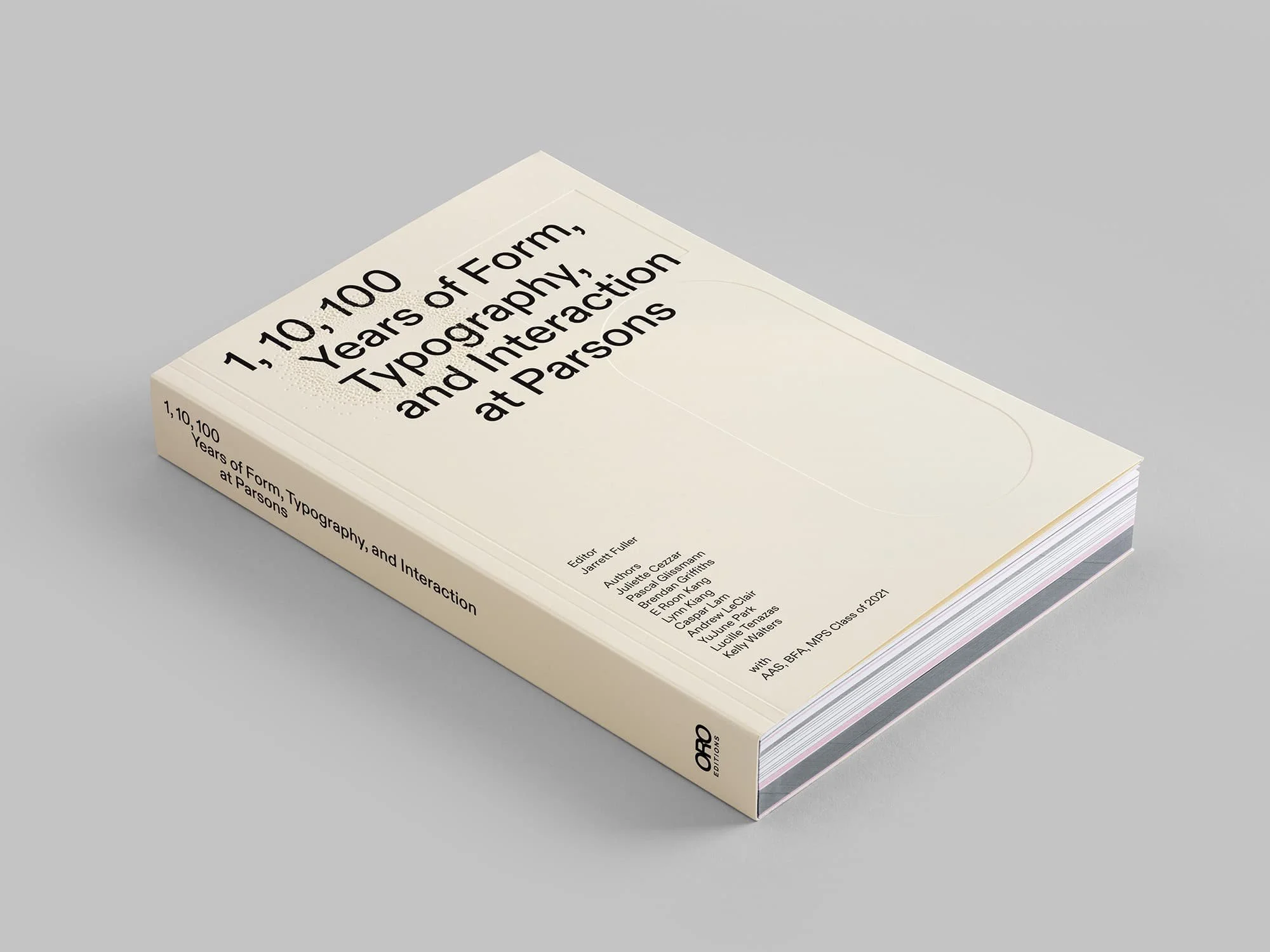
1, 10, 100 Years of Form, Typography, and Interaction at Parsons. Book design by 908A. Edited by Jarrett Fuller. Published by Oro Editions in 2022. Image by Parson School of Design.
How would you describe your mission? What do you want to contribute to the world to make it better?
A lot of what I’m trying to do is redefine and expand what we mean when we use the term “graphic design.” That term has usually been used to describe a very specific industry – branding, logos, websites, apps, posters, and books. I think graphic design can and is a lot bigger than that. There are graphic designers who are making films, doing performance, making paintings, starting podcasts, and I think that all that doesn’t have to be in addition to graphic design — that can just be graphic design. The fact that I’m a graphic designer that’s interviewing architects and urban designers and curators — my position there is an attempt to expand that definition.
Finally, what advice do you have for those starting their careers, or for anyone new to something?
I heard someone say once, “Just because you’re interested in planes doesn’t mean you have to be a pilot.” And it’s so true – you could be an engineer, a plane designer – and I always kept that with me as a model to think about the work you can do. That’s advice I give to my students all the time – maybe you like the design world or parts of it, but you don’t have to be a designer. Finding your core interest and then dancing around it in different ways is very important. Don’t limit yourself to one path.
The other thing I would encourage is just doing something. Just start. And start small – you don’t have to have a fully thought out and completed concept – your work can evolve and change and shift. The little bits of work to get something started creates momentum. That’s the story of the podcast, and I’m sure it’s the story for you too with Madame Architect.
Definitely – I started because I wanted to interview an amazing mentor I had. I had just planned to interview her and publish the one, but after I did, I got a pitch to interview someone else’s amazing mentor.
Exactly — the work keeps going. So just putting something new out into the world, even if it's small, is really important and builds muscle memory for you to do it again.
This interview has been edited and condensed for clarity.